Nir Karki
Talk to an Expert (Nir Karki)
Last-minute Deals
Book Now
Price from
US$1350

Tibet Overland Tour

257 reviews
29 reviews
Duration
8 Days
Trip Grade
Easy
Country
Tibet
Maximum Altitude
4,300m
Group Size
Min 2 pax
Best Time
Autumn (Sep-Nov) and Spring (Mar-May)

Tibet Overland Tour is an 8-day tour that takes you to the core area of Tibet, rich in culture and history. Starting the journey from Kathmandu, you will reach the Kerung Border and head toward the beautiful countryside towns of Xigatse, Xegar, and Tingri.

This tour also brings you insights into Buddhism, which has been practiced in the region for centuries. Lhasa, a famous tourist destination, has several places like Sera Monastery, Drepung Monastery, Jokhang Temple, Barkhor Bazaar, Potala Palace, and many others rich in ancient arts, culture, and history.

The Tibet Overland Tour also offers you a great chance to experience the views of the Himalayas and other natural riches like the Brahmaputra River, Yamdrok-Tso Lake, and more.

Why Tibet Overland Tour?

Stunning Scenery

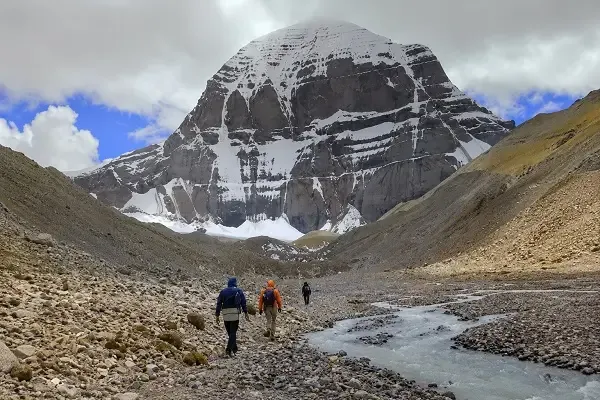
Tibet is considered the “‘Roof of the World’,’ the highest plateau ever. It is also home to stunning landscapes, snow-capped mountains, pristine lakes, and grasslands. You can delve into the natural beauty of Tibet as you can experience the views of Mt. Everest, Kailash, Sishapangma, Lhotse, and many other famous peaks. Similarly, Mansarovar Lake and Namtso Lake provide spectacular views of this region, which are breathtaking.

Cultural And Religious Immersion

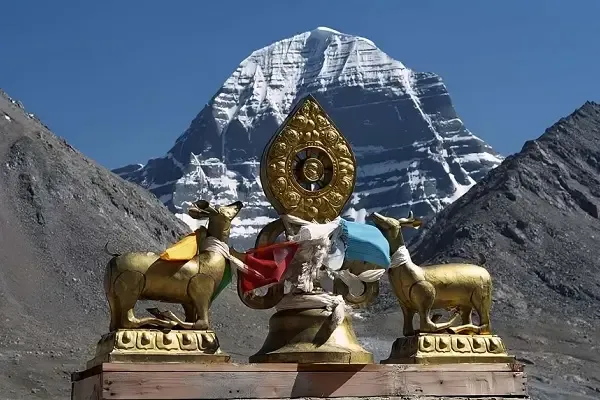
Tibet is rich in culture and religion. Several places and landmarks like Mount Kailash, Mansarovar Lake, Panchen Lama's Tashilhumpu Monastery, Kumbum Stupa & Phalkor Monastery carry great Hindu and Buddhist significance.

Every year, thousands of devotees visit Mansarovar to do religious rituals, expecting to get spiritual enlightenment. Mount Kailash and Mansarovar Lake are closely associated with Lord Shiva in Hindu Myths. It is believed that Lord Shiva, the God of Gods, resides in Kailash Parbat. Similarly, Mansarovar Lake is believed to be a place where the gods take a bath during Brahma Muhurta. Devotees worldwide dip themselves into the lake, hoping to get salvation.

Similarly, Buddhist monasteries like Kumbum Stupa, Phalkor Monastery, and Zutul Phuk Monastery give you the practice of Buddhism in Tibet.

Delve Into Tibetan Cities And Their History

During your Tibet Overland Tour, you will visit famous places like Potala Palace, Sera Monastery, Jokhang Temple, Barkhor Bazaar, and Drepung Monastery. They are the ancient infrastructure and landmarks that exist from the evolution of Lhasa city and bring back the insights of the cultural importance to the present time.

As the major religion of Tibet is Buddhism, you can find numerous Buddhist stupas and monasteries, statues of Lord Buddha, and sculptures and inscriptions that depict ancient Buddhist myths. These arts and artifacts are also found in places like Jokhang Temple, Potala Palace, and Sera and Drepung Monasteries. Nevertheless, Tibet has still lived its history through their culture and celebration. And visiting the city will give you a narrative explanation of its rich history and lifestyle.

Best Time To Go For The Tibet Overland Tour

Generally, the best time for the Tibet Overland Tour is autumn and spring. Here are some of the reasons why:

Autumn Season

Autumn Season, which starts in September and ends in November, features stable weather like dry and sunny days. The clear skies allow you to witness Tibet's stunning fall foliage and colorful landscapes. Besides, the temperature is moderate, which makes travelers comfortable to enjoy the stunning beauty of Tibet.

Spring Season

Spring lasts from March to May, bringing mild, pleasant weather with clear blue skies. Similarly, the nature is colorful during this time as the flowers are in full blossom and the greenery is everywhere, which makes the scene very pleasant.

Besides, there is less rainfall during Spring, which makes navigation comfortable for trekkers. It ensures a safe and sound visit to Tibet.

Can I go on off-season travel to Tibet?

Yes, you can go on off-season travel to Tibet; however, you should be prepared for the weather hazards that come with it. With proper preparation and planning, you can still make the most of your off-season trip to Tibet.

The monsoon season brings heavy rainfall, while the winter comes with heavy snowfall and cold temperatures. You should be mindful of the effects of this weather on travel and plan accordingly.

Trip Highlights

  • Reach the border of Nepal and Tibet, Kerung

  • Explore the culturally rich Lhasa City and its destinations like Potala Palace, Sera and Drepung Monastery, and Panchen Lama's Tashilhumpu Monastery.

  • Reach the highest pass of Gyatsu La Pass at 5220 meters above sea level

  • Explore the views of Mt Cho Oyu (8201m) and Mt Xishapagma (8012m), Karola (5,010m), Kambala (4,749m), and Mt. Everest.
  • Explore Yamdrok-Tso Lake and the Brahmaputra (Yarlung Tsangpo) River
  • Explore Buddhism and its practice in Tibet

How To Get the Most Out Of The Tibet Overland Tour?

Tibet Overland Tour gets you the most out of the Tibetan cities that lie to the other side of the Himalayas from Nepal. Cities like Xigatse, Lhasa, Xegar, and others will be covered in this package, which includes sightseeing and other thrilling activities. Here are some ways to make the most out of your tour in Tibet.

Preparation

Tibet Overland Tour requires a set of preparations, including physical, mental, gear, and safety kits. During the trip, you will be over 3500 meters above sea level, and the temperature in Tibet is relatively low. So packing weather-friendly clothes like thermal layers, windproof and waterproof jackets, warm socks, and gloves is essential.

Similarly, some parts of Tibet require a hike to reach, so ensure you have packed a pair of sturdy hiking boots. In addition, your physical strength is also essential for this tour as it is at a high altitude, and you are most likely to get altitude sickness. Besides, you should prepare the safety kits that might be used during emergencies.

Book Early

Booking early gets you enough time to prepare. If you are looking to embark on a Tibet Tour in the Autumn, make sure you are working on the preparation for one to two months before. Similarly, Tibetan Tourism gets crowded during the peak season, so you have to analyze how to get bookings in the destinations and plan accordingly for the logistics. Booking early will ensure your safe flight to Nepal, transport services, and accommodation.

Choose A Reputable Tour Agency

You should always book your tour from a reputable tour agency, for they provide you with various amenities that align with your expectations and interests. At Marvel Adventure, we provide professional guide services, 24/7 Customer Support, Guidance to book tickets, and several other amenities. We also provide the tour at a reasonable cost, including all your domestic transport, food, and accommodation services.
Tibet Overland Tour Detailed Itinerary

Day 1

Kathmandu-Kerung Border (2,700m)

On the first day of your Tibet Overland Tour, you will start your journey from Kathmandu. You will take a ride by bus to Kerung at 2774 meters above sea level. Kerung is the border of Nepal and Tibet, which gives you insights into the countryside location.

You have to complete some formalities at the Nepalese immigration before heading towards Kerung. From the Kerung Border, you can take either a 1-hour ride by bus or climb uphill for around 2 to 3 hours to reach Kerung

Max Altitude: 2,700m (8,858ft)
Duration: 7-8 hours
Distance: 150 km
Meals: Breakfast, Lunch and Dinner
Accommodation: Guesthouse
Mode of Transportation: Bus
Day 2

Drive to Tingri (4,300m)/Lhatse (4,050m)

The second day of your Tibet Overland Tour starts early in the morning after you wake up in Kerung and have breakfast. Your destination will be Tingri at 4300 meters or Lhatse at 4350 meters above sea level.

You will ride through the adventurous landscapes that give you the vibes of Tibetan culture and lifestyle. As Tibet is the highest plateau in the world, it offers spectacular views of the Himalayan ranges, including peaks like Mt Cho Oyu (8201m) and Mt Xishapagma (8012m).

The weather plays a vital role in sightseeing these mountains, and the most important thing to consider is that you can see the dwarfed scenes of these peaks due to the vastness of the Tibetan plateau. Once you reach Tingri, you can have the scene of mystic Mount Everest and a beautiful view of sunrise and sunset. Tonight you will stay in a guesthouse.

Max Altitude: 4,300m (14,107ft)
Duration: 6-7 hours
Distance: 245 km
Meals: Breakfast, Lunch and Dinner
Accommodation: Guesthouse
Mode of Transportation: Jeep
Day 3

Tingri/Lhaste-Xigatse (3,840m)

The next destination is Xigatse, which is 3900 meters above sea level. You will begin your journey to Xigatse early in the morning from Tingri. First, you will reach Gyatsu La Pass at 5220 Meters above sea level - the highest pass in the Tibet region, which you should cross before reaching Lhasa.

You can experience the Himalayan scenery, including Mount Kailash and other subsidiary peaks, from this region. You will catch a road to Mt Kailash to the west and reach Xigatse after around 4 to 5 hours. You will stay overnight at a hotel.

Max Altitude: 3,840m (12,598ft)
Duration: 4-5 hours
Distance: 244 km
Meals: Breakfast, Lunch and Dinner
Accommodation: Guesthouse
Mode of Transportation: Jeep
Day 4

Drive to Gyantse (3,950m) to Lhasa (3,656m)

The fourth day of the Tibet Overland tour starts with a sightseeing activity. You will wake up early, head toward Panchen Lama's Tashilhumpu Monastery, and rest for some time.

Afterward, you will embark on your journey to Gyantse, a famous tourist place. The Buddhist culture that flourished in the region for centuries is one of the most attractive features of this city. Here, you can find large chortens, monasteries, and statues of Lord Buddha.

During your journey to Gyantse, you will explore Kumbum Stupa & Phalkor Monastery and then drive to the destination through the countryside road. You will chill with the views of Karola (5,010m), Kambala (4,749m), Yamdrok-Tso Lake, and the Brahma Putra (Yarlung Tsangpo) River while you set on a journey to Lhasa from Gyantse.

Max Altitude: 3,656m (11,994ft)
Duration: 6-7 hours
Distance: 360 km
Meals: Breakfast, Lunch and Dinner
Accommodation: Guesthouse
Mode of Transportation: Jeep
Day 5

Sightseeing in Lhasa

On the fifth day of your tour, you will be busy for a whole day with sightseeing activities. You will start your day with an early breakfast in Lhasa city and then plan the activities to do for the remaining day. The setlist for this day will be visiting attractive destinations like Jokhang Temple, Barkhor Bazaar, Potala Palace, Drepung, and Sera Monasteries.

These places carry great significance to Lhasa City’s history and culture. Similarly, you will dive deeper into the cultural and religious significance of the region. For centuries, you can see ancient antiques and artifacts in the Palaces of Lhasa city. Besides, you will find out how the ancient Buddhist culture flourished in Lhasa and how people have been improving their lifestyle with the annotation of Buddhism.

Max Altitude: 3,656m (11,994ft)
Meals: Breakfast, Lunch and Dinner
Accommodation: Guesthouse
Day 6

Sightseeing in Lhasa

The sixth day is the second sightseeing day during the Tibet Overland Tour. You will explore ancient culture, the local markets, historical infrastructures, and religious sites. You will be on a full-day exploration of the culturally rich Lhasa city and return to your hotel for an overnight stay.

Max Altitude: 3,656m (11,994ft)
Meals: Breakfast, Lunch and Dinner
Accommodation: Guesthouse
Day 7

Drive to Xegar (4,300m)

The main motive of the seventh day is to reach Xegar city, which lies at the bottom of Mount Everest on the Tibetan side. It is situated at 4,300 m above sea level and can be challenging as altitude sickness can be prone to at this altitude. The city is also known as Shekar Dzong or Tingri.

Prepare yourself with the necessary clothes and other requirements, as the temperature is also low in this area. From here, you can have spectacular views of famous mountain peaks, such as Mt. Everest (8848 m.)Mt. Lhotse (8516 m.)Mt. Makalu (8463 m.)Mt. Cho-Oyu (8201 m.), and Mt. Shisha Pangma (8012m).

Max Altitude: 4,300m (14,107ft)
Duration: 8-9 hours
Distance: 490 km
Meals: Breakfast, Lunch and Dinner
Accommodation: Guesthouse
Mode of Transportation: Jeep
Day 8

Drive to Kerong Border to Kathmandu (1,400m)

This is the last day of your Tibet Overland Tour, and you will head toward the Kerung Border from Xegar early in the morning. You will drive through the countryside of the Tibetan province, enjoying the mystic mountain views, streams, and tropical tundra forest.

Once you reach the Kerung Border, you return to Kathmandu on a bus, which takes a few hours. You will be escorted to your respective hotels upon your arrival.

Max Altitude: 1,400m (4,593ft)
Duration: 9-10 hours
Distance: 395 km
Meals: Breakfast and Lunch
Accommodation: Hotel
Mode of Transportation: Jeep / Bus
Have Questions? We're Here to Help
Like this itinerary but want to make a few changes? Every traveler is unique, and your journey should be too. Our local travel experts will design a personalized experience tailored to your interests, preferred pace, travel dates and budget.
Route Map & Altitude Profile

Cost Details

Includes

  • Permits and entry fees: The entry and permit charges to various landmarks and sites are included in the cost.
  • Transportation: The transportation charges within Tibet, Bus Fare From and To Tibet
  • Accommodation: Twin sharing accommodation on a BB basis
  • English-speaking guide: A knowledgeable and fluently speaking Tour guide with prior site information is included.
  • Sightseeing and activities: Entrance fees for Major attractions, cultural activities, and guided tours are generally included.
  • Support staff: Team members, like drivers and porters, can be included on demand

Private Trip

Equipment List

Upper Body Layers
  • Breathable, quick-dry base layers
  • Comfortable t-shirts
  • Lightweight insulating jacket
  • Down jacket for cold conditions
  • Waterproof and windproof jackets
Lower Body Layers
  • Thermal base layer
  • Waterproof trekking pants
  • Comfortable pants for evenings in teahouses
  • Comfortable hiking shorts for warmer sections
  • Waterproof and windproof outershell for rain or snow
Footwear & Accessories
  • Trekking boots with ankle support (preferably Waterproof)
  • Multiple pairs of quick-dry socks
  • Warm socks for cold nights
  • Gaiters for snowy, muddy, or dusty trails
Head & Sun Protection
  • A hat or a cap to block the sun
  • Warm beanie for cold mornings and evenings
  • UV-protected sunglasses
  • Neck gaiter or buff to prevent dust, cold, and sunburn
  • Sunscreen (30-50+ SPF) for face and exposed skin
  • Lipbalm with SPF
Personal & Medical Kits
  • Small personal first aid kit
  • Altitude sickness medication (consult a doctor first)
  • Energy bars and electrolyte powder
  • Filtration system and water purifier
  • Allergy medication
  • Digestive enzymes and antacids
  • Band-aids and gauze pads
Travel Documents
  • Valid Passport
  • Chinese Visa
  • Flight Details
  • Tibet Travel Permit (TTP)
  • Chinese Military Permit (for restricted region)
  • Alien Travel Permit (ATP)
  • Health Care Certificate
  • Nepal Travel Visa
  • Travel Insurance 
Miscellaneous
  • Daypack (30-45L) with raincover
  • Reusable water bottles
  • Headlamps for early morning hikes
  • Water purifying tablet or filter
  • Phone or Camera for capturing the adventure
  • Powerbank for an easier charging option
  • Notebook, books, or cards for free time
  • Snacks like energy bars and chocolates
  • Drybag to keep your gear safe from rain

Tibet Overland Tour FAQs

Is the Tibet Overland Tour suitable for first-time travelers to Tibet?

With years of experience, we would say it's the best introduction Tibet can offer. The overland route eases you into the plateau gradually rather than dropping you straight into Lhasa from a plane. Based on our client's feedback, first-timers often say the drive itself taught them more about Tibet than any guidebook. 

What is the best season for a Tibet Overland Tour?

April through October covers the reliable window. May and September are our personal favourites as there is fewer crowds than the summer peak, good road conditions, and some of the clearest light of the year on the plateau. June and July are busy, but the plateau is green and alive in a genuinely beautiful way. We strongly recommend planning for spring or early autumn, so you can have the best of it.

How challenging is the Tibet Overland Tour?

It is less physically demanding than most people expect, more mentally absorbing than they anticipate. The days are long in a vehicle, the altitude is constant, and the landscape is relentless in the best possible way. The physical challenge is mainly altitude as the plateau sits above 4,000m throughout, and your body notices it for the first few days.

Do I need to worry about altitude sickness during the tour?

You have to take it seriously, but don't fear it. Lhasa is at 3,656m, which is enough for mild symptoms in many people, particularly in the first 48 hours. The overland route from Nepal actually helps significantly because you're gaining altitude gradually over several days rather than arriving by flight. We build acclimatization time into every itinerary and brief every traveller before departure on what to expect.

How many days should I spend in Tibet for the best experience?

Our 8-day Tibet Overland Tour from Kathmandu covers the full highlights: the Kerung border crossing, the Friendship Highway, Gyantse, Shigatse, and Lhasa, with proper time at Potala Palace and Jokhang Temple. It is genuinely enough to experience Tibet without rushing it, as you're getting the plateau, the monasteries, and the culture at a pace that lets it actually land.

What travel permits are required to visit Tibet?

You need a Chinese Visa, a Tibet Travel Permit (TTP), an Alien Travel Permit (ATP) for areas outside Lhasa, and potentially a Military Permit and Frontier Pass depending on your itinerary. Trekkers need to understand that none of these can be arranged independently by foreign travellers as they require a registered Tibet travel agency. We coordinate everything through our Lhasa-based partners.

How far in advance should I book a Tibet Overland Tour?

We strongly recommend booking at least 6 to 8 weeks before departure. Tibet Travel Permits take time to process, and the Chinese Visa application needs to be in hand before the TTP process can begin. We've had travellers contact us two weeks out, expecting to leave in a short time. It rarely works. Book early, sort your Chinese Visa first, and give the permit process the time it needs.

Can I enter Tibet from Nepal by road?

Yes, and the Nepal-Tibet overland entry is one of the classic routes into the plateau. The road from Kathmandu crosses the Rasuwagadhi-Kerung border and connects to the Friendship Highway, which runs all the way to Lhasa. It's how most travellers on our tours enter Tibet.

Which border crossing is used between Nepal and Tibet?

The Rasuwagadhi-Kyiring border crossing is the standard route, which is situated a few hours north of Kathmandu through the Rasuwa district. The border crossing involves some paperwork and a vehicle transfer at the border, but nothing complicated if you're with an experienced operator who knows the process. We brief every group thoroughly before the border day.

What are the must-visit places on a Tibet Overland Tour?

Potala Palace, Jokhang Temple, Barkhor Street, and the monasteries of Sera and Drepung are the major highlights. If your itinerary extends to the west, Everest Base Camp Tibet and the Rongbuk Monastery add the mountaineering dimension. For the full spiritual experience, Kailash and Mansarovar are in a category of their own.

Is Potala Palace included in the Tibet Overland Tour?

Yes, it's one of the highlights on our itineraries. Potala Palace, the former winter residence of the Dalai Lamas, is genuinely one of the most extraordinary buildings in the world. Entry tickets are limited daily and must be booked in advance, which is something we arrange as part of the tour.

Can I visit Everest Base Camp in Tibet on this tour?

Yes, the Tibetan side of Everest Base Camp (Rongbuk Base Camp) is accessible by road from Shigatse. It is a day trip or overnight stop that we include in extended itineraries. The Rongbuk Monastery, the highest in the world, adds a layer the Nepal side doesn't have.

What is the altitude of Everest Base Camp in Tibet?

The Tibetan Everest Base Camp at Rongbuk sits at approximately 5,200m, whereas the Everest Base Camp in Nepal side sits at an altitude of 5,364m. We always ensure proper acclimatization in Lhasa and Shigatse before the Everest leg. Rushing to 5,150m without first acclimatizing to the plateau is not something we do.

What type of vehicles are used for the Tibet Overland Tour?

Toyota Land Cruisers are usually the standard vehicle for Tibetan plateau travel. They're reliable, high-clearance, and handle the road conditions that you encounter across the journey. Our vehicles are well-maintained, and our drivers are experienced on the route. Our groups are typically divided across 2-3 Land Cruisers depending on size, with luggage in a separate support vehicle. 

How much driving is involved during the trip?

Quite a lot, and being comfortable with long vehicle days is part of doing this trip. Daily driving on the main overland route typically runs 5-8 hours, with monastery stops, viewpoints, and lunch breaks built in. The plateau landscape keeps changing in ways that make the hours pass differently than they would on a normal road trip. That said, bring a good book and a neck pillow.

What kind of hotels can I expect in Tibet?

Our standard packages use well-located 3 to 4 star properties in major cities like Lhasa. Beyond the main towns, accommodation drops in quality as guesthouses in Gyantse or along the Friendship Highway are basic but functional.

Is internet and mobile network available in Tibet?

Internet exists, but it is restricted, slow, and inconsistent outside Lhasa. In Lhasa and Shigatse, hotel Wi-Fi functions for basic communication. Beyond the main cities, connectivity drops significantly.

What should I pack for a Tibet Overland Tour?

A down jacket is essential regardless of when you travel. Add thermal base layers, a waterproof outer shell, a warm hat, gloves, and a buff for dusty sections. Sunscreen and UV-protective sunglasses are non-negotiable at altitude. Always carry cash in Chinese Yuan as card payments are limited outside Lhasa, and ATMs on the remote plateau don't exist.

Can I customize the Tibet Overland Tour itinerary?

Yes, and we do this regularly. The core route is the backbone, but extensions to Kailash, Everest Base Camp in Tibet, or additional monastery stops are all possible. Private departures give the most flexibility on dates and pace. Group departures have a fixed structure, but we accommodate specific requests where logistics allow. Tell us what matters to you before booking, and we will sort out your itinerary.

Why choose an overland journey instead of flying directly to Lhasa?

Because Tibet isn't just a destination, it's a journey. The overland route takes you across the roof of the world over days. You see the landscape change, the culture deepen, and the air thin gradually. You arrive understanding something about where you are that no airport arrival gives you. From a practical standpoint, the overland acclimatization is also genuinely better than flying directly to altitude. But the real reason is simpler: the drive is the experience. Don't skip it.

Price Per Person
US$1350
US$1350
All inclusive price
Talk to Our Travel Experts

You May Also Like

kailash mansarovar tour via lhasa
Duration: 11 Days

Kailash Mansarovar Tour via Lhasa

US$2750US$2750
Difficulty Level: Strenuous
kailash mansarovar overland tour
Duration: 10 Days
5.0(1 Reviews)

Kailash Mansarovar Overland Tour

US$1850US$1750
Difficulty Level: Moderate
5 day bhutan tour
Duration: 5 Days

5 Day Bhutan Tour

US$1400US$1400
Difficulty Level: Easy
Need Help? Call Us+977 986-0313572