
Nir Karki
Talk to an Expert (Nir Karki)
Last-minute Deals
Book Now
Price from
US$795

Annapurna Base Camp Trek

257 reviews
29 reviews
Duration
11 Days
Trip Grade
Moderate
Country
Nepal
Maximum Altitude
4,130m
Group Size
Min 1 pax
Best Time
(Mar-May) and (Sep-Nov)

Annapurna Base Camp Trek is undoubtedly one of the most accessible and breathtaking high-altitude treks in the Himalayas. The trek, which starts from Pokhara, takes you right into the heart of the Annapurna Sanctuary. Leading through the areas of forests, villages, farms, and alpine grasslands, you will finally reach the base camp at a high altitude of 4,130 meters.

The whole route is full of marvelous views with Annapurna South, Machapuchare, Hiunchuli, and other giant Himalayan mountains being part of the scene. The trek is physically exhausting and visually pleasant at the same time, and the nature, adventure, and cultural immersions are the factors that keep you engaged. The trek is ideal for the reasonably fit hiker without intense physical demands, well-established tea houses, and manageable elevation gains.

The Annapurna Base Camp Trek caters to the tastes of adventurers, nature lovers, photographers, and cultural explorers with wild trails, scenic landscapes, wildlife, and traditional village life within a small, well-supported trek route. 

Every day, you are treated to spectacular sunrises and sunsets over the mountains. The path leads through Gurung and Magar villages, where you can meet the locals, learn their habits, and have homestay dinners.

ABC trekking is open for everyone, whether groups are small or large, couples, solo trekkers, or families. Nonetheless, there is a need for complete planning, packing, and preparation. You should be physically and mentally ready to make daily walks from 4 to 8 hours through occasional steep ascents and rapidly changing weather conditions. Since there is a possibility of altitude sickness, you should also have to be acclimatized through proper pacing. 

Yet, the demands of the journey are paid off with grand views of the mountains, tranquil high altitude valleys, and the feeling of triumph of being at the base camp.

Trip Highlights

  • The ABC trekking route provides one of the most stunning views of Annapurna South, Machapuchare, and Hiunchuli, and several other peaks in the vicinity, which are the highest in the world.
  • There are diverse landscapes all the way through the trek, like subtropical forests, alpine meadows, rocky areas, and glacier valleys.
  • The moment you reach the Base Camp, you are standing in the middle of the Annapurna Sanctuary, with its lofty summits all around you.
  • The hike takes you through Gurung and Magar villages, which have their own unique customs, festivals, and traditions. 
  • The path leads through the jungles of rhododendron, oak, and bamboo, which are habitats of numerous Himalayan wildlife.
  • Trekking for several days is possible and pleasant because of the comfortable lodgings and nourishing local food.
  • In contrast to some other treks that involve extreme high altitudes, ABC is possible for trekkers with moderate fitness levels.
  • The panoramic sunrises and sunsets over the Himalayas are unforgettable.
  • The hike to Poon Hill adds extra adventure and views. The sunrise vistas of the Himalayas from this vantage point are mesmerizing.
  • Traversing the vast ecology of the Annapurna Conservation Area.
Annapurna Base Camp Trek Detailed Itinerary

Day 1

Drive to Pokhara (820 m)

The initial step of the Annapurna Base Camp journey involves a picturesque drive from Kathmandu to Pokhara. Pokhara is an attractive lakeside city and the main entry point to the Annapurna region. The Prithvi Highway winds along the Trishuli River and takes you through terraced hills, small towns, and lush valleys.

You can take a break at local restaurants in spots like Malekhu or Mugling for refreshments. After finally reaching the destination, you can either unwind beside the tranquil Phewa Lake, visit the vibrant Lakeside area, or admire the sight of Machhapuchhre and the Annapurna range mirrored on the lake's surface.

The evening is generally spent either in the discovery of the local coffee shops or taking a boat ride on the lake to see the sunset over the mountains.

The shift from the bustling streets of Kathmandu to the peaceful lakeside of Pokhara is the ideal way to get ready for the upcoming adventure.

Max Altitude: 820m (2,690ft)
Duration: 7-8 hours drive
Distance: 200 km
Meals: Breakfast, Lunch and Dinner
Accommodation: Hotel
Mode of Transportation: Bus / Jeep
Day 2

Trek to Tikhedhunga (1,480 m)

After having an early breakfast, you will drive for about 42 kilometers northwest of Pokhara through the beautiful countryside consisting of terraced fields, rivers, and small Gurung and Magar villages. 

The road along the Modi Khola River provides occasional views of the snow-covered Annapurna and Machhapuchhre peaks. In the trek’s starting point, Nayapul, the permits are checked before heading toward Tikhedhunga.

From Nayapul, the gently upward trail takes you to Birethanti, a picturesque village along the river, with tea houses and shops. You will cross the suspension bridge over the Bhurungdi Khola, and the route gradually goes up through terraced plantations, bamboo forests, and small villages like Hile. The path is not difficult, but it does include a few steep parts, particularly near Tikhedhunga.

Once reaching the destination, you will settle in a warm and comfortable teahouse, enjoy a hot meal, and then go to sleep listening to the soothing sounds of waterfalls and mountain streams.

Max Altitude: 1,480m (4,855ft)
Duration: 2-3 hours trek
Distance: 5 km
Meals: Breakfast, Lunch and Dinner
Accommodation: Teahouse
Day 3

Trek to Ghorepani (2,874 m)

After having breakfast, you will start climbing up along stone stairs with more than 3,000 steps to reach Ulleri, a Magar village. On the way, you will enjoy the picturesque views of terraced hills and even a sneak peek of Annapurna South and Hiunchuli. The path then goes through the dense rhododendron and oak forest with the melodious chirp of the song birds. 

Continuing further, you will pass through small villages like Banthanti and Nangethanti, where the tea houses are a relief during rest and lunch. The temperature drops, and the forest becomes denser with the trail leading towards Ghorepani. 

It is a pretty mountain village on a ridge. The arrival in the afternoon allows you to take in the magnificent mountain views of the surrounding area, including Dhaulagiri, Annapurna South, and Nilgiri.

Eventually, an inviting dinner and sleeping in a teahouse amid fresh mountain air are the closing moments of the day.

Max Altitude: 2,874m (9,429ft)
Duration: 6-7 hours
Distance: 12 km
Meals: Breakfast, Lunch and Dinner
Accommodation: Teahouse
Day 4

Morning Hike to Poon Hill (3,210 m) and Trek to Tadapani (2,630 m)

Poon Hill is one of the most popular viewing points in the Annapurna region. It is between 4:30 and 5:00 a.m. that you wake up and hit the trail towards its summit. The path is well-marked and stony, which usually takes 45 minutes to an hour to reach. 

The views from Poon Hill at this time are unbelievable, a panorama of the glowing mountains from Dhaulagiri, Annapurna I, Annapurna South, Hiunchuli, Machhapuchhre, and many more, all in golden colors. After the sunrise visit and photography, you return to Ghorepani for breakfast and then set out toward Tadapani, the next stop on the trek. 

The trail from Ghorepani to Tadapani leads you through a lovely forest of rhododendron, oak and bamboo trees. At first, the path is a slow uphill walk to Deurali Pass (3,090 m) where you can look at the Annapurna and Dhaulagiri ranges. 

The path then leads steeply downwards into the woods, crossing brooks, and offering a quiet, almost enchanted, setting. Occasionally, you might spot Himalayan langurs and colorful birds. 

When you finally reach Tadapani, the closest views of the Himalayas make the evening setting perfect. Today's mountain adventure concludes with a night at a comfortable teahouse.

Max Altitude: 2,630m (8,628ft)
Duration: 7-8 hours
Distance: 11 km
Meals: Breakfast, Lunch and Dinner
Accommodation: Teahouse
Day 5

Trek to Chomrong (2,170 m)

The journey from Tadapani to Chomrong incorporates walking through the enchanting forests and the traditional Gurung villages with the majestic mountain views. 

You will start by descending through thick rhododendron and oak forests on steep trails. As the forest opens up, you can see the wide-angle views of Annapurna South and Machhapuchhre glowing in the morning light. 

The route continues going down until Chuile and then takes a flatter route towards Kimrong Khola (1,750 m), which is the place where most of the trekkers have their lunch next to the river.

After the suspension bridge across the Kimrong Khola, the track goes up steadily through the terraced fields and the traditional Gurung villages toward Chomrong. The climb may be hard on the legs after the morning's descent, but the reward is the spectacular close-up sighting of Annapurna South, Hiunchuli, and Machhapuchhre towering over the village. 

Chomrong is one of the biggest and most picturesque villages in the area. You can bask in warm teahouses, have nice meals, and get ready for the next day’s trip into the deeper heart of the Annapurna range.

Max Altitude: 2,170m (7,119ft)
Duration: 4-5 hours
Distance: 7 km
Meals: Breakfast, Lunch and Dinner
Accommodation: Teahouse
Day 6

Trek to Dovan (2,600 m)

Today is the day 6 of our Annapurna Base Camp Trek itinerary. The first part of the day sees you down the steep and stone-steps trail to Chomrong Khola. There is a suspension bridge that connects the two hillsides of the valley.

After crossing the bridge, you have to face a gradual but continuous uphill march through the terrace fields and the woods to get to Sinuwa (2,340 m). This is the spot where you can take a break, sip some tea, and let nature's beauty work its magic before going deeper into the woods.

Next, the trail rises and falls slightly through thick bamboo, rhododendron, and oak forests, finally leading to Bamboo (2,310 m), a tranquil place for lunch with nature all around.

The last part from Bamboo to Dovan is a steadily increasing climb through the forest trails that are often shaded. There is a cooling and refreshing effect of the air as you gain altitude, and the landscape is more peaceful with fewer human settlements and the overpowering presence of nature.

 When you finally reach Dovan, you can settle in a quaint teahouse surrounded by trees.

Max Altitude: 2,600m (8,530ft)
Duration: 5-6 hours
Distance: 8.6 km
Meals: Breakfast, Lunch and Dinner
Accommodation: Teahouse
Day 7

Trek to Annapurna Base Camp (4,130 m)

The route from Dovan to ABC is the most thrilling and picturesque part of the whole trip. The route slowly approaches the central part of the Annapurna Sanctuary. After breakfast, you will start walking by the Modi Khola river, rising slowly and steadily through the dense bamboo and rhododendron woods. 

The initial stage leads to Himalaya (2,920 m) and then on to Deurali (3,200 m). Deurali is often selected as a quick nap or lunch break before moving on to higher.

Then, you will walk past tranquil environments with waterfalls rushing down cliffs and sometimes Machhapuchhre appearing between the clouds. The closer to the top, the sparser the vegetation becomes, and the forests give way to vast alpine meadows. 

The onward path steeply ascends alongside the river and moraine to Machhapuchhre Base Camp (MBC) at an altitude of 3,700 m, which is a stunning spot encircled by great mountains. At this place, you can see the close-up views of Annapurna South, Hiunchuli, Gangapurna, and Macchapuchhre itself, very clearly. After a short pause at MBC, the walk proceeds for another 1.5 to 2 hours on a slight rise to Annapurna Base Camp.

Eventually, the large ice-covered semicircular area of the Annapurna Sanctuary is revealed with an all-around view of Annapurna I, Hiunchuli, Tent Peak, and Glacier Dome. The sunset casts a golden hue on the mountains that turns the whole scene into a fairytale. You will spend the night at ABC, soaking in the silence and the majesty of the Himalayas.

Max Altitude: 4,130m (13,549ft)
Duration: 6-7 hours
Distance: 13 km
Meals: Breakfast, Lunch and Dinner
Accommodation: Teahouse
Day 8

Trek to Bamboo (2,310 m)

The walk from ABC to Bamboo marks the start of the transition from the high Himalayas to lower regions, presenting a new view of the mountains and the landscapes around. You take the trail after a hearty breakfast at ABC and descend gradually to MBC. 

The route then goes straight down to the Modi Khola valley where you pass alpine meadows and streams formed by melting glaciers. Along the way, you will also have the chance to see the grand peaks of Annapurna South, Hiunchuli and Machhapuchhre.

After descending more, you go through Deurali and eventually get to Bamboo. The route is scenic with lush forests of rhododendron, oak and bamboo which provide coolness and sometimes offer views of the summit above. The descent requires close attention to your footsteps on the rocky or muddy parts. 

Once at Bamboo you can stay in one of the warm teahouses, enjoy a hot meal and get ready for the next part of the trek.

Max Altitude: 2,310m (7,578ft)
Duration: 6-7 hours
Distance: 13.5 km
Meals: Breakfast, Lunch and Dinner
Accommodation: Teahouse
Day 9

Trek to Jhinu Danda (1,780 m)

Today, you will trek further down towards the lower valleys. The hike from Bamboo to Jhinu Danda mostly goes through green forests and traditional villages. After a meal at Bamboo, the trail first goes down through the rhododendron and oak trees, crossing small streams and getting hold of waterfalls once in a while. You then walk through Sinuwa, a nice place for a short rest and refreshments, and go along the Modi Khola valley.

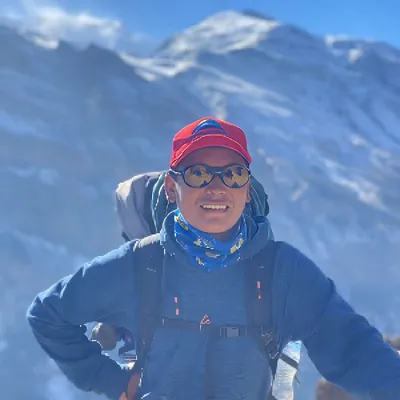
Following the Annapurna Base Camp Trek map we will move forward. The route goes downhill slowly through the terraced fields, bamboo groves, and small hamlets until it reaches Jhinu Danda, a village known for its natural hot springs. The hot springs give a perfect chance to ease tired muscles after the long weekend hiking. 

The route is rather easy in comparison with the earlier high-altitude ascents, yet carefulness is still necessary at the sections that are rocky or slippery.

The night at a tea house in Jhinu Danda gives you a chance to enjoy the beautiful riverside area and serves as a revitalizing stop before heading back to the ending point of the trek.

Max Altitude: 1,780m (5,839ft)
Duration: 5-6 hours
Distance: 10 km
Meals: Breakfast, Lunch and Dinner
Accommodation: Teahouse
Day 10

Drive to Pokhara (820m)

We are on the final day of our Annapurna Base Camp Trek itinerary. Your journey will begin with an early breakfast in Jhinu Danda. Then, you will have a scenic drive to Pokhara. The ride steadily and slowly goes down from mid-hill forests to the lowland valleys.

It will be quite pleasant for the eyes as you will see some of the most beautiful hilly landscapes. The road will frequently lead you through the terraced fields, the meandering rivers and the small local villages.

After arriving in Pokhara you can relax, go sightseeing in the lakeside area, taste the local food and have a party to celebrate the successful completion of the Annapurna Base Camp trek. 

Max Altitude: 820m (2,690ft)
Duration: 2-3 hours drive
Distance: 50 km
Meals: Breakfast, Lunch and Dinner
Accommodation: Teahouse
Mode of Transportation: Bus / Jeep
Day 11

Drive to Kathmandu (1400m)

Today, you will leave Pokhara in the morning for a long drive along the Prithvi Highway, which is a winding road through the hills, valleys and rivers. Small towns, terraced fields, and the Trishuli River are the highlights of the journey, which also shows the rural lifestyle of Nepal. The highway is characterized by its sharp turns and sometimes narrow sections, with pleasant changing scenery.

After you arrive in Kathmandu, we will arrange a smooth ride to your hotel. The incredible Annapurna Base Camp hike has been finished. You can spend the remaining time as you wish.

Max Altitude: 1,400m (4,593ft)
Duration: 7-8 hours drive
Distance: 200 km
Meals: Breakfast and Lunch
Accommodation: Hotel
Mode of Transportation: Bus / Jeep
Have Questions? We're Here to Help
Like this itinerary but want to make a few changes? Every traveler is unique, and your journey should be too. Our local travel experts will design a personalized experience tailored to your interests, preferred pace, travel dates and budget.
Route Map & Altitude Profile

Cost Details

Includes

  • Standard meals (breakfast, lunch, and dinner) during the trek
  • Government license holder guide with local knowledge
  • Strong and helpful porter with proper equipment (1 porter for 2 people)
  • Salary, food, accommodation, and insurance for the guide and porter
  • Tea house/lodge accommodation during the trek
  • Seasonal fresh fruits every night after dinner
  • All land transportation as per the itinerary
  • TIMS (Trekking Information Management System) card
  • Annapurna Conservation Area Project (ACAP) entry permit
  • Two nights standard Hotel in Pokhara on a BB basis
  • First aid kit with an oximeter to monitor oxygen level daily
  • Government taxes and official expenses

Dates & Availability

Aug 2026
Sep 2026
Oct 2026
Nov 2026
Dec 2026
Jan 2027
Feb 2027
Mar 2027
Apr 2027
May 2027
Jun 2027
Jul 2027
Aug 2027
Sep 2027
Oct 2027
Nov 2027
Dec 2027
Start Date
02 Aug, 2026
End Date
12 Aug, 2026
Status
Guaranteed
Price
US$795
Start Date
05 Aug, 2026
End Date
15 Aug, 2026
Status
Guaranteed
Price
US$795
Start Date
09 Aug, 2026
End Date
19 Aug, 2026
Status
Guaranteed
Price
US$795
Start Date
12 Aug, 2026
End Date
22 Aug, 2026
Status
Guaranteed
Price
US$795
Start Date
16 Aug, 2026
End Date
26 Aug, 2026
Status
Guaranteed
Price
US$795
Start Date
19 Aug, 2026
End Date
29 Aug, 2026
Status
Guaranteed
Price
US$795
Start Date
23 Aug, 2026
End Date
02 Sep, 2026
Status
Guaranteed
Price
US$795
Start Date
26 Aug, 2026
End Date
05 Sep, 2026
Status
Guaranteed
Price
US$795
Start Date
30 Aug, 2026
End Date
09 Sep, 2026
Status
Guaranteed
Price
US$795

If there is only one person for the trip, there will be an additional USD 150 cost.

Meet Our Expert Guides

Phinjo Sherpa
Trekking Guide
Dibash Mainali
Trekking Guide
Dinesh Rai
Trekking Guide
Kumar Karki
Trekking Guide

Equipment List

Upper Body Layers
  • Breathable, quick-dry base layers
  • Comfortable t-shirts
  • Lightweight insulating jacket
  • Down jacket for cold conditions
  • Waterproof and windproof jackets
Lower Body Layers
  • Thermal base layer
  • Waterproof trekking pants
  • Comfortable pants for evenings in teahouses
  • Comfortable hiking shorts for warmer sections
  • Waterproof and windproof outershell for rain or snow
Footwear & Accessories
  • Trekking boots with ankle support (preferably Waterproof)
  • Multiple pairs of quick-dry socks
  • Warm socks for cold nights
  • Gaiters for snowy, muddy, or dusty trails
  • Trekking poles to reduce strain on knees
Head & Sun Protection
  • A hat or a cap to block the sun
  • Warm beanie for cold mornings and evenings
  • UV-protected sunglasses
  • Neck gaiter or buff to prevent dust, cold, and sunburn
  • Sunscreen (30-50+ SPF) for face and exposed skin
  • Lipbalm with SPF
Personal & Medical Kits
  • Personal medications
  • Diamox (Acetazolamide) for altitude sickness
  • Ointment
  • Hand sanitizers and wet wipes
  • Quick-dry towel
Travel Documents
  • Valid Passport
  • Passport-sized photos for permits
  • Travel insurance
  • Flight tickets
  • Cash in Nepali Rupees
  • Emergency contact details
Miscellaneous
  • Daypack (30-45L) with raincover
  • Reusable water bottles
  • Headlamps for early morning hikes
  • Water purifying tablet or filter
  • Phone or Camera for capturing the adventure
  • Powerbank for an easier charging option
  • Notebook, books, or cards for free time
  • Snacks like energy bars and chocolates
  • Drybag to keep your gear safe from rain

Essential Information

..

Annapurna Base Camp Trek Difficulty

The Annapurna Base Camp Trek is graded as moderate to challenging in terms of difficulty. Although it is not necessary to possess the technical climbing skills, it is mandatory for the trekkers to have good fitness. This is because the trek involves long hours of walking, steep climbs, and constantly changing terrains. 

The daily hikes vary between 5 and 12 kilometers over rocky trails, staircases, and sometimes even river crossings. The part of the trek which is usually between Chomrong and Dovan and further to the Annapurna Base Camp, feels even more challenging due to the altitude gain. Hence, a slow but steady pace, along with proper resting times, is very important.

Since the trek goes all the way to 4,130 meters at the Base Camp, acclimatization is necessary to prevent mountain sickness. For this reason, packers are recommended to take the required rest or do not ascend too fast along the route. 

This trek can be undertaken by all healthy individuals with proper preparation and a reasonable level of fitness. The breathtaking views of the Himalayas, lively local culture, and the sense of achievement that comes with it all count to make the effort worth it. 

Annapurna Base Camp Trek Cost

The Annapurna Base Camp Trek cost can be quite different based on many aspects such as the length of the trek, type of accommodation, whether a guide and porter are hired, cost of permits and transport. 

Normally, independent trekkers spend about $900–$1,500 per person for a typical 10-14 day hike that includes staying in tea houses, eating, and getting permits. Using a guide or a porter, choosing a private vehicle, or lodging in luxurious hotels can all lead to higher prices.

We present a complete Annapurna Base Camp Trek package priced at only $795 per person, which takes care of lodging, meals, services of an experienced guide and porter, permits, and transport. 

There are also special group discounts available, which further lower the cost for friends or family traveling together. This package enables you to have a carefree trek, to be mesmerized by the beautiful Himalayan nature, and to be fully part of the adventure and culture of the Annapurna area.

Is Annapurna Base Camp Trek safe?

The Annapurna Base Camp Trek is a journey that most healthy and fit travelers can take. The routes are all well-marked, and the tea houses at different points on the trail are equipped for feeding, lodging, and taking care of issues like minor injuries or sick guests. 

To ensure safety, other measures include hiring a professional guide and porter, walking only on marked paths, and being very alert to the weather changes.

Nonetheless, just like every trek done at high altitudes, the hike comes with the possibility of getting altitude sickness, facing sudden weather changes, slipping on the trails, and walking for long hours. Good acclimatization, hydration, and pacing are the mainstays in fighting altitude-related problems.

Apart from the above, good trekking boots, the right gear, and travel insurance are also vital. Nevertheless, the ABC Trek is considered safe, rewarding, and open to those travelers who are adventurous and have a moderate fitness level. 

Guides and Porters for the Trek

Although it is possible to hike to Annapurna Base Camp independently, it is wise to hire a guide and a porter, especially if you are doing this for the first time or are not familiar with the area. 

A professional guide leads you to the right path, makes altitude adjustment, teaches about the local culture, and keeps an eye on you to prevent altitude sickness. A porter takes your heavy bag, which makes the trip less physically tiring, and you get to enjoy the breathtaking views of the Himalayas completely. 

Furthermore, besides offering local knowledge, the guides and porters will also be there in case of emergencies and help you with places to stay and eat, thus making the hike more relaxed and less anxious. We offer a trip with knowledgeable guides and porters who will make this outdoor adventure safe, easy, and remarkable!

Annapurna Base Camp Trek Accommodation

During the Annapurna Base Camp Trek, you will be accommodated in lodges and tea houses run by local families throughout the journey. These tea houses are not extravagant but are decent enough. They provide clean rooms, warm blankets, and hearty meals. 

Twin-shared rooms with basic furniture are offered by most tea houses, while some have shared bathrooms in popular villages. Power, Wi-Fi, and hot showers are available at most places you stop, although in some cases, a small extra payment is necessary. 

All the tea houses in this area are wonderful spots to learn about the local culture and the ethnic groups of Gurung and Magar that exist in the vicinity. The warm dining areas are the most convenient places to unwind, exchange tales, and relax after a tiring day of trekking. 

To sum up, the amenities may be fundamental, but they are hygienic, friendly, and they make it possible for you to have a trekking experience that is both safe and unforgettable.

Best time for Annapurna Base Camp Trek

The most appropriate time to go on a trek to ABC is in the spring (March to May) and autumn (September to November) seasons. They provide stable weather conditions with clear skies, mild temperatures, and great mountain visibility. 

Spring is a riot of colors due to the rhododendron forests in bloom, while autumn provides crisp air, dry weather and awe-inspiring views of the snow-covered Annapurna and Machapuchare peaks. 

Winter (December to February) is another option for those who like to see the mountains in silence and solitude. Nonetheless, it can get really cold, mainly at night and in the alpine zones. The period from June to August, which is the rainy season, is the least favorable time to visit the area, primarily due to the downpour, leeches and muddy trails. 

Taking everything into account, the spring and fall are definitely the most favorable seasons to enjoy the Annapurna Base Camp Trek.

How prepared should you be?

To complete the Annapurna Base Camp Trek successfully, you must have good physical fitness. Plus, your mind must be ready for several days of hiking through changing terrains and altitudes. 

Although the trek is not technically challenging, the days will be pretty long, and you will be walking on steep trails, stone steps, and uneven paths. So, it is vital to have at least some level of stamina and endurance. 

A few weeks of cardio exercises such as hiking, jogging, cycling, or stair climbing will be highly beneficial. Likewise, strength training, including planks, push-ups, deadlifts, and squats, is necessary to upgrade your stamina. 

Mental readiness lets you face the changing weather, basic accommodations, and scarce luxuries along the trip. With the right mentality and sound physicality, most people could do the trek without any discomfort. 

Cultural experiences during the trek

The ABC trek is culturally vibrant. Passing through Gurung and Magar villages, you get to see the local lifestyle and architectural heritage. Staying at local families’ houses, you are mostly provided with an opportunity to socialize with the community and share their traditional meals. Moreso, you might find yourselves getting involved in the smaller festivities or ceremonies.   

How long is the Annapurna Base Camp Trek?

The Annapurna Base Camp Trek distance is about 110 to 120 kilometers round-trip. Usually, the journey wraps up within a time frame of 10 to 12 days, allowing for a smooth pace, acclimatization, and sightseeing along the way. 

The trail starts either from Nayapul or Phedi and goes through beautiful villages like Tikhedhunga, Ghorepani, Chomrong, and Dovan, until finally arriving at the breathtaking Annapurna Base Camp (4130 meters). 

You will be passing through dense subtropical forests, rhododendron hills, and high alpine areas, which constantly offer a rich and scenic experience on the trek.

The average daily distance of trekking is generally from 5 to 12 kilometers, and the walking time may vary from 3 to 7 hours per day, all depending on the ground and the elevation gain. 

The slow pace not only allows for proper acclimatization but also ample time in the tea houses to rest, taste the local cuisine, and meet the Sherpa and Gurung communities.

Annapurna Base Camp Trek FAQs

How difficult is the Annapurna Base Camp Trek?

It's moderate. The trails are well-marked, the altitude is manageable, and you're staying in teahouses the whole way. The steepest sections are around Ulleri and the climb into the sanctuary. Most people with decent fitness handle it fine. It's the cold and the altitude above 3,000m that catches people off guard.

How many days does the Annapurna Base Camp Trek take?

At Marvel Adventure, our standard itinerary is 11 days because it gives trekkers enough time to enjoy the trail comfortably without rushing. Based on our experience, this itinerary makes the trek feel much more relaxed and enjoyable, especially around Chhomrong and Annapurna Base Camp itself.

What is the maximum altitude of the Annapurna Base Camp Trek?

Annapurna Base Camp sits at 4,130m (13,549 ft). It's well within range for most healthy trekkers who pace themselves properly. We always do a gradual ascent profile, never rushing above 3,000m.

Can beginners do the Annapurna Base Camp Trek?

Yes, genuinely. It's one of the better entry points into Himalayan trekking. The trail is clear, the teahouses are comfortable, and you don't need technical skills. That said, "beginner" doesn't mean "no preparation." Do some regular hiking or stair training for 6–8 weeks before you fly. 

What is the best time to do the Annapurna Base Camp Trek?

Autumn (October–November) and spring (March–May) are the seasons we always recommend. October is our top pick as the skies are clear, the air is dry, and Annapurna's south face looks unreal at sunset from Base Camp. Spring is beautiful too, especially in April when the rhododendrons below Ghorepani are in full bloom.

Is altitude sickness a real concern on the Annapurna Base Camp Trek?

It's worth taking seriously, even though ABC isn't as high as EBC. Above Deurali (3,230m), some trekkers start feeling headaches and fatigue. Our guides carry pulse oximeters and keep a close eye on how everyone's doing. If symptoms worsen, we descend as no summit is worth the risk.

How cold does it get at Annapurna Base Camp?

Nights at Base Camp can drop to -10°C or colder, even in October. Days are surprisingly pleasant in the sun, around 5–10°C. A good down jacket, thermal layers, and warm gloves are non-negotiable from Deurali upward.

Do I need a guide for the Annapurna Base Camp Trek?

 Yes, a licensed guide is mandatory. Beyond the legal side, they know which teahouses are good, spot early AMS symptoms, handle logistics, and navigate the trail after snowfall. We've had trekkers tell us they thought they didn't need a guide, and most of them change their mind somewhere around Bamboo in the dark.

What permits do I need for the Annapurna Base Camp Trek?

 The Annapurna Conservation Area Permit (ACAP) and a TIMS card are required for the trek. We handle both as part of our packages, so you're not chasing paperwork on day one. 

How much does the Annapurna Base Camp Trek cost?

A fully guided ABC package typically runs USD $700–$900 per person, depending on group size, duration, and inclusions. This covers accommodation, all meals on trail, guide and porter, permits, and Pokhara transfers. 

What is the accommodation like on the Annapurna Base Camp Trek?

Teahouses all the way. You will find simple twin rooms, shared bathrooms at higher elevations, and a warm dining room that becomes the social hub every evening. Lower down near Ghandruk and Chhomrong, lodges are comfortable, and some have attached bathrooms. 

What food is available during the Annapurna Base Camp Trek?

Dal bhat, noodle soups, fried rice, pasta, eggs, porridge, and momos are the usual teahouse food. Dal bhat is always the move: freshly cooked, filling, and usually comes with free refills. Trekkers need to realize that the menus get shorter as you climb higher.

Is the Annapurna Base Camp Trek safe?

Yes, it's one of the most trekked routes in Nepal for good reason. The trail is well-established, teahouses are consistent, and rescue services can reach most sections quickly. The main risks are altitude sickness and weather changes. We've been running this route for years and the trekkers who run into trouble are usually the ones who rush.

How does the Annapurna Base Camp Trek compare to the Everest Base Camp Trek?

ABC is shorter, lower, and generally less demanding than EBC. ABC has better trail variety with rhododendron forests, rice terraces, Gurung villages, and the view from inside the Annapurna Sanctuary is arguably more dramatic because the mountains surround you.

What should I pack for the Annapurna Base Camp Trek?

The non-negotiables: waterproof trekking boots, a down jacket, thermal base layers, rain gear, trekking poles, a headlamp, and a basic medical kit with altitude medication. Most gear is available in Kathmandu and Pokhara if you're missing anything.

Do I need travel insurance for the Annapurna Base Camp Trek?

Yes, we strongly recommend getting it before you book anything else. A rescue flight from ABC can cost several thousand dollars, and no teahouse is going to put that on a tab. We've seen trekkers skip insurance to save money and spend the rest of the trip stressed about it.

How many hours do we walk each day on the Annapurna Base Camp Trek?

We will usually be walking for 5–7 hours, depending on the section. We built in proper rest stops. Our goal is to arrive at the next teahouse with energy left and not collapsing at the dinner table.

Is the Annapurna Base Camp Trek crowded?

It depends heavily on the season. October and April are peak months, and popular sections like Ghorepani and Chhomrong can feel quite busy. Early mornings are always quieter. If you want the route mostly to yourself, late November and early March could be a great time.

Can I do the Annapurna Base Camp Trek without a porter?

Yes, if you're willing to carry your own pack, but we'd encourage you to reconsider. A porter carries your main bag, which frees you to actually enjoy the walk instead of grinding up every climb under 15kg. It also directly supports a local livelihood as porters from the ABC region rely on trekking work. 

Are hot showers and Wi-Fi available on the Annapurna Base Camp Trek?

Yes, these services are available in most villages, usually for an extra charge. Trekkers need to understand that the connection becomes slower and less reliable at higher elevations.

Is the Annapurna Base Camp Trek possible in winter?

Yes, but conditions become more difficult. Winter brings heavy snowfall at higher altitudes and sometimes can even block the passes. The night temperature becomes extremely cold, making the situation even harsher.

Do I need to carry extra cash on the Annapurna Base Camp Trek?

It’s always smart to carry extra cash for Wi-Fi, charging, hot showers, snacks, drinks, and personal expenses. ATM access becomes very limited once you’re deeper into the trail.

What is Poon Hill and should I include it in my Annapurna Base Camp Trek?

Poon Hill (3,210m) is a sunrise viewpoint above Ghorepani with a sweeping panorama of Dhaulagiri, Annapurna, and Machhapuchhre all lit up at once. We include it in every ABC itinerary we run. The sunrise view here is one of those moments that justifies the whole trip. Don't skip it.

Why should I book the Annapurna Base Camp Trek with Marvel Adventure?

Based on our experience, trekkers appreciate having local guides who know the trail, weather, and altitude conditions well. At Marvel Adventure, we try to keep the experience flexible, safe, and comfortable rather than making it feel overly commercial.

Price Per Person
US$795
US$795
All inclusive price
  • 2 - 5 paxUS$795
  • 6 - 9 paxUS$760
  • 10 - 20 paxUS$725
Talk to Our Travel Experts

What Our Clients Say

March 28, 2026
Incredible experience trekking to ABC

My partner and I hiked to Annapurna Base Camp in March with a guide and a porter.
It has been a wonderful experience. We couldn't be more grateful to our guide, Dinesh, for what...

f
fitgourmet
Germany
January 07, 2026
ABC 9 day trek.

Our trek to Annapurna Base Camp was a great experience. Nir from Marvel Adventures was flexible with trip dates and itinerary to accommodate our group. We were incredibly fortunate to have an exceptional guide in...

R
Rosalind G
United Kingdom

You May Also Like

annapurna circuit trek
Duration: 14 Days
5.0(11 Reviews)

Annapurna Circuit Trek

US$1225US$1225
Difficulty Level: Moderate
annapurna panorama trek
Duration: 7 Days
5.0(3 Reviews)

Annapurna Panorama Trek

US$650US$650
Difficulty Level: Moderate
10 days annapurna circuit trek
Duration: 10 Days
5.0(2 Reviews)

10 Days Annapurna Circuit Trek

US$1175US$1175
Difficulty Level: Strenuous
Need Help? Call Us+977 986-0313572
Book Annapurna Base Camp Trek | 11 Days ABC Adventure