
Nir Karki
Talk to an Expert (Nir Karki)
Last-minute Deals
Book Now
Price from
US$1225

Annapurna Circuit Trek

257 reviews
29 reviews
Duration
14 Days
Trip Grade
Moderate
Country
Nepal
Maximum Altitude
5,416m
Group Size
Min 2 pax
Best Time
(Sep-Nov) and (Mar-May)

Annapurna Circuit Trek is a perfect combination of majestic landscapes, rich cultural encounters, and extraordinary physical challenges. It is an ideal route for those seeking a trek that offers a multitude of experiences within a single journey. From terraced fields of the lowlands to the forests of midhills to alpine deserts and high mountain passes, along with vibrant mountain lifestyles, every step of the trek reveals a unique and diverse facet of Nepal.

If you are someone seeking this ever-changing scenery paired with the warmth of local communities, then the ‘legendary’ Annapurna Circuit trek is for you. Widely regarded as one of the classic treks of the world, it is a rewarding and well-rounded long-distance trek. It takes you around the Annapurna massif, which is home to some of the world’s highest mountains like Annapurna II, III, and IV.

It takes from 8 to 14 days to complete this trek, depending on the route the trekker chooses for this journey. A trekker covers a distance of 160 km to 230 km (approximately) in the trek, varying with the specific itinerary.

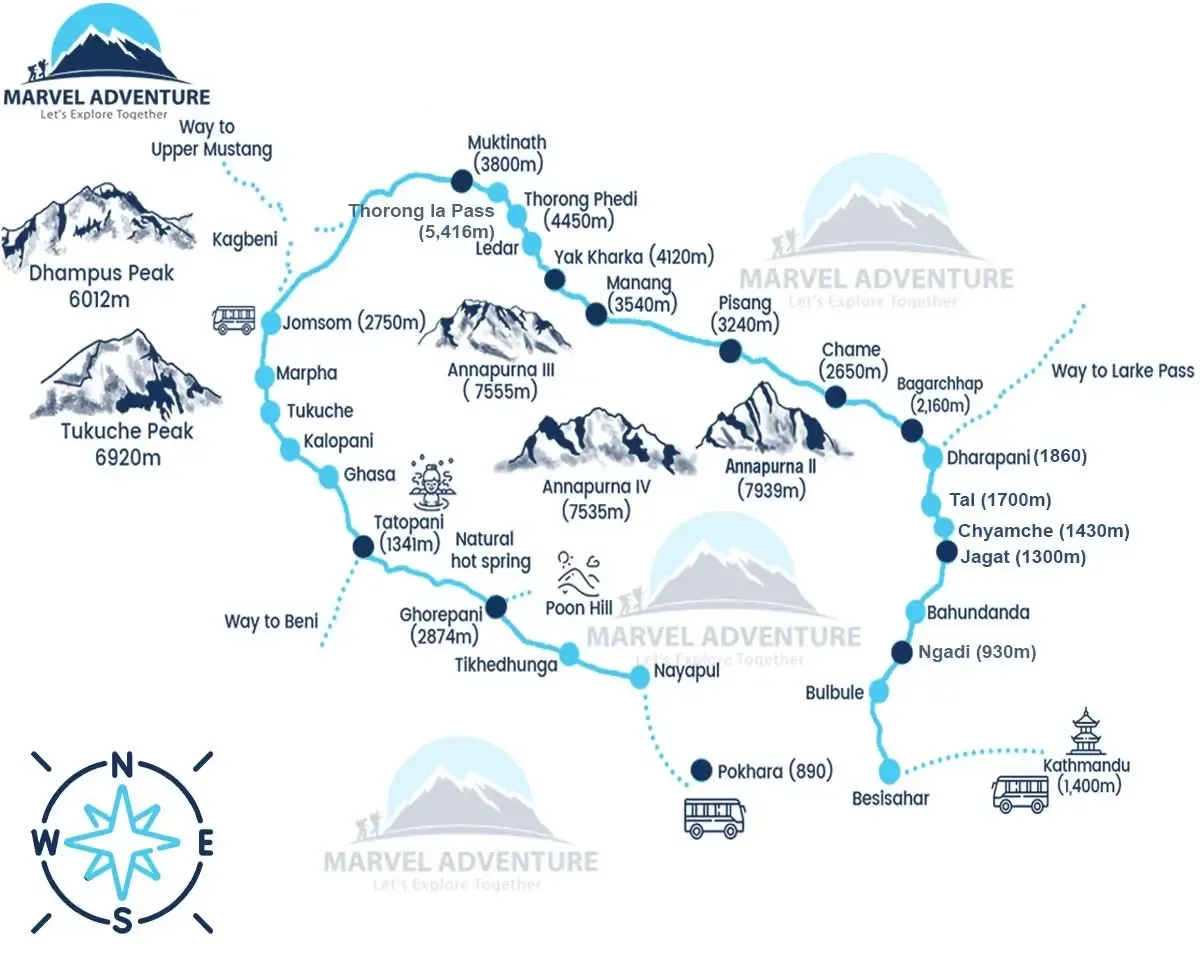
Typically, the trek begins with a drive from Kathmandu to Ngadi, followed by a trek to Chamje and onward through scenic places. Over 14 days, trekkers reach as high as Thorung La Pass, taking in breathtaking mountain views, descend to the sacred site of Muktinath, and trek to the famous Poon Hill before returning to Kathmandu.

Regarded as moderately difficult, the trek can be done by anyone with a good fitness level. A prior trekking experience is not strictly necessary. However, you must have a proper idea of what the trek entails - physical readiness, proper gear, and timely preparation. It ensures a safe, successful, and enjoyable journey.

Route Overview

While trekking the Annapurna Circuit, most trekkers choose the anticlockwise route. This allows for a gradual and steady ascent, making it easier to cross the Thorung La Pass (5,416m). It is the trek’s highest point that rests on the rim of the Tibetan plateau.

The journey begins with a scenic drive from Kathmandu to Ngadi. The route then makes a dramatic transition in geography and culture, where trekkers can see everything from terraced farmlands and waterfalls to alpine deserts and Tibetan-influenced villages.

Construction of new roads along the trekking route has affected the original trekking trail to some extent. Yet the charm of the Annapurna Circuit Trek remains intact. Along with that, there are alternative trekking routes in the area, offering a unique and diverse experience to the trekkers. Mountain biking is also gaining popularity in this area.

The mobile and internet connectivity is good, and the accommodation and food are plentiful. As such, the trekkers can expect an accessible yet challenging trek experience in this region.

Trip Highlights

  • Trek through diverse landscapes, including rice fields, green forests, arid deserts, and mountain passes
  • Experience rich traditions, food, and lifestyle of the Gurung, Thakali, Magar, and Manangi communities
  • Trek spans 160-230 km with multiple exit points and route options
  • Cross Thorung La Pass at 5,416m, one of the highest mountain passes in the world
  • Moderately difficult trek suitable for those with a decent fitness level
  • Spectacular views of the Annapurna ranges, Dhaulagiri, and Machhapuchhre
  • Year-round accessibility for trekking, with the best seasons in autumn and spring
  • Good access to roads, mobile/internet connectivity, and reliable accommodations and food options
Annapurna Circuit Trek Detailed Itinerary

Day 1

Drive to Ngadi (930m)

The first day of the Annapurna Circuit Trek starts from Kathmandu. It is a 7-8 hour drive to Ngadi of Lamjung district. The drive takes you through a beautiful route from Kathmandu, and you have to pass along the banks of the Trishuli and Marshyangdi Rivers.

The stunning road trip also passes through Besisahar, the headquarters of Lamjung district. From there, the ride to Ngadi is noticeably bumpy. So, settle into your seat and observe the unfolding landscapes that offer a taste of the trek ahead, winding through rugged terrain.

After driving the entire day, you arrive in Ngadi. The small village of Ngadi is often the first overnight stay point in this trek. It welcomes you with its cosy tea houses and lodges. Here, you can enjoy dinner and a restful night’s sleep before the real trek begins the next day.

Max Altitude: 930m (3,051ft)
Duration: 7-8 hours drive
Distance: 185 km
Meals: Breakfast, Lunch and Dinner
Accommodation: Teahouse
Mode of Transportation: Bus / Jeep
Day 2

Trek to Chamje (1,410m)

The destination for the second day is a trek to Chamje, a peaceful village nestled along the Annapurna Circuit. As you start the trek, you cross a suspension bridge from Ngadi and head to the small village of Bhaun Danda. Passing through terraced farmlands here, the uphill walk heads towards the villages of Ghermu and Syange. Along this beautiful section of the trekking trail, you witness waterfalls, subtropical forests, and snow-capped mountains, among other things.

One highlight en route is the dramatic cliff in Jagat, where you would want to stop and admire the Marsyangdi River flowing below. The cliffside beehives add to the trek’s wilderness. You arrive at Chamje after about 4 to 5 hours of trekking. You can check into a local tea house or lodge here and spend a relaxing night.

Max Altitude: 1,410m (4,625ft)
Duration: 4-5 hours
Distance: 11 km
Meals: Breakfast, Lunch and Dinner
Accommodation: Teahouse
Day 3

Trek to Bagarchhap (2,160m)

The trail ascends from Chamje as you hike through narrow and steep valleys along the Annapurna Circuit. The trek that begins early requires crossing Tal (1,700m) through a suspension bridge. The scenic village of Tal marks the entry into the Manang district. Along the way, you pass through rhododendron, bamboo, and pine forests. The route gradually opens to farmlands of wheat, barley, and potatoes.

Following this, a climb up stone staircases brings you to the village of Dharapani (1,860m). You will continue westward from here and pass through forests of fir and pine. Eventually, you reach the serene village of Bagarchhap. This is where you recharge for the demanding days ahead.

Max Altitude: 2,160m (7,086ft)
Duration: 6-7 hours
Distance: 14 km
Meals: Breakfast, Lunch and Dinner
Accommodation: Teahouse
Day 4

Trek to Chame (2,650m)

Chame, the headquarters of Manang district, is the final destination for the fourth day of the trek. Leaving behind Bagarchhap, the trail gradually ascends through pine and oak forest, leading to the village of Danakyu. The stunning views of Lamjung HimalAnnapurna II, and other majestic adjacent peaks accompany you along your trekking journey. Their view becomes clearer and more impressive as you reach Timang village following a steep climb. The raging Marshyangdi River is with you for much of the trek, adding to the exquisite landscape.

A short walk from Timang village through Thanchowk and Koto brings you to enchanting Chame. Here, you can rejuvenate in a natural hot spring after an exhausting trek. The stop is a combination of natural beauty at its prime, with a well-deserved rest. Spend the night in Chame before continuing to Lower Pisang the next day.

Max Altitude: 2,650m (8,694ft)
Duration: 5-6 hours
Distance: 15 km
Meals: Breakfast, Lunch and Dinner
Accommodation: Teahouse
Day 5

Trek to Pisang (3,240m)

Set off on the journey early by getting out of Chame and back on the trail on the fifth day. Following the Marshyangdi River, you walk through green fields before reaching a dense pine forest. Nearly an hour's walk will bring you to Bhratang, a village featuring an apple farm. You can try fresh apple juice along with tea, apple pie, and apple doughnuts here.

Now, you continue on the trail that goes up and down along cliffsides. You can see the Marshyangdi River below you as you tread the path that leads you to a suspension bridge. You cross the river via this bridge and ascend through the pine forests. After a nearly 45-minute-long ascent over the ridge, you reach Dhikurpokhari.

From here, you arrive at Lower Pisang walking through lakes, snowy slopes, and grass fields. If you reach your destination around midday, you can explore the surroundings for the remaining time. Otherwise, you can have dinner at the designated lodge and have a good night’s sleep.

Max Altitude: 3,240m (10,629ft)
Duration: 5-6 hours
Distance: 14 km
Meals: Breakfast, Lunch and Dinner
Accommodation: Teahouse
Day 6

Trek to Manang (3,519m)

Embark on a scenic and culturally rich trek from Lower Pisang to Manang on the sixth day of the Annapurna Circuit Trek. As you progress along the trek, you realise that this is one of the most beautiful and historic sections of the trek. The trek, following a breakfast at Lower Pisang, requires you to ascend to Braga, a traditional Himalayan village.

The highlight of the village is the Braga Monastery, also famous as Braga Gompa. It is the largest and oldest monastery in Manang. The monastery was built over 900 years ago. Inside, you can see a collection of Buddhist relics, ancient statues, and flags.

From there, you have to cross wooden bridges and trek along pine forests, yak pastures, prayer wheels, and Buddhist stupas. You arrive at Manang after a few hours’ walk from Braga. The otherworldly views of the Annapurna ranges, Gangapurna, and Chulu Peak welcome you with warmth and a deep sense of wonder in Manang.

Set down your backpack and prepare for a restful night in this mountain village while awaiting the next day’s exploration and acclimatization.

Max Altitude: 3,519m (11,545ft)
Duration: 6-7 hours
Distance: 19 km
Meals: Breakfast, Lunch and Dinner
Accommodation: Teahouse
Day 7

Acclimatization day at Manang

Manang is the first acclimatization point in your 14-day Annapurna Circuit Trek. You arrive here on the seventh day of the trek. While it is considered a rest day, light physical activities are encouraged to aid in acclimatization.

The day begins with a relaxed morning and a hearty breakfast, followed by the exploration of the surroundings of Manang. Popular short hikes in the area include treks to Khangsar and Gangapurna Lake. The trails also treat you to enchanting views of the Himalayan peaks.

The other activities you can opt for include: visiting local monasteries, the cultural museum, and, of course, the cafes over there.

The exploration and hike should be done to prepare your body for the upcoming higher altitudes, especially crossing the pinnacle of the trek, the Thorung La Pass.

After a day of cultural immersion and hiking, return to your tea house or lodge for a warm meal and rest.

Max Altitude: 3,519m (11,545ft)
Meals: Breakfast, Lunch and Dinner
Accommodation: Teahouse
Day 8

Trek to Yak Kharka (4,020m)

The trek from Manang to Yak Kharka takes you deeper into the mountainous terrain of the Annapurna region. After a restful acclimatization day in Manang, you continue on this trail. You have to ascend from Manang, leaving behind the gorgeous Marshyangdi Valley, heading to Ghunsang and Yak Kharka.

As you climb higher from Manang, the views of snowcapped peaks delight you. If lucky, you can spot herds of goats, mules’ caravans carrying loads, and yaks grazing in high pastures. One of the stops on the way is Ghunsang. The trek up to this location is quite challenging. Here, you can rest, use the bathroom, and refill water.

The route from Ghunsag winds along narrow paths and crosses suspension bridges. The mountain views always accompany you along the route. Eventually, you reach Yak Kharka, the perfect stop point for the day.

Some trekkers choose to head to Ledar for the stay. Meanwhile, you can also make a short walk to Ledar for acclimatization and return to Yak Kharka for the night’s rest.

Max Altitude: 4,020m (13,188ft)
Duration: 4-5 hours
Distance: 9.5 km
Meals: Breakfast, Lunch and Dinner
Accommodation: Teahouse
Day 9

Trek to Thorung Phedi (4,560m)

Today’s journey in the Annapurna Circuit is relatively short compared to previous days. If you trekked to Ledar from Yak Kharka the day before, your trek begins by retracing a section of the trail before continuing along the eastern bank of Jarang Khola. You need to cross a suspension bridge along the way and ascend a challenging stretch of trail before reaching Thorong Phedi.

The high-altitude meadow is surrounded by vertical cliffs. From here, you see many majestic peaks of the Annapurna range — Annapurna II, Annapurna III, Annapurna IV, Gangapurna, Thorong Peak, Tilicho Peak, Pisang Peak, and Chulu, to name a few.

Talking of the mountain wildlife, the area is known for spotting griffons, blue sheep, Lammergeyers, and the elusive snow leopard.

Since you arrive at your destination, the Thorung Phedi, in just three to four hours, you have ample time for the remainder of the day. This time should be used for acclimatization as preparation for crossing the Thorung La Pass.

Max Altitude: 4,560m (14,960ft)
Duration: 3-4 hours
Distance: 7.3 km
Meals: Breakfast, Lunch and Dinner
Accommodation: Teahouse
Day 10

Over Thorung La (5,416m) to Muktinath (3,760m)

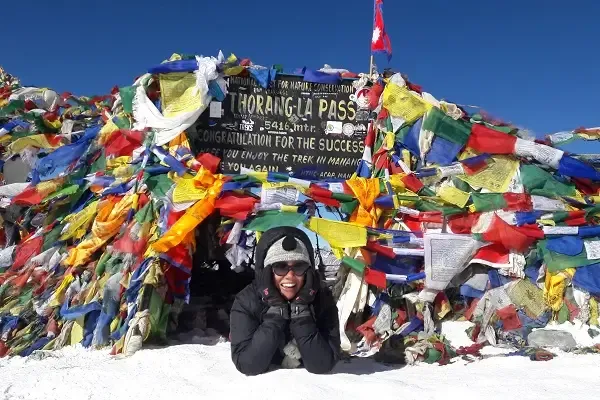
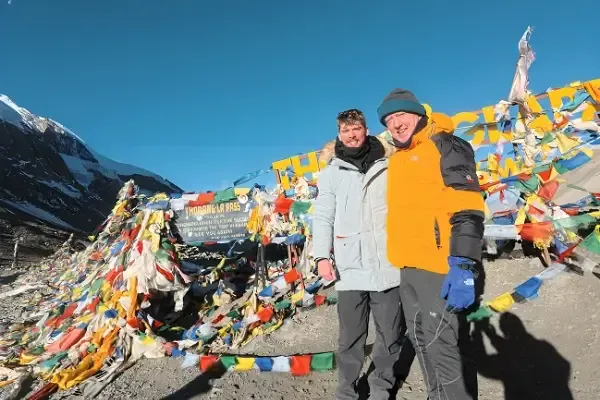
The tenth day of the trek is one of the most challenging yet rewarding experiences. You need to climb through a series of steep switchbacks as part of this trek. Your first stop en route is the Thorung High Camp. The next and most important destination is the Thorung La Pass. After all, it is the highest point of the entire trek.

It is believed that the Thorung La pass served as a historic trade route between Nepal and Tibet. Today, it has become a well-established trekking route on the Annapurna Circuit. Yet caution is essential as snowy and icy sections along the route can make the climb tricky.

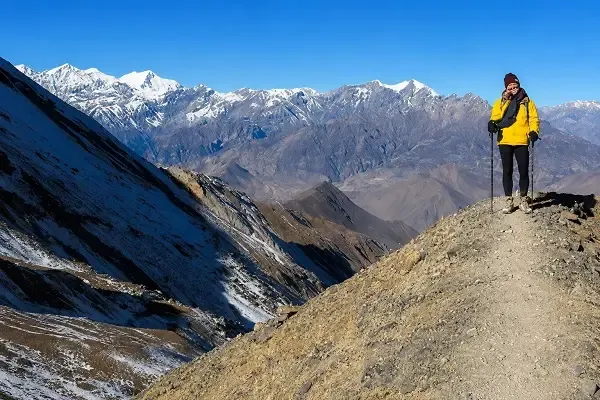
But the ascent is worth the effort as you will receive a cool and calm welcome from majestic peaks, including Annapurna massif, Gangapurna, Dhaulagiri, Tilicho Peak, to name a few. To enjoy this beauty in serenity, it is important to reach the Thorung La Pass before 10 in the morning. If it's delayed, the strong wind can make walking uncomfortable.

Now that you have soaked in the incredible mountain vistas and taken some photos, it's time to trek down to Muktinath, a pilgrimage site important for both Hindus and Buddhists. The Muktinath Temple offers a unique spiritual experience with its eternal flame. The flame is believed to have been burning for over 2,000 years. Pilgrims also bathe in the 108 water spouts here. They are famous as Muktidhara, and bathing here is believed to cleanse people of their sins.

Following the temple visit, you can head to a cosy tea house or lodge in Muktinath and reflect on your accomplishment of conquering one of the highest trekking passes in the world.

Max Altitude: 3,760m (12,335ft)
Duration: 6-7 hours
Distance: 14.5 km
Meals: Breakfast, Lunch and Dinner
Accommodation: Teahouse
Day 11

Drive down to Tatopani (1,190m)

The drive from Muktinath to Tatopani involves a significant descent that requires you to be prepared for the change in altitude. Typically, you drive down the route via jeep, witnessing the scenic Kali Gandaki Valley. Along the way, the beautiful and famous Rupse Falls greet you. The route also offers you interesting views of hillside villages and magnificent mountains.

Due to the challenging road conditions in this region, you are recommended to take a jeep tour. While other modes of transportation are also available, the jeep offers a safer and more comfortable experience, especially on rough and narrow sections of the trail.

Eventually, you reach Tatopani, an area known for natural hot springs. Once there, you realise the accommodation options are aplenty. Along with rejuvenating in the hot springs, you can also trek to nearby villages to make the most of your stay there.

Max Altitude: 1,190m (3,904ft)
Duration: 6-7 hours drive
Distance: 71 km
Meals: Breakfast, Lunch and Dinner
Accommodation: Teahouse
Mode of Transportation: Bus / Jeep
Day 12

Trek to Ghorepani (2,874m)

You are nearing the end of the Annapurna Circuit trek, but there is more to experience. The twelfth day offers a challenging yet enjoyable experience as you trek from Tatopani to Ghorepani. It makes one of the longest walking days of the trek and includes the biggest elevation gain, of nearly 1,700m.

You begin your day by setting off from Tatopani, passing through a checkpoint and ascending past traditional farmhouses and stone steps. One of the stop points for a short break could be the village of Ghara, if needed. Otherwise, you continue on the road, frequently looking back to enjoy the glimpses of the Kali Gandaki Valley opening up below you.

Shikha is another settlement along the route, where you can take a lunch break. The ascent becomes steeper from here as you need to climb stone stairs. You pass through villages like Gharkhola, Phalante, and Chitre. These villages are a reflection of the culture and lifestyle of the hill communities there.

The trail also takes you through forests filled with rhododendron, magnolia, and other native flora as you keep climbing lengthy stairs. Eventually, you arrive at Ghorepani, a popular hub for trekkers looking to complete the Ghorepani-Poonhill trek.

Ghorepani is home to the Magar and Gurung communities. You can choose one of the accommodations available there and rest after one of the difficult climbs of your journey.

Max Altitude: 2,874m (9,429ft)
Duration: 5-6 hours
Distance: 15.5 km
Meals: Breakfast, Lunch and Dinner
Accommodation: Teahouse
Day 13

Trek up to Poonhill (3,210m) and Trek down to Ulleri. Then drive to Pokhara

Wake up early in the morning and climb up to Poon Hill for the spectacular views of sunrise in the Himalayas. If you reach the top of the hill on time, you are blessed with a sweeping view of the Dhaulagiri and Annapurna mountain ranges. The golden glow of the sun spreading over the mountain peaks is something not to be missed.

Offering a complete view of the surrounding mountains and valley, Poon Hill proves to be a haven for photography enthusiasts. It is also a favorite destination for those interested in yoga and meditation. They tend to perform yoga and meditation here, facing the tranquil mountain landscapes.

After spending some time atop Poon Hill, you descend to Ulleri while retracing the walk past Ghorepani. Ulleri, a beautiful Himalayan village in the Annapurna region, is a common stopover in this trek. And this is the final trekking point in the Annapurna Circuit trek.

Ulleri has access to roads, and you can reach your next destination from here via bus, jeep, or other vehicles of your choice. To sum up, after trekking down to Ulleri and resting for a while, you drive to Pokhara.

As you drive ahead, you get farther from the remotest trails of the Annapurna region and nearer to the city chaos. The gradual change in elevation, landscape, and lifestyles of people along the route makes the shift noticeable. It takes around a four-five-hour drive from here to reach Pokhara. You are transferred to your hotel upon arriving in Pokhara. You feel a luxury experience here after treading along the remote areas and limited facilities for days. Get refreshed and take a stroll along the lakeside in the evening. Or immerse yourself in the nightlife of Pokhara, perfect for unwinding after your thrilling adventure.

Max Altitude: 820m (2,690ft)
Duration: 6-7 hours trek
Distance: 9.5 km
Meals: Breakfast, Lunch and Dinner
Accommodation: Teahouse
Day 14

Drive back to Kathmandu (1,400m)

This is the final day of the adventurous Annapurna Circuit trek. The journey comes to an end on the 14th day with a drive back to Kathmandu from Pokhara. You set off from Pokhara, leaving behind its natural heritage, including the tranquil Phewa Lake and panoramic mountain views.

The drive via a tourist bus takes you through Tanahun and Dhading, the mid-hill districts of Nepal. They are known for lush forests and plant diversity. You also retrace the banks of the Marshyangdi and Trishuli Rivers as you return to Kathmandu. En route, you are mesmerised once again with the pleasant views of terraced hillsides, rural settlements, and forested ridges.

Upon arrival in Kathmandu, you can go to your hotel. Now, depending on your energy level and health, you can decide whether you want to rest and recover. Sleep off all the tiredness or continue exploring the city — from the vibrant streets of Thamel and historic Durbar Square to the spiritual ambience of Boudhanath and Swoyambhunath Stupa.

Max Altitude: 1,400m (4,593ft)
Duration: 7-8 hours drive
Distance: 200 km
Meals: Breakfast and Lunch
Accommodation: Hotel
Mode of Transportation: Bus / Jeep
Have Questions? We're Here to Help
Like this itinerary but want to make a few changes? Every traveler is unique, and your journey should be too. Our local travel experts will design a personalized experience tailored to your interests, preferred pace, travel dates and budget.
Route Map & Altitude Profile

Cost Details

Includes

  • Airport pickup and drop-off by private vehicle
  • Standard meals (breakfast, lunch, and dinner) during the trek
  • Government license holder guide with local knowledge
  • Strong and helpful porter with proper equipment (1 porter for 2 people)
  • Salary, food, accommodation, and insurance for the guide and porter
  • Tea house/lodge accommodation during the trek
  • All the land transportation as per the itinerary
  • TIMS (Trekking Information Management System) card
  • Annapurna Conservation Area Project (ACAP) entry permit
  • One night standard Hotel in Pokhara on a BB basis
  • Comprehensive first aid kit with an oximeter to measure the oxygen level
  • Government taxes and official expenses

Dates & Availability

Aug 2026
Sep 2026
Oct 2026
Nov 2026
Dec 2026
Jan 2027
Feb 2027
Mar 2027
Apr 2027
May 2027
Jun 2027
Jul 2027
Aug 2027
Sep 2027
Oct 2027
Nov 2027
Dec 2027
Start Date
02 Aug, 2026
End Date
15 Aug, 2026
Status
Guaranteed
Price
US$1225
Start Date
05 Aug, 2026
End Date
18 Aug, 2026
Status
Guaranteed
Price
US$1225
Start Date
09 Aug, 2026
End Date
22 Aug, 2026
Status
Guaranteed
Price
US$1225
Start Date
12 Aug, 2026
End Date
25 Aug, 2026
Status
Guaranteed
Price
US$1225
Start Date
16 Aug, 2026
End Date
29 Aug, 2026
Status
Guaranteed
Price
US$1225
Start Date
19 Aug, 2026
End Date
01 Sep, 2026
Status
Guaranteed
Price
US$1225
Start Date
23 Aug, 2026
End Date
05 Sep, 2026
Status
Guaranteed
Price
US$1225
Start Date
26 Aug, 2026
End Date
08 Sep, 2026
Status
Guaranteed
Price
US$1225
Start Date
30 Aug, 2026
End Date
12 Sep, 2026
Status
Guaranteed
Price
US$1225

If there is only one person for the trip, there will be a USD 150 additional cost.

Meet Our Expert Guides

Phinjo Sherpa
Trekking Guide
Dibash Mainali
Trekking Guide
Dinesh Rai
Trekking Guide
Kumar Karki
Trekking Guide

Equipment List

Upper Body Layers
  • Breathable, quick-dry base layers
  • Comfortable t-shirts
  • Lightweight insulating jacket
  • Down jacket for cold conditions
  • Waterproof and windproof jackets
Lower Body Layers
  • Thermal base layer
  • Waterproof trekking pants
  • Comfortable pants for evenings in teahouses
  • Comfortable hiking shorts for warmer sections
  • Waterproof and windproof outershell for rain or snow
Footwear & Accessories
  • Trekking boots with ankle support (preferably Waterproof)
  • Multiple pairs of quick-dry socks
  • Warm socks for cold nights
  • Gaiters for snowy, muddy, or dusty trails
  • Trekking poles to reduce strain on knees
Head & Sun Protection
  • A hat or a cap to block the sun
  • Warm beanie for cold mornings and evenings
  • UV-protected sunglasses
  • Neck gaiter or buff to prevent dust, cold, and sunburn
  • Sunscreen (30-50+ SPF) for face and exposed skin
  • Lipbalm with SPF
Personal & Medical Kits
  • Personal medications
  • Diamox (Acetazolamide) for altitude sickness
  • Ointment
  • Hand sanitizers and wet wipes
  • Quick-dry towel
Travel Documents
  • Valid Passport
  • Passport-sized photos for permits
  • Travel insurance
  • Flight tickets
  • Cash in Nepali Rupees
  • Emergency contact details
Miscellaneous
  • Daypack (30-45L) with raincover
  • Reusable water bottles
  • Headlamps for early morning hikes
  • Water purifying tablet or filter
  • Phone or Camera for capturing the adventure
  • Powerbank for an easier charging option
  • Notebook, books, or cards for free time
  • Snacks like energy bars and chocolates
  • Drybag to keep your gear safe from rain

Essential Information

..

Why Trek the Annapurna Circuit?

The Annapurna Circuit trek is undoubtedly the classic and best trek in the world. Despite many other options for trekking available in Nepal, like the Everest Trek, Manaslu Trek, or the Lantang Trek, to name a few, it is still considered the best. And that is all for good reasons. You get a complete trekking experience in this circuit.

Geographical diversity

The Annapurna Circuit trek showcases diverse geographic regions of Nepal like no other trek. You start the trek from the lowlands with rice fields and subtropical forests. As you ascend this trekking trail, you see the landscape gradually transitioning to meadows, arid highlands, and high passes.

Some highlights of this diversity are listed below:

  • Expansive views of Annapurna, Machhapuchhre, and Dhaulagiri
  • Iconic landmarks like Thorung La Pass (5,416m) and Tilicho Lake
  • High mountain deserts and fertile valleys

Rich Cultural Experience

The climb from Ngadi to Thorung La Pass and descent to Muktinath leads you through villages inhabited by Gurung, Thakali, Magar, and Manangi communities, among others. Their culture and lifestyle offer a glimpse into Nepal’s cultural mosaic.

During the trek, you will be able to:

  • Experience authentic local life in homestays and tea houses
  • Savour traditional Nepali dishes like Dal Bhat, Thakali Thali and apple pie
  • Learn about history, culture, and other aspects of the region through monasteries, traditional architecture, and local festivals

Other Reasons

  • A moderately difficult trek suitable for experienced trekkers. The beginners can also try this with the necessary preparations
  • A variety of trek packages in the Annapurna region are available to suit different schedules and preferences
  • Relatively accessible and flexible trek due to good infrastructure, road access points, and different exit routes
  • More budget-friendly trek as compared to treks in other regions of the country
Trekking in Annapurna: Know the Region and Route

Located in Gandaki Province in north-central Nepal, the Annapurna region includes the Annapurna and Dhaulagiri mountain ranges. It lies within the Annapurna Conservation Area, the largest conservation area of Nepal.

This is the first conservation area of the country, covering a vast area of 7,629 sq km. It has the Marshyangdi Valley to the east and the Kali Gandaki River to the west. On its northern boundary lies Mustang, while the Pokhara Valley rests to the south.

The region is home to some of the world’s highest peaks, including Mt Annapurna (8,091m), the 10th highest mountain in the world, and Mt Dhaulagiri (8,176 m), located west of Annapurna I. A total of seven peaks rise above 7,000m in this region. It has 16 mountain peaks above 6,000m. The Kali Gandaki Gorge, the world’s deepest river gorge, cuts between Annapurna I and Dhaulagiri.

With such features, trekking in the Annapurna region offers a rewarding experience in the Himalayas of Nepal. Therefore, trekking in this region is equally popular amongst Nepalis and foreigners alike. The area was opened to foreigners for trekking in 1977. Since then, this area has been offering a plethora of trekking options for trek enthusiasts.

Today, the region offers diverse trekking options, like the short and long treks of the Annapurna Circuit. Other popular routes include Annapurna Base Camp Trek, Annapurna Panorama Trek, Ghorepani Poonhill Trek, Jomsom Muktinath Trek, Ghorepani Poonhill Ghandruk Trek, Dhampus Sarangkot Trek with Paragliding, Mardi Himal Trek, and Khopra Ridge Trek. Trekkers can also combine itineraries like Manaslu and Annapurna Circuit Trek or Annapurna Circuit Trek with Tilicho Lake.

The trekkers meet a mix of ethnic communities along the route, fertile farmlands, lush forests, and mountains, offering a unique and rich trek experience.

Annapurna Circuit Weather: Monthly Report

The trekkers visiting here should understand that the weather varies by season and by altitude. Like in most other trekking routes of the country, the best time to trek to the Annapurna Circuit is the peak seasons. Autumn and spring seasons are regarded as ideal for trekking in the classic route, as the weather is favorable for trekkers.

However, if you acquire proper knowledge about the weather conditions of the region and proceed with caution, you can trek at other times of the year, too. So, you need to make the preparations accordingly, as the trek is possible year-round.

Here is a month-wise weather report of the Annapurna region, helping you decide the best time to trek to Annapurna Circuit:

January

The temperature ranges from 10°C in lower regions to -20°C in higher elevations in January.

It is the coldest month of the year, yet you will love to see snow-covered landscapes along the route. But there are chances of the Thorung La Pass remaining closed due to heavy snowfall in January. If you have proper gear and want to trek in solitude without having to encounter many trekkers en route, January could be the month for you.

February

If you are equipped with insulated clothing and traction gear, then trekking on the Annapurna Circuit is possible in February. In this month, temperatures dip as low as -1°C to -14°C in alpine areas. Nonetheless, the skies are clear, offering good visibility, and the trails are quite unlike the peak season. But as the trail can be icy and covered with snow, you need to be careful while treading along the route.

March

March marks the beginning of spring, one of the best-suited months to trek to this region. The month greets you with blooming rhododendrons and clearer skies if you decide to be on the trekking trail. Temperatures also allow for a comfortable trek as they range from 15°C at lower altitudes to -10°C higher up. The crowd is also moderate during this month, making your trek less troublesome.

April

This is the best spring month for trekking as it boasts stable weather. Lower regions get warmer, with the temperature reaching up to 22°C. The higher points are still colder with temperatures around 5°C. The footfall, therefore, is high in April in the Annapurna Circuit due to favourable weather, good visibility, and rewarding views of the flora of the region.

May

May marks the arrival of pre-monsoon in Nepal; thus, you can expect occasional rain. Typically, you will see a warm and clear morning in May. The afternoons, however, can be hazy, obstructing the beautiful views of the mountains. On your trekking route, you can see the wildflowers blooming to their fullest. Talking about the temperature, it is up to 20°C in the lowland and 0°C in the highland.

June

Monsoon arrives in Nepal and in the Annapurna region. This month, the daytime temperature can rise as high as 30°C in valleys and 10°C in mountains. You will find a reduced number of trekkers on the trail during this month. You need to be wary of monsoon issues like rain, mud, and leeches. The risk of slippery trails and landslides persists. Yet many opt for this trek with caution.

July

If you decide to trek to the region in July, expect frequent rains and slippery trails. Due to cloud cover and heavy rainfall, the visibility is limited, obstructing your chance to see the majestic peaks. Do not forget that the July trek means trekking in the peak monsoon. Yet whenever the weather clears for shot durations, you can see mountain views. Temperature ranges from 18°C to 30°C during the day and reaches up to 6°C at night at higher elevations.

August

In August, the lower regions record temperatures of around 25°C, and higher areas have up to 5°C. This month too is also good for a solitary trek experience. Yet be wary of wet weather conditions and get ready with waterproof gear.

September

It marks the start of the autumn season in Nepal, offering clear skies followed by fading rain. Lower regions record temperatures as high as 15°C, while they reach up to 0°C in higher altitudes. September is suitable for trekking, in the sense that the weather and landscapes are perfect. One advantage, the trail is less crowded.

October

The days are dry and sunny in October. Mountain air is crisp. Temperatures are between 20°C and -5°C in the lower and higher elevations, respectively. All these factors are reasons this is a peak time for trekking. The Thorung La Pass is accessible and does not remain closed during this time. Crisp and dry weather add to the experience with clearer and stunning views of the landscapes.

November

The weather is cool and stable this month, allowing for a peaceful trek and scenic photography. That’s possible because of clear skies and thinning crowds in the region. As winter is approaching, the temperatures drop to -10°C in higher elevations. The lower areas record temperatures up to 10°C in November.

December

It is the time of snow and frigid temperatures at higher altitudes. While the higher areas record temperatures up to -20°C, the lower trails remain recorded between 5°C and -10°C. Snow on the trails makes the landscapes magical. But you might be denied a permit to go to the high pass, as it may be closed.

Overall, March to May and September to November are considered the best months to trek to the Annapurna Circuit.

Entry Permit for Annapurna Circuit Trek

As the Annapurna Circuit trek route falls in the Annapurna Conservation Area Project, one needs to take an entry permit before starting the trek. It is mandatory to carry the permit during the entire trip, as the authorities concerned might want to check it.

You need special permits in case you want to trek to areas regulated as restricted. The restricted areas include Upper Mustang and Nar Phu Valley.

Entry fee

  • Foreign nationals: 3,000
  • SAARC nationals: 1,000 (includes tax), an additional 2.9% applies to the online payment process
  • Permits issued at check-posts are charged double the fees
  • No permit required for children below 10 years of age
Annapurna Circuit Trek Difficulty Level

Annapurna Circuit Trek is a moderately difficult trek that begins from an elevation lower than 1,000m and requires you to go above 5,000m. During the expedition, you have to walk for four to eight hours every day, covering a distance of 7 to 17 km, depending on the route and your itinerary. Sometimes you need to opt for an elevation gain of more than 500m. Add to the unpredictable weather conditions of the Himalayas.

So, before you think of being a part of this trek, make sure you understand its difficulty level. The challenges and the level of difficulty are determined by several factors, including your prior trekking experience, physical fitness, terrain and weather, to name a few.

Here is a brief explanation of what determines the difficulty level during the trek and its impacts:

Past Trekking Experiences

The difficulty level along the Annapurna Circuit becomes more comfortable if you are an experienced trekker. As you will be traversing high altitudes, you must be used to walking long and strenuous hikes for an entire day. Otherwise, you might not be able to navigate the diverse Annapurna Circuit trails. Even if you are a novice, prepare yourself in advance for the trek with short treks and hikes. This practice will let you self-evaluate if you are ready to accept the challenges of the Annapurna Circuit.

Physical Fitness

Whether it is a trek to the Annapurna Circuit or any other trails of the world, physical fitness is an important factor. Your fitness level plays a major role in the success of your trek. Therefore, if you are someone trained for trekking, you will find this trek moderately difficult.

But for someone with no stamina, this trek can turn into a challenging affair. Lack of physical fitness means experiencing fatigue easily, being unable to walk at the pace of trained trekkers, and delayed recovery from exhaustion. These factors ultimately can affect your entire trekking itinerary.

To beat the challenging trek, you must train for at least three months physically so that you can complete the trek with an enjoyable experience.

Likewise, if you are not aware of using trekking gear properly and just set off for the journey, then you are heading for a failed mission. Good knowledge of the packing list eases your trek experience, helping you to succeed in the mission.

Weather Conditions

The weather in the Annapura region is not stable; it is rather unpredictable. You can make general predictions about the weather patterns for different seasons and months. But remember that the weather can change all of a sudden here. That is a general case of the weather in the Himalayas. It means you might face a sudden snowfall or a heavy rainfall. Temperatures can fluctuate, and fog covers add a problem to visibility issues.

Such factors at times force you to alter your route, and sometimes it is difficult even to trace the path. It leads to delays in your trek. These problems are mostly common in winter and monsoon, making the trek more challenging. But if you choose spring and autumn, there is a chance for you to avoid these challenges to an extent.

Health Issues

If you have any pre-existing medical conditions that can make it difficult for you to get involved in strenuous physical activities, then it can hinder the success of your trek. Trekkers need to get themselves checked to know whether they are fit for such journeys because of their health conditions.

Likewise, minor injuries are treated on the way and typically do not affect your trekking trip. But the trek also poses the risk of altitude sickness, as one needs to go above 2,500m. A proper acclimatization is required for the body to adapt to the changing altitude and its components, like oxygen level, thinning air, and more.

Despite that, one might suffer from altitude sickness as each human body responds to such changes differently. Getting altitude sickness means a delay or aborting the trek. You should watch out for its early symptoms like lightheadedness, nausea and vomiting, tiredness, insomnia, and shortness of breath.

Therefore, get a proper understanding of altitude sickness before embarking on this journey, and even get ideas on how to prevent it. Staying hydrated, walking at a gradual pace rather than rushing to cover more than the recommended distance, adequate rest, and a nutritious diet are some of the ways to do so.

Yet again, if you show symptoms of altitude sickness, you should inform the guide immediately. Your health comes before the trek.

Preparing for the Trek

If you want to trek to the Annapurna Circuit, prepare yourself to enhance your fitness level in all aspects, be it physical or mental. Get ready at least three months before the trek with the following guidelines:

  • Opt for a weekly training schedule for maintaining physical fitness
  • Try strength training like lunges, squats, wall sitting, and toes up, for strong legs
  • Go for stair running, high-knee, box jumps, burpees, and jumping jacks for your heart - it later helps your body function with less oxygen during the trek
  • Engage in a cardio workout a minimum of three times a week, with each session of one hour
  • Hike regularly
  • Set realistic expectations so the results do not disappoint you
  • For mental endurance, practice meditation, yoga, and mindfulness
  • Ensure your diet is nutritious, filled with lean proteins, good fats, green vegetables, and carbohydrates
Food and Drinks on the Annapurna Circuit Trek

The popular trekking destination in Nepal boasts good options for food and drinks. Trekkers can expect to choose from a range of local to international cuisine that offers variety.

Where to eat: Basic meals are available at the tea houses or lodges.

What to eat: Both the vegetarian and non-vegetarian options are available. For breakfast, you can try a breakfast set of bread, eggs, potatoes, tea, and coffee. You may also opt for Tibetan bread with jam or honey, paratha, pancakes, porridge, and French toast, to name a few. Lunch and dinner let you choose from the Nepali staple meal, Dal Bhat, along with popular momo, chowmein, thukpa, pizza, and pasta.

What to drink: Hot drinks like tea and coffee are available. Soft drinks are available too. But they are expensive. Soft drinks, along with alcohol consumption, are not recommended as they cause dehydration. The best drink is water, which you can consume boiled or filtered.

Note: Since the food items are carried by porters or horses in the remote areas, the variety is limited. Also, they get expensive due to the transportation cost. Plus, the menu has fewer options in the off-season than in the peak season.

Accommodation Options

Tea houses, lodges, and homestays offer accommodation services along the Annapurna Circuit. Generally, there is no problem in finding accommodations in this region. Yet peak seasons are the exception. Therefore, you should book them in advance to ensure you get a warm bed following a day-long trek. Don’t worry, we will take care of that!

Tea Houses: It is the most commonly available accommodation facility, especially in smaller villages. It typically has rooms with twin beds, bathrooms (usually shared), and a communal dining space. Some go beyond basic services and even offer facilities of a hot shower. You can get Wi-Fi access in some accommodations.

Lodges / Guesthouses: They are more comfortable than tea houses, are located in larger villages, and most often have private bathrooms and hot showers. If lucky, you might get free internet access as well.

Homestays: Along your trekking route, places like Ghorepani have facilities for homestays. This is ideal for those looking to indulge in local culture. You stay at the locals’ homes with their family in this service.

What to expect

  • Expect twin-sharing rooms with a bed, blankets, and some furnishing. Bring a sleeping bag for added warmth as well as for hygiene.
  • The most common bathroom features are: squat toilets and shared restrooms
  • Communal dining space
  • Hot showers are available after paying an extra charge
  • Internet access via Wi-Fi is not reliable. Rather, you can bring an NTC or Ncell SIM card and use mobile data.
  • Electricity is powered by solar or hydropower, as per availability. Charging stations are available in the common areas of the accommodation.
Guide and Porter: Are They Necessary?

In Nepal, it is mandatory to hire a guide if you are going for a trek. Hiring porters is optional. But for a safe, comfortable, and quality trek, both are essential. At Marvel Adventure, we offer experienced, licensed, and reliable guides. They are excellent communicators, well-known about the Annapurna Circuit, local culture, and history. Their English is fluent.

We have the provision of assigning one porter for two trekkers. They are strong and reliable and carry up to 25 kgs of luggage combined. You will find them supportive as you trek along the route.

Tipping is a well-established custom in Nepal’s trekking community. It is not mandatory, yet most trekkers choose to offer tips to the guides and porters in appreciation for their hard work throughout the journey.

Annapurna Circuit Trek FAQs

Do I need a guide for the Annapurna Circuit Trek?

Yes, foreign trekkers are generally required to trek with a licensed guide in Nepal. Honestly, guides also make the experience smoother because they handle pacing, accommodation, and trail logistics.

What permits are required for the Annapurna Circuit Trek?

You need the Annapurna Conservation Area Permit (ACAP) and the TIMS card for the trek.

What is included in the Annapurna Circuit Trek package?

Our package includes permits, guide service, accommodation, transportation, and sometimes meals. At Marvel Adventure, we always explain clearly what is included before the trek starts.

How much extra money should I carry during the trek?

It’s always smart to carry extra cash for Wi-Fi, charging, hot showers, snacks, drinks, and personal expenses. ATM access becomes very limited once you’re deeper into the trail.

Is the Annapurna Circuit Trek more crowded than Everest Base Camp?

Usually less crowded than Everest Base Camp, especially outside the peak villages. Many trekkers actually prefer Annapurna because the trail feels more varied and spacious.

Can I do the Annapurna Circuit Trek during winter or monsoon?

Yes, but conditions become more difficult. Winter brings snow near Thorong La, while the monsoon can make the lower sections muddy and cloudy.

Why book the Annapurna Circuit Trek with Marvel Adventure?

Based on our experience, trekkers appreciate having local guides who know the trail, weather, and altitude conditions well. At Marvel Adventure, we try to keep the experience flexible, safe, and comfortable rather than making it feel overly commercial.

Is the Annapurna Circuit Trek still worth doing after road construction?

Yes, absolutely. A lot of trekkers ask this before booking. Based on our experience at Marvel Adventure, the trekking trail still offers incredible mountain scenery, local villages, and cultural experiences. The road mainly affects certain lower sections, while the core trekking areas still feel very rewarding.

How difficult is the Thorong La Pass crossing?

Thorong La Pass is the toughest part of the trek. The climb starts very early in the morning, and the altitude makes everything feel slower and heavier. Most trekkers say the challenge is more about stamina and thin air than technical difficulty.

Is the Annapurna Circuit Trek suitable for beginners?

Yes, beginners with decent fitness can do it. From our experience, trekkers who walk slowly, stay hydrated, and listen to the guide usually complete the circuit comfortably.


How fit do I need to be for the Annapurna Circuit Trek?

You don’t need to be an athlete, but good stamina definitely helps. If you can handle multiple days of uphill walking and regular hiking before the trip, you’ll enjoy the trek much more.

What is the best time to do the Annapurna Circuit Trek?

Spring (March–May) and autumn (September–November) are the best seasons for trekking in Nepal. During these months, the weather is usually stable, and the mountain views around Thorong La are much clearer.

Can I add Tilicho Lake to the Annapurna Circuit Trek?

Yes, many trekkers add Tilicho Lake to the itinerary. If you are someone seeking extra scenery and has a few additional days available, we would definitely recommend adding Tilicho Lake to your itinerary.

How cold does it get near Thorong La Pass?

It gets very cold, especially early in the morning during the pass crossing. Temperatures can drop below freezing, and wind chill makes it feel even colder near the top. Make sure you have packed well for the cold weather.

Is altitude sickness common on the Annapurna Circuit Trek?

Yes, altitude sickness can happen, especially above Manang. Our guides regularly check trekkers for symptoms because one thing many first-time trekkers underestimate is how quickly altitude can affect energy levels.

How does Marvel Adventure help prevent altitude sickness?

We focus a lot on gradual ascent, proper acclimatization, hydration, and pacing. Our guides regularly monitor trekkers and adjust walking speed depending on how everyone is feeling.

What is the highest altitude of the Annapurna Circuit Trek?

The highest point is Thorong La Pass at around 5,416 meters. Reaching the top feels like a huge achievement for most trekkers.

Can the Annapurna Circuit Trek be shortened?

Yes, modern road access allows flexible itineraries. Some trekkers start from Chame or end at Jomsom, depending on time and preference. At Marvel Adventure, you can customize your itinerary based on your schedule and comfort.

What transportation is used during the Annapurna Circuit Trek?

We will be using tourist buses or private jeeps between Kathmandu, Besisahar, and the trek starting or ending points. Over the years, jeep access has made the circuit much more flexible than before.

Are jeep rides included in the trek itinerary?

Yes, jeep transportation is included depending on the package. At Marvel Adventure, we clearly explain transportation details before the trek begins.

What kind of accommodation is available during the trek?

The accommodation will mainly be in teahouses and mountain lodges. Villages in the lower sections offer more comfort, while higher places near Thorong Phedi become more basic due to the altitude.

Are attached bathrooms available during the trek?

You will have access to attached bathrooms in villages at the lower section of the trek, but they become limited as you gain altitude. You will usually find shared bathrooms at high mountain lodges.

Are hot showers, charging, and Wi-Fi available?

Yes, these services are available in most villages, usually for an extra charge. Trekkers need to understand that the connection becomes slower and less reliable at higher elevations.

What food is available during the Annapurna Circuit Trek?

You can easily find dal bhat, noodles, pasta, fried rice, potatoes, soups, pancakes, eggs, tea, and coffee throughout the route. Most trekkers end up loving dal bhat after a few trekking days.

Is drinking water safe during the trek?

You can easily get boiled water from teahouses along the trek. We recommend using filtered or purified water instead of drinking directly from taps. Many trekkers use water purification tablets or refill filtered water along the trail. Carry a reusable water bottle, as getting water bottles every time is not practical while you are in the mountains.

Price Per Person
US$1225
US$1225
All inclusive price
  • 2 - 4 paxUS$1225
  • 5 - 9 paxUS$1200
  • 10 - 20 paxUS$1150
Talk to Our Travel Experts

What Our Clients Say

October 24, 2025
Excellent and fun experience with guide Dinesh and porter Buddha

Just completed the Annapurna circuit and our guide Dinesh and porter Buddha were amazing. Could not ask for or imagine a better experience with a guide and porter. Dinesh was an excellent guide and took...

I
India M
United States
June 12, 2025
The best experience!!

I can’t put into words how wonderful my experience was in Nepal hiking the Annapurna Circuit Trek with Marvel Adventures. First off, Nir, the owner, organized everything so well and is very responsive. He picked...

n
nicoledarian88
Australia

You May Also Like

12 days annaurna circuit trek
Duration: 12 Days
5.0(6 Reviews)

12 Days Annapurna Circuit Trek

US$1200US$1200
Difficulty Level: Moderate
10 days annapurna circuit trek
Duration: 10 Days
5.0(2 Reviews)

10 Days Annapurna Circuit Trek

US$1175US$1175
Difficulty Level: Strenuous
8 days annapurna circuit trek
Duration: 8 Days
5.0(1 Reviews)

8 Days Annapurna Circuit Trek

US$1099US$1100
Difficulty Level: Moderate
Need Help? Call Us+977 986-0313572