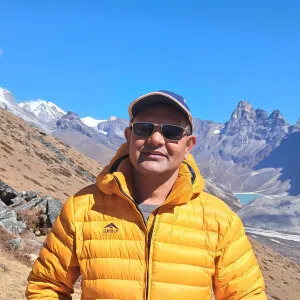

Nir Karki
Talk to an Expert (Nir Karki)
Last-minute Deals
Book Now
Price from
US$1350

Gokyo Renjo La Pass Trek

257 reviews
29 reviews
Duration
12 Days
Trip Grade
Moderate
Country
Nepal
Maximum Altitude
5,360m
Group Size
Min 2 pax
Best Time
Autumn (Sep-Nov) and Spring (Mar-May)

Every trail in the Everest region is challenging plus tricky, and so is the Gokyo Renjo La Pass Trek. This beautiful journey combines exploring Gokyo valley and crossing one of the three passes. The Gokyo and Renjo La Pass trek is a substitute for the mainstream 12 Days Everest Base Camp Trek. You escape the crowded routes and walk on a more peaceful path on this journey.

The Gokyo Renjo La Pass Trekking trails lie inside the Sagarmatha National Park of the Khumbu region. It resides in the eastern Himalayas of Nepal and near the Ngozumpa glacier. Gokyo and Renjo La Pass trek has enchanting features that make it an exclusive trip to the mountains. You can climb Gokyo Ri, visit the fourth and fifth lakes, and cross Renjo La Pass.

Gokyo Ri is a beautiful peak or viewpoint that lies above Gokyo village. It is famous for its sunrise view and marvelous sight of Lhotse, Makalu, Cho Oyu, and more. Similarly, the Gokyo Fourth Lake is called Thonak Tsho, and Fifth Lake is known as Ngozuma Tsho. During your acclimatization day, you visit these two beautiful lakes.

The trails also take you over Renjo La Pass, one of the high passes of the Khumbu region. The pass lies above 5000 m, so you enjoy the stunning view of Mount Everest, Nuptse, Lhotse, Makalu, etc. The Gokyo Renjo Trek begins with a flight to Lukla, and after breakfast, you walk to Phakding. From there, you move towards Namche and rest there before climbing to a higher elevation.

The next day, you move onward to Dole, then to Machhermo, and later, climb to Gokyo. Arriving at Gokyo, you have your lunch, hike to Fifth Lake, and, the next morning, summit Gokyo Ri for a sunrise view. After a marvelous time in Gokyo, you climb Renjo La Pass and descend to Lungden. The next day you head down to Thame and visit Thame monastery for prayer.

You then head down to Namche and then to Lukla the following day. You catch the morning flight to Kathmandu from Lukla and end the trip.

Best time for Gokyo and Renjo La Pass Trek

Spring and autumn have always been considered the best times for the Gokyo Renjo La Trek. Every year the Gokyo trails are packed during these seasons.

The months from March to April and September to November fall in spring and autumn. The stable weather and temperature are the major highlights of these months.

The visibility is clear, the hills have more greenery, the paths are colorful, and the mountains stand tall under the clear sky. Also, there are fewer chances of rainfall and snowfall, making the day walks comfortable.

The average temperature ranges between 11 to 18 degrees in spring, while it is about 7 to 14 degrees during autumn. The day is warm but the nights are chilly in higher regions.

Is Gokyo Renjo La Pass Trek Difficult?

Gokyo and Renjo La Pass Trek have moderate to hard level difficulty. It means the trek is suitable for both professional and novice trekkers as long as they have sound stamina and mind.

Walking each day up and down the rugged topography puts a toll on people's bodies and minds. If you are not prepared for the trek, you might lose the determination to complete it.

You need to walk at least 15 to 20 km daily for 5 to 6 hours to finish the trek peacefully. If you wish, add more days to make it easier and more relaxing. However, we do not recommend shortening the days as it might cause health-related problems, mainly for newcomers.

If Gokyo and Renjo La Pass Trek is your first trip to the mountains, be sure to have excellent build and strength. Do not visit the trails if you are doubtful or unprepared because doing so will only slow down the group.

Gokyo Renjo La Pass Trek Permits

Every trekking trail in Nepal requires one or more permits to enter a specific area, so the Gokyo Renjo La Pass Trek is no different. The Gokyo Renjo La routes reside in the Everest region, so you need to carry two permits:

Sagarmatha National Park entry permit: This permit is necessary to enter the national park and conservation area. You can buy this from Nepal Tourism Board in Kathmandu or Monjo. This permit costs about NPR 3000, USD 30 for foreigners, and NPR 1500, USD 15 for SAARC people.

Khumbu Pasang Lhamu Rural Municipality permits: This permit replaced the TIMS Card and is required to enter the different villages of the Khumbu region. You can buy this permit only from Lukla. It costs about NPR 2000, USD 20 for everyone.

P.S. All the fees are to be paid in Nepalese currency.

Trip Highlights

  • Adventure on the other side of Everest and scenic Khumbu at Gokyo valley
  • Gokyo Valley, a picturesque country enclosed within the range of high mountains
  • Enjoy scenic moments around the crystal clear and emerald lakes of Gokyo Valley
  • Hike to the viewpoint at Renjo-la with a stunning panorama of the world's highest peaks
  • Grand panorama of Everest, Cho-Oyu, Lhotse, and Makalu mountain range
  • Cultural and adventurous walks around the high and hidden areas of the Khumbu valley
Gokyo Renjo La Pass Trek Detailed Itinerary

Day 1

Fly to Lukla (2,860m) and Trek to Phakding (2,610 m)

Wake up fast and get ready for the Gokyo Renjo La Pass Trek. Your guide will come to pick you up early in the morning to catch the flight to Lukla from Tribhuvan International Airport.

Arriving at the airport, you complete the necessary formalities and board the plane to Lukla. After taking off, you get a splendid 360-degree view of rivers, hills, valleys, and mountains. Enjoying the marvelous scenarios, you reach Lukla airport, well-known for its narrow and small runway.

You fill your tummy and head north, walking out of the town through the stone stairs. Today, you lose altitude when trekking from Lukla to Phakding as the trails follow downhills along the Dudh Koshi River.

You continue walking down the main street and come across the Khumbu Pasang Lhamu Rural Municipality office. From there, you hike for an hour or so to reach Chheplung and cross over Thado Koshi using a suspension bridge.

You can witness Kusam Kanggru, one of the most challenging mountains to conquer, past the bridge. As you keep moving ahead, the trails lead you to Ghat, where you walk over a ridge marked with Mani stones.

The trail between Lukla and Phakding is a mix of stone pathways, rocky sections, and dirt, which is easy to maneuver. It is mostly downhill with some short uphill segments.

You come across several suspension bridges as you approach Phakding. This beautiful village lies at a lower elevation, with more greenery and a great view of the Dudh Koshi River.

Max Altitude: 2,610m (8,562ft)
Duration: 3-4 hours
Distance: 8 km
Meals: Breakfast, Lunch and Dinner
Accommodation: Teahouse
Day 2

Trek to Namche Bazaar (3,440 m)

After your overwhelming first night in the Everest region, you now head to your second-day destination, which is Namche Bazaar. Today's trek is challenging as you gain nearly 1200 m elevation at once.

You leave Phakding after breakfast and start by crossing the suspension bridge over the Dudh Koshi River. Then, passing small settlements, you reach the Khumbu Pasang Lhamu ticket-checking counter.

After checking your permits, you follow the stair paths through the jungle and alongside the river. If you are fortunate, you might see some endangered wild animals.

The trails have several small ups and downs until you reach Jorsale, where you have lunch. After a delicious meal, you verify your permits at the Sagarmatha National Park entry point and continue further.

From here, you keep following the steep uphill trails while viewing green valleys and snow-capped peaks in the distance. After a strenuous hike of a few hours, you arrive at Namche Bazaar, the Sherpa town, and the hub of the Khumbu district.

Namche is the gateway that leads to the different areas of the Everest region. This town is the last developed place with ATMs, cafes, western restaurants, Wi-Fi, and more.

Max Altitude: 3,440m (11,286ft)
Duration: 5-6 hours
Distance: 10.7 km
Meals: Breakfast, Lunch and Dinner
Accommodation: Teahouse
Day 3

Rest day at Namche Bazaar for acclimatization and excursion

Namche is a beautiful town that offers several side trips, making it the best place for acclimatization. During your stay here, you can visit the mini-museum which is 30 minutes away from the center.

The walk up to the museum offers a great bird's eye view of Namche, while the sight from the museum gives a great view of Lhotse, Nuptse, and more. Or you can hike up to Hotel Everest View for a more exciting adventure.

The trail to the hotel is a 3 to 4-hour-long uphill walk from Namche. You pass some traditional villages like Khumjung and make a zigzag hike through dirt paths and stairs.

Reaching the hotel, you have lunch here while enjoying the view of Mount Everest, Ama Dablam, Thamserku, and many more. You explore the village for an entire day and return to Namche for the night.

Max Altitude: 3,440m (11,286ft)
Meals: Breakfast, Lunch and Dinner
Accommodation: Teahouse
Day 4

Trek to Dole (4,200 m)

After breakfast, you leave the town and continue your trek towards Dole. You climb above it while following the flat trail beyond the Dudh Koshi River. You keep moving forward to Kyangjuma while viewing Kantega and Ama Dablam.

From Kyangjuma, you walk down the route to Sansa and follow the Gokyo signpost. You first make a steep ascent along the narrow paths and through the dense forests.

The trails keep ascending and lead you to Mong La, a small Rai village. From here, you climb uphill along the barren and rocky path while enjoying the scenic setting.

Then you make a steep decline along the dusty trail to Phortse Tenga, where you stop for lunch. The walks are fairly pleasant from here onwards, with gradual climbs through the rhododendron forest.

After walking for hours, you reach Dole, which emerges above the treeline. This village is a cluster of trekking lodges rather than actual homes. It offers a spectacular view of Khumbila and Tawache.

Max Altitude: 4,200m (13,779ft)
Duration: 5-6 hours
Distance: 11.5 km
Meals: Breakfast, Lunch and Dinner
Accommodation: Teahouse
Day 5

Trek to Machhermo (4,470 m)

You are already above the treeline, and the trails will only take you higher from here. After breakfast, you leave the village towards Machhermo. The walk between these places is straightforward with gentle climbs.

You start by ascending the trails to Lopharma while viewing Cho Oyu at a distance. Then, you gain elevation and trek through the forest while passing waterfalls.

During the walk, you might see mountain goats, musk deer, and pheasants. After walking for half an hour, you reach Luza and stop for lunch. Regaining your energy, you trek down to the river and slowly climb uphill toward Machhermo.

This beautiful village offers a breathtaking view of Taboche, Kajyori, Cholatse, and Cho Oyu.

Max Altitude: 4,470m (14,665ft)
Duration: 4-5 hours
Distance: 7 km
Meals: Breakfast, Lunch and Dinner
Accommodation: Teahouse
Day 6

Trek to Gokyo Lake (4,790 m)

You leave the beautiful village after a delicious meal. The trail separates from here as one crosses over the Dudh Koshi river towards Na, while another leads you to Gokyo, and you choose the latter.

The journey starts by ascending a small hill and walking over its edge while enjoying the exotic view of Cho Oyu in front and the Khantega gorge below. The valley keeps expanding with the routes to Pangram at 4390m beyond the ridge.

You then descend the trail down to the riverbank and continue taking a steep uphill path through the moraines of Ngozumpa glacier, the longest glacier in Nepal.

From here, you keep moving forward and reach Longpongo lake, followed by Raboche Tsho (the second lake) in the next half an hour or so. From Raboche, the trail separates as one path crosses the glacier to Thagnak, while another moves along the glacier and leads to Gokyo.

Taking the latter option, you gradually climb the trails and arrive at Gokyo. You have lunch here and leave your belongings in the lodge to continue towards Fifth Gokyo Lake.

You head north from the valley, gaining altitude, and reach Thonak Tsho (the fourth lake). Then, you follow the path, doing a gradual climb uphill to Ngozumpa Tso, the fifth lake.

The place offers a beautiful view of Mt. Cho Oyu, Ngozumpa glacier, Nuptse, Gyachung Kang, Everest, Lhotse, Makalu, and more. Enjoy the view and head down to Gokyo for the night.

Max Altitude: 4,790m (15,715ft)
Duration: 3-4 hours
Distance: 6 km
Meals: Breakfast, Lunch and Dinner
Accommodation: Teahouse
Day 7

Early morning hike to Gokyo Ri (5,357 m)

You spend another day in Gokyo to explore the beautiful valley and climb Gokyo Ri. The beautiful peak looms above the Gokyo village on the lake's northern edge.

Today starts with an early morning hike to the summit of Gokyo Ri to view the beautiful sunrise. The trials lead you uphill the hillside through the dusty and rocky path.

The routes are steep, with a gradual climb to the summit. You arrive at the top while it's still dark, so there will not be much to see. But once the sun begins to rise and shine over the peaks and valleys, it takes your breath away.

The sunrise view from Gokyo Ri is not to be missed, with the golden rays shining over the snowy peak. After a while, you get to enjoy the beautiful sight of Lhotse, Makalu, Cho Oyu, Ama Dablam, and more.

You capture the moments and stay there for some time, then descend to the village following the same route. You then have breakfast and explore the village and its nearby area.

The remaining day goes by exploring around and interacting with the villagers.

Max Altitude: 4,790m (15,715ft)
Meals: Breakfast, Lunch and Dinner
Accommodation: Teahouse
Day 8

Cross Renjo - La (5,360 m) and descend to Lungden (4,370 m )

The trek today is long as you cross over one of the three high passes. You leave the village after breakfast and start by gently climbing uphill over the grassy area.

The climb gradually becomes steeper as you continue walking uphill to the top. After trekking the steep complex trails, you are offered the panoramic view of Rolwaling, Tengo ragi Rau, etc., in the west, while Makalu, Everest, and Gokyo Lake in the east.

You spend some time admiring the beautiful scenarios and trek down to Lungden. The trails follow through a beautiful meadow to the Bhote Koshi River and continue alongside it.

Walking past yak caravans and several small settlements, you reach Lungden. The village shows you the unforgettable view of Lhotse, Taboche, and more.

Max Altitude: 4,370m (14,337ft)
Duration: 7-8 hours
Distance: 12 km
Meals: Breakfast, Lunch and Dinner
Accommodation: Teahouse
Day 9

Trek to Thame village (3,880 m) via Marlung

You begin the trek from Lungden to Thame after breakfast. You descend south of the trails peacefully along the river while passing stone houses. After walking for an hour or two, you reach Maralung and cross over the Bhote Koshi River.

You now follow the traditional route that Tibetan Traders used for centuries. From here, you enter the beautiful forest of rhododendron and descend to Taranga.

The trail winds you through the Langmuche Khola valley and leads you to Thame. The trek today is an excellent combination of stoic endurance and transcendent joy.

Arriving at Thame, you have lunch and head to the Thame monastery, where spiritual Buddhist practices are done. You get to see the beautiful views of Ama Dablam, Makalu, and more from here.

Max Altitude: 3,880m (12,729ft)
Duration: 6-7 hours
Distance: 13 km
Meals: Breakfast, Lunch and Dinner
Accommodation: Teahouse
Day 10

Trek to Namche Bazaar (3,440m)

Today's trek is mostly descended from Thame to Namche Bazaar, making the hike pleasant. It is a mixture of downhills, flat sections, and short uphill climbs in some parts.

Leaving the village, the trail takes you steeply down to the Dudh Koshi River. You then cross over it using a suspension bridge and enter the beautiful forest of rhododendrons and oaks.

You then gradually climb uphill for another couple of hours and descend to a valley. From there, you again cross over the river and come across a more forested area.

Then continue the walk for another hour or so, until you arrive at Namche Bazaar. You can refresh and roam around the town while enjoying the beautiful view.

Max Altitude: 3,440m (11,286ft)
Duration: 4-5 hours
Distance: 8.5 km
Meals: Breakfast, Lunch and Dinner
Accommodation: Teahouse
Day 11

Trek to Lukla (2,860m)

Today is your final day in the Everest region as you head back to Lukla from Namche. It is a long downhill walk through dense forests, suspension bridges, and past the villages.

Following the same trails back, your time inside the beautiful Sagarmatha National Park ends. You walk up and down several routes before you reach Lukla.

Lukla is a beautiful town of Sherpas; explore the place and enjoy the views of the Himalayas.

Max Altitude: 2,860m (9,383ft)
Duration: 5-6 hours
Distance: 19 km
Meals: Breakfast, Lunch and Dinner
Accommodation: Teahouse
Day 12

Fly back to Kathmandu (1,400m)

Today you wake up early and catch the flight back to Kathmandu. Looking at the beautiful scenarios, you leave the peaceful nature behind and return to the noisy city.

After landing at the airport, your Gokyo Renjo La Pass trek ends. We hope you had a fun time with TrekEBC and will remember us for other treks.

Max Altitude: 1,400m (4,593ft)
Duration: 35 minutes
Meals: Breakfast
Accommodation: Hotel
Mode of Transportation: Flight
Have Questions? We're Here to Help
Like this itinerary but want to make a few changes? Every traveler is unique, and your journey should be too. Our local travel experts will design a personalized experience tailored to your interests, preferred pace, travel dates and budget.
Route Map & Altitude Profile

Cost Details

Includes

  • Airport pick-up and drop-off by private vehicle
  • All Domestic flights and airport tax as listed in the itinerary
  • Standard meals (breakfast, lunch, and dinner) during the trek
  • Government license holder guide with local knowledge
  • A strong and helpful porter with proper equipment (1 porter for 2 people)
  • Salary, food, accommodation, and insurance for the guide and porter
  • Tea house/lodge accommodation during the trek
  • Pasang Lhamu Rural Municipality entry permit
  • Sagarmatha National Park entry permit
  • Comprehensive first aid kit with oximeter
  • Government taxes and official expenses

Dates & Availability

Aug 2026
Sep 2026
Oct 2026
Nov 2026
Dec 2026
Jan 2027
Feb 2027
Mar 2027
Apr 2027
May 2027
Jun 2027
Jul 2027
Aug 2027
Sep 2027
Oct 2027
Nov 2027
Dec 2027
Start Date
03 Aug, 2026
End Date
14 Aug, 2026
Status
Guaranteed
Price
US$1350
Start Date
06 Aug, 2026
End Date
17 Aug, 2026
Status
Guaranteed
Price
US$1350
Start Date
10 Aug, 2026
End Date
21 Aug, 2026
Status
Guaranteed
Price
US$1350
Start Date
13 Aug, 2026
End Date
24 Aug, 2026
Status
Guaranteed
Price
US$1350
Start Date
17 Aug, 2026
End Date
28 Aug, 2026
Status
Guaranteed
Price
US$1350
Start Date
20 Aug, 2026
End Date
31 Aug, 2026
Status
Guaranteed
Price
US$1350
Start Date
24 Aug, 2026
End Date
04 Sep, 2026
Status
Guaranteed
Price
US$1350
Start Date
27 Aug, 2026
End Date
07 Sep, 2026
Status
Guaranteed
Price
US$1350
Start Date
31 Aug, 2026
End Date
11 Sep, 2026
Status
Guaranteed
Price
US$1350

If there is only 1 person for the trek, it will cost an additional USD 150

Meet Our Expert Guides

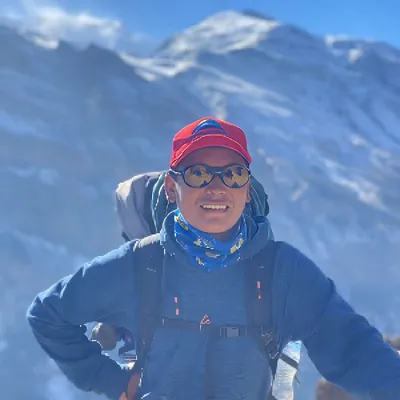
Khilaraj Nachhiring
Trekking Guide
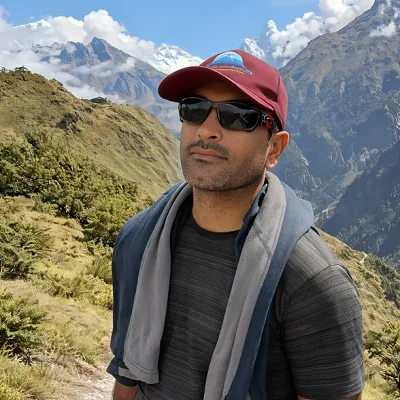
Phinjo Sherpa
Trekking Guide
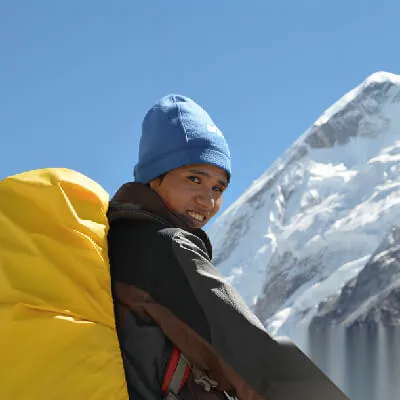
Kumar Karki
Trekking Guide
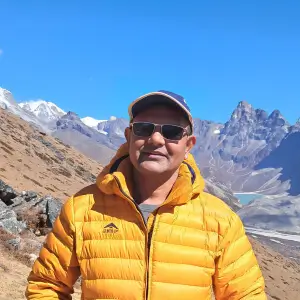
Dhana Tamang
Trekking Guide

Equipment List

Upper Body Layers
  • Breathable, quick-dry base layers
  • Comfortable t-shirts
  • Lightweight insulating jacket
  • Down jacket for cold conditions
  • Waterproof and windproof jackets
Lower Body Layers
  • Thermal base layer
  • Waterproof trekking pants
  • Comfortable pants for evenings in teahouses
  • Comfortable hiking shorts for warmer sections
  • Waterproof and windproof outershell for rain or snow
Footwear & Accessories
  • Trekking boots with ankle support (preferably Waterproof)
  • Multiple pairs of quick-dry socks
  • Warm socks for cold nights
  • Gaiters for snowy, muddy, or dusty trails
  • Trekking poles to reduce strain on knees
Head & Sun Protection
  • A hat or a cap to block the sun
  • Warm beanie for cold mornings and evenings
  • UV-protected sunglasses
  • Neck gaiter or buff to prevent dust, cold, and sunburn
  • Sunscreen (30-50+ SPF) for face and exposed skin
  • Lipbalm with SPF
Personal & Medical Kits
  • Personal medications
  • Diamox (Acetazolamide) for altitude sickness
  • Ointment
  • Hand sanitizers and wet wipes
  • Quick-dry towel
Travel Documents
  • Valid Passport
  • Passport-sized photos for permits
  • Travel insurance
  • Flight tickets
  • Cash in Nepali Rupees
  • Emergency contact details
Miscellaneous
  • Daypack (30-45L) with raincover
  • Reusable water bottles
  • Headlamps for early morning hikes
  • Water purifying tablet or filter
  • Phone or Camera for capturing the adventure
  • Powerbank for an easier charging option
  • Notebook, books, or cards for free time
  • Snacks like energy bars and chocolates
  • Drybag to keep your gear safe from rain

Essential Information

...

Difficulties Faced during Gokyo and Renjo La Pass Trek

Gokyo Renjo La Pass Trek takes you high in the mountains, so it will not be easy. You will face many known and unknown difficulties during the trip, and some of them are:

Altitude Sickness

Altitude sickness is always a concern if you are going for a high-altitude trek. The air is thin in tall places, so the oxygen level is also low, which causes acute mountain sickness for a few.

The Gokyo Renjo La Pass trek takes you above 5000 m for most of the journey, so the chances of AMS are higher. However, every person has a different build, so not every visitor suffers from altitude sickness.

Some regular signs of altitude sickness are headache, nausea, vomiting, breathing difficulty, sleep deprivation, dizziness, and more. The symptoms worsen with the illness and are fatal to your life, so the best advice is to inform your guide or companion.

If you are a solo traveler, do not continue the trek; instead, acclimatize where you are for a few days. If the symptoms do not decrease, then trek down to lower altitudes.

Finding Accommodation

Many might be confused about why finding accommodation will be difficult. If you have not traveled during peak season without booking, you won’t know about the tension and stress.

During spring and autumn, the routes overflow with trekkers, so no lodges or tea houses are empty. If you have no reservation, then you might not find any rooms on arrival.

Due to a lack of availability, many people sleep on the kitchen floor or in the lobby. Sometimes the lobby and kitchen are also packed, so people camp outside. Thus, finding accommodation is a problem during peak seasons.

Weather and temperature

Weather and temperature are other factors that can change the outcome of your Gokyo Renjo La Pass trek. This is a significant problem when traveling during winter and monsoons.

During the off-season, the weather and temperature are unfavorable to trekking in higher regions. Due to bad weather conditions, the trips can get delayed or halted mid-way.

There are occurrences of route blockage due to heavy snow in winter. Likewise, the trails are slippery, muddy, and wet during monsoons, making it hard to continue at some points.

Lousy weather conditions also affect your flight schedule as it does not operate at that time. So, the chances of a plane delay and cancellation are also high.

Tips for Gokyo Renjo La Pass Trek

You can’t change mishaps, but you can prevent them from happening, so we have mentioned a few tips to follow for Gokyo Renjo La Pass:

Acclimatize

The most important thing to do during a trek is to acclimatize. You should hold acclimatization for one or two days before reaching high elevation. So, when preparing an itinerary, choose the ones with more days.

Acclimatization is the best way to prevent altitude sickness. During rest days, you do not sleep all day; instead, you climb to higher places to let your body adjust to the current elevation.

Traveling to high places without acclimatization will be risky, even for professionals. So, be careful and do not fool around in the mountains.

Train before the Trek

Many people begin the trek without training their bodies and mind, so they quickly get sick or tired, thus losing motivation to walk further. So, we always recommend trekkers do physical exercises before starting the trek.

You do not need to hit the gym or hire a trainer for the exercises. Instead, you can do simple training like cycling, walking for 4 to 5 hours each day, hiking to high altitude places, swimming, and more.

You need to do exercises that build muscle and leg strength to increase stamina. These physical exercises can be done 2 to 3 weeks before the trek.

Carry a bottle and drink plenty of fluids

Another important tip is to carry a personal bottle for the Gokyo Renjo Pass Trek. The chances of dehydration are higher as you lose plenty of fluid in sweat, so always fill your bottle and carry it along with you.

Bottled water is available in the trials, but they cost triple the actual price. So, instead of spending more on bottled water, you can bring your bottle and refill water from the lodges at half the price.

Carry Cash

The rural areas of Nepal are still not developed and the parts in the Himalayas are worse, so you won’t find any ATMs or banks at higher elevations. The last atm is seen in Namche and it is broken most of the time.

So, before leaving Kathmandu, carry enough cash for your expenses like snacks, hot showers, etc. Moreover, exchange your bills and carry the equivalent cash as the people in the Himalayas do not accept dollars or other currencies except NPR.

Renjo La Pass Crossing

Altitude and approach

  • Renjo La sits at 5,360m, approached from Gokyo directly depending on your itinerary's pacing. It is a long, steady climb rather than a short sharp push.

What the crossing actually involves

  • No technical climbing gear is required, but the approach and descent both involve loose rock and, depending on season, packed snow or ice on the northern side. Trekking poles and proper boots matter more here than almost anywhere else on this route.
  • The descent into the Bhote Koshi valley toward Lungden is steep and can be harder on the knees than the ascent was on the lungs.

The view from the top

  • You get to experience a genuinely different panorama from Gokyo Ri with Everest, Makalu, and the Rolwaling range visible from a completely different angle, along with a clear look back across the Gokyo lakes you've just left behind.

Weather windows

  • Mornings are consistently the best window for the crossing, as the afternoon cloud and wind build quickly at this altitude, and an early start gives the best combination of visibility and calmer conditions.
Accommodation Throughout the Trek

Gokyo side teahouses

  • Reasonably well-established given how popular Gokyo has become. You can find twin-share rooms and shared facilities, with Gokyo village itself having the better lodges on this side of the trek.

Lungden and the Renjo La approach

  • Noticeably more basic than Gokyo with fewer lodges, simpler rooms, and limited menu options reflecting how much quieter this side of the loop is.

Thame and the descent

  • Accommodation improves again once you've crossed and descended toward Thame, a historic Sherpa village with decent lodges and a level of cultural interest that the standard EBC trail doesn't offer in the same way.

Final stretch back to Namche

  • Once you rejoin the main EBC trail near Namche, accommodation standard jumps back up considerably. There is a noticeable contrast after several days on the quieter Renjo La side.
Trail Conditions

Spring (March–May)

  • Generally good conditions on both sides of the loop, though late-season snow can occasionally complicate the Renjo La crossing into May. It's always worth checking conditions with your guide closer to departure.

Autumn (September–November)

  • The most reliable season for this specific combination. Autumn has stable weather for both the Gokyo Ri sunrise and the Renjo La crossing, with October offering the clearest visibility for both viewpoints.

Winter considerations

  • Renjo La can become genuinely difficult or temporarily closed after heavy snowfall. This route demands more flexibility in winter than a standard Gokyo-only trip would.

Monsoon

  • Cloud cover regularly obscures both the Gokyo Ri and Renjo La views during monsoon months, undermining the main reasons to do this specific combination. We would steer most trekkers toward the main seasons instead.
Your Support Team on a Loop Route

Why guide familiarity with both sides matters

  • Not every guide who knows the standard EBC trail well also has strong Renjo La and Bhote Koshi Valley experience. Ask specifically about this when booking, since the two sides of the loop demand different local knowledge. Marvel Adventure ensures proper licensed guide for both sides in every group.

Porter logistics on a loop

  • Porters need to be briefed on the full loop route rather than a simple there-and-back, since supply planning differs on the quieter Lungden side compared to the well-stocked Gokyo and Namche sections.

Safety considerations specific to the pass

  • Our guides carry extra attention on Renjo La day specifically. The combination of altitude, exposed terrain, and the all-day crossing means earlier turnaround decisions if weather or symptoms suggest it's the right call.

Gokyo Renjo La Pass Trek FAQs

What is the highest altitude reached during the trek?

The highest point is Renjo La Pass at around 5,360 meters. The pass day starts early, and once you climb above Gokyo, you really begin to feel the thin Himalayan air

How many days does the Gokyo Renjo La Pass Trek take?

Our standard itinerary takes 12 days, with proper acclimatization days. Some trekkers like adding an extra day in Gokyo because the scenery there is honestly one of the highlights of the entire Everest region.

What is the best time to do the Gokyo Renjo La Pass Trek?

Spring and autumn are the best times for this trek. During peak trekking seasons, the weather is usually more stable and the mountain visibility is excellent. Around late October, the lakes and mountain reflections can look unreal on clear mornings.

Is the Gokyo Renjo La Pass Trek harder than Everest Base Camp Trek?

Yes, generally it’s a bit harder than the standard Everest Base Camp Trek because of the Renjo La Pass crossing. But many trekkers say the quieter trails and scenery make the extra effort completely worth it.

Is altitude sickness common on the Gokyo Renjo La Pass Trek?

Altitude sickness can happen because several days are spent above 4,500 meters. Our guides regularly check how trekkers are feeling, especially around Gokyo and before crossing Renjo La Pass. Slow pacing makes a huge difference on this route.

Are Lukla flights included in the Gokyo Renjo La Pass Trek package?

Yes, Lukla flights are usually included in most Marvel Adventure packages unless stated otherwise. Depending on the season, flights may operate from Kathmandu or Ramechhap.

How fit do I need to be for the Gokyo Renjo La Pass Trek?

You don’t need to be an athlete, but good fitness definitely helps. If you can comfortably walk several hours a day with uphill sections, you’ll be fine. One thing many first-time trekkers underestimate is how much altitude slows down your normal pace.

How much does the Gokyo Renjo La Pass Trek cost in Nepal?

The cost depends on itinerary length, flights, group size, and accommodation preferences. Compared to classic Everest Base Camp packages, this trek usually costs slightly more because of the longer route and extra logistics around Gokyo and Renjo La.

What food is available on the trek?

You’ll find dal bhat, soups, noodles, fried rice, pasta, potatoes, pancakes, eggs, tea, coffee, and bakery items in many villages. Based on our experience, trekkers usually end up eating more dal bhat than expected because it gives steady energy at altitude.

What happens if Lukla flights are cancelled during the trek?

Honestly, Lukla delays are just part of trekking in the Everest region sometimes. Weather changes very quickly there. If flights get cancelled, Marvel Adventure helps rearrange flights or helicopter options whenever possible so trekkers are not left stressed and confused.

What should I pack for the Gokyo Renjo La Pass Trek?

Warm layers, a proper down jacket, waterproof gear, gloves, trekking boots, sunglasses, and a good sleeping bag are essential. Weather in the Everest region can shift very quickly, especially near Renjo La Pass.

Can you see Mount Everest from the Gokyo Renjo La Pass Trek?

Yes, you get incredible Everest views during the trek, especially from Gokyo Ri and Renjo La Pass. From our experience, the panoramic view from Gokyo Ri is actually one of the best Everest viewpoints in the entire Khumbu region.

What is the Gokyo Renjo La Pass Trek in Nepal?

The Gokyo Renjo La Pass Trek is one of those routes people usually discover after researching Everest Base Camp. It combines the turquoise Gokyo Lakes, quieter Everest trails, and the Renjo La high pass. Honestly, many trekkers at Marvel Adventure end up loving this route more because it feels less crowded and more peaceful overall.

How difficult is the Gokyo Renjo La Pass Trek?

The Gokyo Renjo La Pass Trek is categorized as moderately difficult. It's not a technical climb, but your fitness level and experience definitely come into play while determining the difficulty of this trek. We have had clients from teenagers to people in their 50s who have completed this trek.

Is the Gokyo Renjo La Pass Trek suitable for beginners?

Yes, beginners can do it if they prepare properly and maintain a steady pace. Based on our experience at Marvel Adventure, first-time trekkers who listen to their guide, hydrate properly, and don’t rush usually do surprisingly well on this route.

Price Per Person
US$1350
US$1350
All inclusive price
  • 2 - 4 paxUS$1350
  • 5 - 9 paxUS$1325
  • 10 - 20 paxUS$1275
Book This Trip
Talk to Our Travel Experts

What Our Clients Say

November 17, 2025
Gokyo and Renjo La

Top local agency in Kathmandu. Nir takes care of all problems and quickly finds solutions. The tour was very well organized, from helicopter flight to Farewell dinner. Good guide and strong porter, you can highly...

M
Michael H
United Kingdom
November 02, 2025
Gokyo lakes and renjo la pass

I had the time of my life travelling to Nepal and trekking up to Gokyo Lakes and Renjo la pass. Nir made the whole process super easy and helped with all I needed.
We...

T
Tallara
Argentina

You May Also Like

Best Selling Trek
everest base camp trek
Duration: 12 Days
5.0(31 Reviews)

12 Days Everest Base Camp Trek

US$1350US$1450
Inclusion
Difficulty Level: Moderate
everest base camp trek via gokyo lake
Duration: 13 Days
5.0(11 Reviews)

Everest Base Camp Trek via Gokyo Lake

US$1495US$1495
Difficulty Level: Moderate
10 days renjo la pass trek
Duration: 10 Days
5.0(1 Reviews)

10 Days Renjo La Pass Trek

US$1195US$1195
Difficulty Level: Strenuous
Need Help? Call Us+977 986-0313572