
Nir Karki
Talk to an Expert (Nir Karki)
Last-minute Deals
Book Now
Price from
US$1199

Salleri to Everest Base Camp Trek

257 reviews
29 reviews
Duration
14 Days
Trip Grade
Strenuous
Country
Nepal
Maximum Altitude
5,545m
Group Size
Min 2 pax
Best Time
Sep-Nov) and (Mar-May)

Are you looking forward to trekking through a fairly new, unexplored trail, rather than the 12 days Everest Base Camp Trek, without worrying about the flight issues to Lukla? If yes, then our special Salleri to Everest Base Camp Trek package might be the one you are looking for.

Everest region trekking generally starts with a short flight from Kathmandu to Lukla. But this package is slightly different, where you will take a scenic drive from Kathmandu to Salleri, the district headquarters of Solukhumbu. The long yet stunning drive offers spectacular views of lush green forests, rivers, gorges, terraced fields, and many other beautiful panoramas. 

As the trek actually begins from Surke, you first drive to Surke from Salleri. You pass through small streams, hilly gorges, beautiful pine and alpine forest, traditional villages, and an incredible backdrop. The close-up view of Numbur Himal as seen during the trek is something that you can only truly appreciate while trekking through this route. 

One of the best aspects of taking the Salleri to Everest Base Camp trek route is that it follows the original trail before the flights to Lukla took place. It also provides ample time to get acclimatized before heading to the trek.

The marvelous surrounding views and less-explored trail ultimately link with the usual trail. The trek goes on as you cross the suspension bridges and reach Sagarmatha National Park, a UNESCO World Heritage Site. 

Various flora and fauna such as blue pines, firs, rhododendrons, Himalayan monals, blood pheasants, and musk deer can be seen here. 

Sherpa culture is one of the finest attractions linked with the sublime Everest region. Namche Bazaar, Khumjung, and Tengboche are some of the glaring attractions of the Sherpa villages owing to their hospitality, ancient Buddhist monasteries, mani walls, and chortens.

Through the trail with glacial moraine, your journey reaches the Everest Base Camp via Salleri and Kalapatthar, which offer a majestic experience in the Everest region of Nepal. Relishing the jaw-dropping scenery of the sun rising from here is definitely an iconic moment of a travel tale. 

Marvel Adventure offers the Salleri to Everest Base Camp Trek with a professionally designed itinerary, licensed trekking guides, permits, and all other necessary arrangements. Join us and experience one of the most mesmerizing treks in the breathtaking Himalayas.

Trip Highlights

  • Drive from Kathmandu to Surke through rivers, forests, settlements, as well as the mid-hills of Nepal
  • Suitable for those looking for an alternative to Lukla flights that are prone to weather-related delays and cancellations
  • Quieter trails up to Chheplung before merging with the main route to the Everest Base Camp via Salleri
  • Trek through diverse ecosystems, allowing a chance to explore the biodiversity of Sagarmatha National Park
  • Opportunity to visit culturally rich and hospitable Sherpa villages featuring monasteries and prayer walls 
  • Ascent to the Everest Base Camp and witnessing a stunning sunrise view from Kalapatthar
  • Walk beside glacial rivers, across moraines, and near the Khumbu Glacier
Salleri to Everest Base Camp Trek Detailed Itinerary

Day 1

Drive from Kathmandu (1,400m) to Salleri (2,390m)

The first day of our Salleri to Everest Base Camp trek itinerary comprises a nearly 10-hour drive from Kathmandu to Salleri. Usually, you travel via jeep and pass through historic towns, rivers, and scenic landscapes before ending the day at Salleri, the gateway to the Solukhumbu region.

The drive starts with a morning departure from your hotel. You exit Kathmandu Valley via Bhaktapur, drive to Sanga, and pause at Dhulikhel for breakfast. You will see the traditional Newari towns while passing through these places.  

Continuing on the BP Highway, you drive via a newly blacktopped road offering a smooth drive. Passing through Nepalthok and Khurkot, you arrive at Ghurmi. This stretch requires you to drive along forested hills, rivers, and valleys. The Sun Koshi River runs parallel to the highway in several places.

From here, you join the Mid-Hill Highway of Nepal, popularly known as Madhya Pahadi Lokmarga. The road becomes narrower and hillier from here onwards, and you may experience some rougher sections, too. As you climb to higher altitudes, dense pine and rhododendron forests are abundant.

You may stop for snacks and fuel at Okhaldhunga Bazaar and then drive through remote villages, river crossings, and waterfalls. Finally, you arrive at Salleri and stay at a lodge overnight. Salleri Bazaar is a central market of the area with teahouses, lodges, and colorful shops.

Max Altitude: 2,390m (7,841ft)
Duration: 9-10 hours drive
Distance: 267 km
Meals: Breakfast, Lunch and Dinner
Accommodation: Lodge
Mode of Transportation: Jeep
Day 2

Drive to Surke (2,290m)

The second day of the trip involves another jeep drive through multiple sections of ascents and descents. Overall, you descend about 100m during the drive, yet the route is mostly a combination of ups and downs. The road is generally rough and gravelled after Salleri, so expect a bumpy ride through narrow roads and steep sections. 

After departing from Salleri, you drive towards Ringmo, from where you get to see views of Numbur Himal and the hills surrounding it. The drive also passes through Takshindo and Nunthala, a popular village along the route with basic lodging facilities.

Then head to Kharikhola from there, crossing suspension bridges over rivers, and then go further into the Khumbu region. Sparse hillside villages, pine and rhododendron forests, and terraced fields accompany you as you drive ahead. 

Following the paths adorned by waterfalls, stone houses, flags, and chortens, you finally arrive at Surke. This small village is the starting point for the Everest Base Camp trek via Salleri for those looking to skip the flights to Lukla. It sits just below Lukla, along the Dudh Koshi River.

Max Altitude: 2,290m (7,513ft)
Duration: 6-7 hours drive
Distance: 55 km
Meals: Breakfast, Lunch and Dinner
Accommodation: Lodge
Mode of Transportation: Jeep
Day 3

Trek to Phakding (2,610m)

The actual trek begins today. The route from Surke offers a quieter, less crowded alternative to the busy trail that starts in Lukla. 

You begin the trek by ascending out of the Surke village along the terraced fields and forest. Then, you climb steep sections with stone steps that lead up to the Sherpa village of Chaurikharka. Like every other Sherpa settlement in the Everest region, this place is also adorned by mani walls, chortens and prayer wheels.

From there, you need to descend to Chheplung, which is the first quick stop for a tea break. The main trail from Lukla merges at this point, and thus, you head to Phakding with fellow trekkers arriving from Lukla. 

You continue the trail that goes northeast and cross several suspension bridges. The path is easy and also takes you to another rich Sherpa village called Ghat.

Finally, you arrive at Phakding after passing through more small Sherpa villages, monasteries, chortens, and mani walls. This village sits on the riverside and features plenty of teahouses and lodges. 

Max Altitude: 2,610m (8,562ft)
Duration: 4-5 hours
Distance: 9 km
Meals: Breakfast, Lunch and Dinner
Accommodation: Teahouse
Day 4

Trek to Namche Bazaar (3,440m)

The fourth day’s trail follows the Dudh Koshi River and requires you to climb a steep path before reaching Namche Bazaar. It begins with the departure from Phakding, and the trail is made up of gentle ascents and descents. Suspension bridges add a thrilling element to today’s journey; you need to cross five of them.

You cross the first suspension bridge upon leaving Phakding and arrive at Benkar, a small village with waterfalls. There is a second bridge near Benkar. With beautiful views of Thamserku above, you make a gradual climb past terraced fields and chortens. Then you cross the third suspension bridge and arrive at Monjo. 

You step into the Sagarmatha National Park from this point. You need to stop here for verification of trek permits. Following a short rest, you descend to Jorsale, crossing the fourth suspension bridge of the day’s trek, and have your lunch.

Continue walking from here, going across the confluence of Dudh Koshi and Bhote Koshi rivers before climbing up to the famous Hillary Suspension Bridge. This is the fifth and highest suspension bridge that marks the steep ascent to Namche Bazaar. 

The climb is through pine forests that lead to a police checkpoint at Mislung before you arrive at Namche Bazaar. On a clear day, you can see the views of Everest from here.

Max Altitude: 3,440m (11,286ft)
Duration: 5-6 hours
Distance: 10.7 km
Meals: Breakfast, Lunch and Dinner
Accommodation: Teahouse
Day 5

Acclimatization Day at Namche

According to the Centers for Disease Control and Prevention, one may be at risk for altitude sickness if the person is traveling to an elevation higher than 2,400m. Acclimatization is important for preventing altitude sickness in such cases. That is why, as you will be at an altitude of 3,440m at Namche, you must spare one day for rest and acclimatization. 

The related activities for the day include a short uphill walk to the Sherpa Culture Museum. You can watch exhibitions on Sherpa culture, mountaineering history, and local wildlife on display there. This is also a viewpoint offering vistas of Everest, Lhotse, Ama Dablam, Thamserku, and Kongde Ri. 

In addition, the day requires you to trek to Hotel Everest View at an altitude of 3,880m. You can enjoy tea and coffee on its terrace, which also offers 360-degree views of the aforementioned peaks. The property is famous as being among the world’s highest-altitude luxury hotels.

Then, you descend to Khumjung and Khunde villages located at altitudes of 3,780m and 3,700m, respectively. You can visit the Khumjung Monastery, the Hillary School, and Khunde Hospital in these villages while passing through traditional Sherpa homes and stone-walled fields.

Ultimately, you descend back to Namche and explore the area for the remainder of the day before heading to the lodge for rest and preparation for the next day’s trek.

Max Altitude: 3,440m (11,286ft)
Meals: Breakfast, Lunch and Dinner
Accommodation: Teahouse
Day 6

Trek to Tengboche (3,867m)

The trek from Namche to Tengboche is a mix of easy and difficult trail sections. The start is easy as you climb out of Namche and arrive at Kyanjuma. It is a good rest stop that features teahouses. Then the route follows a steep descent through pine forests up to Phunki Tenga, a flat section near the river crossing. It is another rest point where you would want to pause before the upcoming climb to Tengboche. 

The ascent is the toughest section of the day, featuring steep switchbacks. The walk indeed is tiring, yet the well-built paths make the journey easier. 

As you near the top of your destination, you might also get glimpses of Ama Dablam. Once you enter the Tengboche area, the trail gradually flattens and takes you to a beautiful open meadow. 

One of the highlights of the place is the Tengboche Monastery, regarded as the largest in the Khumbu region. Not to forget are the spectacular views of snow-capped mountains that offer a good photo opportunity too. 

Meanwhile, before opting to rest at your designated lodge for the night, you might want to offer prayers at the monastery and explore the serene atmosphere there.

Max Altitude: 3,867m (12,687ft)
Duration: 4-5 hours
Distance: 9.2 km
Meals: Breakfast, Lunch and Dinner
Accommodation: Teahouse
Day 7

Trek to Dingboche (4,410m)

Today’s trek is moderate as you tread past a well-built and not technically difficult trail. You won’t need to climb steep trails like Namche to Tengboche. Yet it is not easy either, as the beginning requires you to go through a steep trail while descending to Debuche. You can see a nunnery along with a few teahouses here.

The descent, however, does not stop here, and you continue to hike downhill through pine forests and then cross the suspension bridge over Imja Khola. Now the course of the trek changes from here as you need to climb to Pangboche village, which is at an altitude of 3,930m. While the nature of the route keeps changing, what remains constant is the view of Ama Dablam. 

Pangboche, often used as a stop for tea and a brief rest, is famous for the region’s oldest monastery, the Pangboche Monastery. You continue ascending from here as you pass through the villages of Shomare and Orsho. Enjoy the views of alpine terrain and vegetation while watching for blue sheep, eagles, and other mountain wildlife. 

Now, you pass the junction and choose the right side of the path that splits from Pheriche. A gradual uphill walk from there, after crossing a wooden bridge, finally brings you to Dingboche, your destination for the day.

Rest and relax at the lodge, looking forward to the next day in Dingboche.

Max Altitude: 4,410m (14,468ft)
Duration: 5-6 hours
Distance: 10.5 km
Meals: Breakfast, Lunch and Dinner
Accommodation: Teahouse
Day 8

Acclimatization Day at Dingboche

You have climbed about 960m since your first acclimatization at Namche. Therefore, the eighth day of the trek demands another acclimatization break.

What to do on this day? First hike to Nangkartshang Peak with a maximum elevation of 5,083m. It is a moderate trek with steep elevation gain. The hike begins with a gradual climb followed by a sharp ascent towards the top. From the top, you can see fantastic views of Island Peak, Makalu, Lhotse and Ama Dablam along with the lakesides of Imja Valley.

Despite the elevation gain of over 600m during this hike, you need to take it as the acclimatization principle follows the rule of ‘climb low, sleep high’. This is a way to train your body to get used to thin air. Therefore, you descend to Dingboche from the peak.

You can spend the remaining time exploring the area that is also known as the ‘summer valley’ of the region, for its warmer and sunnier weather. Bakeries and small internet cafes are some places to enjoy a drink and relax. After that, you can rest for the day while getting ready for the next day’s ascent.

Max Altitude: 4,410m (14,468ft)
Meals: Breakfast, Lunch and Dinner
Accommodation: Teahouse
Day 9

Trek to Lobuche (4,940m)

After an early breakfast, you step out of Dingboche through the trail that features an easy uphill section. Walking through open alpine meadows for about 2 hours, you arrive at Dughla, also known as Thukla. It is a small settlement with few teahouses at the base of a moraine.

You can have your lunch at this stop and then climb to Thukla Pass. The route to the pass that is above Dughla is steep and zigzag. It becomes rocky, especially on the climb to the Thukla Memorial area. Here, you can see memorial cairns of climbers like Rob Hall and Scott Fisher, among others, who lost their lives on Everest. You may also see Taboche and Cholatse from this point.

The trek continues from here with a gradual incline over rocky terrain before arriving at Lobuche. You need to pass through yak pastures and glacial steps as well.

Finally, you arrive at Lobuche, a small settlement with stone lodges and teahouses. The view of Nuptse is best from here, along with a clear view of Khumbu Glacier located below it. 

Max Altitude: 4,940m (16,207ft)
Duration: 5-6 hours
Distance: 8 km
Meals: Breakfast, Lunch and Dinner
Accommodation: Teahouse
Day 10

Trek to Gorakshep (5,164m) and Hike to Everest Base Camp (5,364m)

You arrive at your destination, the Everest Base Camp, on the tenth day of the trek. To accomplish the goal of touching the foothills of Everest, you should start early. Following a breakfast at Lobuche, head for a gradual incline along a rocky and uneven path. 

There are some short, steep inclines as well. Passing through them along with glacial debris and boulders, you reach Gorakshep. It is a seasonal settlement on a sandy basin. Towering mountains surround it.

The first leg of the trek ends here as you check into a teahouse and have your meal of the day. The next leg is the ascent to Base Camp. Leaving extra gear at the teahouse, you head to your ultimate goal. 

The trail does not have steep climbs. Instead, you need to go through ups and downs constantly, which can make you tired. Cairns, poles, moraines, and loose rocks are the features of this trail. As you go higher, you start seeing views of Khumbu Icefall, glacial ponds, icy formations, and crevasses.

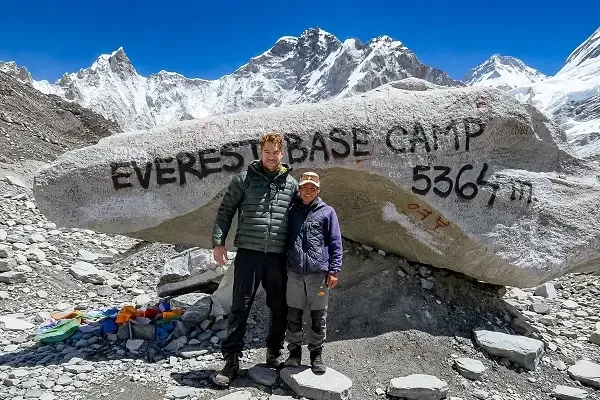
Once at the Everest Base Camp, you can get closer views of the Icefall along with Nuptse and Pumori peaks. You must have heard that you won’t see the peak of Everest from here, and the sight is for the next day to enjoy.

But whatever you see here is a lot for you to explore — from the views of different mountain ranges to prayer flags, marker stones, and expedition tents of multiple hues.

Rest here, hydrate sufficiently, and take photos to your heart’s content before walking down to Gorakshep, where you spend the night.

Max Altitude: 5,164m (16,942ft)
Duration: 7-8 hours
Distance: 13 km
Meals: Breakfast, Lunch and Dinner
Accommodation: Teahouse
Day 11

Hike to Kalapatthar (5,545m) and Trek down to Pheriche (4,371m)

Kalapatthar, located at an altitude of 5,545m, is the highest elevation you reach during the trek. This is a viewpoint that offers the best views of the Everest summit and a beautiful sunrise above it.

As the objective is to make it to Kalapatthar to see the sunrise, you need to start early. Go steep uphill from Gorakshep in the cold morning. The path is sandy and rocky. It also requires you to pass through switchbacks up a ridge. The final section makes you navigate over large stones before reaching its summit. 

Upon reaching there, you feel the hard work has paid off, thanks to the unparalleled close-up view of the summit of Everest. You would want to capture the golden rays of the sun rising over Everest as well as Lhotse, Nuptse, Pumori, and Ama Dablam, forever. Take out your camera and make the most of each moment there.

After photos and rest, walk down to Gorakshep for breakfast, and then retrace your steps to Lobuche. Once again, you walk down past the Thukla Pass memorial. After Thukla, you, however, head to Pheriche, leaving the trail that goes to Dingboche. 

Traversing through rocky and dusty paths and grassy flats, you arrive at Pheriche. After spending a night over 5,000m in Gorakshep, Pheriche turns out to be a warm relief. You feel the temperature is warmer and the air is rich in oxygen here. 

Located opposite Dingboche, the small settlement of Pheriche is known for the aid post (for altitude-related issues) of the Himalayan Rescue Association. 

Max Altitude: 4,371m (14,340ft)
Duration: 6-7 hours
Distance: 13 km
Meals: Breakfast, Lunch and Dinner
Accommodation: Teahouse
Day 12

Walk back to Namche (3,440m)

An early breakfast in Pheriche is followed by a downhill hike to Namche Bazaar. Retracing your path, you walk down to Namche. Expect the trek to last about 7 to 8 hours. 

Starting with a gradual descent, you rejoin the main trail near Pangboche and also pass through the ancient Pangboche Monastery. 

The trek continues down to Debuche as you walk along the rhododendron forest before crossing the suspension bridge over Imja Khola.  It follows a brief climb to Tengboche and a deep descent to Phunki Tenga. 

You need to cross the river once again before climbing to Kyangjuma. Then you walk towards Namche. Upon your arrival at Namche, you rest at the lodge. 

You need to start early, as the twelfth day requires trekking for long hours. The descent can be difficult, and you may need to use trekking poles for steep descents, especially into Phunki Tenga. 

Going down may be easier than climbing up, yet it is still demanding. So, do not forget to stay hydrated and to take frequent breaks to ensure a smooth trek.

Max Altitude: 3,440m (11,286ft)
Duration: 6-7 hours
Distance: 14.3 km
Meals: Breakfast, Lunch and Dinner
Accommodation: Teahouse
Day 13

Trek down to Surke (2,290m)

Today, you depart from Namche Bazaar following your breakfast. The trek begins with a descent through steep stone steps along the pine and rhododendron forests. 

Crossing the suspension bridge over the Dudh Koshi River, you follow the main trek trail past the villages of Monjo and Benkar. Mani walls and waterfalls are some of the highlights along the route. 

Once again, you are at Phakding, where you spent your night when starting the trek. The return journey doesn’t let you stay here. Instead, you will walk past Ghat village and reach Chheplung. 

It is the point from which the trail branches off to Surke and Lukla. You head to Surke, which requires a descent unlike the ascent required for Lukla. This route is best for those who want to avoid Lukla completely and continue their road journey.

 After walking for about 6 to 7 hours, you are at Surke, a small and quiet village where you will stay for the night. This segment of the Salleri to Everest Base Camp trekking route completes your mountain walk and takes you to your return journey via road.

Max Altitude: 2,290m (7,513ft)
Duration: 7-8 hours
Distance: 20 km
Meals: Breakfast, Lunch and Dinner
Accommodation: Lodge
Day 14

Drive to Salleri (2,390m)

You need not walk today, as it is a drive from Surke to Salleri. It offers relief to your tired body from trekking.

Following breakfast, the jeep carrying you descends to Chaurikharka, Paiya, and then to Kharikhola via a rough track. The road is steep and narrow in this section. 

The drive then takes an uphill route from Kharikhola and passes through hillside terraces. Then you arrive at Nunthala, passing through the small settlements of Ringmo and Jubing. You need to drive on the road that winds through forests and farmlands in this section. 

The road continues to be dusty and bumpy as you drive to Salleri. Climbing further, you arrive at Salleri, the rest stop for the day. 

During this drive, you might get irritated by the rough roads. Yet the quieter and off-beaten path, as compared to Lukla, adds to your travel experience. Not to forget the stunning views of valleys, hillsides, and snow peaks. 

During this return trip, you get the last chance to admire the rugged terrain that you conquered during the Everest Base Camp trek via Salleri.

You stay at a Lodge in Salleri as you look forward to the smoother drive to Kathmandu the next day. 

Max Altitude: 2,390m (7,841ft)
Duration: 6-7 hours
Distance: 55 km
Meals: Breakfast, Lunch and Dinner
Accommodation: Lodge
Mode of Transportation: Jeep
Day 15

Drive to Kathmandu (1,400m)

Bidding goodbye to your two-week-long Salleri to Everest Base Camp trek, you return to Kathmandu on the fifteenth day. As you are traveling by road, the departures are pretty early. That is also because the drive duration is long, and you want to arrive in Kathmandu on time. 

From Salleri, your ride takes you to Okhaldhunga, then heads to Ghurmi and Khurkot before reaching Kathmandu. The roads are well-paved and offer a smooth ride as compared to the previous day’s road travel. 

Driving through beautiful hills, rivers, and terraced farms, you arrive at a warmer elevation in Kathmandu. You are then dropped off at your hotel, where you can rest and rejuvenate while celebrating the milestone of your adventure journey.

Max Altitude: 1,400m (4,593ft)
Duration: 9-10 hours
Distance: 267 km
Meals: Breakfast and Lunch
Accommodation: Hotel
Mode of Transportation: Jeep
Have Questions? We're Here to Help
Like this itinerary but want to make a few changes? Every traveler is unique, and your journey should be too. Our local travel experts will design a personalized experience tailored to your interests, preferred pace, travel dates and budget.
Route Map & Altitude Profile

Cost Details

Includes

  • Airport pick-up and drop-off by private vehicle
  • All land transportation as per the itinerary
  • Domestic flight back to Kathmandu from Lukla
  • Standard meals (breakfast, lunch, and dinner) during the trek
  • Government license holder guide 
  • Strong and helpful porter with proper equipment (1 porter for 2 people)
  • Salary, food, accommodation and insurance for guide and porter
  • Tea house/lodge accommodation during the trek
  • Fresh fruits every night after dinner
  • Sagarmatha National Park entry permit
  • Pasang Lhamu Rural Municipality Entry Permit
  • A comprehensive first aid kit with an oximeter to monitor the oxygen level
  • Government taxes and official expenses

Dates & Availability

Aug 2026
Sep 2026
Oct 2026
Nov 2026
Dec 2026
Jan 2027
Feb 2027
Mar 2027
Apr 2027
May 2027
Jun 2027
Jul 2027
Aug 2027
Sep 2027
Oct 2027
Nov 2027
Dec 2027
Start Date
03 Aug, 2026
End Date
16 Aug, 2026
Status
Guaranteed
Price
US$1199
Start Date
06 Aug, 2026
End Date
19 Aug, 2026
Status
Guaranteed
Price
US$1199
Start Date
10 Aug, 2026
End Date
23 Aug, 2026
Status
Guaranteed
Price
US$1199
Start Date
13 Aug, 2026
End Date
26 Aug, 2026
Status
Guaranteed
Price
US$1199
Start Date
17 Aug, 2026
End Date
30 Aug, 2026
Status
Guaranteed
Price
US$1199
Start Date
20 Aug, 2026
End Date
02 Sep, 2026
Status
Guaranteed
Price
US$1199
Start Date
24 Aug, 2026
End Date
06 Sep, 2026
Status
Guaranteed
Price
US$1199
Start Date
27 Aug, 2026
End Date
09 Sep, 2026
Status
Guaranteed
Price
US$1199
Start Date
31 Aug, 2026
End Date
13 Sep, 2026
Status
Guaranteed
Price
US$1199

If there is only one person for the trip, there will be USD 200 additional cost.

Meet Our Expert Guides

Khilaraj Nachhiring
Trekking Guide
Phinjo Sherpa
Trekking Guide
Dinesh Rai
Trekking Guide
Dhana Tamang
Trekking Guide

Equipment List

Trekking for over two weeks requires you to carry all the basic personal and trek essentials either in your backpack or luggage. The items should comprise everything from clothes needed to deal with changing weather to trekking gear to personal care items.

Here are some suggestions on what you need to bring with you during the Salleri to Everest Base Camp trek so that you can pack accordingly: 

Upper Body Layers
  • Breathable, quick-dry base layers
  • Comfortable t-shirts
  • Lightweight insulating jacket
  • Down jacket for cold conditions
  • Waterproof and windproof jackets
Lower Body Layers
  • Thermal base layer
  • Waterproof trekking pants
  • Comfortable pants for evenings in teahouses
  • Comfortable hiking shorts for warmer sections
  • Waterproof and windproof outershell for rain or snow
Footwear & Accessories
  • Trekking boots with ankle support (preferably Waterproof)
  • Multiple pairs of quick-dry socks
  • Warm socks for cold nights
  • Gaiters for snowy, muddy, or dusty trails
  • Trekking poles to reduce strain on knees
Head & Sun Protection
  • A hat or a cap to block the sun
  • Warm beanie for cold mornings and evenings
  • UV-protected sunglasses
  • Neck gaiter or buff to prevent dust, cold, and sunburn
  • Sunscreen (30-50+ SPF) for face and exposed skin
  • Lipbalm with SPF
Personal & Medical Kits
  • Personal medications
  • Diamox (Acetazolamide) for altitude sickness
  • Ointment
  • Hand sanitizers and wet wipes
  • Quick-dry towel
Travel Documents
  • Valid Passport
  • Passport-sized photos for permits
  • Travel insurance
  • Flight tickets
  • Cash in Nepali Rupees
  • Emergency contact details
Miscellaneous
  • Daypack (30-45L) with raincover
  • Reusable water bottles
  • Headlamps for early morning hikes
  • Water purifying tablet or filter
  • Phone or Camera for capturing the adventure
  • Powerbank for an easier charging option
  • Notebook, books, or cards for free time
  • Snacks like energy bars and chocolates
  • Drybag to keep your gear safe from rain

Essential Information

...

Why choose Salleri over Lukla?

Choosing an overland journey over a swift flight to Lukla to trek to Everest Base Camp might not make sense to all. If you are also wondering why one should choose Salleri over Lukla, then Marvel Adventure has answers for you.

To avoid flight delays

The most significant reason is the option to avoid flight delays. The unpredictable weather in the Himalayas leads to frequent cancellations or delays of flights in Lukla. If you choose to travel via Salleri, you can reduce those uncertainties.

For a scenic overland journey

The jeep ride from Kathmandu to Salleri and even to Surke offers wonderful views of the mid-hills of Nepal. You can see terraced hillsides, and rivers as well as forests, providing a visual treat.

To trek on quieter trails

The roads and trails from Salleri are less crowded than the regular Lukla route. From Surke, you can trek on peaceful trails through Rai and Sherpa villages. It is the perfect chance to enjoy your walk in solitude amidst the Himalayas.

For better acclimatization

The altitude gain for your trek begins gradually, from Salleri (2,390m) to Surke to Phakding and so on. This reduces the risk of altitude sickness to an extent as compared to flying directly to Lukla, which is at an altitude of 2,860m.

To support local communities

The Salleri to Everest Base Camp trek requires you to pass through less-traveled villages. Choosing this route means the expenses you make during your stays here contribute to the livelihoods of the locals.

Trek Difficulty Level: What Affects It?

The Salleri to Everest Base Camp trek is considered moderately challenging. It involves two weeks of continuous trekking. It covers diverse terrain, from low hills to alpine landscapes. Nonetheless, the trip difficulty is not dependent on one factor only. 

Here are some prominent key factors that help you determine its difficulty: 

Altitude gain

There is a significant altitude gain during the Salleri to Everest Base Camp trek. Starting from 2,369m at Salleri, you ascend to Kalapatthar at 5,545m. Despite the gradual ascent, you go above 5,000m. This indicates that the risk of altitude sickness persists. Also, climbing to areas with a thinner oxygen level is level puts more strain on the body, making the trek difficult. 

Daily trek hours

Every day, you need to walk 5 to 8 hours if you want to complete the Salleri to Everest Base Camp trek. Walking at higher altitudes and over rugged terrain requires more physical effort. You cannot stop until you reach your destination, which is definitely not easy.

Trail conditions

The trek requires you to walk on steep trails. They are rocky, too. At higher altitudes, especially when trekking from Gorakshep to Everest Base Camp or Kalapatthar, you need to tread over loose rocks. They can make the path unstable and slippery. Occasional icy paths are also a part of this trek, adding to the difficulty level.

Basic facilities

Mostly, you will be staying at lodges and teahouses. But they are not well-equipped with all the required facilities, especially in higher altitudes. You need to compromise on basic facilities. You might take it as a difficult experience to rest in places with just the basic conditions after walking for long hours every day.

Unpredictable weather conditions

The weather conditions tend to change quickly after 4,000m. You can expect cold, wind, and snow in a matter of time. This makes the trek difficult as you need to battle with the challenges of the changing weather.

Long trek duration

The Salleri to Everest Base Camp trek is 15 days in total. It is longer than other Everest Base Camp treks, which are usually of 10-12 days. The addition of even one more day in the itinerary means more time on trails with basic conditions. It is not an easy experience for all.

Preparing for the Trek

If you are an experienced trekker with good mental and physical fitness, then you can do the Sallerti to Everest Base Camp trek. The experiences and fitness are a must as you need to walk through rough trails and ascend to high altitudes. 

You may trek to this region as a beginner, too. But before that, you must train yourself to be able to traverse the terrain and face its challenges. 

Opt for the following preparations to navigate the Salleri to Everest Base Camp trek with ease:

Physical Training

The level of your physical endurance and cardio are the most important factors that determine the success of your trek. They must be good enough to deal with the challenges you face while on this trek. Therefore, start to train yourself physically at least 6 to 8 weeks before embarking on this trek. 

To enhance your physical endurance, opt for strength training. Push-ups, squats, planks and mountain climbs are some of the activities that make your body strong. Hike with a loaded backpack. Climb stairs to build the strength needed for uphill sections in the trek.

Also, perform cardio training to improve the performance of your heart and lungs. Hiking, cycling and jogging help with this. 

Mental Preparation

The trek is more than a physical endeavor. It can be mentally taxing, too, given the continuous walk along rough terrain and high altitudes. You are unable to complete the trek if you are not mentally prepared for these factors. So, be ready for long trekking days, limited comfort, fatigue, weather delays and unforeseen circumstances. 

Best Time for Salleri to Everest Base Camp Trek

Autumn and spring offer the best conditions for the Salleri to Everest Base Camp trek. They are peak trekking seasons in Nepal. They offer safe trails, clear views and stable weather. All these features ensure a comfortable journey. Yet it is possible to complete this trek at any time of the year with some caution.

Check out the season-wise suitability of this trek:

Spring: March to May

The spring months are known for moderate weather, suitable for trekking. The daytime temperature in Salleri ranges between 15°C and 20°C. At night, it is between 5°C and 10°C. You can expect it to dip as low as 2°C to 6°C in Gorkashep during the day. At night, it is between -10°C and -15°C

The average daytime temperatures, therefore, are mild enough to allow you a comfortable trek. Overall, the weather is stable and leads to good visibility of the area. The longer daylight hours let you trek conveniently. Meanwhile, rhododendron forests in full bloom present a magnificent view of your trekking trail.

The area is crowded in spring, yet it is not that busy compared to autumn. All these factors make spring one of the best seasons to trek to Everest Base Camp from Salleri.

Autumn: September to November

Choose autumn months for the Salleri to Everest Base Camp trek if you want to get good views of mountains, stable weather and a festive ambiance

As autumn is the post-monsoon season in Nepal, you get to see clear views of the Himalayas amidst the clear skies.

The temperatures are between 14°C to 18°C in Salleri during the day while they range from 4°C to 8°C at night. Gorakshep records between 0°C and 4°C during the day and -10°C to -18°C at night. They are suitable for trekking with a comfortable experience.

Autumn also heralds some of the prominent Nepali festivals, Dashain and Tihar. It adds a memorable cultural element to your trek. 

It is a peak trekking season in Nepal which makes the trail crowded. Yet the fact is that the trails are well-managed and all the lodges and teahouses remain open.

Winter: December to February

Winter months are colder with temperatures between 8°C to 12°C during the day and 0°C to 4°C at night in Salleri. But in Gorakshep, they range between -5°C to 0°C in the daytime. Nighttime temperatures can be extreme, ranging from -18°C to -25°C. 

As such, there are chances of snowfalls, which make the trails slippery and can even block the trails. Cold weather also means the chances of teahouses remaining closed at higher altitudes. 

Some of the benefits of winter trek are: Chances to trek in solitude, as there are fewer trekkers on the trail and the best visibility offered by clear skies.

Monsoon: June to August

Salleri records daytime temperatures ranging from 20°C to 25°C and at night, it is from 12°C to 16°C. You can expect temperatures between 5°C and 8°C during the day and -5°C to -10°C at night in Gorakshep.

The best feature of this season are the lush greenery in the lower hills. But the frequent heavy rains make the trails muddy. There is a risk of landslides and the trek is not ideal for a high-altitude section.

Food and Accommodation

You will stay in lodges or teahouses during the Salleri to Everest Base Camp trek. They provide basic lodging facilities to the trekkers. Yet they are comfortable and address your basic needs.

You can expect simple rooms that are furnished with twin beds. You get blankets. But the bathrooms need to be shared. The quality of these facilities is better in lower elevations than in higher altitudes. It becomes simple as you climb higher during the trek.

The food menus are simple yet promise warm and fresh home-cooked meals that are good for your health. Look forward to delicious Dal Bhat, one of the most commonly available and filling combinations of rice, lentil soup, vegetables and spices. The other options include fried rice, momos, noodles, pancakes and soups. Tea and coffee are readily available during the trek. 

But you can carry some snacks and energy bars to satiate your hunger during long walking days and for a change of taste. 

Permits and Insurance

Trek permits

To undertake the Everest Base Camp via Salleri, the trekkers need the following permits. Usually, trekking companies take care of these permits for their clients. You will need:  

  • Sagarmatha National Park Entry Permit
  • Khumbu Pasang Lhamu Rural Municipality Permit

Travel Insurance 

You must have valid travel insurance before starting your trek to Everest Base Camp via Salleri. So, get a policy that provides you with a security scheme for the entire trek. 

Make sure that it covers helicopter rescue in case of emergency, medical expenses, personal injuries, loss of luggage and unforeseen cancellation of flights that do not provide a refund.

Acclimatization for Safe Trek

The trek from Salleri to Everest Base Camp is one of the highest treks in the world. Climbing above 5,000m is an integral part of this adventure. So, there is a high chance for trekkers on this route to suffer from altitude-related issues like Acute Mountain Sickness (AMS). So, you conquer this journey only with proper preparation for altitude sickness. 

For that, you need to be careful not to rush the walk. Enjoy the trek at your gradual pace, letting your body get accustomed to the environment you ascend to. Hurrying to reach the destination worsens things, preventing your body from acclimatizing.

Even when choosing your Everest Base Camp trek package, make sure that it has enough days for acclimatization. Otherwise, you have a high chance of getting AMS despite proper physical training and mental preparation before the trek.

Also, make sure your daily water intake is at least 3-4 liters during the trek. Staying hydrated is mandatory to deal with the quick water loss from your body at higher altitudes.

But that does not allow you to drink alcohol as it hinders with acclimatization process. Avoid smoking, too. 

Despite all the precautions, you might show the symptoms of altitude sickness. Its primary symptoms include: 

  • Lack of appetite
  • Nausea and vomiting
  • Dizziness or lightheadedness
  • Fatigue and weaknesses
  • Shortness of breath
  • Sleeping difficulties
  • Nosebleed
  • Drowsiness
  • Rapid pulse

If such symptoms persist, you should inform your guide about your condition. Guides and porters associated with Marvel Adventure are trained in basic medical skills. With their experience and expertise, they can help you in case of an emergency. 

Salleri to Everest Base Camp Trek FAQs

What is the Salleri to Everest Base Camp Trek?

The Salleri to Everest Base Camp Trek is a classic overland route that starts with a drive to Salleri and then continues on foot toward the Everest region. At Marvel Adventure, we often recommend it for trekkers who want a quieter and more gradual approach to the Khumbu compared to flying directly to Lukla.

How difficult is the Salleri to Everest Base Camp Trek?

It’s a moderate-to-challenging trek. The extra days help trekkers acclimatize before they head to higher altitudes, but you have to understand that the overall distance is greater. Most trekkers don’t realize that the early hiking days feel longer because you’re still entering higher terrain gradually.

Is the Salleri to Everest Base Camp Trek suitable for beginners?

Yes, beginners with good fitness can do it. From our experience at Marvel Adventure, this route is actually better for first-time trekkers because the slower ascent helps the body adjust more naturally to altitude.

How many days does the Salleri to Everest Base Camp Trek take?

The trek usually takes around 15 days, depending on the exact route and acclimatization days. You can also slightly extend your itinerary for a more comfortable pace.

How do you reach Salleri from Kathmandu?

We reach Salleri by a long jeep or bus ride from Kathmandu, usually taking 8–12 hours depending on road conditions. The distance from Kathmandu to Salleri is around 267 km, a scenic but bumpy journey into the lower Everest region.

What food is available on the Salleri route?

You will be surprised to see wide range of meals in the Everest region, including dal bhat, noodles, soups, pasta, rice dishes, potatoes, pancakes, and eggs. Our guides often recommend lighter and freshly cooked meals at higher elevations for easier digestion. 

What happens if weather affects the return from Lukla?

Weather delays are common in the Everest region. If Lukla flights are affected, Marvel Adventure helps rearrange flights or arrange helicopter alternatives when necessary.

How fit do I need to be for this trek?

You have to be fit enough to walk 5-7 hours for consecutive days. One common mistake first-time trekkers make is understimating how tiring multiple-day trekking can be, especially at high-altitude. Regular hiking or cardio a few times a week for 2 months before your departure definitely helps you enjoy the trek more.

Is the Salleri route less crowded than Lukla route?

Yes, the Salleri route is significantly less crowded at the beginning than the Lukla route. We will be joining the main Everest Base Camp trail only after reaching the higher Khumbu villages.

Can this trek be done during winter or monsoon?

Yes, but conditions are more challenging. Nights in winter are extremely cold, but the days are very clear, while the monsoon brings slippery trails and limited visibility in the lower sections.

How much does the Salleri to Everest Base Camp Trek cost?

The cost of this trek depends on duration, guide services, accommodation level, and transportation. Generally, it is slightly more economical in terms of flights but longer in overall trekking days.

Why choose the Salleri to Everest Base Camp Trek?

Based on our experience at Marvel Adventure, this route is ideal for trekkers who prefer a quieter and more gradual approach to Everest. It avoids Lukla on the way in and gives a more authentic, slow-building Himalayan trekking experience.

Price Per Person
US$1199
US$1199
All inclusive price
  • 2 - 4 paxUS$1199
  • 5 - 9 paxUS$1149
  • 10 - 20 paxUS$1129
Book This Trip
Talk to Our Travel Experts

What Our Clients Say

October 25, 2025
Trekking the Classical Route (Jiri to Everest Base Camp) & Chitwan National Park

We booked an action-packed month in Nepal and were incredibly lucky to have Marvel Adventure, a local company run by the warm and welcoming Nir. He grew up in the Everest region, starting as a...

K
Kim
Australia
October 07, 2025
EBC - A dream came true

In september 2025 I started the Everest Base Camp trek (without a flight to Lukla) with Sudip Tamang as my guide. In short: it was a wonderful experience.

Although the ride to...

N
Nick U
United States

You May Also Like

Best Selling Trek
everest base camp trek
Duration: 12 Days
5.0(31 Reviews)

12 Days Everest Base Camp Trek

US$1350US$1450
Inclusion
Difficulty Level: Moderate
gokyo renjo la pass trek
Duration: 12 Days
5.0(7 Reviews)

Gokyo Renjo La Pass Trek

US$1350US$1350
Difficulty Level: Moderate
pikey peak trek
Duration: 7 Days
5.0(4 Reviews)

7 Days Pikey Peak Trek

US$695US$695
Difficulty Level: Moderate
Need Help? Call Us+977 986-0313572
Salleri to Everest Base Camp Trek | Classic Everest Journey