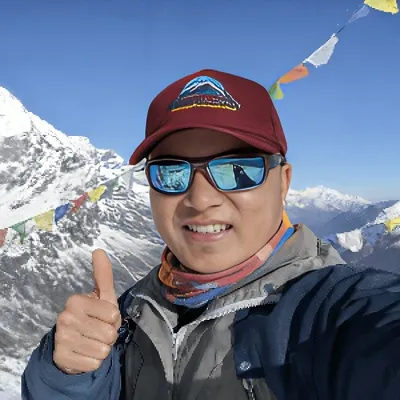

Nir Karki
Talk to an Expert (Nir Karki)
Last-minute Deals
Book Now
Price from
US$1199

Gokyo Valley Trek - 10‑Day Itinerary Package

257 reviews
29 reviews
Duration
10 Days
Trip Grade
Strenuous
Country
Nepal
Maximum Altitude
5,357m
Best Time
Autumn (Sep-Nov) and Spring (Mar-May)

When someone says Nepal is a trekker’s paradise, they indeed don’t lie. The country is abundant in natural beauty, which never fades. It has unique topography and remarkable landscapes that are best explored on foot. And during the Gokyo Valley trek, you get to experience these at once.

Nepal has excellent walking trails that are willing to take hikers on an adventurous journey. One of these many hikes is the Gokyo Lake trek, a trek that comes with extreme adventure, magnificent scenery, and an incredible experience.

Visitors trekking to Gokyo can learn about the culture, lifestyle, and traditions of different ethnic groups living here, primarily Sherpas. They can also visit the fascinating towns all the way up to Gokyo and even engage in one of their cultural activities or social gatherings.

Gokyo Lake is considered one of the best trekking destinations in northeastern Nepal. It is usually at the top of many trekkers' wish lists, given the magnificent views and iconic landmarks. The trek, which is around 98 km, starts from Lukla and weaves through forests and valleys before you arrive at Gokyo.

The Gokyo Valley trek passes through several villages and traverses through forested terrains full of rhododendrons and pines. The trail has multiple suspension bridges, and trekkers will have to walk over the rocks and boulders to arrive at the valley.

Walking trails meander through the tropical forests that are home to Himalayan tahr, musk deer, and snow leopards. Its route follows the bank of the Dudh Koshi River and takes a few switchbacks before gaining elevation.

The trekkers have to travel through remote settlements like Dole and Machhermo to get to the village. The view of Gokyo Ri stretches from the Ngozumpa Glacier, which we have to travel to. It also provides a view of nearby Sherpa villages and serene glacial lakes.

The trek from Machhermo to Gokyo is short but challenging, with rugged trails. It’s unpaved and full of rocks and boulders, which makes it difficult to walk over. The climb to Gokyo Ri is equally challenging, following steep rocky trails and glacial moraines.

The Gokyo Valley trek is strenuous but worthwhile, as it rewards trekkers with a mesmeric view of Lhotse, Makalu, and Cho Oyu. Trekkers walking to the top will also get to enjoy the beautiful glimpses of six freshwater lakes.

Nested at 16,400 ft, Thonak Cho is the largest lake in Gokyo Valley. Lying nearby are Dudh Pokhari, Gyazumpa Cho, and Tanjung Cho. Generally, they all feed on the seepage of the Ngozumpa Glacier.

Check out our similar packages: Gokyo Renjo La Pass Trek, Everest Base Camp - Cho La Pass - Gokyo Trek12 days Everest Base Camp Trek

Trip Highlights

  • Glorious mountain peaks such as Lhotse, Makalu, Cho Oyu, and others
  • Hike through the scenic forests of Sagarmatha National Park
  • Exploration of wildlife habitats, birds, and natural vegetation
  • Picturesque Sherpa towns of Lukla and Namche
  • Serene glacial lakes of Gokyo, including Thonak and Dudh Pokhari
  • Iconic landmarks and religious sites
  • The spectacular sight of Khumbu Icefall
  • Magical sunrise view over Gokyo Ri
Gokyo Valley Trek - 10‑Day Itinerary Package Detailed Itinerary

Day 1

Kathmandu to Lukla (2,860m) flight. Then trek to Phakding (2,610m)

Our journey to Gokyo Lake begins with a scenic flight from Kathmandu to Lukla. It lasts about half an hour and comes with a spectacular view of sweeping hills and raging waterfalls. Upon landing, we’ll meet our crew and have breakfast before heading out for the trek.

Scrambling the hills beside the fuming Dudh Koshi River, the trail heads toward Phakding. It takes us through the Chaurikharka Village and down to Dudh Koshi, which offers an astounding view. After the trek of the day on a well-worn path, we’ll reach Phakding. Overnight stay in a guesthouse.

Max Altitude: 2,610m (8,562ft)
Duration: 3-4 hours
Distance: 8 km
Meals: Breakfast, Lunch and Dinner
Accommodation: Teahouse
Day 2

Trek to Namche (3,440m)

It’s a difficult 5.8-mile walk from Phakding to Namche, so we'd better get moving on the trail. The trek continues with a scenic walk along the banks of the Dudh Koshi River and over the suspension bridge.

Crossing the Hillary Suspension Bridge and passing several remote villages, the trail stops at Sagarmatha National Park. After getting permits to the sanctuary, we climb up through the forest from where Mt. Everest can be easily witnessed. After a problematic uphill trek, we’ll arrive at Namche Bazaar.

Max Altitude: 3,440m (11,286ft)
Duration: 5-6 hours
Distance: 10.7 km
Meals: Breakfast, Lunch and Dinner
Accommodation: Teahouse
Day 3

Acclimatization Day at Namche

The trail from Namche to Dole is physically demanding and strenuous. It even starts to gain elevation from here. So, instead of climbing the trail upward, we’ll stay back in the town and take a rest.

After having breakfast, we’ll walk up to the Everest Hotel View. It takes about 2-3 hours to reach the hilltop and watch the magnificent view of Mt. Everest and Thamserku. The surrounding scenery is amazing, with steep hills and subtropical forests.

The trail descending to Namche is beautiful as well. It provides us with a lovely view of snow-capped mountains and sweeping hills throughout the way. We’ll stay in the same guesthouse as the previous one in Namche.

Max Altitude: 3,440m (11,286ft)
Meals: Breakfast, Lunch and Dinner
Accommodation: Teahouse
Day 4

Trek to Dole (4,200m)

After the acclimatization, we’re ready to work our way up to Dole again. The trek, too, has a sharp hill to climb and a scenic walk through the forest. The path to Dole is slightly rocky, with highs and lows from end to end.

It separates from the main EBC trail and winds through the Mong La Pass after almost two hours of walking. While scrambling the trails, trekkers are able to catch a glimpse of beautiful Ama Dablam and Mt. Khumbila.

Getting to the village requires a downhill walk into the rhododendron and pine forests. From here, the trail goes to the riverside village of Phortse Tenga and then to Dole. It’s a straight uphill climb to the village, which is quite tiring.

Max Altitude: 4,200m (13,779ft)
Duration: 5-6 hours
Distance: 11.5 km
Meals: Breakfast, Lunch and Dinner
Accommodation: Teahouse
Day 5

Trek to Macchermo (4,470m)

Leaving Dole, we set off on a hike to Machhermo. The trek is a continuous uphill ascent through the pastures, which serve as a playground for yaks. Alongside, there are several religious shrines and prayer flags, which look spectacular.

The trail ahead unfolds the majestic view of Mt. Cho Oyu, Lhotse Shar, Ama Dablam, and Nuptse. It also leads us to the beautiful villages of Lapharma and Luja before stopping at Machhermo. 

Max Altitude: 4,470m (14,665ft)
Duration: 4-5 hours
Distance: 7 km
Meals: Breakfast, Lunch and Dinner
Accommodation: Teahouse
Day 6

Trek to Gokyo Lake (4,790m)

After about an hour of trekking, we’ll cross the grazing yak fields and trek to Phanga. Traveling in this section will help us come across memorials honoring those lost in landslides. As the trail gains elevation, the path becomes narrower and steeper.

Here, the trails are rough and filled with rocks and boulders. The walk is short but strenuous, taking about an hour or so. Gokyo is one of the highest villages in Nepal, perched on the eastern shore of the third Gokyo Lake.

It’s only a few walks away from the lake and right underneath the Gokyo Ri. We’ll briefly stop at the village to have lunch and then walk around and enjoy the view. You might go for a short walk around the Gokyo village to explore the Gokyo region.

We will spend the night at the teahouses/hotels in Gokyo village.

Max Altitude: 4,790m (15,715ft)
Duration: 3-4 hours
Distance: 6 km
Meals: Breakfast, Lunch and Dinner
Accommodation: Teahouse
Day 7

Hike to Gokyo-Ri (5,357 m) and Trek down to Dole (4,200m)

After breakfast, we head for the Gokyo Ri summit. Gokyo Ri is located at an altitude of 5,357 m / 17,575 ft. The trailhead starts on the west side of the Ngozumpa and takes almost 1.5 to 2 hours (depending on your walking speed), covering almost 2 kilometers.

The trek is continuously upward with no downward slope. It’s rough and covered with loose rocks, making the walk more challenging than it seems. After reaching the summit, we get to relish the incredible views of rolling hills and towering mountains. After exploring the Gokyo Ri, we will start our trek back to Dole.

The trek from Gokyo to Dole is mostly downhill with some switchbacks. It begins with a walk through the glacial moraines of Ngozumpa and passes through several stone chortens.

As we move forward, the trail opens up and provides glimpses of Thamserku and Kantega. We’ll be walking beside these shimmering mountains all along the way. The easy walk winds through the villages and over the Dudh Koshi River Valley. After a short ascent, the trail ends at the beautiful village of Dole.

Optional Route: Instead of trekking down to the Dole, you could explore the Gokyo 5th Lake and stay at Gokyo village. One extra day will be added to the itinerary if you do so. This allows you to explore all four Gokyo lakes.

Max Altitude: 4,200m (13,779ft)
Duration: 7-8 hours
Distance: 14 km
Meals: Breakfast, Lunch and Dinner
Accommodation: Teahouse
Day 8

Trek to Namche Bazaar (3,440m)

Just 7.4 miles from the village of Dole is our next destination. The trek to Namche isn’t tricky but is lengthier, with a few highs and lows. Outside of the village, the trail winds through dense forests and passes several remote villages. It initially descends Sanasa and walks through Phortse Tanga before arriving at Mong.

On the way, we’ll pass several Tibetan monasteries and ancient chortens. Surrounded by steep hills and mountains, Namche has a magnificent view to offer visitors. After watching the picturesque scenery, we’ll get back to the teahouse and get some rest.

Max Altitude: 3,440m (11,286ft)
Duration: 5-6 hours
Distance: 11.5 km
Meals: Breakfast, Lunch and Dinner
Accommodation: Teahouse
Day 9

Trek down to Lukla (2,860m)

We’ll spend the last day of the Gokyo Valley trek at Lukla. After descending the steep hills and crossing Hillary's suspension bridge, we move towards the local village. Most of our trek today is around the Dudh Koshi River Valley and its surroundings, offering scenic views.

After arriving at Lukla, we’ll freshen up and get some rest at our lodge. Since we have remained undefeated throughout the expedition, it’s only fair to celebrate the moment. After dinner, we’ll get off to sleep.

Max Altitude: 2,860m (9,383ft)
Duration: 5-6 hours
Distance: 19 km
Meals: Breakfast, Lunch and Dinner
Accommodation: Teahouse
Day 10

Early flight back to Kathmandu (1,400m)

We’ll leave for Lukla airport early in the morning. It’ll take us around 30 minutes to reach Kathmandu. Upon arrival, our staff will transfer you to the hotel, where you can rest the entire day or go shopping.

Max Altitude: 1,400m (4,593ft)
Duration: 35 minutes
Meals: Breakfast
Accommodation: Hotel
Mode of Transportation: Flight
Have Questions? We're Here to Help
Like this itinerary but want to make a few changes? Every traveler is unique, and your journey should be too. Our local travel experts will design a personalized experience tailored to your interests, preferred pace, travel dates and budget.
Route Map & Altitude Profile

Cost Details

Includes

  • Airport pick up and drop off
  • All Domestic flights and airport tax as listed in the itinerary
  • Standard meals (breakfast, lunch, and dinner) during the trek
  • Government license holder guide 
  • A strong and helpful porter with proper equipment (1 porter for 2 people)
  • Salary, food, accommodation and insurance for guide and porters
  • Tea house/lodge accommodation during the trek
  • Fresh fruits every night after dinner
  • Pasang Lhamu Rural Municipality entry permit
  • Sagarmatha National Park entry permit
  • Comprehensive first aid kit with oximeter
  • Government taxes and official expenses

Dates & Availability

Aug 2026
Sep 2026
Oct 2026
Nov 2026
Dec 2026
Jan 2027
Feb 2027
Mar 2027
Apr 2027
May 2027
Jun 2027
Jul 2027
Aug 2027
Sep 2027
Oct 2027
Nov 2027
Dec 2027
Start Date
03 Aug, 2026
End Date
12 Aug, 2026
Status
Guaranteed
Price
US$1199
Start Date
06 Aug, 2026
End Date
15 Aug, 2026
Status
Guaranteed
Price
US$1199
Start Date
10 Aug, 2026
End Date
19 Aug, 2026
Status
Guaranteed
Price
US$1199
Start Date
13 Aug, 2026
End Date
22 Aug, 2026
Status
Guaranteed
Price
US$1199
Start Date
17 Aug, 2026
End Date
26 Aug, 2026
Status
Guaranteed
Price
US$1199
Start Date
20 Aug, 2026
End Date
29 Aug, 2026
Status
Guaranteed
Price
US$1199
Start Date
24 Aug, 2026
End Date
02 Sep, 2026
Status
Guaranteed
Price
US$1199
Start Date
27 Aug, 2026
End Date
05 Sep, 2026
Status
Guaranteed
Price
US$1199
Start Date
31 Aug, 2026
End Date
09 Sep, 2026
Status
Guaranteed
Price
US$1199

If there is only 1 person for the trip, there will be USD 150 additional cost.

Meet Our Expert Guides

Khilaraj Nachhiring
Trekking Guide
Phinjo Sherpa
Trekking Guide
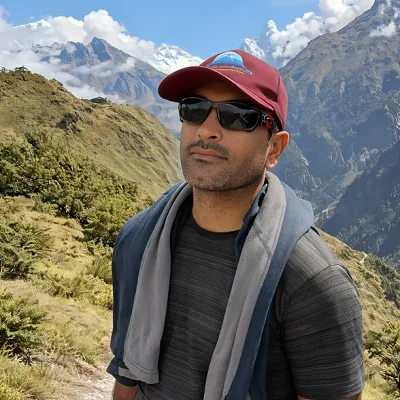
Kumar Karki
Trekking Guide
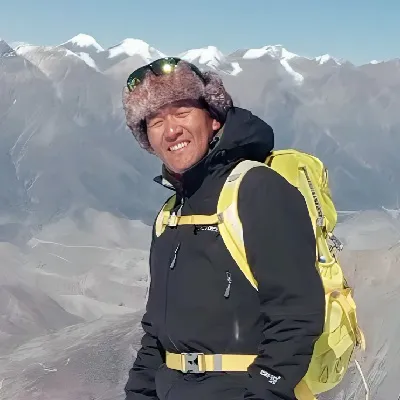
Jangbu Sherpa
Trekking Guide

Equipment List

Trek to Gokyo Lake isn’t a stroll in the park. It’s a strenuous walk of 61 miles with many ups and downs. The trail to this glacial lake has steep hills that go down to the forest and above the valley. Besides, it has unpredictable weather, which makes the trek even more difficult.

Hence, trekking to Gokyo Lake needs good preparation along with some equipment required for the trek. You have to be careful while picking these items and ensure they don’t go to waste. Consideration must be given to weather, trek difficulties, duration, and distance. Here are some of the trek essentials needed for the Gokyo Valley Trek.

Upper Body Layers
  • Breathable, quick-dry base layers
  • Comfortable t-shirts
  • Lightweight insulating jacket
  • Down jacket for cold conditions
  • Waterproof and windproof jackets
Lower Body Layers
  • Thermal base layer
  • Waterproof trekking pants
  • Comfortable pants for evenings in teahouses
  • Comfortable hiking shorts for warmer sections
  • Waterproof and windproof outershell for rain or snow
Footwear & Accessories
  • Trekking boots with ankle support (preferably Waterproof)
  • Multiple pairs of quick-dry socks
  • Warm socks for cold nights
  • Gaiters for snowy, muddy, or dusty trails
  • Trekking poles to reduce strain on knees
Head & Sun Protection
  • A hat or a cap to block the sun
  • Warm beanie for cold mornings and evenings
  • UV-protected sunglasses
  • Neck gaiter or buff to prevent dust, cold, and sunburn
  • Sunscreen (30-50+ SPF) for face and exposed skin
  • Lipbalm with SPF
Personal & Medical Kits
  • Personal medications
  • Diamox (Acetazolamide) for altitude sickness
  • Ointment
  • Hand sanitizers and wet wipes
  • Quick-dry towel
Travel Documents
  • Valid Passport
  • Passport-sized photos for permits
  • Travel insurance
  • Flight tickets
  • Cash in Nepali Rupees
  • Emergency contact details
Miscellaneous
  • Daypack (30-45L) with raincover
  • Reusable water bottles
  • Headlamps for early morning hikes
  • Water purifying tablet or filter
  • Phone or Camera for capturing the adventure
  • Powerbank for an easier charging option
  • Notebook, books, or cards for free time
  • Snacks like energy bars and chocolates
  • Drybag to keep your gear safe from rain

Essential Information

...

Why trek Gokyo Lake?

Stunning Views

Gokyo Lake isn’t short on breathtaking views. Some of its best can be discovered along the trail, while the rest can be traced at the spot. Trekkers can enjoy the natural view of tropical forests, lush green foliage, and beautiful valleys on their journey.

During the hike, they also watch the spectacular view of mountain ranges and lovely waterfalls. At Gokyo, they can find many iconic landmarks, oligotrophic lakes, and glaciers, which are pretty impressive.

Gokyo Lakes

Named after Gokyo Ri peak, the Gokyo Lakes are the attractions of this trek. They are located at an elevation ranging from 4,700m to 5,000m in the Sagarmatha National Park. The Gokyo Lakes are the world’s highest freshwater lakes and comprise six main lakes. There are a total of 19 lakes, though. In this trek, you get to see Gokyo Cho aka Dudh Pokhari, Thonak Cho, Gyazumpa Cho, Tanjung Cho, and Kyajumba Cho. Dudh Pokhari is most frequently visited among all and is an iconic lake in the area. These lakes are sacred to both the Hindus and Buddhists in Nepal.

Magnificent Mountains

The trek takes you along a diverse landscape offering views of a range of mountains from the start. It all begins with an opportunity to witness the magnificence of Ama Dablam (6,812 m). Not to miss are the graceful summits of Thamserku (6,608 m) and Chamlang (7,319 m). The massive Kantega (6,782 m) and the prominent Kongde Ri (6,187 m) are other peaks you can see along the trekking trail. As you ascend, you feel nearing the mountain giants, including the world’s tallest peak, Everest (8,8848m). Alongside, you also catch the views of Lhotse (8,516 m), Makalu (8,481 m), Cho Oyu (8,188 m), Nuptse (7,861 m), Pumori (7,161 m), Island Peak (6,160 m) and Cholatse (6,440 m).

Cultural Exploration

Gokyo Valley Trek is an overwhelming experience for visitors who are new to Nepali culture, language, and tradition. They’ll be acquainted with the local Sherpa culture and their religious ceremonies on this trek.

Visitors will get to blend in with the native people. Just a few days at Khumbu and they’ll be well aware of the Himalayan lifestyle, customs, and practices. Various trails in Khumbu will provide trekkers with a view of Tibetan monasteries, Chortens, and mani walls.

Festive Encounters

Here is a brief overview of some of the major festivals of the region. If you happen to trek in the area during the festive season, you get to enjoy the festive colors along with the locals.

Gyalpo Lhosar

People from Sherpa communities celebrate this festival in February or March, based on their calendar. This celebration marks the beginning of the Tibetan New Year. You will see people performing folk dances, partying, organising ceremonies, as well as sacred practices, as a part of this festival.

Mani Rimdu

If you opt for an autumn trek to the Gokyo Valley, you might get to participate in this festival with the locals. Mani Rimdu is a major festival of the Sherpa people that usually falls in October or November. The 19-day festival features mask dance, fire rites, colorful mandala of sand, meditation and other ceremonies. If you are a cultural enthusiast, you may adjust your trek calendar accordingly and enjoy the festival.

Dumje

The four-day festival is celebrated in May/June. It marks the birth anniversary of Guru Rinpoche. Those following Tibetan Buddhism regard him as a revered figure. Some of the highlights of this festival include performances of dance and different rituals. This is also a major Sherpa festival.

Adventurous Trail

Gokyo Valley Trek is more of a trail walking than exploration. Trekkers will have to do the sightseeing while hiking. This makes the journey more adventurous and fun as they get to view stunning snow peaks, beautiful landscapes, and waterfalls.

As the trailhead starts in the town of Lukla, trekkers will explore a series of villages and walk the lush meadows before heading to the mountain. The voyage offers them some of the finest of Khumbu, including the view of steep-sided valleys, deep forests, and charming towns.

Exploration of rural settlements

The trek to Gokyo Lake allows visitors to explore the rural settlements of Khumbu. It makes them travel through the medieval Sherpa villages and towns. Trekkers can expect to receive warm hospitality and aid. The locals here are incredibly nice and friendly to the guests. They make them feel at home and help them with anything and everything.

Moderate trails

Gokyo Valley Trek has easy hiking trails as compared to other walks. The trek has no technical difficulties except for a few steep hills and rugged trails. The walk on the Ngozumpa Glacier can be slightly challenging and demanding. Walking the long forested trails and climbing up the valley won’t be easier either. But, apart from that, the trek is a breeze with no obstacles.

Difficulties of Gokyo Valley Trek

Walking the most popular hikes in Nepal may seem fun, but it's a lot harder. Traveling through the wilderness and climbing steep slopes for multiple hours is grueling. Its trails are physically demanding, with many twists and turns.

Not just the trail, but even the weather of Gokyo is tricky. It fools visitors into climbing the trail and makes the journey challenging for them. Some of the other difficulties of the Gokyo Valley Trek are as follows.

Trek Distance

The long walking trails of Gokyo Lake require multiple days to finish. Trekkers have to walk an average of 5-6 hours and cover a distance of 10-15 km, which is a lot. The hike is intimidating for any trekker who’s not used to walking the highlands or rocky terrains.

Since the trek has to be completed within the travel limit, trekkers have to beat the clock. In this matter, choosing a short itinerary isn’t going to be much help. Covering longer distances in a short time is inconvenient for any hiker.

Altitude Sickness

Gokyo Valley Trek is a mountain trek. So, the hikers will have to travel at higher altitudes for most of the expedition. As they go higher, the oxygen level decreases and causes altitude sickness. The low atmospheric pressure makes the trekkers dizzy and exhausted. Some of them even have difficulty breathing due to low oxygen.

Dehydration

Walking the mountainous terrains of Gokyo while carrying a heavy daypack can bug anyone. On top of that, you have to climb steep trails and walk in the heat, which causes the body to lose sweat. The overflow of liquid increases the risk of dehydration and fatigue. Trekkers will suffer from terrible headaches, sunken eyes, and listlessness. Therefore, to prevent dehydration, they have to drink sufficient water rather than relying on just a bottle of water.

Weather & Temperature

The unpredictable weather of Gokyo Lake is another challenge for hikers. When hiking, trekkers experience a tremendous change in weather due to the rise in altitude. The weather is usually frigid at Gokyo, but it changes with the season down in the valley. Summers are hot and humid in Khumbu, while winters are chilly, which makes hiking extremely difficult.

Trail Logistics

Electricity, ATM and Internet are some of the basic facilities you have been used to in your daily life. The trekking trail also offers these facilities, but they have some limitations.

Read on to know more about these logistics:

Electricity

You require electricity for charging your phones and camera, among other things. And of course, for lighting purposes. Your accommodation facility arranges the lights for you during your stay there. They have an area for charging in their reception or dining area where you can charge your devices. You may need to pay extra in return for receiving this service.

Internet

There are two options for Internet connections — WiFi and cellular data. You will get good WiFi service up to Namche Bazaar. Your teahouse or lodge may charge you extra if you want to use it there. Meanwhile, you need to get SIM cards of NTC or NCELL, Nepali telecommunication providers, to opt for mobile data. They can have good network coverage, yet are not always reliable.

ATM

There are plenty of ATMs in Kathmandu. But your trekking trail is different. They are available only up to Namche Bazaar. So, you can either withdraw money in Kathmandu or at Namche Bazaar and carry the cash with you.

Hot Showers

Hot showers are available at the accommodation facilities that you find in the Gokyo Valley trek. Yet, you need to remember that at higher altitudes they are limited or even slow to heat. Some include hot water in the lodging services at lower altitudes, but at higher altitudes, you have to pay extra per shower.

Is Insurance Mandatory?

Yes, travel insurance is mandatory and highly recommended. Trekking at high altitudes is always risky. Look for a company that covers the cost of injuries, medical expenses, and helicopter evacuation costs. Helicopter rescue is the only option to take you to the nearest hospital if you get sick at a high altitude.

Do I get Guide and Porter?

Yes, Marvel Adventure provides a well-experienced, fluent English-speaking guide who has sound knowledge of the mountains, history, and local cultures of the region. They guide you throughout the trek as well as entertain you during the walk.

We also provide one porter for two trekkers. Porters can carry 20-25 kg of bags. They will carry your bags so that you can walk easily and enjoy every moment during the trek. We recommend you pack only the essential gear.

Because of their hard effort, guides and porters expect some TIPS from you.

Best time for Gokyo Valley Trek

Autumn Season

Autumn is one of the few times when trekkers will experience warm and pleasant weather. It’s usually dry and sunny in Khumbu during the season. Days are warmer and nights are chillier, with temperatures dropping up to 2 degrees Celsius.

The temperature in Gokyo Lake is much colder, averaging about -12 degrees Celsius. With winter just around, November typically has the coldest days of all autumn months. Trekkers will likely witness a gradual temperature drop along with light snowfall.

The autumn color might have faded over time. But if you walk the trail in October, there’s enough stunning fall foliage along the trek. Visitors can watch the changing tree leaves and lush meadows during the expedition.

Spring Season

Trekkers can experience similar weather in spring as well. Warm days, cooler nights, and fabulous views make the season incredible to hike. It has long daylight hours full of sunshine, which makes the climb easy and comfortable.

But, since winter doesn’t go without putting up a fight, the weather is cold at the beginning of the season. There might be light snowfall in different parts, especially at higher altitudes. After late March, the temperature will increase, but it will still be cold at Gokyo Lake.

There’s low precipitation and humidity in Spring at Gokyo. Meanwhile, flower blooms are at their peak in the valley and forest. Its green terrace farms and colorful wildflowers provide a picturesque backdrop to the hikers.

Also, migrating birds and animals put on an excellent show for them. Since the weather will be warm with clear skies, trekkers can enjoy the unobstructed view of shimmering snow peaks and diverse landscapes.

Off-season

Winter is the off-season for trekking in Nepal. It starts from December and ends in February. During these months, you are less likely to meet the trekkers on the route. The temperature starts dropping, and snowfall is very likely to happen. Those who enjoy snowfall may resist the odds; winter is the best time. But they do it with lots of preparations, as winters could be severe in the mountains, as the days are short and cold. The average temperature of Gokyo is -10 to -14 degrees Celsius in winter, which makes the hike incredibly difficult.

Summer is humid and hot in Khumbu, with an average temperature of 2.3 degrees Celsius. It has warmer days with bright sunshine, making the trek more comfortable.

But it doesn’t last long as the monsoon starts. There might be heavy rainfall from mid-June, which makes the trail murky. The weather might not be clear, and it’s hard to catch the views. 

Follow our best time for Gokyo trek guide for detailed information.

Food & Accommodation

Wandering the trails of Gokyo, especially if you want a place to stay, isn’t a competitive spirit. There are ample accommodation options here, including lodges, hotels, and teahouses.

In the valley, guesthouses are the most affordable choices for accommodation.

They are well-equipped and spacious with pre-arranged furniture. Most of the lodgings offer a handful of services like a bed, pillow, blanket, and a hand towel to the guest. They usually charge a low price of around US$2 to US$5 per night.

There’s no shortage of accommodation in higher regions either. You will find lots of teahouses. They have twin-share rooms with sufficient space for each person. Unfortunately, the rooms have no direct connection to the bathroom, so the guests will have to share the regular ones.

Apart from the lodging, they also provide food to the visitors, consisting of local staple foods like rice, lentils, curry, and pickles. It’s a classic Nepali dish, simple yet delicious. Other dishes available to try are fried noodles, tasty dumplings, and pancakes.

The breakfast has soup, bread, muesli, and eggs, typically served with tea. But, these are only offered by the guesthouses in town. There’s usually a shortage of food items in teahouses at higher altitudes.

Due to rugged trails, goods must be transported using porters or yaks, increasing costs. Foods are relatively cheaper in lower valleys, so if you want to save money, stock the goods right here.

Preparations for Gokyo Valley Trek

Gokyo Valley Trek is pretty challenging, especially for someone who has never trekked before. It has mixed terrains with some rocky hills, which are physically demanding. The fight against its winding trail isn’t easy to win either. Trekkers have to walk through the lush meadows and valleys before making a continuous ascent to Gokyo Lake.

Hence, it requires some hardcore training to tackle these harsh trails. Trekkers have to give at least a month for physical training. They must be dedicated as the hike is not easy. They should spend as much time as possible on the routine workout, as it helps them stay fit and in good shape.

Walking back and forth on the steep trails is exhausting. So, try doing labor-intensive activity and cardiovascular exercises like running, cycling, jogging, and brisk walking. These workouts will help to improve your muscular strength and endurance capacity.

Taking a few hikes on different routes before the trek is an excellent idea. Not only will they prepare you well for the trek, but they’ll also help you tackle the mountainous terrains. It’ll take the stress off your head and make the walk more accessible.

Mental Preparation

As much as physical exercise is essential, mental toughness is also important. Therefore, trekkers have to take care of their mental strength. Hiking to Gokyo Lake is weight-bearing and mentally exhausting work.

So, put in extra effort on the hike and give yourself enough time to prepare. Don’t be intimidated by the trek difficulties; fight against the odds. Maintain resilience and maximize your abilities as much as possible. Stay hydrated, and don’t let the trek get into your nerves.

Gokyo Valley Trek - 10‑Day Itinerary Package FAQs

What is the highest altitude reached during the trek?

The highest point is Renjo La Pass at around 5,360 meters. The pass day starts early, and once you climb above Gokyo, you really begin to feel the thin Himalayan air

How many days does the Gokyo Renjo La Pass Trek take?

Our standard itinerary takes 12 days, with proper acclimatization days. Some trekkers like adding an extra day in Gokyo because the scenery there is honestly one of the highlights of the entire Everest region.

What is the best time to do the Gokyo Renjo La Pass Trek?

Spring and autumn are the best times for this trek. During peak trekking seasons, the weather is usually more stable and the mountain visibility is excellent. Around late October, the lakes and mountain reflections can look unreal on clear mornings.

Is the Gokyo Renjo La Pass Trek harder than Everest Base Camp Trek?

Yes, generally it’s a bit harder than the standard Everest Base Camp Trek because of the Renjo La Pass crossing. But many trekkers say the quieter trails and scenery make the extra effort completely worth it.

Is altitude sickness common on the Gokyo Renjo La Pass Trek?

Altitude sickness can happen because several days are spent above 4,500 meters. Our guides regularly check how trekkers are feeling, especially around Gokyo and before crossing Renjo La Pass. Slow pacing makes a huge difference on this route.

Are Lukla flights included in the Gokyo Renjo La Pass Trek package?

Yes, Lukla flights are usually included in most Marvel Adventure packages unless stated otherwise. Depending on the season, flights may operate from Kathmandu or Ramechhap.

How fit do I need to be for the Gokyo Renjo La Pass Trek?

You don’t need to be an athlete, but good fitness definitely helps. If you can comfortably walk several hours a day with uphill sections, you’ll be fine. One thing many first-time trekkers underestimate is how much altitude slows down your normal pace.

How much does the Gokyo Renjo La Pass Trek cost in Nepal?

The cost depends on itinerary length, flights, group size, and accommodation preferences. Compared to classic Everest Base Camp packages, this trek usually costs slightly more because of the longer route and extra logistics around Gokyo and Renjo La.

What food is available on the trek?

You’ll find dal bhat, soups, noodles, fried rice, pasta, potatoes, pancakes, eggs, tea, coffee, and bakery items in many villages. Based on our experience, trekkers usually end up eating more dal bhat than expected because it gives steady energy at altitude.

What happens if Lukla flights are cancelled during the trek?

Honestly, Lukla delays are just part of trekking in the Everest region sometimes. Weather changes very quickly there. If flights get cancelled, Marvel Adventure helps rearrange flights or helicopter options whenever possible so trekkers are not left stressed and confused.

What should I pack for the Gokyo Renjo La Pass Trek?

Warm layers, a proper down jacket, waterproof gear, gloves, trekking boots, sunglasses, and a good sleeping bag are essential. Weather in the Everest region can shift very quickly, especially near Renjo La Pass.

Can you see Mount Everest from the Gokyo Renjo La Pass Trek?

Yes, you get incredible Everest views during the trek, especially from Gokyo Ri and Renjo La Pass. From our experience, the panoramic view from Gokyo Ri is actually one of the best Everest viewpoints in the entire Khumbu region.

What is the Gokyo Renjo La Pass Trek in Nepal?

The Gokyo Renjo La Pass Trek is one of those routes people usually discover after researching Everest Base Camp. It combines the turquoise Gokyo Lakes, quieter Everest trails, and the Renjo La high pass. Honestly, many trekkers at Marvel Adventure end up loving this route more because it feels less crowded and more peaceful overall.

How difficult is the Gokyo Renjo La Pass Trek?

The Gokyo Renjo La Pass Trek is categorized as moderately difficult. It's not a technical climb, but your fitness level and experience definitely come into play while determining the difficulty of this trek. We have had clients from teenagers to people in their 50s who have completed this trek.

Is the Gokyo Renjo La Pass Trek suitable for beginners?

Yes, beginners can do it if they prepare properly and maintain a steady pace. Based on our experience at Marvel Adventure, first-time trekkers who listen to their guide, hydrate properly, and don’t rush usually do surprisingly well on this route.

Price Per Person
US$1199
US$1199
All inclusive price
  • 2 - 4 paxUS$1199
  • 5 - 9 paxUS$1150
  • 10 - 20 paxUS$1100
Book This Trip
Talk to Our Travel Experts

What Our Clients Say

May 20, 2026
The best!

I did the 10 day Gokyo Valley trek with Marvel Adventures. From start to end it was so brilliant. Nir, the owner of the company, was so communicative over WhatsApp. His son and him were...

Sophie Taylor
Sophie Taylor
England
October 26, 2025
Unique Trekking to Gokyo Ri-Nepal September 2025

This year my daughter and I left for Gokio-Ri training in Nepal. We used the proven travel company Marvel Adventure, with whom I hiked to Everest Base Camp in 2024. Marvel Adventure is highly recommended...

A
Andreas B
Finland

You May Also Like

everest base camp cho la pass gokyo trek
Duration: 14 Days
5.0(23 Reviews)

Everest Base Camp Chola Pass Gokyo Trek

US$1575US$1575
Difficulty Level: Strenuous
everest base camp trek via gokyo lake
Duration: 13 Days
5.0(11 Reviews)

Everest Base Camp Trek via Gokyo Lake

US$1495US$1495
Difficulty Level: Moderate
gokyo renjo la pass trek
Duration: 12 Days
5.0(7 Reviews)

Gokyo Renjo La Pass Trek

US$1350US$1350
Difficulty Level: Moderate
Need Help? Call Us+977 986-0313572