Does Age Determine Suitability?
No. What truly matters here is how active you are and your previous trekking history.
Two trekkers who are in their late 60s can show up on the same trail in completely different shapes. One person who walks regularly and has done trekking in the past few years knows how quickly his body can recover. On the other hand, the person who isn’t active enough or hasn’t done a multi-day trek isn’t confident enough for the entire circuit.
How much walking do you do in your daily life? Have you completed a multi-day trek before? Can you handle continuous uphill? How would your knees do on descent, and how good do you feel after trekking the whole day? Someone who ticks most of these boxes is usually in a better position than someone younger who doesn't.
The published ACAP and TIMS information does not list an upper age limit. Check with your travel insurer for any age restrictions or additional documentation requirements.
What Makes the Trek Demanding?
The Annapurna Circuit difficulty isn’t just about the Thorong La Pass crossing. Our clients often tell us how the combination of consecutive walking days, changing terrain, and altitude affects their sleep and recovery.
Usually, on our Annapurna Circuit itinerary, you will be walking around 5 to 7 hours a day for around two weeks. You won’t find it hard in the first few days as you're fresh, and the trail conditions are good. The fatigue tends to build quietly from around day four or five onward. The same legs that felt fine on day two can feel noticeably heavier by day six, even without anything going wrong.
The sections below Chame and on the way to Thorong La have stone staircases and loose scree as well. Here you need to have steady footing, and be prepared for hours of uneven surfaces. Plenty of people in their 60s and 70s move through these sections without issue. But rather than comparing with other people, you need to be honest with yourself. Ask yourself, “Can my ankles and knees really handle this terrain?”
One common mistake people make is not talking about the descent before the trail starts. Going downhill, especially on tired legs, puts real strain on the knees and quads. The descent from Thorong La to Muktinath is the clearest example.
From the lower valley to the pass, you gain more than 4,000 metres. As the air thins, your pace naturally slows, your breathing works harder, and tasks that felt easy lower down take noticeably more out of you above 4,000. And to be honest, this isn’t about fitness. It’s more of an adjustment your body needs time to make, which is why the itinerary structure matters as much as your training does.
The teahouses you find above around 3,000 metres are basic. Rooms are usually unheated outside the common dining area, walls are thin, and your sleep can be interrupted by the cold. The higher you go, the less reliable the hot showers become. Some lodges charge extra for them or don't offer them at all in the coldest months. These factors can really affect how rested you feel every day, and recovery matters more as the trek goes on.
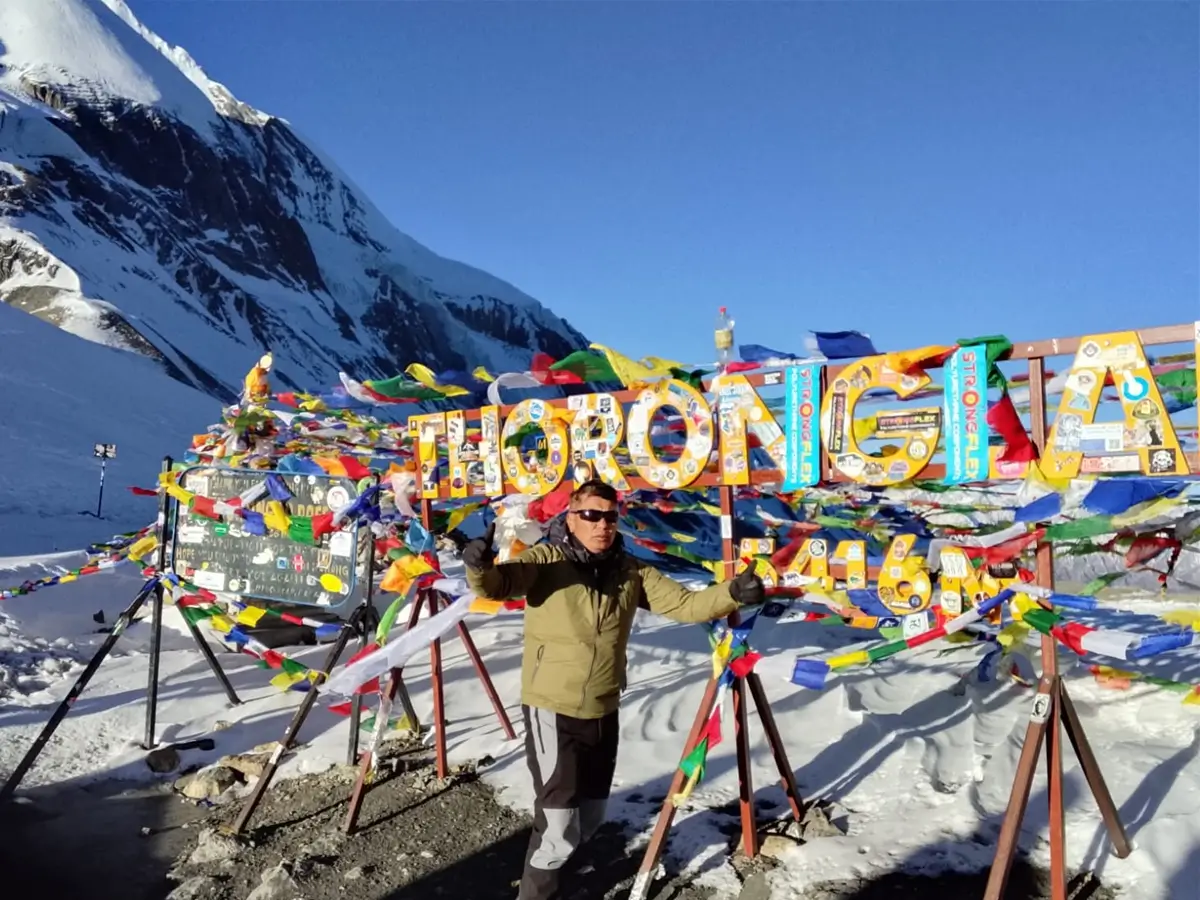
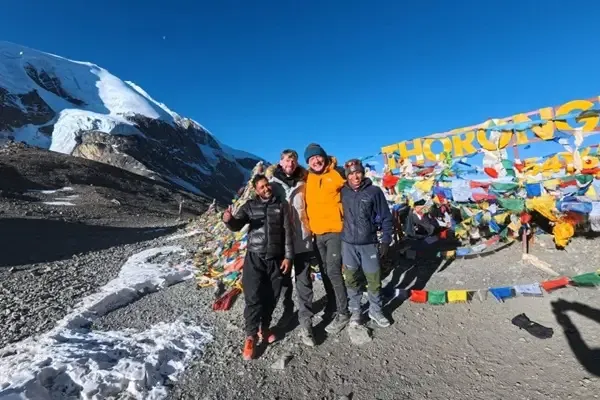
Crossing Thorong La (5,416 m) is one of the longest and most demanding days on the trek. You’ll usually start before dawn from Thorong Phedi or High Camp. The total walking time depends on where you start, your pace, and trail conditions. After reaching the pass, you still have a descent of roughly 1,650 m to Muktinath (3,760 m).
Choosing the Right Annapurna Circuit Trek for Older Trekkers
The most important factor that determines how manageable your trek feels is choosing the right itinerary. You can have a completely different experience from someone with the same fitness level depending on your elevation gain each day and how much time you have to adjust yourself to the altitude.
Manang (3,519 m) is the main acclimatization stop on the Annapurna Circuit trek. There have been times when we have added an extra acclimatization day on the Annapurna Circuit for senior trekkers. Walking the Annapurna Circuit at a slower pace can make a real difference to how the final approach feels.
Shortening the itinerary doesn't make the trek easier either. Cutting days without adjusting the altitude schedule means covering the same elevation gain in less time. This is usually harder on your body.
If you genuinely have limited time, the better thing to do is usually to look at where road transport can be shortened rather than compressing the high-altitude sections. Road conditions on Annapurna Circuit vary with the season. If you want to learn more, we can walk you through the current state of the road rather than promise a smooth ride that may not hold up.
Preparing for the Walk
There’s no perfect training plan. But we always recommend a few things to our clients that would help with Annapurna Circuit trek fitness requirements.
Walk regularly, three or four times a week, for about 2 to 3 months before you go. Regular walks help you a lot and even beat the occasional big weekend hike. A few weeks before you leave for Kathmandu, try to string a couple of long walks together, back to back. That’s the real test. Honestly, it's not important whether you can do one big hike, but what matters more is how your legs feel the next morning. That’s basically what the circuit asks of you every day.
Add in some hills, both up and down, and carry the pack you’ll actually use. A loaded pack on a downhill stretch is a different experience entirely. If you don’t have access to hills around, you can simply train on staircases with a backpack on.
A few questions worth asking yourself honestly
- Have you recently walked on uneven ground for several hours at a time?
- Can you manage downhill sections with control, not just get through them?
- How do you feel the day after a long hike: recovered, or still working through it?
- Have you practiced carrying the daypack weight you expect to use?
- Can you hold a steady walking pace for several hours without needing long stops?
These questions aren't a medical clearance, and they won't guarantee anything about how you'll do on the trek. These questions are a way to spot if you are going right in your preparation while you still have time to work on them.
Health and Altitude Planning
The health and altitude planning for this trek is something we take very seriously. Thorong La sits at around 5,416 metres. Before you even reach the pass, you would have already spent several nights above 3,500m at Manang, Yak Kharka and Thorong Phedi. The thin air at this altitude affects everyone to some degree, no matter how experienced you are. Therefore, we don’t take it lightly at any point of the trek.
If you have any sort of health conditions or need regular medications, consult a qualified doctor before you book the trek. While our guides are licensed and well-trained for altitude-related problems, they are not in a position to advise you on any medication.
Before you book the trek, let us know about any relevant information, such as your health, medications, and diet requirements. This will make it easier for us to plan around so that you don’t have to worry during the trek.
The single best thing you can do beyond that is follow a proper ascent schedule with real acclimatization days built in. These acclimatization and rest days help your body to adapt to the environment.
If anything doesn’t feel right during the trek, immediately inform your guide. Sometimes trekkers keep the early symptoms like headache, nausea, dizziness, and unusual fatigue to themselves because it isn’t bothering them much, but this usually brings bigger trouble later on. We completely understand everyone has their own pace, so you don’t have to be tough just to keep up with the group. The earlier we catch on to the symptoms, the more manageable altitude sickness becomes.
Also, make sure your travel insurance covers trekking above 5,000 m and includes emergency evacuation.
Support and Lodge Comfort
A good guide plays a great role in lots of quiet work that you might never notice from the outside. Your guide sets a pace that the entire group can sustain and keeps a watch on how everyone is doing throughout the trek. They adjust the plan if someone in the group needs more time or attention, and help catch early signs of altitude sickness.
Similarly, your porter matters a lot too. A porter carries your main bag, and you will be walking with just a daypack. This makes a big difference over two weeks trekking in the Annapurna Circuit. However, this doesn’t remove the physical demands of the trek. It simply means you won't have to walk with extra weight, and there is someone experienced looking after you throughout the trek.
Now, if you want more private space and to set your own pace, we would suggest a private departure. It allows more room for you, where you can do the Annapurna Circuit at a slower pace, take extra stops, or even add an extra acclimatization day if you need one. The group departures run on a fixed schedule, and the walking speed of different trekkers varies a lot within the entire group. Sometimes, you might end up waiting for others or feel the pressure to keep up. So, if flexibility is one thing you don’t want to compromise on, private departure could be ideal for you.
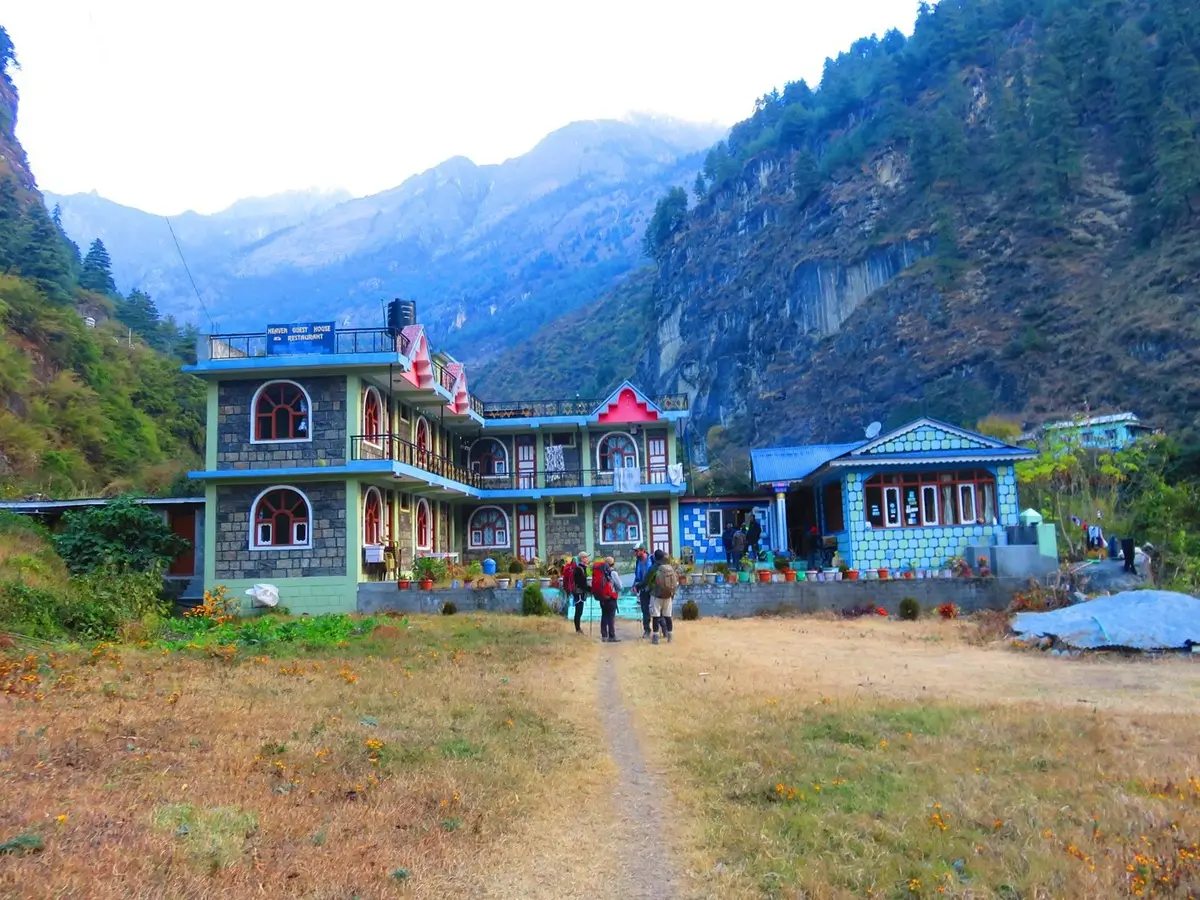
Finally, how is the accommodation on the Annapurna Circuit trek route? On the lower sections of the trek, teahouses usually offer private rooms. These rooms are simple, with a bed and a blanket. Some of them might have attached bathrooms as well, but in most cases, shared bathrooms are common.
As you get higher, especially past Manang, this availability decreases, especially in busy trekking seasons. Sometimes there is a good chance that private rooms aren’t available at all. Facilities like hot showers, reliable charging, and heated rooms become less consistent with increasing altitude and decreasing temperature.
What to Discuss Before Booking
Before we finalize the itinerary, let us know a few things beforehand. Your recent hiking or trekking experience. Your comfortable pace. Any health considerations we should plan around. How many days you are here for. Whether you need a porter and what your expectations are for a private room.
This is how we can build something that actually fits you instead of just handing you a package. At Marvel Adventure, we always suggest a good conversation before booking. We get to understand what you truly want from the trek, and you get to know how we operate the entire Annapurna Circuit trek based on your preferences.
Trekkers of any age could find the Annapurna Circuit trek difficult. Therefore, age isn’t the deciding factor here; your current fitness, trekking experience, and a proper itinerary are.
If you are seriously considering this trek, contact us at Marvel Adventure. We will help develop a realistic itinerary that suits you specifically.
Frequently Asked Questions
Can someone in their 60s do the Annapurna Circuit Trek?
Yes. Many people have completed the Annapurna Circuit successfully in their 60s, but it really depends on your personal health, fitness, and your previous experience.
Do older trekkers need more acclimatization days?
Not automatically. Additional acclimatization days should be planned according to the itinerary, sleeping-altitude gains, previous altitude-related problems, and individual health considerations. Older age alone does not determine how much acclimatization someone needs.
Can every walking day be kept short?
Some walking stages can be shortened where villages and lodges allow. The Thorong La crossing is still a long day, so we plan the surrounding stages with recovery and acclimatization in mind.
Should I take a private trek or join a group?
It depends on how much flexibility you want throughout the trek. A private departure gives more flexibility to adjust your pace and take extra rest, while a group schedule runs on a fixed schedule.
Is recent Himalayan experience necessary?
It does help a lot but isn’t a requirement. Recent experience helps you determine how your body reacts to altitude. But honest preparation, a well-built itinerary, and attention to your own health are more reliable factors in how you'll do than whether you've specifically trekked in the Himalayas before.