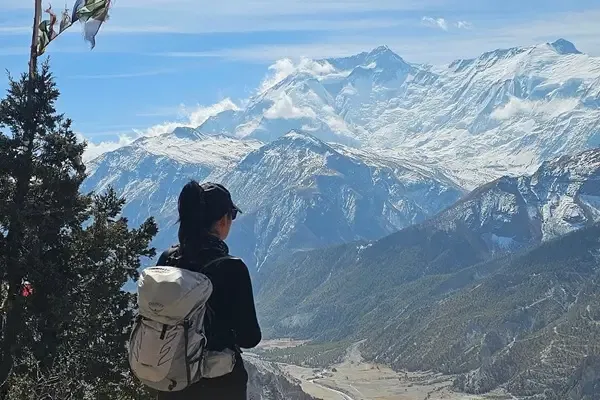
Thorong La Pass Crossing at a Glance
You might be standing at 4,560 metres with your headlamp still on, ready to leave. But the day isn’t that simple. Thorong La feels different when you're the one walking it. Here’s a rough overview of what the day looks like.
| Detail |
What to expect |
| Starting Point |
Thorong Phedi (around 4,560 m) |
| Highest Point |
Thorong La Pass, approximately 5,416 m |
| Finish |
Muktinath (around 3,760 m), reached via a long descent on the pass's western side |
| Departure |
Usually before dawn, between 3:30 and 5:00 AM. Exact timing depends on the overnight stop and conditions |
| Main Challenge |
Altitude, sustained uphill walking, cold, and the long descent |
| Walking Time |
Roughly, it might take 7-9 hours depending on the conditions that day |
| Distance |
Approximately 15 km |
| Terrain |
Mountain trail, an exposed ridgeline approaching the top, and loose, uneven ground on the way down |
Before You Start: The Evening and Early Morning
Real preparation for this day starts the evening before. Not at 4 AM with a headlamp in a freezing room.
After dinner, your guide reviews the next morning’s departure time, expected conditions, and how everyone is feeling. That conversation decides your wake-up call more than what your itinerary says.
Lay out your layers, gloves, headlamp, spare batteries, water, and snacks before bed. You don’t want to be digging through your bag in the dark at 4 AM with numb hands. Breakfast is usually quick, timed to whenever the group’s actually walking out the door. Your boots get checked one final time. Keep anything you might need during the climb, such as sunglasses, lip balm, and a spare buff, within easy reach.
Here's the most important part: tell your guide the truth about how you feel. Headache, nausea, unusual tiredness, or trouble catching your breath? Inform your guide immediately before you set off. If your guide knows how you're feeling, they can reassess the plan. That might mean adjusting the pace or changing the plan altogether. Quietly pushing through and hoping it passes is one of the more common mistakes we see on this day.
There’s a certain quietness while getting ready in the dark. Cold air, headlamps here and there, nobody saying much, and a feeling of anticipation. Just know the plan, know what you’re walking into, and don’t hesitate to open your mouth if something feels off.
What is the Climb to Thorong La Like?
There’s no single version of this climb. It depends on where you slept, how your body’s taking the altitude, and what the weather decides to throw at you. Here’s how the day differs depending on where you start.
Starting from Thorong Phedi
If you sleep at Phedi, you have more climbing to do before reaching the pass. The climb out of Thorong Phedi doesn’t ease you in. In the first hour, you're gaining real elevation before the main ascent has even properly started. You’re moving in the dark, or close to it, and the air is already thinner than anything you’ve walked through so far on this trek. Every step toward the High Camp asks a little more of your lungs than it would lower down. You feel that difference almost immediately. There’s no technical difficulty, but the trail keeps climbing long after you expect it to level off.
Starting from Thorong High Camp
Start from High Camp, and there's less climbing at the front end of the day. That doesn't make the altitude go away, though. High Camp sits noticeably higher, which means you might have a rougher night's sleep despite the shorter ascent ahead of you. Where you start from comes down to how you're acclimatizing, what the weather's doing, and how the rest of your itinerary is shaped. Treat it as something to decide with your guide.
Walking Towards the Pass
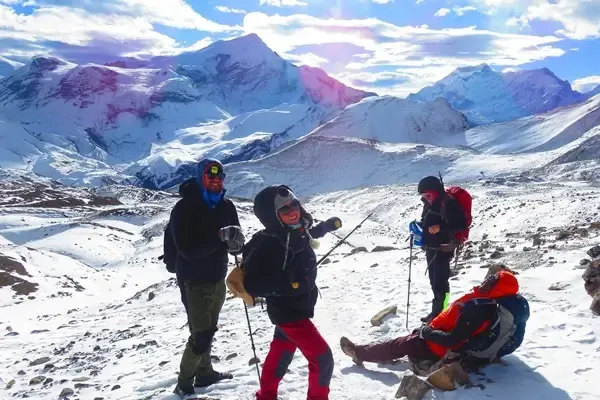
The trail out of High Camp doesn’t do you any favours. You’re already above 4,800 metres before you’ve taken a single step, so your legs feel off from the start. The trail from High Camp to Thorong La Pass has loose scree that shifts under your boots, and then patches of ice that crack and crunch in the half-light.
Past the halfway point, the trail widens out and loses the little shelter it had. That’s usually where the wind hits against your chest, finding its way through any gap in your jacket. Your breathing shifts here too. Nobody talks much anymore. Heads down, eyes on the next few feet of trail.
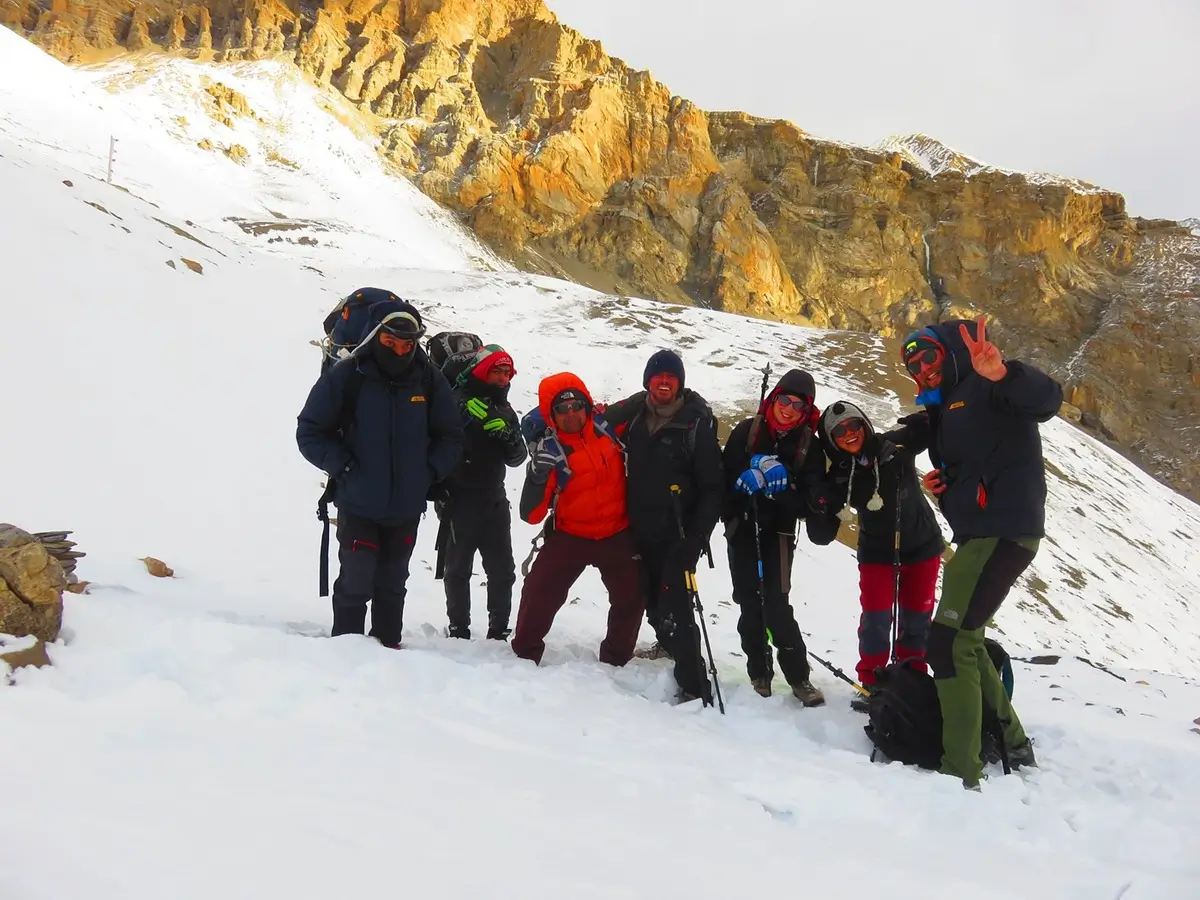
A lot of the Thorong La Pass difficulty is simply that this stretch takes longer than it looks like it should. Progress is slow. The air's thin. The pass seems to sit at the same distance for longer than feels reasonable. This stretch, more than any of the actual climbing, is where the day wears you down. And finally, with no real warning, the ground levels out and the prayer flags come into view, marking your arrival at Thorong La Pass.
What Happens When You Reach the Pass?
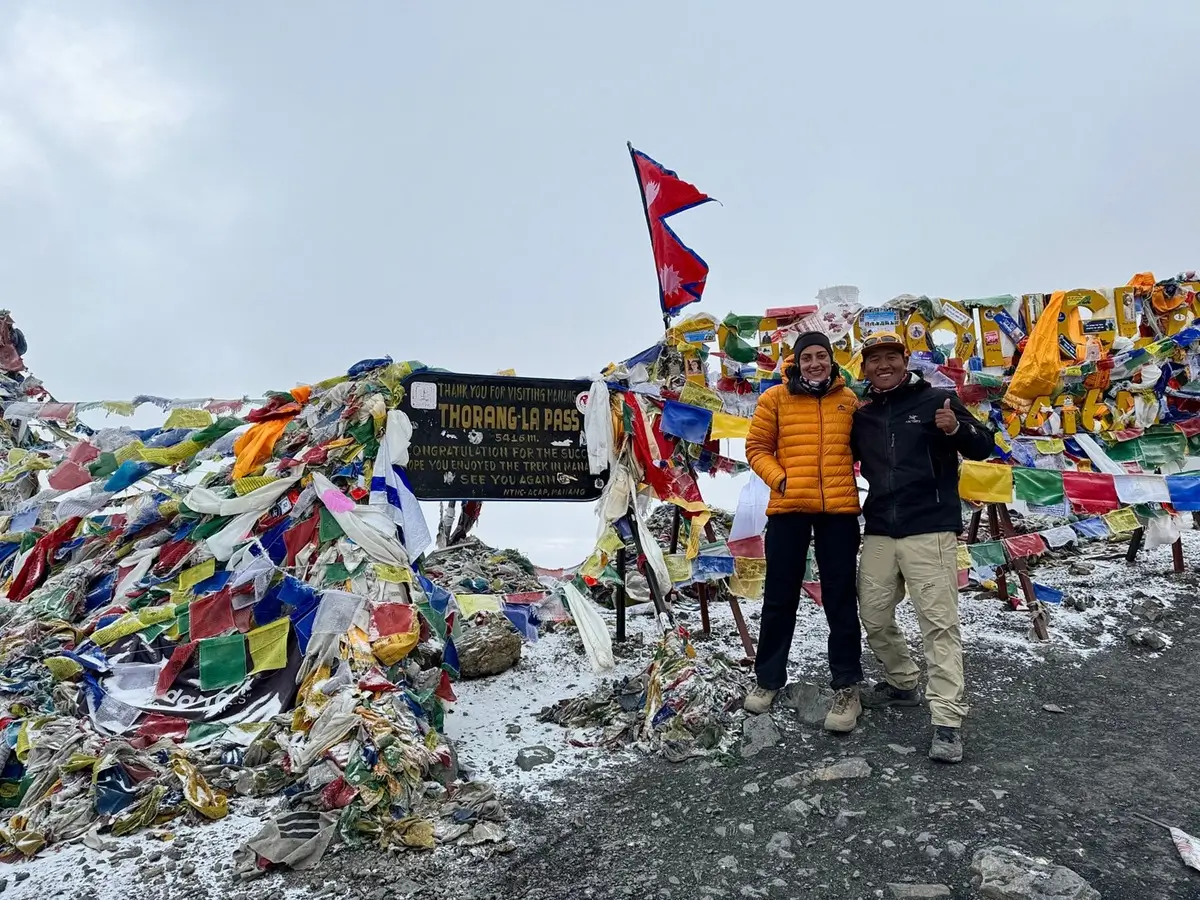
Most people end up stopping near the sign and the prayer flags, catching their breath and taking the photos everyone takes. After hours of slow, grinding effort, something shifts when you actually get there. You get that feeling of accomplishment after reaching the highest point on the Annapurna Circuit.
It’s properly cold, and the wind doesn’t let you forget it. We don’t stay here for long. A few photos, maybe something to eat, and then hands shoved back into gloves fast. You catch your breath, you listen to whatever your guide’s saying about the way ahead, and you begin the descent before getting too cold.
You need to remember one thing here: the pass is a milestone, not the finish line. The hard part behind you doesn’t mean the day is done. There’s still a long way down.
Why the Descent to Muktinath Deserves Just as Much Attention
It is easy to think the hard part is behind you once you're standing at 5,416 metres. It isn't. The Thorong La Pass descent is its own kind of difficult, and underestimating it surprises more trekkers than the climb does.
You lose more elevation on the way down than you gained on the way up. From the pass, the route loses roughly 1,650 metres in elevation before reaching Muktinath, based on an overnight elevation of around 3,760 metres. And you're doing it on legs that are already tired, over loose rock and uneven ground. That combination is hard on knees, ankles, and feet. It's usually where blisters and sore joints show up, even in trekkers who felt completely fine at the top.
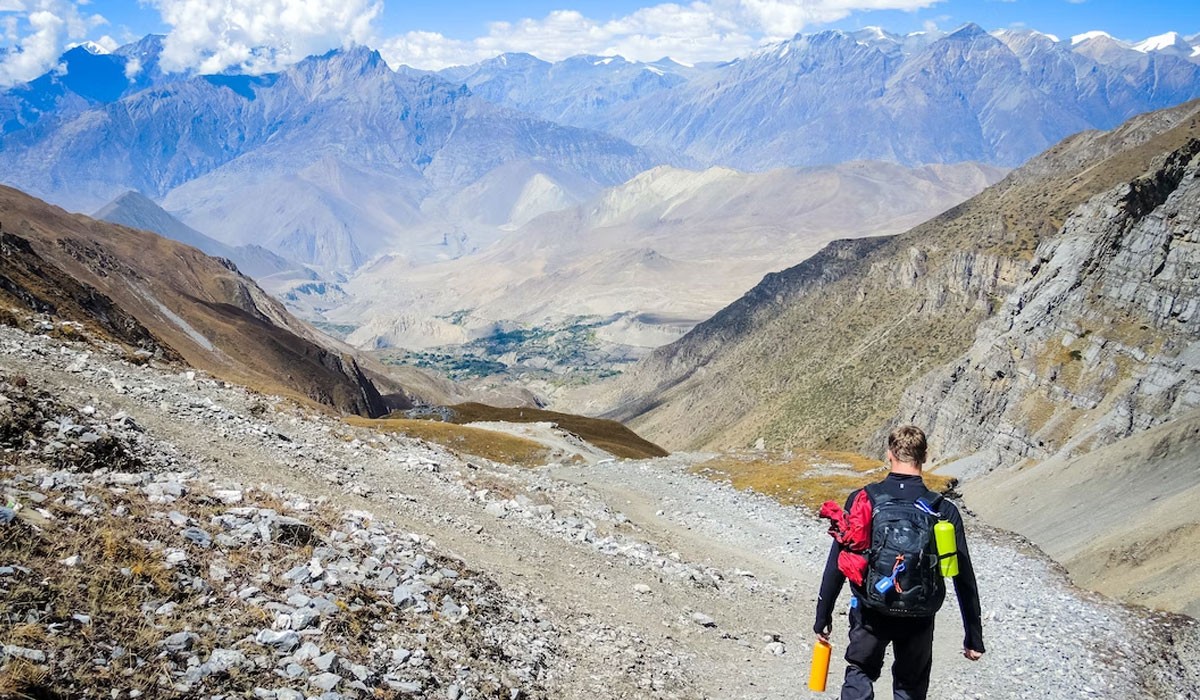
Lower elevation doesn't flip a switch and make it easy, either. You're still walking for hours. Still need to eat, drink, adjust layers as the temperature shifts. Still need to watch your footing on ground that punishes a careless step. Therefore, the trail from Thorong Phedi to Muktinath requires careful footing and sustained attention before it finally eases off.
Muktinath is still hours away once you leave the top, and that's usually when the whole day catches up with you. Some trekkers find the descent harder on their bodies than the climb ever was. Others would say the opposite. Depends on the person, the conditions, and how much the morning already took out of you.
What Makes Thorong La Pass the Hardest Day for Trekkers?
It’s never one brutal stretch that breaks people. It’s everything showing up on the same day, back to back, with no real room to recover in between. That’s the real reason trekkers keep calling it the hardest dat of the Annapurna Circuit Trek. Not because any single section outclimbs the tougher stages elsewhere on the route, but because nothing here gets a break.
Altitude
Up around 5,416 metres, there’s a lot less oxygen to work with, and you feel it in everything you try to do. Most trekkers who’ve acclimatized properly tend to do better than those who try to rush things. However, it doesn’t remove the risk of altitude sickness. Altitude simply makes the whole day heavier than it has to be.
Total effort
The climb, the stretch of time spent up at altitude, and the long way down after. None of it is a quick push you recover from. It’s a full day of work, start to finish, with the finish line further off than it looks.
Early departure
You’re up before the sun, usually after a night of broken, thin-air sleep, which means you’re walking into the hardest day of the trek before you’ve even properly woken up.
Weather exposure
Wind, cold, snow, ice, and a whiteout if you’re unlucky. Any one of these can slow you down and rewrite the whole day, no matter how fit you showed up.
If you’re planning the trek in winter, our guide to the Annapurna Circuit in December explains seasonal conditions and itinerary considerations.
Accumulated fatigue
This day doesn’t arrive suddenly. It comes stacked on top of everything before it: how you slept, how you ate, how well you acclimatized, and how hard you pushed on earlier stages. All of that quietly shows up here, whether you realize it or not.
Being fit helps, but it won’t cancel out altitude. Honestly, nothing written here, or anywhere else on the internet, can tell you exactly how your own body’s going to handle the day until you’re standing in it.
How Should You Prepare for the Crossing?
There are some of the most important things to consider;
Choose an itinerary with a considered ascent schedule
Gradual acclimatization and sensible overnight stops matter a lot more here. Before you book, read the itinerary line by line. An extra acclimatization day isn’t a guarantee against altitude illness. But a rushed one gives you almost nowhere to go if the day starts falling apart.
If you have previous high-altitude experience and good fitness, you can also check out our 10 Days Annapurna Circuit Trek.
Prepare for sustained uphill and downhill walking
General fitness gets you halfway there. What helps more is walking: longer distances, varied ground, some real uphill and downhill in the exact boots and daypack you’re bringing with you. You don’t need to train like you’re climbing Everest. A few steady weeks of walking will do more for you than one punishing session the week before you fly.
Pack for cold and changing conditions
Pack warm layers, a windproof outer shell, insulated gloves, sturdy trekking boots, and a working headlamp with spare batteries. Carry sun protection, drinking water, and enough snacks for a long trekking day. Keep these essentials accessible in your daypack. If you have a porter, pack your remaining belongings in your main trekking bag for transport to the next overnight stop. For a complete checklist, see our Annapurna Circuit Packing List.
Learn to manage your pace
A steady rhythm with proper breaks will carry most people through this day in far better shape than rushing off ahead and then collapsing to recover every ten minutes. Match your pace to the altitude, not to whoever in your group happens to be fastest. And say something to your guide when you’re struggling. Don’t just nod along and keep walking because it feels easier than admitting it.
Understand altitude and when to stop
Acclimatizing well brings the risk down. It doesn’t take it off entirely. The moment symptoms show up, report immediately to your guide. Mild symptoms may require rest and reassessment at the same altitude. Worsening symptoms, breathlessness at rest, confusion, or difficulty walking require urgent descent and medical assistance. Your guide will reassess the situation and help arrange appropriate medical advice or descent when necessary.
Planning With Marvel Adventure
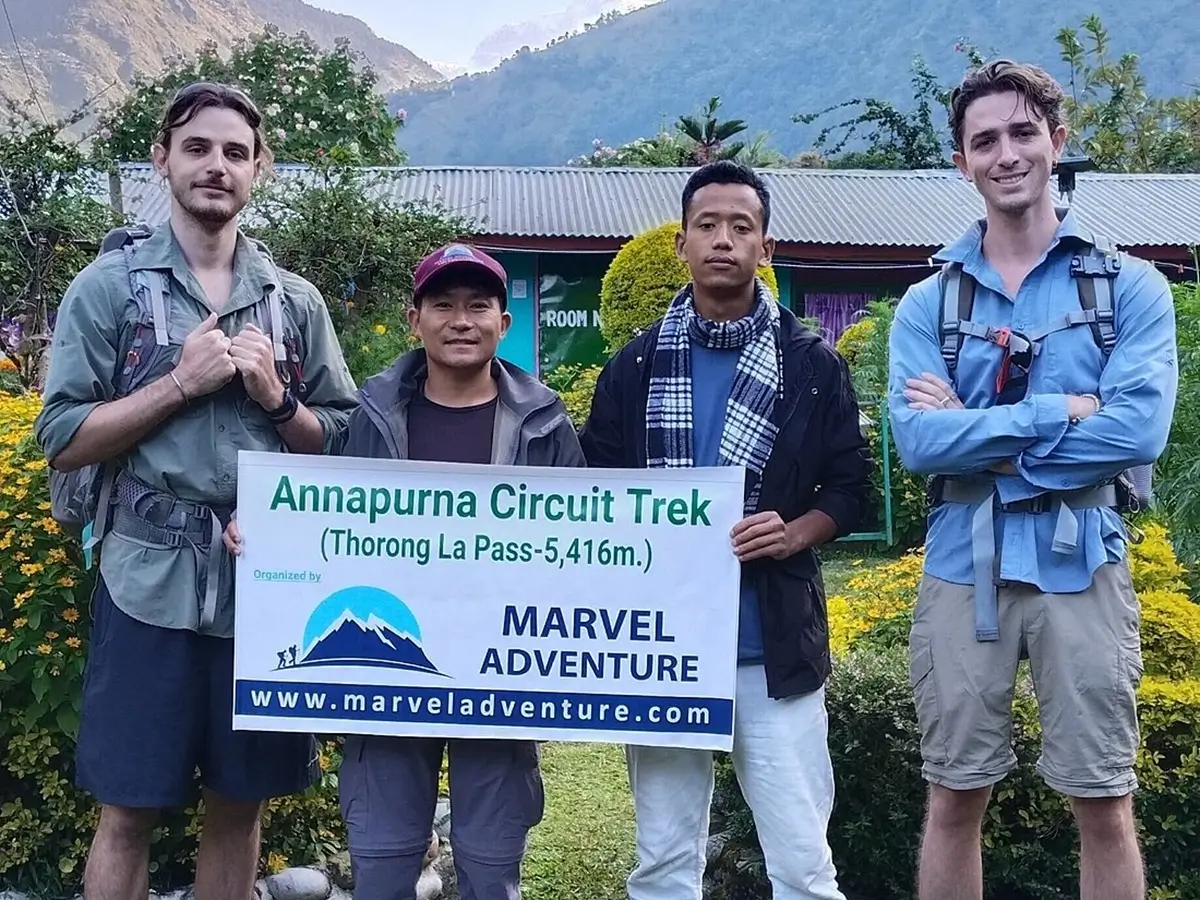
Good planning changes this day more than almost anything else does. That means an itinerary with sensible overnight stops, real time built in to acclimatize, a guide who's actually watching how the group's doing in the days leading up to it, and enough time set aside for the descent.
These are among the decisions we work through when we build an Annapurna Circuit itinerary. Not sure how the pass day will fit your pace? Tell us your trekking dates, your previous experience, and the itinerary you're looking at. At Marvel Adventure, we'll help you go through the route and work out what to think about before you cross Thorong La.
Frequently Asked Questions
Will we cross Thorong La in the dark?
Most groups leave while it’s still dark, around 3:30 to 5:00 AM. By the time you’re near the pass, the sky’s usually lightening, so the exposed ridgeline and the descent happen in daylight.
Do I need crampons or microspikes for Thorong La?
Not usually. Sturdy trekking boots handle the trail fine most of the year. Heavy snow or ice near the top in colder months can change that, and your guide will adjust pace or route if needed. Microspikes may be useful when the trail is icy, including during the main trekking seasons.
What happens if I’m too unwell to cross on the planned day?
You don’t cross. Signs of altitude illness mean a rest day, a reassessment the next morning, or assisted descent if it’s serious. This is exactly why the itinerary you book matters. One with no spare days leaves you with far fewer options if this happens.
Can I arrange transport immediately after reaching Muktinath?
Yes. Muktinath has road access, so jeeps and buses run onward toward Jomsom, with flights available from there too. However, most trekkers don’t push straight on. After 7 to 9 hours on your feet, an overnight in Muktinath makes more sense than rushing for a jeep.
Is the climb or the descent harder on Thorong La day?
Depends on the person. The climb tests your lungs and sustained effort. The descent tests your legs and joints, with more elevation lost than gained on tired legs. Some find the climb harder, others the descent. Don’t assume a strong climb means an easy way down.
What happens if bad weather closes Thorong La?
Our guides and lodges stay in close contact, and a crossing gets delayed if conditions turn dangerous. A flexible itinerary with a day or two of buffer can help with the delays. If the conditions are too harsh, then your guide will make the final call: either wait a few more days or descend back.