How Have Roads Changed the Annapurna Circuit?
The road building didn't happen all at once. Two separate roads have reached into the circuit from opposite ends. One climbs the Marsyangdi Valley from Besisahar toward Manang and the other comes up the Kali Gandaki Valley from the Pokhara side toward Jomsom and Muktinath. Between them, the middle of the old route has stayed almost entirely on foot.
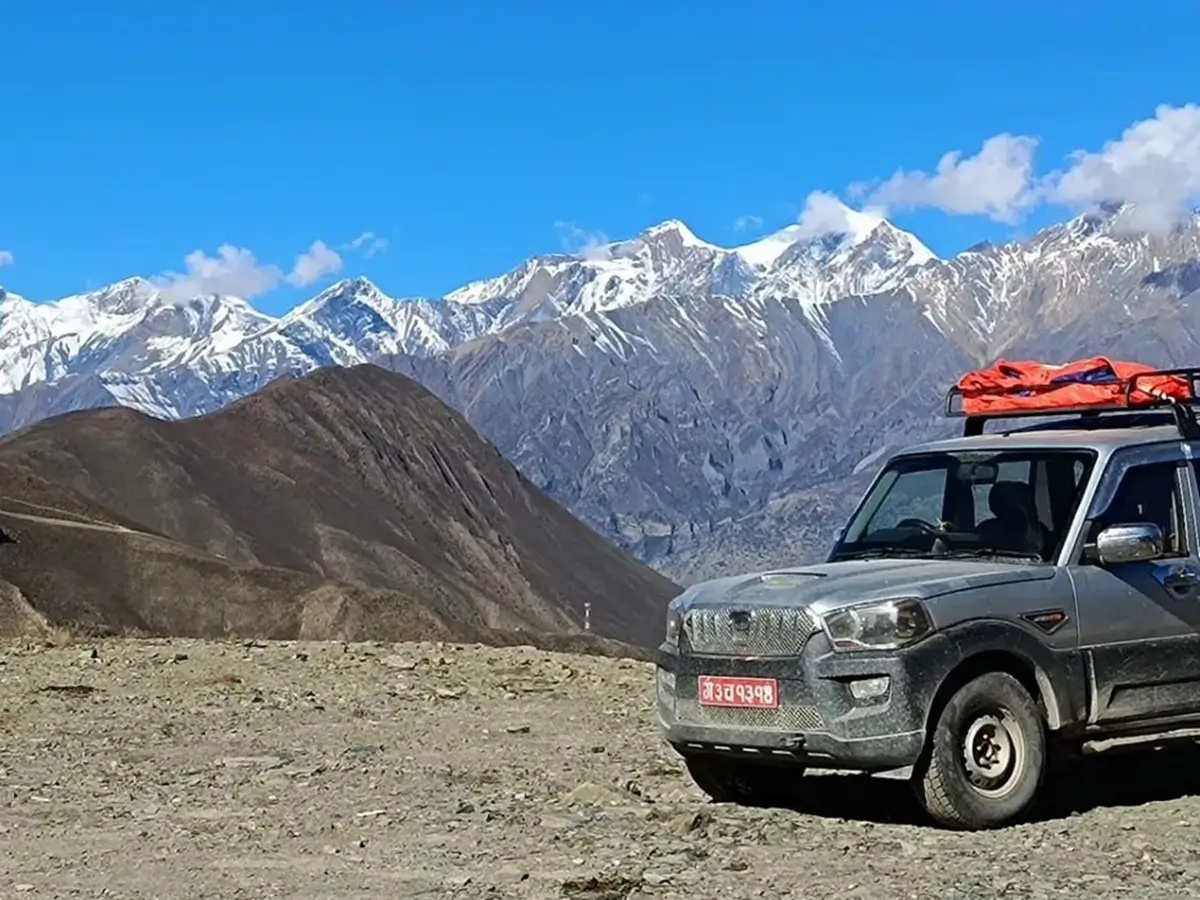
Where a road runs close to the old trail, you’ll notice it. Dust in the dry months. Sometimes there is a jeep or motorbike close enough that you step aside. In the early days, you will get less of that quiet you’d expect up here. And in a few spots, the trail and road are on the same ground.
But when people hear that the circuit is ruined, here is what they often miss out: these roads give trekkers more flexibility than the original route ever allowed. You can shorten or lengthen the trek by driving further in or further out, or exit early in case of altitude or weather emergency.
For the villages in the Annapurna Region, road access means faster transport of supplies, easier access to medical care, and a shorter trip to market for people who live there. Yes, that doesn’t make eating dust behind a jeep pleasant for a trekker, but people also need to realize that these roads serve a population well beyond the trekking season.
Which Parts of the Annapurna Circuit Involve Road Walking?
The clearest way to think about the Annapurna Circuit today is as five different sections, each with a different relationship to the road.
| Route section |
What readers should understand
|
|
Besisahar - Dharapani -Chame approach
|
Road access and road-linked walking. Experience depends on start point and usable alternatives |
|
Chame - Pisang
|
Mixed road and trail exposure depending on the walking route |
|
Upper Pisang - Ghyaru -Ngawal - Manang
|
A higher village route with more climbing |
|
Manang - Thorong La -Muktinath
|
High-altitude trekking and crossing a pass |
|
Muktinath - Jomsom and the exit valley
|
Road-linked travel with walking variants and transport choices |
Besisahar to Dharapani to Chame is where major changes have been over the years. Today, a motorable road runs right through here, and plenty of itineraries simply prefer to drive it. You can still choose to walk some parts of it, as there are footpath alternatives. They just take longer, and some don’t have proper signs along the trail.
Chame to Pisang is more of a mixed one. You'll cross the road here and there. But a good part of this stretch takes you past the apple farm and along the Marsyangdi gorge, where there is a proper trekking route, away from any traffic.
Above Pisang, you’ve got the one decision that shapes this whole trek: stick to the lower trail near the valley, or climb up through Upper Pisang, Ghyaru, and Ngawal instead. We'll get into the detailed route properly below.
From Manang, up over Thorong La, and down into Muktinath, you're on foot the entire way. This is where the highest point of the trek is. Therefore, it doesn’t have the road access that you find in the lower section of the circuit.
From Muktinath, the road runs a long way down the Kali Gandaki valley. Our standard itinerary uses a vehicle for descent from Muktinath rather than walking every kilometre. There's also a quieter walking option here, through a village called Lubra.
To put it all together, roughly the bottom section on each side has changed. The higher sections remain the main attraction for trekkers seeking mountain trails away from traffic. And the middle section is where you need a bit of planning, depending on what you want from the entire Annapurna Circuit experience.
Which Alternative Trails Are Worth Considering?
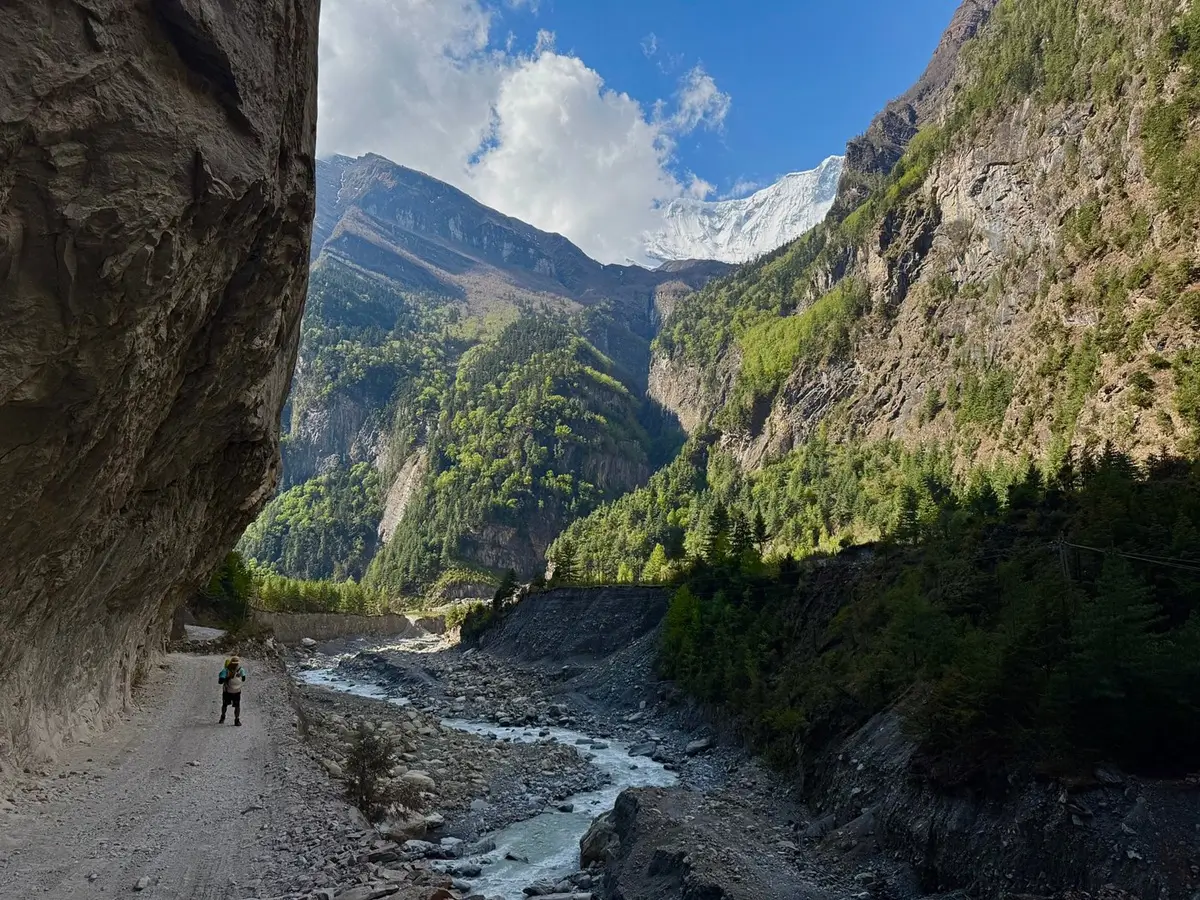
The New Annapurna Trekking Trails (NATT) connect existing village paths and alternative walking routes to help trekkers reduce road walking on the Annapurna Circuit. The network uses both red-and-white and blue-and-white trail markings. These routes can take you away from busy road sections, although some stretches still cross or follow vehicle tracks.
NATT isn't some separate trek you book instead of the Annapurna Circuit. It's layered on top of it. And not every stretch is maintained the same way. Some sections barely see footfall, and some get harder to follow after a bad monsoon. So, we strongly recommend double-checking the routes mentioned below with your guide before you go.
Upper Pisang to Manang via Ghyaru and Ngawal
If you are planning on making only one change in your route, this could be a better option for you. From Pisang, the lower trail runs pretty much straight to Manang, and sticks close to the road for a good stretch. The upper route does something different. It climbs up through Upper Pisang first, an old village built in the Tibetan-influenced style that you'll get to see more heading into the Manang Valley. Then on to Ghyaru, then Ngawal, both located higher on the hillside with the whole Annapurna range laid out in front of you.
But there is a trade-off. It's a longer day and a harder one too, with more climbing and more descending. You will need to build extra time in for this one. What you get in return is genuinely some of the best walking on the entire circuit: close views of Annapurna II, III, IV, Gangapurna rising up across the valley, and villages that feel older and quieter than anything down on the valley floor. That extra elevation gain also gives you a chance for better acclimatization before Manang and the climb toward Thorong La.
It's not automatically the right call for everyone, though. If you're already feeling the altitude, have limited time, or are trekking with someone who'd struggle with a longer climbing day, the lower route is a perfectly reasonable choice, and honestly, it isn't a lesser version of the trek.
Muktinath to Jomsom via Lubra
On the Mustang side, our itinerary moves from Muktinath to the Tatopani section by vehicle before continuing on foot to Ghorepani and PoonHill. The road here is well established and a lot of trekkers are ready for a change of pace after Thorong La. If you'd rather walk this stretch, there's a quieter option: the route through Lubra.
Lubra sits off the main Kagbeni-to-Jomsom road. You get there by climbing over a ridge from the Muktinath side, instead of dropping straight down the valley. After crossing the Lubra Pass (3,772m), you head into an ancient village in between the mountains that still follows its spiritual tradition. Lubra village is known as one of the last Bon (a pre-Buddhist tradition) villages in the region. The walk here feels more like high desert, with more ridgeline and less of a flat valley trail. It is a genuinely different landscape from some of the most popular treks in Nepal.
It takes longer than just riding or walking the direct route, and it's not something every itinerary builds in automatically. Marvel Adventure’s itinerary treats it as an optional add-on, depending on timing and what the group wants. If you are looking for off-the-beaten trekking routes in Nepal, the trek to Lubra might be the one for you.
Village Paths and Lower Valley Alternatives
Beyond the two routes above, there are smaller local footpaths scattered along the lower sections of the circuit. Old village-to-village connections, riverbank paths, and short bypasses around the noisier stretches of road near Besisahar, Bhulbhule, and the approach to Chame. Several of these follow the opposite riverbank from the road, or cut through villages the vehicle route skips entirely.
Honestly, these are better asked about on the ground than planned around from home. Bridge conditions change. Trail maintenance changes. What your guide heard last week beats what you read on a blog post two months ago. And a quieter alternative usually means more climbing, or a longer day, which changes where you'll realistically land by evening. Therefore, this is not something to decide on your own. Your guide comes in to make the final call.
How Can You Plan a Better Annapurna Circuit Itinerary?
Here are some local tips that will help you plan a better itinerary for the Annapurna Trek.
Choose your walking start deliberately
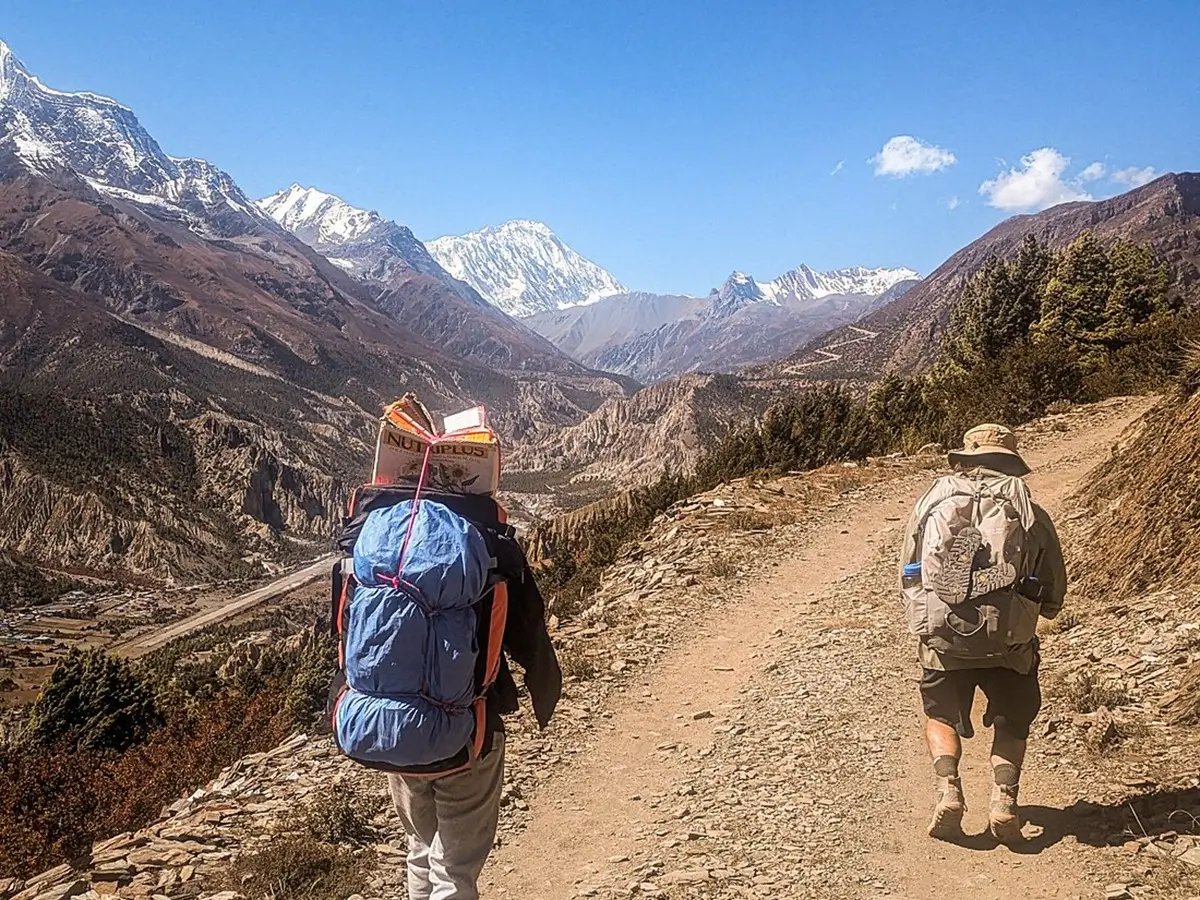
Dharapani keeps more of the lower approach as walking instead of driving, with more days, a more gradual ascent, and a lower-altitude start. Chame cuts out a portion of that roadside walking and saves you time, but also gives you less gradual acclimatization before things get steep. Neither one wins straightforwardly. It's about how much time you've got and how you want to spend those first few days.
Ask which trails the itinerary follows
Before you book anything, ask straight out: does this day follow a named NATT alternative, the road, or some mix of both? A good itinerary can answer that section by section. If it can't, that tells you something too.
Protect the ascent schedule
The acclimatization day in Manang and a sensible, unhurried approach to Thorong La matter more to how the trek actually feels than skipping a day off the lower, road-adjacent sections. Don't rush the bottom of the trek just to save more time before the pass. That's the wrong place to cut corners.
Decide how you want to finish
Marvel Adventure’s standard itinerary drives from Muktinath to Tatopani, then continues with trekking toward Ghorepani and Poon Hill before exiting to Pokhara. This means you don't have to walk the entire Kali Gandaki valley to complete the trip. If you'd prefer to explore quieter villages or take a different walking route, you can go for Lubra if it fits your schedule. You can also consider the Annapurna Circuit Trek with Tilicho Lake if you want to add another major destination to your route.
Confirm current conditions
Trail access, transport availability, bridge conditions, and weather all shift year to year and season to season. Confirm these with your guide and check all of this shortly before you arrive, instead of relying on what was true the season before.
What Should You Expect From the Trek Today?
The Annapurna Circuit is still a busy teahouse trek. During peak trekking seasons, you'll meet other trekkers and share a dining room most evenings. We have seen some people loving that, and some taking time to adjust to it, and either reaction is completely normal. The villages keep changing character as you go: terraced farmland and subtropical forest down low, pine and fir through the middle, then those drier, more mountain desert-feeling villages once you're up past Manang and into Mustang.
Accommodation shifts with altitude too. Lower down, you can easily find attached bathrooms and hot showers. Get up past Thorong Phedi, and it's shared bathrooms and colder rooms with everything simpler. Realistically, that's just how high-altitude teahouse trekking works anywhere in Nepal.
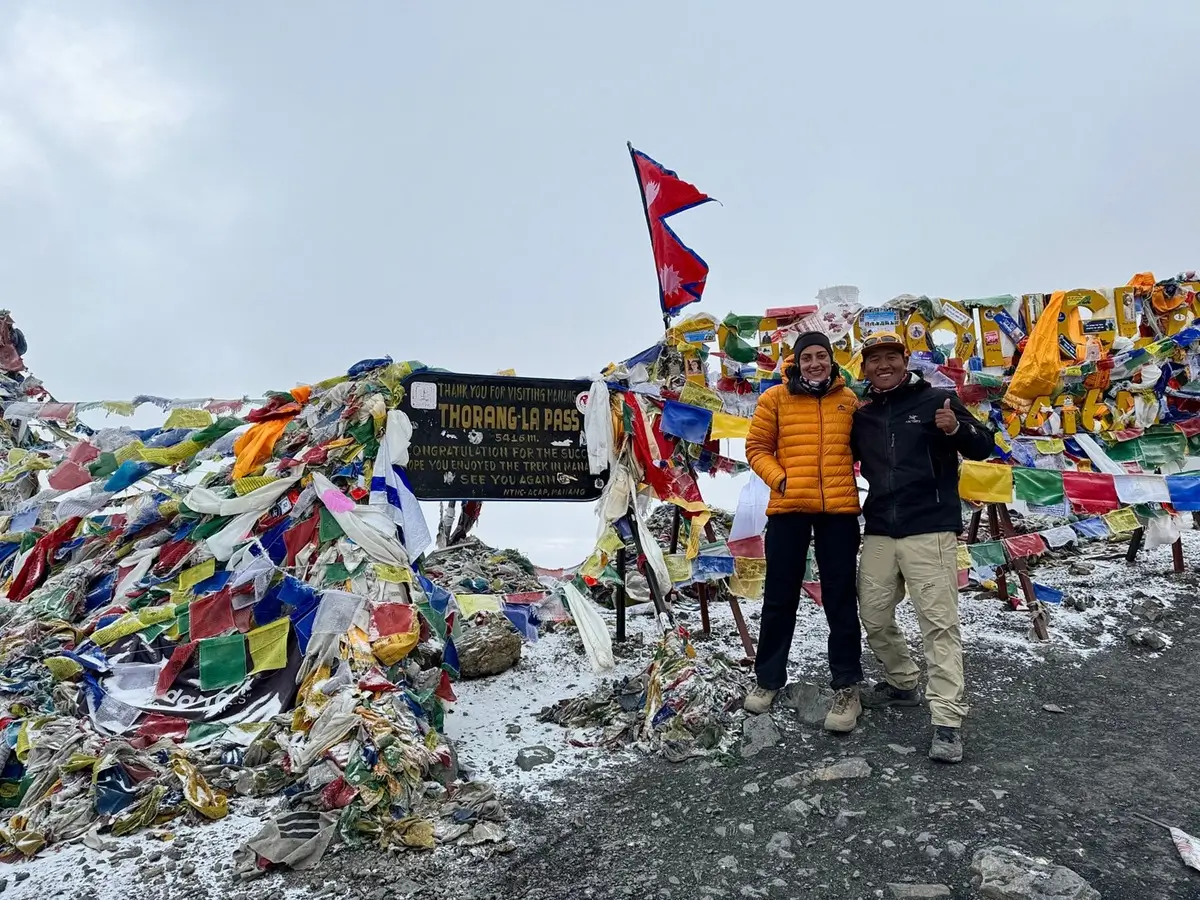
Some days you'll walk beside a road, or cross one, depending on which route you took through that section. Crossing Thorong La itself is the hardest single day of the whole trip. Early start. A long, genuinely high climb. Cold and windy at the top even on a good day. Our Annapurna guides often say that it's less about anything technical and more about managing fatigue and thin air while your legs keep moving.
Then there's the shift from Manang toward Mustang: one of the more striking parts of the whole circuit. You gradually move towards a wind-carved landscape around Muktinath and Jomsom. This is where you might feel a completely different atmosphere than the lower Annapurna foothills you started in. A genuinely different world from where day one began.
So, Is the Annapurna Circuit the Right Trek for You?
This is a good fit if you want:
- A long Himalayan trek that moves through several distinct landscapes and village cultures in one trip
- A proper high-altitude pass crossing, with Thorong La as a genuine physical and mental challenge
- Established teahouse infrastructure and a route that's easy to support logistically
- The flexibility to mix walking with transport depending on your time or energy that day
- The option to choose quieter footpaths on purpose, rather than just taking whatever the default itinerary hands you
Maybe look elsewhere if:
- You want a trek that's almost entirely road-free, start to finish
- You've got very limited time for acclimatization and want to keep the Thorong La crossing as low-stress as possible
- You're after something quieter and more remote, with far fewer other trekkers around you
- Your expectations are built around walking the historical, pre-road route exactly as it was twenty years ago, start to finish
If you genuinely prefer remoteness more than anything else on this list from the start of your trek, take a proper look at the Manaslu Circuit Trek instead. It's not a simple swap, though. You'll need a restricted-area permit, a guide with you the whole way, and you'll be heading into a more remote region with far fewer villages and other trekkers around. It's generally tougher logistically too. It's not entirely free of roads either. Our own itinerary still uses some vehicle transport on the approach and the exit, same as the Annapurna Circuit does. But most of your walking happens farther from roads.
Conclusion
The honest answer is that the Annapurna Circuit is still worth doing, but it isn't the same trek it was before the roads arrived. The approach and exit valleys have genuinely changed. The high section from Manang over Thorong La to Muktinath retains the mountain trekking experience that draws people to the circuit. And the sections in between reward a trekker who's willing to choose a footpath over a jeep track when available, even if that means a longer or harder day.
So if you're stuck deciding where to start, which route to take above Pisang, whether Lubra's worth the extra time, or how to handle that exit valley, just talk to us. We'd help you walk through it in detail. Route planning is most of what separates a frustrating version of this trek from a genuinely good one, and it's worth getting right before you book your dates.
FAQs
Can you avoid all roads on the Annapurna Circuit?
Not entirely. How much road walking you encounter depends on your starting point, finishing point, and the trails you follow. With the right alternatives, you can cut road exposure down a lot.
Is it better to start the Annapurna Circuit Trek at Ngadi or Chame?
It depends on what you’re after. Ngadi means more walking and a slower altitude build-up, which is good for acclimatization, but it has more time on the road-adjacent trail. Chame skips most of that stretch and saves days, at the cost of some gradual altitude buildup.
Will I miss the best parts of the Annapurna Circuit if I choose a shorter itinerary?
Usually not. Shorter itineraries tend to trim the lower, road-adjacent sections rather than the Manang-Thorong La-Muktinath stretch most people come for.
Is the higher route from Ghyaru and Ngawal worth the extra effort?
For most people, yes. It’s a longer, harder day than the valley trail, but you get some of the best views on the whole circuit, quieter villages, and zero road. It also helps with acclimatization. If you’re already feeling the altitude or short on days, the lower route is the better call.
Can I reduce road walking without rushing the trek?
Yes, that’s really the point of route planning. The Ghyaru–Ngawal route, NATT alternatives, and the Lubra variant can reduce road walking, but may require longer walking days or an extra overnight, depending on your itinerary. Trying to dodge every road stretch on a tight schedule is what actually leads to rushing.
What should I check in an Annapurna Circuit itinerary before booking?
Ask which sections are walked vs driven, day by day. Confirm your starting point, whether the Ghyaru-Ngawal route and a Manang rest day are included, and what the exit plan looks like.