Nir Karki
Talk to an Expert (Nir Karki)
Last-minute Deals
Book Now
Price from
US$1575

Everest Base Camp Chola Pass Gokyo Trek

257 reviews
29 reviews
Duration
14 Days
Trip Grade
Strenuous
Country
Nepal
Maximum Altitude
5,545m
Group Size
Min 2 pax
Best Time
(Sep-Nov) and (Mar-May)

Everest Base Camp-Chola Pass-Gokyo Trek is an adventurous trek in the Khumbu region. Everest Base Camp and Gokyo Valley are the destinations of this trek via the technical Cho La Pass.

Beginning the trek from the classical Everest trekking route from Lukla, it offers a unique experience walking through the moderate trail with the beautiful scenery all around. 

The trek begins after a flight of about 30 minutes from Kathmandu to Lukla. Furthermore, exploring the Sherpa culture and heritage, you trek all the way to Everest Base Camp via Namche Bazar, Pangboche, Tengboche, and Dingboche.

The breathtaking views of Mt. Everest, Lhotse, Ama Dablam, and several other snow-capped peaks from the top of Kalapatthar are something you will relish the most during the trek.

The adventurous trek does not stop there, yet as you make an ascent to Gokyo via Cho La Pass. Chola Pass (5420m) is a technical section that remains snowy most of the time. The wonder of the snow-covered peaks of the Everest region is just spectacular.  

After your trek to Gokyo Valley, you head to explore the awesome Himalayan beauties from Gokyo Ri, aka Gokyo Peak at 5357m. Along with the Himalayan panoramas, the view of Ngozumba glacier, the largest glacier in Nepal, and the Gokyo five lakes amazes you. Then you trek all the way to Lukla via Machhermo and Dole.

Trip Highlights

  • A scenic flight from Kathmandu to Lukla
  • Following in the footsteps of Tenzing and Hillary to Everest
  • An insight into the local culture and traditions
  • Exploration of Buddhist monasteries
  • Majestic view of mountains from Kalapatthar and Gokyo Peak
  • Explore Gokyo Lakes and Ngozumpa Glacier

Everest Base Camp Chola Pass Gokyo Trek Detailed Itinerary

Day 1

Fly to Tenzing Hillary Airport at Lukla (2,860m) and Trek to Phakding (2,610m)

Early morning flight to the tiny airstrip of Lukla. Once we reach there, you will have a quick breakfast. Then we will proceed towards Phakding, which is slightly downhill from Lukla, so it will be comparatively easier day in your trek.

Max Altitude: 2,610m (8,562ft)
Duration: 3-4 hours
Distance: 8 km
Meals: Breakfast, Lunch and Dinner
Accommodation: Teahouse
Day 2

Trek to Namche Bazzar (3,440m)

It will be an interesting day of your trek starting along the banks of the Dudhkoshi River, which you will have to cross back and forth through 5 suspension bridges. The 5th one will be even more interesting as it is the world's 123rd-tallest bridge. After walking for about 3 hours, we will enter Sagarmatha National Park, the UNESCO-listed natural world heritage site. A steep uphill from there will take us to Namche, the gateway to Everest Base Camp. 

Max Altitude: 3,440m (11,286ft)
Duration: 5-6 hours
Distance: 10.7 km
Meals: Breakfast, Lunch and Dinner
Accommodation: Teahouse
Day 3

Acclimatization in Namche Bazaar

We spend a day in Namche to get used to the conditions before making an ascent to the higher altitudes. We will visit the museum and make a short hike to the Everest View Hotel, where we will be blessed with spectacular mountain views. After spending some time at this heavenly place, we retrace our path back to Namche. 

Max Altitude: 3,440m (11,286ft)
Meals: Breakfast, Lunch and Dinner
Accommodation: Teahouse
Day 4

Trek to Tengboche (3,867m)

After a rest day in Namche, we trek all the way to Tengboche, which will take around 5 hours. On reaching Tengboche, we will visit the biggest monastery of the Khumbu region. Furthermore, we can also have a close view of Mt.Amadabalam (6853m), which is one of the most beautiful mountains of the region. 

Max Altitude: 3,867m (12,687ft)
Duration: 4-5 hours
Distance: 9.2 km
Meals: Breakfast, Lunch and Dinner
Accommodation: Teahouse
Day 5

Trek to Dingboche (4,410m)

The trek goes slightly downhill for about an hour till we cross a wooden bridge. Then we will walk uphill to Pangboche (A big Sherpa Village) and head towards Somare, just above 4000m, which will be our lunch spot. As we walk above 4000m, there will be no more vegetation. Trek continues up to Dingboche, where we will stay overnight in a lodge.

Max Altitude: 4,410m (14,468ft)
Duration: 5-6 hours
Distance: 10.5 km
Meals: Breakfast, Lunch and Dinner
Accommodation: Teahouse
Day 6

Acclimatization day in Dingboche

We will have an interesting day hike to Nagarjuna Hill (5100m), which is straight up from Dingboche. We can have spectacular mountain views from there. Then we will walk down to Dingboche to have lunch. Either explore the surroundings or rest the remaining day; it's all up to you. 

Max Altitude: 4,410m (14,468ft)
Meals: Breakfast, Lunch and Dinner
Accommodation: Teahouse
Day 7

Trek to Lobuche (4,940m)

Trail slightly begins with a gentle walk till Thukla (4600m) where you can enjoy tea break or even lunch as there is no possibility in between Thukla and Lobuche. Then it will be a sharp climb to Thukla pass (4800m). It's a place of memorial of great climbers from around the globe who lost their life during Everest expedition. Overnight at lodge in Lobuche.

Max Altitude: 4,940m (16,207ft)
Duration: 5-6 hours
Distance: 8 km
Meals: Breakfast, Lunch and Dinner
Accommodation: Teahouse
Day 8

Trek to Gorakshep (5,164m) and Everest Base Camp (5,364m)

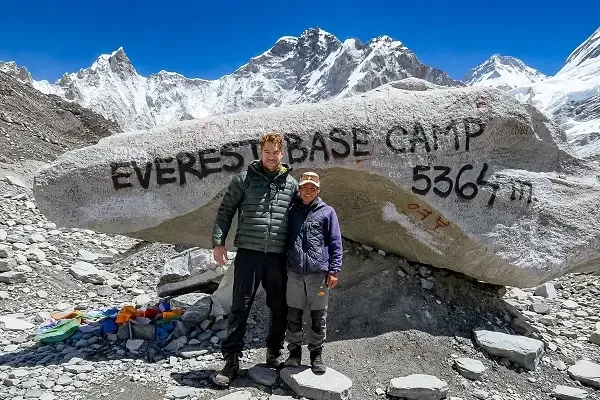
It is going to be a fabulous day as you are going to achieve your desired goal. Gorakshep is the last place where we can get lodging and food. So we will drop our bags in the hotel rooms, have a quick lunch, and walk to Everest Base Camp. The moment of reaching the base camp of the highest mountain in the world will remain as a lifelong memory. We will return to Gorakshep and stay there overnight.

Max Altitude: 5,164m (16,942ft)
Duration: 7-8 hours
Distance: 13 km
Meals: Breakfast, Lunch and Dinner
Accommodation: Teahouse
Day 9

Hike to Kalapatthar (5,545m) and Trek to Dzongla (4,830m)

We make an early start to reach Kalapatthar, the wonderful viewpoint. From Kalapatthar, we can relish watching the sunrise bathe the Himalayas along with the stunning 360-degree views of the surrounding mountains. After enjoying the amazing views from Kalapatthar, we descend to Zongla, the ultimate destination for the day. 

Max Altitude: 4,830m (15,846ft)
Duration: 6-7 hours
Distance: 10.8 km
Meals: Breakfast, Lunch and Dinner
Accommodation: Teahouse
Day 10

Trek to Gokyo (4,790m) via Cho La Pass (5,420m)

It is probably a bit strenuous a day as we make the challenging uphill climb through snow and ice to cross Cho La Pass. After crossing Cho La Pass, we continue the trek downhill until we reach Dragnak. Continuing the trek from Dragnak, we hike to Gokyo. The small village of Gokyo is one of the highest settlements in the world in terms of altitude. 

Max Altitude: 4,790m (15,715ft)
Duration: 7-8 hours
Distance: 12.5 km
Meals: Breakfast, Lunch and Dinner
Accommodation: Teahouse
Day 11

Hike to Gokyo Peak (5,357m) and trek down to Dole (4,200m)

We will begin the day with a steep climb to the top of Gokyo Ri, from where we can see four peaks above 8000m, namely Mount Everest, Lhotse, Makalu, and Cho Oyu. We will also visit the famous Gokyo Lakes before tracing our steps down to Dole. 

Max Altitude: 4,200m (13,779ft)
Duration: 7-8 hours
Distance: 14 km
Meals: Breakfast, Lunch and Dinner
Accommodation: Teahouse
Day 12

Trek down to Namche Bazaar (3,440m)

Leaving the splendid mountains in the backdrop, we continue our trek through the Sherpa villages as we approach Namche. On reaching Namche, you can buy the souvenirs to take back home and relax for the rest of the day. 

Max Altitude: 3,440m (11,286ft)
Duration: 5-6 hours
Distance: 11.5 km
Meals: Breakfast, Lunch and Dinner
Accommodation: Teahouse
Day 13

Trek back to Lukla (2,860m)

We will take an early breakfast in Namche before taking a downhill hike to Lukla. Retracing our path, we will walk down to Lukla, which will take around 7 hours. On reaching Lukla, you can celebrate the completion of the memorable trek. 

Max Altitude: 2,860m (9,383ft)
Duration: 5-6 hours
Distance: 19 km
Meals: Breakfast, Lunch and Dinner
Accommodation: Teahouse
Day 14

Early flight back to Kathmandu (1,400m)

In the early morning, we will catch the plane from Lukla to the capital city. You can enjoy the scenic view from the plane as you leave the mountains. On reaching Kathmandu, you will be transferred to a hotel by private vehicle, where you can take a cozy rest. 

Max Altitude: 1,400m (4,593ft)
Duration: 35 minutes
Meals: Breakfast
Accommodation: Hotel
Mode of Transportation: Flight
Have Questions? We're Here to Help
Like this itinerary but want to make a few changes? Every traveler is unique, and your journey should be too. Our local travel experts will design a personalized experience tailored to your interests, preferred pace, travel dates and budget.
Route Map & Altitude Profile

Cost Details

Includes

  • Airport pick-up and drop service
  • All Domestic flights and airport tax as listed in the itinerary
  • Standard meals (breakfast, lunch, and dinner) during the trek
  • Professional and friendly guide
  • A strong and helpful porter with proper equipment (1 porter for 2 people)
  • Salary, food, accommodation, and insurance for the guide and porters
  • Tea house/lodge accommodation during the trek
  • Pasang Lamhu Rural Municipality Permit
  • Sagarmatha National Park entry permit
  • Comprehensive first aid kit with oximeter
  • Government and local taxes

Dates & Availability

Aug 2026
Sep 2026
Oct 2026
Nov 2026
Dec 2026
Jan 2027
Feb 2027
Mar 2027
Apr 2027
May 2027
Jun 2027
Jul 2027
Aug 2027
Sep 2027
Oct 2027
Nov 2027
Dec 2027
Start Date
03 Aug, 2026
End Date
16 Aug, 2026
Status
Guaranteed
Price
US$1575
Start Date
06 Aug, 2026
End Date
19 Aug, 2026
Status
Guaranteed
Price
US$1575
Start Date
10 Aug, 2026
End Date
23 Aug, 2026
Status
Guaranteed
Price
US$1575
Start Date
13 Aug, 2026
End Date
26 Aug, 2026
Status
Guaranteed
Price
US$1575
Start Date
17 Aug, 2026
End Date
30 Aug, 2026
Status
Guaranteed
Price
US$1575
Start Date
20 Aug, 2026
End Date
02 Sep, 2026
Status
Guaranteed
Price
US$1575
Start Date
24 Aug, 2026
End Date
06 Sep, 2026
Status
Guaranteed
Price
US$1575
Start Date
27 Aug, 2026
End Date
09 Sep, 2026
Status
Guaranteed
Price
US$1575
Start Date
31 Aug, 2026
End Date
13 Sep, 2026
Status
Guaranteed
Price
US$1575

If there is only 1 person for the trip, there will be USD 150 additional cost.

Meet Our Expert Guides

Khilaraj Nachhiring
Trekking Guide
Phinjo Sherpa
Trekking Guide
Dinesh Rai
Trekking Guide
Kumar Karki
Trekking Guide

Equipment List

Upper Body Layers
  • Breathable, quick-dry base layers
  • Comfortable t-shirts
  • Lightweight insulating jacket
  • Down jacket for cold conditions
  • Waterproof and windproof jackets
Lower Body Layers
  • Thermal base layer
  • Waterproof trekking pants
  • Comfortable pants for evenings in teahouses
  • Comfortable hiking shorts for warmer sections
  • Waterproof and windproof outershell for rain or snow
Footwear & Accessories
  • Trekking boots with ankle support (preferably Waterproof)
  • Multiple pairs of quick-dry socks
  • Warm socks for cold nights
  • Gaiters for snowy, muddy, or dusty trails
  • Trekking poles to reduce strain on knees
Head & Sun Protection
  • A hat or a cap to block the sun
  • Warm beanie for cold mornings and evenings
  • UV-protected sunglasses
  • Neck gaiter or buff to prevent dust, cold, and sunburn
  • Sunscreen (30-50+ SPF) for face and exposed skin
  • Lipbalm with SPF
Personal & Medical Kits
  • Personal medications
  • Diamox (Acetazolamide) for altitude sickness
  • Ointment
  • Hand sanitizers and wet wipes
  • Quick-dry towel
Travel Documents
  • Valid Passport
  • Passport-sized photos for permits
  • Travel insurance
  • Flight tickets
  • Cash in Nepali Rupees
  • Emergency contact details
Miscellaneous
  • Daypack (30-45L) with raincover
  • Reusable water bottles
  • Headlamps for early morning hikes
  • Water purifying tablet or filter
  • Phone or Camera for capturing the adventure
  • Powerbank for an easier charging option
  • Notebook, books, or cards for free time
  • Snacks like energy bars and chocolates
  • Drybag to keep your gear safe from rain

Essential Information

Insurance

Travel insurance is mandatory for all clients undertaking any trip. It should provide adequate security for the full duration of the tour to cover personal injury, medical expenses, repatriation expenses, helicopter rescue and loss of luggage. Make sure that your insurance policy covers up to 2500-5000 meters of altitude.

Guide and Porter

We provide experienced, knowledgeable and honest guide with good communication skills in English language to make your trip wonderful. The guide will provide all the information about the mountains, different histories, cultures, traditions and many more. We will provide 1 porter for 2 people. The porters are helpful as well as strong and will carry a maximum of 25 kgs combined. After giving the best services along with the hard works up in the mountains, guides and porters expect some tips from your side. Tipping culture is very common in tourism sector.

Altitude Sickness

Altitude sickness, also known as Acute Mountain Sickness (AMS), is a pathological effect of high altitude on humans, caused by acute exposure to low partial pressure of oxygen at high altitude. It commonly occurs above 3000 meters. It presents as a collection of nonspecific symptoms, acquired at high altitude or in low air pressure, resembling a case of "flu, carbon monoxide poisoning, or a hangover". However, most people can ascend to 3000 meters without difficulty.

Primary Symptoms of Altitude Sickness:

  • Lack of appetite, nausea, or vomiting
  • Fatigue or weakness
  • Dizziness or lightheadedness
  • Swelling of hands, feet, and face
  • Insomnia
  • Shortness of breath upon exertion
  • Nosebleed
  • Persistent rapid pulse
  • Drowsiness
  • General malaise

Prevention:

Ascending slowly is the best way to avoid altitude sickness. Avoiding strenuous activity such as skiing, hiking, etc. in the first 24 hours at high altitude reduces the symptoms of AMS. Alcohol and sleeping pills are respiratory depressants, and thus slow down the acclimatization process and should be avoided. Alcohol also tends to cause dehydration and exacerbates AMS. Thus, Marvel Adventure strictly suggests avoiding alcohol consumption in the first 24–48 hours at a higher altitude.

Guides and porters from Marvel Adventure are very much familiar with this problem due to their experience. All of them are trained with basic medical trainings and hence they definitely can help you.

Explore our exclusive Everest Region packages, featuring the serene Gokyo Lake Trek, the exhilarating Three High Pass Trek, and the scenic Everest Panorama Trek. Each package is meticulously crafted to offer a unique exploration of the Himalayas, catering to varying levels of adventure and fitness.

Best Time for Everest Base Camp Chola Pass Gokyo Trek

Nothing beats the suitability of Nepal's peak trekking seasons if you are wondering about the perfect time for the Everest Base Camp Chola Pass Gokyo trek. Autumn and spring, without a doubt, offer ideal conditions for embarking on this adventurous journey. 

Each part of your trekking route is affected by the seasonal changes. So, you may reconsider whether you are planning for monsoon or winter treks. 

The following breakdown helps you identify the best time for the trek depending on the conditions of the route:

Autumn: Popular and Ideal 

Autumn stands out as peak trekking season in Nepal for a reason. It creates a perfect blend of nature and adventure. The weather is consistent, creating trails that are comfortable for walking. That is why it is regarded as an ideal and popular time to trek to Everest Base Camp and Gokyo via Cho La pass.

Stable weather is one of the features of this season, which extends from September to November. This means there is little or no rain for several days in the trek route. You can experience sunny conditions most of the time. The temperature is moderate without extreme fluctuations. Also, there is no risk of sudden storms. 

All these factors contribute to dry trails. They are easy to walk on as compared to monsoon trails that tend to be wet. The views of Everest, Kala Patthar and Gokyo Ri are very clear. Equally clean are the skies above high mountains. These conditions are ideal not only for walking and enjoying, but for photography, too.

Cho La Pass is a challenging point of this trek and snow cover is one of the reasons for this. Yet the snow is less than in winter, allowing for a comparatively easier trek. Nonetheless, you need to be careful of slippery icy patches. Even then, the high pass is manageable for trekkers provided they have the right equipment and guidance. 

Spring daytime is pleasant for walking as it is neither too hot nor too cold. Be careful to stay warm in chilly mornings, evenings and nights.

Despite a few challenges, autumn is recommended as the best time for undertaking this trek.

Spring: Beautiful and Rewarding

The perfect time for the Everest Base Camp Chola Pass Gokyo trek is spring if you love colorful landscapes and fresh mountain air. Temperatures are also comfortable for hiking during the daytime. 

The routes are filled with hues of beautiful flowers. The lower sections of the trail between Lukla and Namche come alive in hues of red, pink and white rhododendrons.

Likewise, visibility is usually good due to clear skies. Despite occasional afternoon clouds, you won’t miss the magnificent views of Everest along with Lhotse and Ama Dablam.

The daytime temperatures below 4,000m are neither very hot nor very cold. They are just right for trekking. But temperatures drop significantly during the night and early mornings in places like Gorakshep, Lobuche and Gokyo. Expect the temperature to drop below freezing.

March can see snow and ice in Cho La Pass. But the snow starts to melt by late April and May. This makes it easier to traverse the high pass. 

While autumn is the busiest time of the year, spring is comparatively less busy. So, the trails are quieter than in autumn.

However, spring is no less of a trekking season in Nepal. So, if the Everest Base Camp Chola Pass Gokyo trek is on your radar, spring is the second-best and recommended season.

Winter: Peaceful but Harsh

Winter trek to Everest Base Camp and Gokyo via Chola Pass is for you if you are looking for peaceful trails. But with peace comes harsh weather conditions, demanding proper cold gear and strong fitness from the trekkers.

As the temperatures can fall below -15°C at higher altitudes, the daytime can feel extremely cold. Wind chills are regular. The nights are freezing. 

Not many dare to brave such weather, which is why the trails are nearly empty in December, January and February. 

One of the main destinations of this trek, the Cho La Pass, is a challenge to cross. You should not attempt to cross the pass without proper gear and experience. There are chances it might remain closed due to snow.

The other limitation of this season is that teahouses around Gokyo and the pass tend to shut down. It might create difficulties in arranging for logistics. 

However, this time is best for getting clear views of the mountain landscapes and their surroundings. You can enjoy nature in its best form in solitude. 

Monsoon: Rich but Unpredictable

It is a rewarding experience to walk amidst greenery, exploring nature’s richness. Monsoon offers the chance for the trekkers heading to Everest Base Camp, to Chola Pass, to Gokyo. But that comes with the challenge of difficult weather conditions.

The lower Khumbu transforms into a green valley in June, July and August. It is a rewarding experience to enjoy greenery accompanied by blooming flowers.

However, these features come with certain risks, like heavy rain and mud. The trails become slippery. The likelihood of landslides increases in the lower sections of the trail.

Leeches are common in lower forested areas following the rain. The rain and clouds lead to poor visibility. You may not be able to see Everest for days, missing the most important view of the entire trek. 

If you are ready to face all these odds, then you can go ahead with this trek with the necessary preparations.

How Difficult is the Trek?

This trek combines three different destinations - Everest Base Camp, Cho La Pass and Gokyo. The individual trekking to these three places has their own difficulty level. But once they are combined as a package, it becomes one of the challenging journeys in the Khumbu region. Yet with the right preparation, it is an achievable goal.

The Everest Base Camp Chola Pass Gokyo trek has been graded as ‘very strenuous’.  That is because you need to trek to high altitudes above 5,000m. The route ascends from Lukla at an altitude of 3,800m and then goes over 5,500m.

For instance, Kalapatthar is at an altitude of 5,545m. You need to reach 5,420m to reach Cho La Pass. Gokyo Ri is at an elevation of 5,357m. 

As such, the altitude gain is also significant. The oxygen level is also significantly lower at high altitudes. So, trekkers must plan acclimatization days mandatorily. Otherwise, there is a chance of suffering from altitude-related conditions such as Acute Mountain Sickness.

Likewise, the terrains are not easy to traverse. You need not use any climbing equipment in this trek. Yet you can’t avoid hiking through steep and rocky sections. If there is ice or snow on the trail, then crossing Cho La pass can feel technical. Therefore, you might have to use microspikes or crampons in some cases. 

On average, the trekkers walk 5-8 hours a day as part of this journey. A few days might require you to walk for 9-10 hours. The daily effort demands endurance and stamina to keep on going. 

What adds to the trek's difficulty is the inconsistent mountain weather. It changes quickly. Snowstorms and wind chill are common in peak seasons, too. This can make your trekking experience difficult. 

Requirements for the Trek

The Everest Base Camp Cho La Pass Gokyo trek is a challenging journey that takes you above 5,000m. Hence, a solid preparation is essential to participate in this adventure. 

You must be an experienced trekker to join this trek. In addition, you require physical fitness and mental strength. Equally important is to train yourself to develop your overall trek capacity. 

Below are some suggested preparations: 

Who should attempt it

Some of the basic qualities that the trekkers must possess to succeed in this trek are a good fitness level and prior trek experience. Fitness in this sense is the ability to walk a minimum of 6-8 hours per day carrying a backpack. If you are this fit, the trek is for you. 

The other criterion is experience. Trekkers must have walked over 3,500m in the past. It should be a part of a multi-day trek at altitude. Only then are you able to adapt to high altitudes. 

Furthermore, you must be confident to traverse through difficult terrain both mentally and physically. The reason is that rocky, uneven and icy terrain is a part of this trek. You are unable to avoid them on this trek. So, you need to prepare accordingly.

Who should avoid it

The trek is not suitable for those new to trekking and do not possess any experience at all. Trekking is fun, but traversing above 5,000m is a serious business. A slight mistake can cost your life. Thus, you do not know what to expect and how to deal with challenges during the trek without prior experience. 

Anyone with a serious heart or respiratory issue might also not be suitable for this trek. One should consult their physician before joining the trek if they have such health issues. 

It is also a no for those who are not prepared for challenging trails and the cold temperatures of the mountains. 

How to prepare for it

Prepare yourself both physically and mentally if you wish to be a part of the Everest Base Camp Cho La Pass Gokyo trek. Mental and physical strength and endurance make the trip safe, successful and enjoyable. 

You can prepare in the following ways:

Cardio Training

Cardio training improves endurance, so that you are not tired quickly during the trek. It enhances lung capacity. It helps your lungs tolerate thin air at high altitudes. The increased high efficiency ensures better oxygen circulation even when the body is under stress.

You can obtain good cardio fitness through hikes and long walks. Regular walks carrying a loaded backpack are the way to do so. Stair climbing, cycling and swimming are also suggested.

Strength Training

Strengthen your legs and hips with exercises like squats and lunges. Core exercises like planks and bridges improve stability. These trainings help you during deep ascents and descents. You can also navigate rocky and slippery sections with ease.  

Strength training avoids the quick fatigue of muscles. It prevents falls by helping you maintain balance when walking. Stronger muscles protect your knees from getting injured

Mental Training

The trekking days are long and tiring. You face discomfort from cold and fatigue.  Fear and anxiety are common when crossing difficult areas like the high passes.

A proper mental training helps you deal with these situations. For that, learn to practice focusing on small goals when simulating trek conditions during physical training. 

For instance, when you are on long hikes as a physical preparation for the trek, tell yourself, ‘I will just reach that next bend and rest. I won’t give up here.’ This mentality helps later in the trek. 

Likewise, visualize yourself reaching each milestone like Everest Base Camp, Cho La Pass and Gokyo. It helps make the seemingly impossible goal attainable. 

Also, prepare yourself to face discomfort during the trek. Yet that is temporary and just a part of the adventure. 

A strong mentality makes you resilient to harsh conditions. That ultimately ensures the success of the trek.

Permit Checklist

Marvel Adventure assists you with the permits required for the Everest Base Camp Cho La Pass Gokyo trek. But since you are the one who is actually traversing the area, you need to understand what they are and why they matter. 

You will require: 

Sagarmatha National Park Entry Permit: This permit is essential to enter Sagarmatha National Park. It is a UNESCO World Heritage Site. Once you obtain this permit, you can trek to the entire Everest region. This includes the Everest Base Camp, Cho La Pass and Gokyo Valley.  

Pasang Lhamu Rural Municipality Entry Permit: It is a permit issued at the local level. It is necessary to enter the area of Pasang Lhamu Rural Municipality. Its territory begins as soon as you land in Lukla from your aircraft. 

Lodging and Dining Along the Trail

You will spend nights at locally-run lodges and teahouses along the Everest Base Camp Chola Pass Gokyo trek. They offer basic lodging facilities along with nourishing meals for the trekkers. 

Here is what you can expect: 

Rooms and Facilities

The teahouses and lodges provide basic bedding. They include a pillow, a mattress and a blanket. Communal dining rooms offer heating facilities. They are usually heated with a stove fueled by yak dung. But the rooms are not heated. So, bring a winter-rated sleeping bag to stay warm at night, especially in Lobuche, Dzongla and Gokyo among other places.

Lodges from Lukla to Namche are better-equipped, with some even offering attached bathroom facilities. Shared toilets are a feature of places above that. 

Meanwhile, the lodges are very basic in Dzongla and Dragnag. In Gokyo, they are smaller than in other places. They can fill up quickly in peak trekking season. So, you should make reservations in advance and remain on the safe side.

You can charge your device after paying a certain amount throughout the trek. To deal with a limited power supply in higher altitudes, you should bring a power bank.

Expect for basic squat toilets. There can be simple Western-style toilets, too. But rather than faucets, you will get buckets of water. It is advised to bring toilet paper if you can’t do without it.

Food to Eat

The trekking route features basic but filling meals. Most teahouses have a similar kind of menu. Generally, you are provided with breakfast, lunch and dinner.

For breakfast, they serve Tibetan bread or chapati with jam or honey. They also provide porridge, muesli, eggs and tea or coffee.

Lunch and dinner are mostly similar, comprising dal-bhat, fried noodles, fried rice, momos and pasta.

Potato-based dishes are commonly available as the locals cultivate it here.

You can also find drinks, including lemon tea and hot chocolate, among other beverages. 

But bring your tea bags and instant coffee if you want to enjoy the flavors of your home. Snacks like nuts are high in calories and offer a pleasant change of taste.

Responsible Trekking

Trekking through the Everest region means being on one of the busiest trek trails in the world. Every year, this region welcomes thousands of visitors. This can result in the deterioration of the fragile mountain environment if trekking is not done responsibly.

As a trekker, you should also contribute to the protection of the environment. Proper waste management, therefore, should be your priority. 

Always pack and take with you what you bring in to dispose of in the right place. This includes plastic wrappers, sanitary waste, as well as used batteries. 

Also, avoid buying bottled water whenever possible. Instead, opt for reused water bottles.

Likewise, respect local culture and people. Stay on marked trails. Avoid damaging vegetation. Do not disturb wildlife. 

Being a responsible trekker is the key to keeping the beauty and features of the Everest region intact.

Everest Base Camp or Gokyo: Why Not Choose Both?

Many trekkers choose the standard Everest Base Camp trek only. Others opt for the trek to Gokyo Valley only. So, it is obvious for you to question which one is better. 

Both are great options for trekking, offering a unique experience in the mountain trails of Nepal.

Yet rather than choosing one destination, we advise you to combine both places and be a part of a comprehensive trekking experience. As such, you can enjoy the features of both destinations, connected by the adventurous Cho La Pass. 

The following comparison table shows why you should choose the combined options of trek to Everest Base Camp and Gokyo via Cho La Pass: 

Comparison Table

Trek Routes

Features

Everest Base Camp Trek

Trek Duration: 12 days

Route Highlights: Everest Base Camp, Kala Patthar, Tengboche Monastery

Trip Difficulty: Moderate

Crowds: Busy

Gokyo Valley Trek

Trek Duration: 10 days

Route Highlights: Gokyo Lakes, Gokyo Ri, Ngozumpa Glacier

Trip Difficulty: Strenuous

Crowds: Quieter

Everest Base Camp Cho La Pass Gokyo Trek (Combined) 

Duration: 14 days

Route Highlights: All landmarks seen during the Everest Base Camp and Gokyo Valley treks along with Cho La Pass

Trip Difficulty: Very strenuous

Crowds: Less crowded after Everest Base Camp

The above table presents three trekking options in the Everest region and explains the differences. 

The classic route of the Everest Base Camp trek offers a close-up view of Everest, sunrise from Kalapatthar along with Khumbu Icefall. But it is one of the busiest trekking trails.

The Gokyo Valley trek, on the other hand, has peaceful trails. You can see turquoise Gokyo Lakes, ascend Gokyo Ri and enjoy the Ngozumpa Glacier, too. This part of the journey does not require you to hike to the Everest Base Camp.

But if you want to experience all the aforementioned highlights, the combined route via Cho La Pass is the best option for you. 

The Everest Base Camp Chola Pass Gokyo trek first takes you to the Everest Base Camp and then to Chola Pass before exploring the Gokyo Valley. It is more challenging yet rewarding. This is because with the addition of a few more days in your itinerary, you can experience the greatest variety of the Everest region.

Everest Base Camp Chola Pass Gokyo Trek FAQs

What is the Everest Base Camp Cho La Pass Gokyo Trek in Nepal?

The Everest Base Camp Cho La Pass Gokyo Trek is a full circuit trek that connects Everest Base Camp, the Cho La Pass, and the Gokyo Valley. At Marvel Adventure, we often describe it as the “complete Everest experience” because it combines classic EBC with the turquoise Gokyo Lakes and a high mountain pass adventure.

How difficult is the Everest Base Camp Cho La Pass Gokyo Trek?

It’s a challenging trek. The Cho La Pass crossing at over 5,300 meters adds a serious physical and mental test. Most trekkers don’t realize the difficulty comes not just from distance, but from altitude, cold conditions, and long trekking days.

Is the Everest Base Camp Cho La Pass Gokyo Trek suitable for beginners?

Beginners can do it, but only if they are very fit and well-prepared. From our experience at Marvel Adventure, trekkers with prior hiking experience handle this route much more comfortably than first-timers.

What is the highest altitude reached during this trek?

The highest point is Cho La Pass at around 5,420 meters. Kala Patthar (5,545 meters) is also included for the best Everest viewpoint, and both days feel significantly tougher due to altitude.

How many hours do we walk each day?

You’ll typically walk 5–8 hours per day. Some days, especially near Cho La Pass, can feel longer because of steep climbs, icy sections, and early starts.

What is the best time to do the Everest Base Camp Cho La Pass Gokyo Trek?

Spring (March–May) and autumn (September–November) are the best seasons. During peak trekking seasons, the weather is more stable and the pass crossing is generally safer.

Is altitude sickness common on this trek?

Yes, altitude sickness is quite common because the trek stays above 4,000 meters for many days. Our guides at Marvel Adventure carefully monitor trekkers and adjust pace when needed.

Is the Cho La Pass difficult to cross?

Yes, Cho La Pass is one of the more technical-feeling sections due to steep ice, snow, and rocky terrain. Most trekkers don’t realize that weather conditions can change the difficulty level dramatically in a single day.

Do I need a guide for the Everest Base Camp Cho La Pass Gokyo Trek?

As of the recent regulation, trekkers must be accompanied by a licensed guide in the Everest Region. The Nepali law no longer allows solo trekking in this region. And to be fair, having a guide genuinely helps you with route insights and local connections that make a real difference in the trail. Marvel Adventure provides guides who have been operating in the Everest region for years and have deep knowledge about this trek.

Are Lukla flights included in the package?

Yes, your package will include the Lukla flight. Depending on the trekking season and air traffic, your departure route will either be Kathmandu or Ramechhap. We will confirm the flight details in advance, provide you with all the useful information regarding the flight and keep you updated on any operational charges.

What food is available on this trek?

You will be surprised to see wide range of meals in the Everest region, including dal bhat, noodles, soups, pasta, rice dishes, potatoes, pancakes, and eggs. Our guides often recommend lighter and freshly cooked meals at higher elevations for easier digestion. 

How fit do I need to be for the EBC Cho La Pass Gokyo Trek?

You need strong fitness and stamina. Long hiking experience is highly recommended. From our experience at Marvel Adventure, consistent training before the trek makes a huge difference on Cho La Pass day.


Is this trek more crowded than Everest Base Camp?

Parts of the EBC section are crowded, but the Gokyo and Cho La sections are much quieter. Many trekkers at Marvel Adventure choose this route specifically for the balance of popular and peaceful trails.

How much does the Everest Base Camp Cho La Pass Gokyo Trek cost?

The cost depends on itinerary length, group size, guide services, and flights. It is generally more expensive than standard EBC due to its longer duration and added logistics, but most trekkers feel the full circuit experience is worth it.

Price Per Person
US$1575
US$1575
All inclusive price
  • 2 - 4 paxUS$1575
  • 5 - 9 paxUS$1550
  • 10 - 20 paxUS$1525
Book This Trip
Talk to Our Travel Experts

What Our Clients Say

December 20, 2025
Gokyo Cho La Everest Base Camp

We stumbled upon marvel adventures by chance and could not be more happy with the service. From the beginning, staff helped us to hire gear and briefed us on anything we would possibly need. Our...

J
Jaden T
United States
April 22, 2025
Amazing Gokyo & EBC Trek!

I had an amazing experience with Marvel Adventures, doing the Gokyo Lakes & Everest Base Camp Trek via Cho La Pass. Everything was so well organised and tailored to my needs and preferences which made...

C
Canice M
Germany

You May Also Like

Best Selling Trek
everest base camp trek
Duration: 12 Days
5.0(31 Reviews)

12 Days Everest Base Camp Trek

US$1350US$1450
Inclusion
Difficulty Level: Moderate
everest three high passes trek
Duration: 15 Days
5.0(9 Reviews)

Everest Three High Passes Trek

US$1750US$1875
Difficulty Level: Strenuous
everest base camp trek via gokyo lake
Duration: 13 Days
5.0(11 Reviews)

Everest Base Camp Trek via Gokyo Lake

US$1495US$1495
Difficulty Level: Moderate
Need Help? Call Us+977 986-0313572