
Nir Karki
Talk to an Expert (Nir Karki)
Last-minute Deals
Book Now
Price from
US$1175

Manaslu Circuit Trek

257 reviews
29 reviews
Duration
12 Days
Trip Grade
Moderate
Country
Nepal
Maximum Altitude
5,106m
Starts
Kathmandu
Ends
Kathmandu
Group Size
Min 2 pax
Activities
Trekking
Best Time
Autumn (Sep - Nov) and Spring (Mar - May)

Manaslu Circuit Trek is an incredible choice for off-the-beaten-path lovers. It is the best alternative for those who want to avoid the ever-crowded Everest and Annapurna Regions of Nepal.

Manaslu Circuit trek takes you around the exquisite Manaslu Region, the home of the world’s 8th-tallest peak. The route was opened for foreigners in 1992.

Yes, Mt Manaslu, with a staggering height of 8,163m, is the main highlight of the trek. But we bet that’s one of many highlights. Manaslu Region is home to distinct civilizations, varied landscapes, glaciers, lakes, dense vegetation, sacred sites, majestic peaks, electric rivers, and more. Whether you love nature or culture or both, the Manaslu Circuit Trek 12 Days is a complete package for all sorts of trekkers.

Manaslu lies about 132km from Kathmandu, the capital of Nepal. The adventure of the Manaslu Circuit Trek begins in Kathmandu with a scenic drive to Soti Khola via Arughat. The bus ride is just the start. Once the trip reaches Soti Khola, the trek commences. Following the banks of the Budhi Gandaki River, the walk progresses gradually.

As it goes further, beautiful things start to happen. You will enter the land of diverse people such as Gurungs, Tamangs, Brahmins, and other ethnic groups. It lets you experience diversity. Nature also becomes more appealing as you see mountains, dense woods, lofty hills, glaciers, lakes, grasslands, terrace fields, and others.

The major stops of the trek, like Larkya La Pass (5,125m), Birendra Lake, Manaslu Base Camp, Samagaon, and Pungyen Gompa, will come along. Each of these sites will leave you amazed. Yet, the best thing about the trek, or the ultimate thing, is the Larkya La Pass. The mountain pass offers a vast panorama, including peaks such as Pawar Peak, Himlung, Gyaji Kung, Kang Garu, Annapurna II, Manaslu, and more.

After taking a round excursion of the Manaslu Region, the trek brings you to Dharapani. That is the ending point of the Manaslu Circuit trail. By the time you reach the ending point, you’ll have unforgettable memories, experiences, and pictures for life. On top of everything, you will experience and explore this less-frequented region in peace.

If you wish for a peaceful trekking experience in the Himalayas, there is no better option than this. Don’t think twice; 12 days of the Manaslu Circuit Trek is amazing.

Trip Highlights

  • Scenic mountain vista of the Manaslu region
  • Passing through the diverse natural terrains
  • Cultural exploration of the local settlements of the region
  • An option of an extended trip to the Tsum Valley
  • Exploring the unique flora and fauna
  • Staying at the local tea houses and lodges
  • Tasting the delicious cuisine of the locals

Why choose Manaslu Region for the Trek?

The Manaslu Region has beautiful landscapes that are ideal for all travelers. There is a Himalayan vista that you can observe from various viewpoints. Moreover, you can also get a scenic view of the natural terrains of the region, including waterfalls, forests, hills, streams, rivers, and others.

The trek trails pass through numerous off-the-beaten trails. You will pass through virgin territories that have not been extensively trekked before. The pristine natural landscapes have unique natural beauty. Trekkers will have the best opportunity for the region’s natural and cultural exploration.

The trails of this scenic trek also pass through the homes and settlements of the local people. You will experience the local people's traditions, heritage, and lifestyle in the rural landscapes. Hence, for these reasons, you should choose the Manaslu region for the trek.
Manaslu Circuit Trek Detailed Itinerary

Day 1

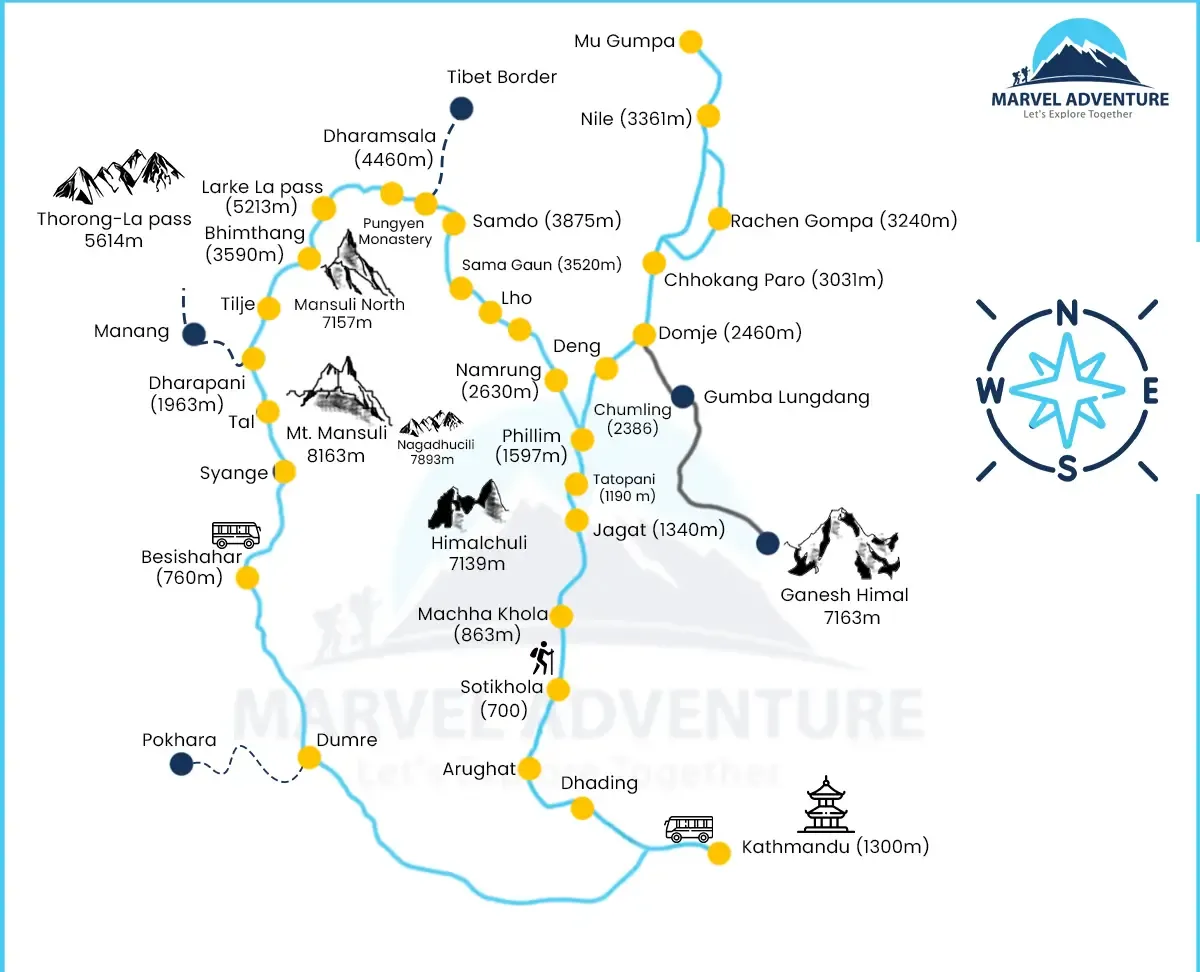
Drive from Kathmandu to Machhakhola

The trip starts from Kathmandu. After having breakfast, you will take a private vehicle on the Prithvi Highway. From the capital city of Kathmandu, you will pass through the scenic hilly regions to finally arrive at the destination of Arughat.

The journey passes through the settlements of Dhading Besi and other accommodations. The area has natural terrains, including green hills, terrace-farmed hills, water streams, rivers, and others. From the settlement of Dhading Besi, the roads get pretty rugged.

While driving through the scenic landscapes along the Budhi Gandaki River, you will reach Machhakhola. Stay overnight at the teahouse in Macchakhola and take a well-deserved rest.

Max Altitude: 870m (2,854ft)
Duration: 7-8 hours drive
Distance: 160 km
Meals: Breakfast, Lunch and Dinner
Accommodation: Lodge
Mode of Transportation: Public bus
Day 2

Trek to Jagat (1,350m)

The trail on this section of the trek passes through the beautiful terrains to arrive at Jagat. The lovely tour then takes you through the serene trails of the hilly region. There are incredible natural terrains that you can observe along the trails. The course of the trek starts from Machhakhola, as you trek along the narrow path.

The trails then lead you to Tharo Khola, and we will continue our journey to Khola Besi. The tracks then ascend the beautiful region to finally arrive at the Tatopani hot spring. The serene trails will then climb up the ridge to eventually reach the Budhi Gandaki river, which we cross on a suspension bridge.

The beautiful trails climb up the stony staircase and cross the landslide area. The ridge will take you to Doban, crossing a suspension bridge. Hard staircases pass down the river to finally arrive at the settlement of Thado Bharyang.

The Budhi Gandaki rivers are beautiful settlements on the west bank. There we will climb a ridge and then walk alongside the beautiful river. The beautiful trail will lead you to the village settlement of Jagat. You will have dinner, rest, and spend the night at the teahouse.

Max Altitude: 1,350m (4,429ft)
Duration: 5-6 hours
Distance: 22 km
Meals: Breakfast, Lunch and Dinner
Accommodation: Teahouse
Day 3

Trek to Deng (1,860m)

At the beautiful settlement in Jagat, we will have breakfast and then continue our journey to Deng. The trail then continues along the steep gorge along the tracks, from where you will finally cross the steep valley and then go downhill to the grasslands.

Slopes along the trail will eventually lead you to the Budhi Gandaki river, where you will cross to the east bank of the Budhi Gandaki river. Then the trail leads you through the lush bamboo forest before reaching the banks of Deng Khola. There is a small Deng village where you will find a teahouse to stay for the night.

Max Altitude: 1,860m (6,102ft)
Duration: 6-7 hours
Distance: 20 km
Meals: Breakfast, Lunch and Dinner
Accommodation: Teahouse
Day 4

Trek to Namrung (2,630m)

The trail from Deng takes you through the serene trails to arrive at the destination of Namrung. The beautiful course provides you with the best views of the entire region from various viewpoints along the route. The trail crosses the stunning Budhi Gandaki River and climbs up the hill to arrive at Rana.

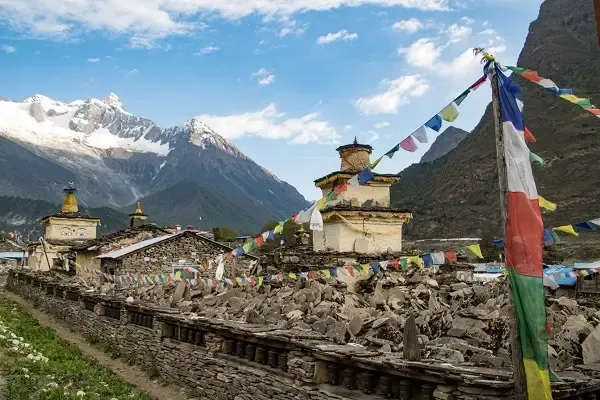
From this point, you will continue your journey through the challenging trails. The beautiful, serene trails then lead you through the Budhi Gandaki valley’s west side. The tracks then pass through an area with many mani stones and Buddhist heritage and landmarks before arriving at the settlement of Ghap.

The trail then takes you to the Prok village, providing outstanding views of the Siring Himal. Along the way, you’ll cross several rivers and walk through peaceful bamboo forests. You can also find Gompas, monasteries, and other Buddhist heritages along the trail.

We will cross the gorge, after which the trails turn flat and smooth. We will finally climb uphill and then reach Namrung, where we will spend the night. It is great to view the beautiful Himalaya vista of Ganesh Himal, Siring, and Mt. Himal Chuli.

Max Altitude: 2,630m (8,628ft)
Duration: 5-6 hours
Distance: 19 km
Meals: Breakfast, Lunch and Dinner
Accommodation: Teahouse
Day 5

Trek to Lho (3,180m)

On this trek section, you will trek from Namrung to Lho on a steep uphill climb to a forested area. Numerous natural green trails lead you to the village of Lihi. There are multiple villages with many chortens and barley terraces. We will cross the Simnang valley and pass through the settlements of Sho before finally arriving at Lho, where we will spend the night at the teahouse.

Max Altitude: 3,180m (10,433ft)
Duration: 5-6 hours
Distance: 10.5 km
Meals: Breakfast, Lunch and Dinner
Accommodation: Teahouse
Day 6

Trek to Samagaun (3,500m)

The trek from Lho starts with a walk to Shyala village. The scenic trails will lead you to the town of Sama, where you can get sweeping views of Mount Manaslu. There you can also find the Ribung Gompa, an essential religious viewpoint. The views of the snow-clad mountains, glaciers, and others will enthrall you along the trail.

Max Altitude: 3,500m (11,482ft)
Duration: 5-6 hours
Distance: 17.5 km
Meals: Breakfast, Lunch and Dinner
Accommodation: Teahouse
Day 7

Acclimatization day at Samagaun

On this day of the trek, you will acclimatize at the village settlement of Samagaon. The beautiful trails of this trek will take you through incredible trails where you can explore the natural terrains of the region.

The area around the village is ideal for exploring and acclimatizing to the region. The religious site of the Pungyen Gompa is a main acclimatization point in the region. There are also stunning glaciers that you can view from the viewpoint on top of a hill. After exploring the gompa and monastery area, you will return to Samagaon, where you will spend the night at the teahouse.

Max Altitude: 3,500m (11,482ft)
Meals: Breakfast, Lunch and Dinner
Accommodation: Teahouse
Day 8

Trek to Samdo (3,860m)

The section of the trek takes you from Samagaon to Samdo. The Budhi Gandaki trail then leads through a water stream, which you will cross on suspension bridges. The tour will lead you to Larkya la on a comfortable path passing through the mani walls.

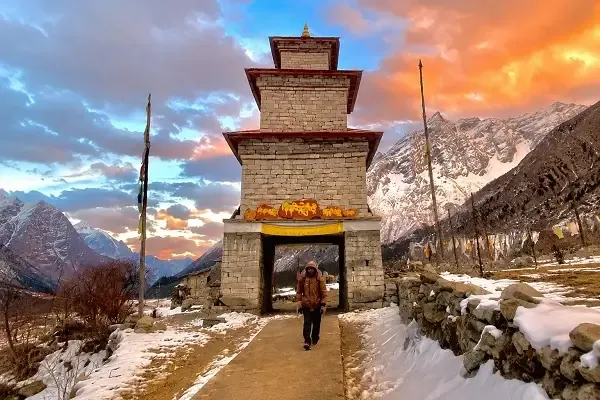
There are juniper and other forested areas. There is the Budhi Gandaki River along the trail. Trekkers can also find a stone arch, from where you can observe a sweeping Himalayan vista, and then reach Samdo, where you will spend the night at a teahouse.

Max Altitude: 3,860m (12,664ft)
Duration: 5-6 hours
Distance: 16.5
Meals: Breakfast, Lunch and Dinner
Accommodation: Teahouse
Day 9

Trek to Dharamsala (4,480m)

On this trek section, you will continue your journey through the beautiful terrains to arrive at Dharamsala. There are various wooden bridges that you need to cross over the Budhi Gandaki River. We will generally hike upwards in the region to cross multiple water streams.

The Larkya glacier is another highlight of the trek that you can observe along the trail. Finally, after trekking for a while, you will arrive at the Dharmashala. This trek allows you to explore the journey and acclimate along the trail.

Max Altitude: 4,480m (14,698ft)
Duration: 5-6 hours
Distance: 11.7 km
Meals: Breakfast, Lunch and Dinner
Accommodation: Teahouse
Day 10

Cross the Larke pass (5,106 m) and trek down to Bimtang (3,720 m)

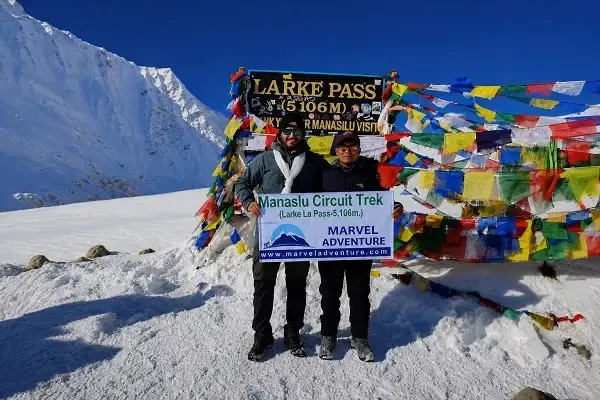
The trail on this section of the trek will take you to the region of Bimtang. In this section, you will cross the majestic Larke La Pass. The trekking journey also passes through the numerous valleys, cliffsides, and ridges to the north side of the Larkya glacier. From there, you can get the sweeping vista of the Larkya peak.

The trail then climbs uphill to the moraines on top of a glacier. The last section of the trek to the pass is quite steep; hence, you must traverse this terrain cautiously. The sweeping vista of the entire Himalayan landscape of the region, including the Annapurna, Himlung, Kanggru, Cheo, and others, is quite enchanting.

After trekking for long hours, we arrive at the low pastures before finally arriving at the Bhimtang. The sweeping vista of Mount Manaslu is a highlight of this section of the trek.

Max Altitude: 3,720m (12,204ft)
Duration: 6-7 hours
Distance: 24 km
Meals: Breakfast, Lunch and Dinner
Accommodation: Lodge
Day 11

Trek to Dharapani, Take Jeep to Besisahar (1,430m)

Walking duration: 6 hrs

Drive duration: 3-4 hrs

You will trek through the beautiful trails with spectacular views of the entire region. There are high pasture lands in the region as you pass through them. Then, cross the Dudh Khola over a suspension bridge. There are forests with rhododendron trees that you will pass through on the trail to arrive at this destination. Some narrow fields and ridges climb uphill to the riverbank to Gho. We will climb uphill to Tiliche and continue to Dharapani.

The beautiful trek trails pass through stony, rugged paths and then cross a bridge over Dudh Khola. Many walls and prayer flags will greet you in the village of Thonje. The beautiful trails then lead you to the police checkpoint, where you can show your permits before continuing along the route to Dharapani.

This section of the trek lies in the Annapurna Circuit. Trekkers will pass through the forested areas, mani walls, and a village to arrive at the large waterfall, Tal. After trekking for around 1-2 hours, we will finally arrive at Dharapani. After arriving at Dharapani, you will take the jeep drive to Besisahar.

The scenic drive will continue through the banks of the Marsyangdi Khola. The route opens up to broad valleys, pastures, and towns. The gentle route finally arrives at the downhill settlement of Besisahar. There you will spend the night at the tea house.

Max Altitude: 1,430m (4,691ft)
Duration: 3-4 hours drive
Distance: 50 km
Meals: Breakfast, Lunch and Dinner
Accommodation: Lodge
Mode of Transportation: Jeep
Day 12

Drive back to Kathmandu

We will take on this drive from Kathmandu to Besisahar Pass through the beautiful hilly highways. The beautiful trail passes alongside the Marsyangdi and Trishuli River banks. There are many rice fields, terraced farmed hills, rivers, waterfalls, valleys, and other scenic vistas along the journey. After arriving in Kathmandu, you will continue to rest and stay overnight at the hotel.

Max Altitude: 1,400m (4,593ft)
Duration: 6-7 hours drive
Distance: 175 km
Meals: Breakfast and Lunch
Accommodation: Hotel
Mode of Transportation: Public Bus
Have Questions? We're Here to Help
Like this itinerary but want to make a few changes? Every traveler is unique, and your journey should be too. Our local travel experts will design a personalized experience tailored to your interests, preferred pace, travel dates and budget.
Route Map & Altitude Profile

Cost Details

Includes

  • Airport pick up and drop by private vehicle
  • Standard meals (breakfast, lunch and dinner) during the trek
  • Government license holder guide with vast knowledge of the region
  • Strong and helpful porter with proper equipment (1 porter for 2 people)
  • Salary, food, accommodation and insurance for guide and porters 
  • Tea house/lodge accommodation during the trek
  • Fresh fruits every night after dinner
  • Public transportation as per the itinerary
  • TIMS (Trekking Information Management System) card
  • ACAP and MCAP entry permits
  • Special restricted area Manaslu permit
  • Comprehensive first aid kit with oximeter to measure your oxygen level daily
  • All government taxes and official expenses
  • Duffel bag, sleeping bag, down jacket and walking poles for the trek

Dates & Availability

Aug 2026
Sep 2026
Oct 2026
Nov 2026
Dec 2026
Jan 2027
Feb 2027
Mar 2027
Apr 2027
May 2027
Jun 2027
Jul 2027
Aug 2027
Sep 2027
Oct 2027
Nov 2027
Dec 2027
Start Date
02 Aug, 2026
End Date
13 Aug, 2026
Status
Guaranteed
Price
US$1175
Start Date
06 Aug, 2026
End Date
17 Aug, 2026
Status
Guaranteed
Price
US$1175
Start Date
09 Aug, 2026
End Date
20 Aug, 2026
Status
Guaranteed
Price
US$1175
Start Date
13 Aug, 2026
End Date
24 Aug, 2026
Status
Guaranteed
Price
US$1175
Start Date
16 Aug, 2026
End Date
27 Aug, 2026
Status
Guaranteed
Price
US$1175
Start Date
20 Aug, 2026
End Date
31 Aug, 2026
Status
Guaranteed
Price
US$1175
Start Date
23 Aug, 2026
End Date
03 Sep, 2026
Status
Guaranteed
Price
US$1175
Start Date
27 Aug, 2026
End Date
07 Sep, 2026
Status
Guaranteed
Price
US$1175
Start Date
30 Aug, 2026
End Date
10 Sep, 2026
Status
Guaranteed
Price
US$1175

If there is only one person for the trip, there will be an additional cost of USD 150. 

Trip Extensions & Add-ons

There is also an extension to the beautiful destination of Tsum Valley for the trekking journey. This addition makes the tour even more enchanting.

The side trip option is ideal if you want to travel on a unique journey through the serene trails. It will allow you to observe and experience the ancient landmarks of the Tsum Valley.

The trek also provides trekkers with an outstanding travel experience in the cultural landmarks of the region. The ancient tribal settlements date back to the medieval period. There are caves in the Tsum Valley where Milarepa and Guru Rimpoche (Padmasambhava) meditated.

Equipment List

Upper Body Layers
  • Breathable, quick-dry base layers
  • Comfortable t-shirts
  • Lightweight insulating jacket
  • Down jacket for cold conditions
  • Waterproof and windproof jackets
Lower Body Layers
  • Thermal base layer
  • Waterproof trekking pants
  • Comfortable pants for evenings in teahouses
  • Comfortable hiking shorts for warmer sections
  • Waterproof and windproof outershell for rain or snow
Footwear & Accessories
  • Trekking boots with ankle support (preferably Waterproof)
  • Multiple pairs of quick-dry socks
  • Warm socks for cold nights
  • Gaiters for snowy, muddy, or dusty trails
  • Trekking poles to reduce strain on knees
Head & Sun Protection
  • A hat or a cap to block the sun
  • Warm beanie for cold mornings and evenings
  • UV-protected sunglasses
  • Neck gaiter or buff to prevent dust, cold, and sunburn
  • Sunscreen (30-50+ SPF) for face and exposed skin
  • Lipbalm with SPF
Personal & Medical Kits
  • Personal medications
  • Diamox (Acetazolamide) for altitude sickness
  • Ointment
  • Hand sanitizers and wet wipes
  • Quick-dry towel
Travel Documents
  • Valid Passport
  • Passport-sized photos for permits
  • Travel insurance
  • Flight tickets
  • Cash in Nepali Rupees
  • Emergency contact details
Miscellaneous
  • Daypack (30-45L) with raincover
  • Reusable water bottles
  • Headlamps for early morning hikes
  • Water purifying tablet or filter
  • Phone or Camera for capturing the adventure
  • Powerbank for an easier charging option
  • Notebook, books, or cards for free time
  • Snacks like energy bars and chocolates
  • Drybag to keep your gear safe from rain

Essential Information

When is the best time for Manaslu Circuit Trek?

Spring season

The spring season is quite famous for its beautiful weather all around. There are stable weather conditions, with temperatures at moderate levels. Wildflowers like rhododendrons are blooming all around the hills.

Travelers will get to observe the beautiful Himalayan vista in blue skies. Moreover, you will pass through forested trails, including pine and fir trees. There is less rainfall, snowfall, and other weather challenges.

Autumn season

Autumn is a beautiful time in the Manaslu region. This autumn season has great weather and a scenic Himalayan view. There are moderate temperatures and a pleasant atmosphere in the region. Autumn is also a festive time, meaning you can explore the cultural aspect and celebrate the local festivities.

Offseason Treks

Winters are aesthetically pleasant at the high altitude, but also bring heavy snowfall and extreme temperatures. In the summer, there are hot and humid conditions. There are weather-related challenges in these seasons that make the trek difficult. Check the best time for more details.

How challenging is the Manaslu Circuit Trek?

In the high-altitude region, you will find challenges like unpredictable weather, rugged terrains, and extreme frigid conditions. The trekking experience will also determine the difficulty level of the trek. If you have trekked at a high altitude, you will find the hike less challenging. However, amateur trekkers will find the walk to be quite strenuous.

Another difficulty factor of the Manaslu region trek is altitude sickness. Acute mountain sickness is quite a challenge in high-altitude regions. It is due to the inability of the body to adapt to the changing high altitude conditions.

Hence, acclimatization is essential to tackle this problem. You can take the trek gradually, acclimatize at regular intervals, rest properly and drink lots of water. These steps will help you tackle the altitude sickness symptoms along the trail. 

Can you do this trek?

Anyone with proper exercise and preparation can take this trek in the Manaslu region. The Manaslu Circuit Trek is ideal for trekkers of all ages, sizes, and skill levels. All you need is proper physical fitness to tackle the rugged terrains of the region.

There are numerous challenging aspects that you might face during the trek. Mental strength is also an essential part of the trekking journey. Hence, you must prepare well for the trek with proper nutrition, packing, and training.

How to prepare for Manaslu Circuit Trek?

The Manaslu Circuit Trek is a high-altitude trek that takes you above 5000m. Therefore, prepare well for the trip considering various aspects. Some of the essential tips on how to prepare for the trek are as follows:

  • Trek early as soon as the sun rises for a comfortable trekking adventure.
  • Trekking early will also lead you to your destination on time.
  • Acclimatize well during the journey.
  • Trekkers should also hydrate at regular intervals to tackle altitude sickness
  • Train well ahead of the trek with proper exercises
  • Only pack the items that are essential for the trekking journey
  • Book all your accommodations and meals in the tea houses, especially if you are traveling during the peak seasons
  • Carry water purification tablets to safeguard the drinking water in the region
  • You can also carry snacks like protein bars, chocolate bars, and others
  • Carry a power bank, solar charger, and extra batteries along the trail
What are the accommodation facilities in the Manaslu Circuit Trek?

Manaslu Region is a remote region, hence facilities in these regions are basic. Hence, you will stay in local tea houses during this trek. So the accommodation includes a twin bed, mattress, pillow, and blanket. Toilets are generally shared; however, some tea houses also offer attached bathrooms. Hot showers, wifi, electronic charging, and other facilities are available at an added cost. These facilities are only available in the lower regions.

What are the food facilities along the trail?

Food along the Manaslu circuit is generally served as Dal bhat, a typical Nepalese dish. You can also have other cuisine, including Indian, Chinese, and others. All of the food is generally well-cooked and provides you with enough energy required for this trek. Besides that, you will also get tea, coffee, garlic soup, Porridge, Pizza, Noodles, Dumplings, Tibetan Bread, and others.

What are the drinking water facilities on the Manaslu Circuit trek?

You can either take bottled Mineral Water or use tap water for drinking. Bottled water, but it will cost you significantly more as you move up along the trail. Therefore, one way to save costs is to carry water purification tablets. You can get water from taps along the trail and use these water purification tablets.

Is a guide and porter essential?

A guide will keep you company along the trail and look after you in case of any emergency conditions. They will navigate confusing trails and protect you from injuries, accidents, and other emergencies. Porter carries your luggage so that you can trek hassle-free.

What permits are required for this Manaslu Circuit Trek?

Manaslu Circuit Trek permit includes Annapurna Conservation Area Project Permit (ACAP), Manaslu Conservation Area Project Permit (MCAP) and Restricted Area Permit (RAP).

Is Travel insurance required for Manaslu Region Trek?

Travel insurance is necessary, especially in high-altitude trekking like the Manaslu circuit trek. It will cover all details, including medical injuries, accidents, thefts, loss of property, and others along the trail.

Ensure that your travel insurance covers 4000m and above and includes emergency helicopter rescue. Getting altitude sickness or any accident that does not let you trek further is essential.

Manaslu Circuit Trek FAQs

Can I do the Manaslu Circuit Trek solo?

No. Solo trekking is not permitted in the Manaslu Restricted Area. Trekkers must travel with a licensed guide and meet permit requirements.

Why is the Manaslu region called a restricted area?

The region lies close to the Nepal-Tibet border and has special regulations to help preserve local culture and manage tourism in remote mountain communities.

What permits are required for the Manaslu Circuit Trek?

You need the Manaslu Restricted Area Permit, Manaslu Conservation Area Permit (MCAP), and Annapurna Conservation Area Permit (ACAP). Marvel Adventure handles all your permit requirements beforehand.

How long is the Manaslu Circuit Trek?

Our standard itinerary takes around 12 days, including the drive from Kathmandu and the return to Pokhara or Kathmandu at the end. At Marvel Adventure, we usually recommend allowing enough time to enjoy the trek comfortably.

What kind of accommodation is available during the trek?

Teahouses are present throughout the trek, but quality and availability vary more dramatically than on the Everest or Annapurna circuits. In the lower sections of the trek, teahouses are basic but consistent. Higher up in Samagaun and Samdo, lodges are simple and in some cases the only option in the village.

Are hot showers, charging, and Wi-Fi available during the trek?

You can find hot showers at most teahouses, but they usually cost about 3$ - 5$ extra. You can also find common charging ports in the dining hall of the teahouse. However, you might have to wait for your turn, so we always recommend carrying a power bank for your devices. WiFi is available in most of the lodges, but we have noticed that they are quite unreliable at higher altitudes.

What food is available during the Manaslu Circuit Trek?

You will be surprised to see a wide range of meals in the Manaslu region, including dal bhat, noodles, soups, pasta, rice dishes, potatoes, pancakes, and eggs. Our guides often recommend lighter and freshly cooked meals at higher elevations for easier digestion. 

Is drinking water safe during the trek?

We suggest not to drink any tapwater or streams untreated during the trek. Its can be really helpful if you carry quality water filter or purification tablets. The most practical and widely available option in the mountains is boiled water from the teahouses. Its very important for trekkers to stay hydrated, especially when you are in higher altitude.

How many hours do we walk each day?

Most days run 6-8 hours, with some longer stages in the lower Budhi Gandaki valley. The Larkya La crossing day is the longest day of trekking and also the most difficult section.

What transportation is used for the Manaslu Circuit Trek?

The trek starts from Machha Khola, which is a 7-8 hour jeep drive from Kathmandu. At the end of the circuit, we will exit through Besisahar and connect to Pokhara or back to Kathmandu by jeep or tourist bus.

What is included in the Manaslu Circuit Trek package?

Our standard Manaslu Circuit Trek package includes: Kathmandu pickup and drop-off, private jeep transport, all three permits (Manaslu RAP, MCAP, and TIMS card), all accommodation, all meals on trail (breakfast, lunch, and dinner), a licensed and experienced guide, and a porter. We're happy to walk through the breakdown line by line.

How much extra money should I carry during the trek?

We generally suggest carrying USD $300–500 in Nepali rupees. This can easily cover any personal expense, hot showers, charging fees, Wi-Fi charges, tips for guides and porters, and souvenir shopping. You won't find any ATMs in the route. So, always carry enough cash before you leave Kathmandu.

How remote is the Manaslu Circuit Trek compared to Everest Base Camp?

It is significantly more remote than most people expect. The EBC route has teahouses every hour or two, helicopter access from most points, and hundreds of other trekkers on the trail. The Manaslu Circuit has long sections between villages with no lodges, limited mobile coverage above the lower valley, and rescue logistics that are more time-consuming.

Why book the Manaslu Circuit Trek with Marvel Adventure?

Because this circuit demands an operator who knows it properly. We've been running the Manaslu Circuit regularly, and our guides know the routes, the teahouse network, and the Larkya La conditions. When something goes wrong above Samagaun, you want a team that handles it without drama. That's what we're here for.

How difficult is the Manaslu Circuit Trek?

This is a strenuous, high-altitude trek. It is considered to be one of the more demanding teahouse routes in Nepal. You will be crossing Larkya La pass above 5,000m, spending multiple days above 4,000m, and covering multiple days of continuous trekking through high altitude remote terrain.

Is the Manaslu Circuit Trek suitable for beginners?

Honestly, No. And we'd rather tell you that upfront than have you find out above Samdo. The Manaslu Circuit is remote, the rescue infrastructure is limited compared to more popular routes, and the Larkya La crossing demands both physical and mental reserves that take experience to build. If this is your first Himalayan trek, we recommend EBC or the Annapurna Circuit first.

How fit do I need to be for the Manaslu Circuit Trek?

You need to be comfortable walking 6–8 hours on consecutive days over rough terrain with a daypack, at altitude. From our experience, trekkers who've done at least one previous multi-day Himalayan trek and maintained regular hiking or cardio for 3-5 months before departure handle the Manaslu Circuit well.

What is the highest altitude of the Manaslu Circuit Trek?

The high point is Larkya La Pass at 5,106m. The approach from Dharamsala (4,480m) involves a long, exposed traverse above the snowline before the final push to the pass.

How difficult is the Larkya La Pass crossing?

It's the hardest day on the Manaslu Circuit and one of the more demanding pass crossings in Nepal. The pass itself at 5,106m involves a long, exposed approach above the snowline with a steep technical descent on the far side. In autumn conditions, it's manageable without crampons, but our guides always assess conditions the evening before and carry traction gear as standard.

What is the best time to do the Manaslu Circuit Trek?

Spring (March–May) and autumn (September–November) are the best seasons for trekking in Nepal. During these months, the weather is usually stable, and the mountain views around Larkya La are much clearer.

Can I do the Manaslu Circuit Trek during monsoon or winter?

Monsoon (Jun-Aug) brings heavy rainfall and landslide risk on the lower Budhi Gandaki trail. We have done it with some experienced trekkers, but the trail risks are real, and we don't recommend it for most people. Winter (Dec-Feb) means Larkya La can be completely impassable, teahouses above Samagaun are limited or closed entirely, and temperatures at the pass drop to levels that are dangerous without proper cold-weather expedition gear.

Is altitude sickness common on the Manaslu Circuit Trek?

Mild AMS symptoms are common above 3,500m with headaches, fatigue, and disrupted sleep affecting most trekkers at some point on this circuit. On the Manaslu Circuit, descending quickly isn't always straightforward, and helicopter access depends heavily on weather. This is exactly why proper acclimatization at Samagaun is non-negotiable on our itineraries.

How does Marvel Adventure help prevent altitude sickness?

We build it into the itinerary structure rather than treating it as an afterthought. Every Manaslu Circuit itinerary we run includes proper acclimatization days at Samagaun. Our guides take pulse oximeter readings every evening above 3,500m, brief trekkers on early AMS symptoms, and monitor hydration and pace throughout.

Is travel insurance mandatory for the Manaslu Circuit Trek?

We require it. No exceptions and no flexibility on this one. Your policy must cover high-altitude trekking up to at least 6,000m and helicopter evacuation. The Manaslu valley is remote enough that evacuation logistics are more complex than on the EBC or ABC routes, and helicopter access from the upper circuit can take significantly longer depending on weather.

Do I need a guide for the Manaslu Circuit Trek?

Yes, on this route it's both a legal requirement and a genuine safety necessity. The Manaslu Restricted Area permit cannot be issued without a licensed guide. Beyond the regulation, the trail marking is inconsistent, and the Larkya La approach involves navigation above the snowline. Our guides know this circuit well, including which teahouses to trust, where the trail disappears in snow, and when the weather window for the pass is closing.

Price Per Person
US$1175
US$1175
All inclusive price
  • 2 - 5 paxUS$1175
  • 6 - 9 paxUS$1140
  • 10 - 20 paxUS$1100
Book This Trip
Talk to Our Travel Experts

What Our Clients Say

November 12, 2025
Solo trek Around Manaslu

As an experienced hiker who completed quite a few challenging treks, I have been very impressed by Marvel Adventure. My guide Dinesh did an incredible job managing our itinerary under very challenging circumstances due to...

M
Matteo P
Portugal
October 25, 2025
Amazing Manaslu Circuit Experience

Such an amazing experience!!
Two weeks in Nepal hiking the Manaslu Circuit and couldn't ask for anything better. Nir, the owner, was there to welcome us at the airport. He was so professional and...

S
Steven C
Australia
Need Help? Call Us+977 986-0313572