
Nir Karki
Talk to an Expert (Nir Karki)
Last-minute Deals
Book Now
Price from
US$1300

Everest Base Camp Trekking | 2026/27 (Group Joining)

257 reviews
29 reviews
Duration
12 Days
Trip Grade
Moderate
Country
Nepal
Maximum Altitude
5,545m
Group Size
Min 2 pax
Best Time
(Sep-Nov) and (Mar-May)

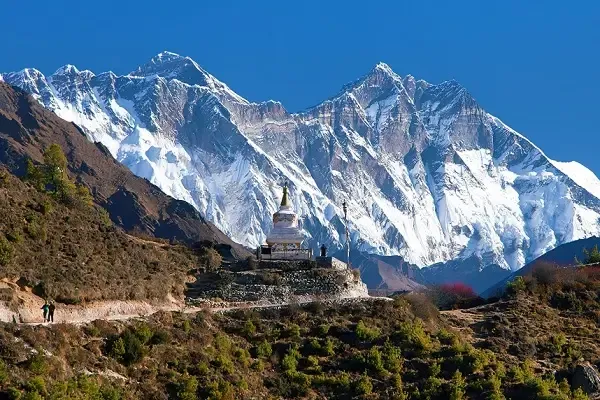
Everest Base Camp Trekking is a marvelous journey towards an abode of the world’s tallest mountain, Mt. Everest (8848 m). Rejoice over 25 snowcapped mountain vistas and relish the impeccable hospitality of the intrepid mountaineering clan of Sherpa over a fortnight of Himalayan walking adventure journey of Nepal. If you wish to create a momentous tale of wilderness adventure, including Sherpa culture, then it is an ideal choice to make.

Travel planners of Marvel Adventure will ensure the best trekking guides and support crew members for a hassle-free trek to Khumbu, Nepal. The journey, full of joy, excitement, and iconic Himalayas, makes the Everest Base Camp Trek route of Nepal one of the best walking trails across the globe.

Journey of 12 Days Everest Base Camp Trek is not an ordinary wilderness holiday activity in Nepal. It is a once-in-a-lifetime opportunity. Numerous prodigious trekking trails of Nepal look flat in comparison to this trek in Nepal. A joyous yet adventurous mountain flight to the world’s most extreme-rated airport, the Tenzing Hillary Airport, Lukla, is the first activity.

Upon meeting the rest of the crew members in Lukla, we set foot on course towards Phakding. Tranquil trails along the Dudhkoshi River and various hamlets pave the way for trekkers to reach Namche Bazaar. Behold the iconic Larpchen Bridge before walking uphill to Namche.

The first sight of Everest can be seen about 20 minutes before reaching the marketplace of the Sherpa people. Namche Bazaar (3440 m) is a vibrant Himalayan town on which most of the Khumbu region depends for daily supplies.

Acclimatization is key to the successful completion of high-altitude trekking. Hiking to the Everest View Hotel as part of acclimatization endows breathtaking scenery of numerous mountains. Tabuche, Kwangde, Thamserku, Amadablam, Lhotse, Nuptse, and Everest will make your day as Mountain Vistas’ day.

Trekkers traverse through pine and rhododendron forests, including uphill as well as downhill, towards Tengboche (3860 m). This is the spiritual heartland of the Sherpa people and the entire Khumbu.

You may also like:  8 Days Everest Base Camp Heli Trek 

During the Manirimdu Festival, the monastery holds special festive activities. After getting blessings from monks of the monastery, we set out on our trip of the Everest Base Camp Trekking to Dingboche via Pangboche. Trekkers will start to notice the change in vegetation and landscape.

Another acclimatization break takes place in Dingboche (4400 m). Hiking of Nagarshan Hill (5100 m) is the final acclimatization activity. Trekkers trek past the Thukla Memorial before reaching Lobuche after an acclimatization day in Dingboche.

Thukla Memorial is for remembering heroes who lost their lives during the Everest expedition. The most cherished day of trekking falls on this day. Trekkers will walk through moraines beside the Khumbu glacier and reach Gorakshep. After about 1.5 hours of walking, trekkers will finally reach Everest Base Camp (5364 m).

Capture these precious moments as much as possible. During the mountaineering season, trekkers will be amazed to see a vibrant base camp with many expedition groups camping. Experience the sun rising or setting too from as high as 5545 m (Kalapathar). Relishing jaw dropping scenery of the sun rising from the casement of the Himalayas is definitely an iconic moment of a travel tale.

Everest Base Camp Trekking package for trekking vacation in Nepal would make you glued to the exciting places of the Khumbu region, from mountains to Sherpa Village and from glacial rivers to the alpine forests. For the safe and wilderness adventure activity presented with impeccable hospitality at the most competitive rates, choose  Marvel Adventure. Make your trip a mesmerizing trekking holiday in Nepal with us.

Explore our diverse Everest Region packages, including the stunning Gokyo Lake Trek, the challenging Three High Pass Trek, and the breathtaking Everest Panorama Trek. Each package is designed to offer a unique experience of the majestic Himalayas, catering to different levels of adventure and fitness.

Trip Highlights

  • View of 4 of the world’s top ten tallest mountains, including Mt. Everest
  • More than 25 lofty snow-capped mountain peaks
  • Sherpa Villages & Himalayan Caravan
  • Temperate to Alpine forests
  • World’s highest located Sagarmatha National Park
  • Glacial River, Glaciers & Moraines
  • World’s Most Extreme Airport
  • Spectacular Himalayan Sunrise View 
Everest Base Camp Trekking | 2026/27 (Group Joining) Detailed Itinerary

Day 1

Fly to Tenzing Hillary Airport at Lukla (2,860m) and Trek to Phakding (2,610m)

35 minutes of Scenic Mountain flight showcases numerous alluring landscapes en route to Lukla. The journey can be full of anticipation and anxiousness as you will be landing at the World’s Most Extreme Rated airport, the Tenzing Hillary Airport. We meet our porters and Sherpa in Lukla. After a brief stop, we start our trek. The trail encompasses suspension bridges, forests, and villages before we reach Phakding.

Max Altitude: 2,610m (8,562ft)
Duration: 3-4 hours
Distance: 8 km
Meals: Breakfast, Lunch and Dinner
Accommodation: Teahouse
Day 2

Trek to Namche (3,440m)

We crossed 5 suspension bridges altogether on this day. We trek past places like Benkar, Manjo, and Jorsalle. In Manjo, we will enter the Sagarmatha National Park, where our permits will be checked. Lunch will be on the way, and we will follow green lush forests, waterfalls, and a view of Thamserku and Kusum Kangaru mountains. The first view of Mt. Everest can be seen just about half an hour from Namche Bazaar. 

Max Altitude: 3,440m (11,286ft)
Duration: 5-6 hours
Distance: 10.7 km
Meals: Breakfast, Lunch and Dinner
Accommodation: Teahouse
Day 3

Acclimatization Day at Namche

As part of acclimatization to adjust our bodies for high altitude walking, we hike towards the Everest View Hotel after breakfast. If the weather is clear, the majestic view of Kwangde and Thamserku can be seen from your accommodation. We will take a sip of coffee in the Everest View Hotel and witness a panoramic view of the mountains. Tabuche, Nuptse, Everest, Lhotse, Amadablam, Thamserku, and numerous others can be seen. If time permits, we can stroll around Khumjung Village or around various shops, eateries, and bars of Namche Bazaar. 

Max Altitude: 3,440m (11,286ft)
Meals: Breakfast, Lunch and Dinner
Accommodation: Teahouse
Day 4

Trek to Tengboche (3,867m)

The trail is roughly flat until Kyangjuma and descends to Phungi Thanga. We traverse uphill through dense green lush forests of rhododendron, pines, and fig to reach Tengboche. Iconic Tengboche Monastery with gigantic Mt. Amdablam in the backdrop mystifies our trip. The magnificent view of the Khumbu Valley on either side is the feature of Tengboche. On a clear day, you can view Everest too. Offer your prayers at the monastery in the evening and get a good sleep. 

Max Altitude: 3,867m (12,687ft)
Duration: 4-5 hours
Distance: 9.2 km
Meals: Breakfast, Lunch and Dinner
Accommodation: Teahouse
Day 5

Trek to Dingboche (4,410m)

We trek past the village of Pangboche and Somare to reach Dingboche. We will start to notice the change in vegetation. Trees will start to disappear, and we will see occasional bushes on the way. The sight of Amadablam will always be on our right-hand side. Dingboche is a relatively large village with few teahouses and lodges. 

Max Altitude: 4,410m (14,468ft)
Duration: 5-6 hours
Distance: 10.5 km
Meals: Breakfast, Lunch and Dinner
Accommodation: Teahouse
Day 6

Acclimatization Day at Dingboche

Final acclimatization rest is done at Dingboche. We will climb to Nagarshan Hill (5100 m) or trek to Chhukung Valley to adjust our bodies. After hiking, we will again come back to our teahouse and rest.

Max Altitude: 4,410m (14,468ft)
Meals: Breakfast, Lunch and Dinner
Accommodation: Teahouse
Day 7

Trek to Lobuche (4,940m)

After breakfast, we will start our trek. We will walk in a valley surrounded by hills, Lobuche Peaks, and Tabuche Peaks. We will take our lunch in Thukla, then climb uphill until we reach Thukla Memorial. Witness various memorials of Everest summiteers who lost their lives during the Everest expedition. Legendary mountaineers like Babuchhiri, Pashang Lhamu, Scott Fischer, Rob Hall, and others’ memorials can be seen. The sight of Mt. Pumori is ever-present during the trip until we reach Lobuche. 

Max Altitude: 4,940m (16,207ft)
Duration: 5-6 hours
Distance: 8 km
Meals: Breakfast, Lunch and Dinner
Accommodation: Teahouse
Day 8

Trek to Gorakshep (5,164) and Everest Base Camp (5,364m)

We will climb Lobuche Pass and trek through moraines beside Khumbu Glacier until we reach Gorakshep. Walking on rough terrain might be tiresome, but understand the instructions of the trekking guide and walk meticulously. After a brief stop at the teahouse in Gorakshep, we walk towards Everest Base Camp. Take as many pictures as possible in base camp. We will again return to Gorakshep for the overnight. 

Max Altitude: 5,164m (16,942ft)
Duration: 7-8 hours
Distance: 13 km
Meals: Breakfast, Lunch and Dinner
Accommodation: Teahouse
Day 9

Hike to Kalapatthar (5,545m) and trek down to Pheriche (4,371m)

Early in the morning, we will start the uphill climbing of Kalapathar. Majestic sun rising from the casement of the Himalayas and enlightening it with its rays is a joy to watch. A whole body view of Everest, Lhotse, Nuptse, Pumori, Amadablam, and numerous other mountains will make you feel worthwhile after enduring tiring walking. After such spectacular phenomena viewing, we trek downhill to Pheriche. This is a small town opposite Dingboche at the foothill of Tabuche. 

Max Altitude: 4,371m (14,340ft)
Duration: 6-7 hours
Distance: 13 km
Meals: Breakfast, Lunch and Dinner
Accommodation: Teahouse
Day 10

Walk back to Namche (3,440m)

Even if the trail is similar to where we ascended, don’t overlook the mountains and landscape. As you descend, altitude decreases, and you will breathe more easily, and you will have great memories too. The scenery looks absolutely different while returning as well. We trek past Tengboche and reach Namche Bazaar. 

Max Altitude: 3,440m (11,286ft)
Duration: 6-7 hours
Distance: 14.3 km
Meals: Breakfast, Lunch and Dinner
Accommodation: Teahouse
Day 11

Trek down to Lukla (2,860m)

It’s a joyous day of trekking. With an amazing memory of time spent in Everest Base Camp and its periphery on our heads, we will travel towards Lukla jovially. We will enjoy together, including porters and support crew members, in the evening. Enjoy to the fullest with Nepali folk music, beverages, and delicacies. 

Max Altitude: 2,860m (9,383ft)
Duration: 5-6 hours
Distance: 19 km
Meals: Breakfast, Lunch and Dinner
Accommodation: Teahouse
Day 12

Fly Back to Kathmandu (1,400m)

We will formally leave the Khumbu region today. 35 minutes of scenic flight will take us back to Kathmandu. You will be transferred to your hotel from the airport. In the evening, the Marvel Adventure will host a farewell dinner. We will exchange our memories and debrief about the services offered. 

Max Altitude: 1,400m (4,593ft)
Duration: 35 minutes
Meals: Breakfast, Lunch and Dinner
Accommodation: Hotel
Mode of Transportation: Flight
Have Questions? We're Here to Help
Like this itinerary but want to make a few changes? Every traveler is unique, and your journey should be too. Our local travel experts will design a personalized experience tailored to your interests, preferred pace, travel dates and budget.
Route Map & Altitude Profile

Cost Details

Includes

  • Airport pick up and drop off by private vehicle
  • All Domestic flights and airport tax as listed in the itinerary
  • Standard meals (breakfast, lunch, and dinner) during the trek
  • Government license holder guide
  • Strong and helpful porter with proper equipment (1 porter for 2 people)
  • Salary, food, accommodation, and insurance for the guide and porters
  • Tea house/lodge accommodation during the trek
  • Fresh fruits every night after dinner
  • TIMS (Trekking Information Management System) card
  • Sagarmatha National Park entry permit
  • Comprehensive first aid kit with oximeter
  • Government taxes and official expenses

Dates & Availability

Aug 2026
Sep 2026
Oct 2026
Nov 2026
Dec 2026
Jan 2027
Feb 2027
Mar 2027
Apr 2027
May 2027
Jun 2027
Jul 2027
Aug 2027
Sep 2027
Oct 2027
Nov 2027
Dec 2027
Start Date
03 Aug, 2026
End Date
14 Aug, 2026
Status
Guaranteed
Price
US$1300
Start Date
07 Aug, 2026
End Date
18 Aug, 2026
Status
Guaranteed
Price
US$1300
Start Date
10 Aug, 2026
End Date
21 Aug, 2026
Status
Guaranteed
Price
US$1300
Start Date
14 Aug, 2026
End Date
25 Aug, 2026
Status
Guaranteed
Price
US$1300
Start Date
17 Aug, 2026
End Date
28 Aug, 2026
Status
Guaranteed
Price
US$1300
Start Date
21 Aug, 2026
End Date
01 Sep, 2026
Status
Guaranteed
Price
US$1300
Start Date
24 Aug, 2026
End Date
04 Sep, 2026
Status
Guaranteed
Price
US$1300
Start Date
28 Aug, 2026
End Date
08 Sep, 2026
Status
Guaranteed
Price
US$1300
Start Date
31 Aug, 2026
End Date
11 Sep, 2026
Status
Guaranteed
Price
US$1300

There will be an additional cost of USD 125 for a single pax.

Meet Our Expert Guides

Khilaraj Nachhiring
Trekking Guide
Phinjo Sherpa
Trekking Guide
Dibash Mainali
Trekking Guide
Kumar Karki
Trekking Guide

Equipment List

Upper Body Layers
  • Breathable, quick-dry base layers
  • Comfortable t-shirts
  • Lightweight insulating jacket
  • Down jacket for cold conditions
  • Waterproof and windproof jackets
Lower Body Layers
  • Thermal base layer
  • Waterproof trekking pants
  • Comfortable pants for evenings in teahouses
  • Comfortable hiking shorts for warmer sections
  • Waterproof and windproof outershell for rain or snow
Footwear & Accessories
  • Trekking boots with ankle support (preferably Waterproof)
  • Multiple pairs of quick-dry socks
  • Warm socks for cold nights
  • Gaiters for snowy, muddy, or dusty trails
  • Trekking poles to reduce strain on knees
Head & Sun Protection
  • A hat or a cap to block the sun
  • Warm beanie for cold mornings and evenings
  • UV-protected sunglasses
  • Neck gaiter or buff to prevent dust, cold, and sunburn
  • Sunscreen (30-50+ SPF) for face and exposed skin
  • Lipbalm with SPF
Personal & Medical Kits
  • Personal medications
  • Diamox (Acetazolamide) for altitude sickness
  • Ointment
  • Hand sanitizers and wet wipes
  • Quick-dry towel
Travel Documents
  • Valid Passport
  • Passport-sized photos for permits
  • Travel insurance
  • Flight tickets
  • Cash in Nepali Rupees
  • Emergency contact details
Miscellaneous
  • Daypack (30-45L) with raincover
  • Reusable water bottles
  • Headlamps for early morning hikes
  • Water purifying tablet or filter
  • Phone or Camera for capturing the adventure
  • Powerbank for an easier charging option
  • Notebook, books, or cards for free time
  • Snacks like energy bars and chocolates
  • Drybag to keep your gear safe from rain

Essential Information

Essential for Everest Base Camp Trekking

1. Insurance

Travel insurance is your responsibility to get when taking part in the Everest Base Camp Trek. Even when joining a group trek, the insurance should be done individually. Every trekker in the group must have an insurance policy that covers the costs of medical treatment and evacuation, among others, that are a part of a high-altitude trek.

2. Guide and Porter

We provide experienced, knowledgeable, and honest guides with good communication skills in the English language to make your trip wonderful. The guide will provide all the information about the mountains, different histories, cultures, traditions, and much more. As a group, you will be led by a government-licensed guide. If the group is larger, an assistant guide may accompany the team. They ensure more personal attention and smoother logistics. These guides are responsible for daily coordination, health check-ups, and overall management of the group.

We will provide 1 porter for 2 people. The porters are helpful as well as strong and will carry a maximum of 25 kgs combined. After giving the best services along with the hard work up in the mountains, guides and porters expect some tips from your side. Tipping culture is very common in the tourism sector.

3. Accommodation 

If you are opting for a group trek to the Everest Base Camp, then you will need to share the accommodation facilities. During your stay in the hotels in Kathmandu, as well as tea houses in the trek route, you will be staying on a twin-sharing basis. As such, you will also be sharing the bathrooms with your room partners in case the rooms have attached bathrooms.

4. Altitude Sickness

Altitude sickness, also known as Acute Mountain Sickness (AMS), is a pathological effect of high altitude on humans, caused by acute exposure to low partial pressure of oxygen at high altitude. It commonly occurs above 3000 meters. It presents as a collection of nonspecific symptoms, acquired at high altitude or in low air pressure, resembling a case of "flu, carbon monoxide poisoning, or a hangover". However, most people can ascend to 3000 meters without difficulty.

Primary Symptoms of Altitude Sickness:

  • Lack of appetite, nausea, or vomiting
  • Fatigue or weakness
  • Dizziness or lightheadedness
  • Swelling of hands, feet, and face
  • Insomnia
  • Shortness of breath upon exertion
  • Nosebleed
  • Persistent rapid pulse
  • Drowsiness
  • General malaise

Prevention: Ascending slowly is the best way to avoid altitude sickness. Avoiding strenuous activity such as skiing, hiking, etc. in the first 24 hours at high altitude reduces the symptoms of AMS. Alcohol and sleeping pills are respiratory depressants, and thus slow down the acclimatization process and should be avoided. Alcohol also tends to cause dehydration and exacerbates AMS. Thus, Marvel Adventure strictly suggests avoiding alcohol consumption in the first 24–48 hours at a higher altitude.

Guides and porters from Marvel Adventure are very much familiar with this problem due to their experience. All of them are trained with basic medical trainings and hence they definitely can help you.

Size of Group

Marvel Adventure keeps the group size thoughtfully structured to ensure each trekker has a rewarding experience. You can choose to be a part of a small, medium, or large-sized group. 

Small groups comprise around 2-4 trekkers, offering a close experience among the participants. The size is ideal if you want more individual attention from the guide. It is also a good option if you do not want to be a part of a crowded team.

Around 5-9 trekkers make up the medium groups. The group energy is intact with this number of people. But at the same the group is easily manageable. 

But if you are someone who prefers lively and communal settings, then you choose large groups. Such groups have over 10 trekkers. Multiple porters are there to support the trekkers. At the same time, the main guide is supported by an assistant guide to ensure all trekkers are taken care of. Look forward to diverse interactions amongst people, along with a shared sense of accomplishment among the group members.

However, always remember that, irrespective of the size of the group, Marvel Adventure ensures to maintain a balance between group interaction and personalized care during the Everest Base Camp trek.

Fixed Departure Dates

One of the features of the Group Joining Everest Base Camp Trek is that the journey starts on pre-scheduled dates. That means the start date of the trek is already set. So is the case with the itinerary. 

This makes it easier for solo travelers and small groups to join the trek without having to plan a private trip. But at the same time, you are not able to postpone the trek. You need to follow the already set date and time and accommodate it within the group's plan

Nonetheless, you need not worry about whether the departure is guaranteed or not. Once at least 2 or more trekkers are confirmed, we guarantee the departures will be on time.  You can contact us to inquire about available slots or to join an existing group.

Small Group vs Private Everest Base Camp Trek

The 12 Days Everest Base Camp Trek package has options to trek either as a small group or a private group, too. Choosing between these two depends on the style of your travel as well as your budget. 

Below is a comparison between these two options in terms of their similarities and differences.

Small Group (Group Joining) Trek

Small groups heading to the Everest Base Camp trek generally comprise people from different parts of the world. They are strangers, yet they are like-minded travelers. As such, you set off on a journey while making new friends and creating new experiences. 

The general rule is that you join a pre-scheduled group departure. This limits your flexibility as an individual because you need to follow the daily pace as scheduled, which is convenient for the entire group.

Yet, the benefit is that you share logistics with fellow trekkers. This reduces the overall Everest Base Camp trek price that you pay. Add to that the social atmosphere you experience with new friends that you make along the trail.

This option is ideal for solo travelers, along with couples or friends who are looking for a budget-friendly trekking experience. 

Private Trek

The private trek is ideal for families and groups who are seeking a more private experience. This applies to the couples, too, who prefer each other’s company more than anything else. 

Flexibility is the best part of this option, as you can start the trek on the date that is suitable for you. Even the itinerary can be customized to adjust rest days and pace, among others. 

You will get a dedicated guide and porter who are focused entirely on your group. With such facilities available, the cost for the private trek is higher.

How to Join the Everest Base Camp Trek Group?

The process of joining our group departure to Everest Base Camp is simple. We ensure a hassle-free booking and services if you decide to travel with us.

To secure your spot, contact us directly for the latest availability. You can contact us on WhatsApp: +977-9860313572 - Nir Karki.

Or you can also reach out via our email or fill out an enquiry form available on our website. We will respond promptly with all the details. 

Once you know about the group size, itinerary, and what’s included, you can choose your departure date and confirm your booking. We will then provide a packing list as well as trekking advice and help with travel logistics upon your confirmation. 

Why Choose a Group Joining Option?

Opting for a Group Joining Everest Base Camp trek has several benefits. Solo adventurers and travelers to whom budget matters the most will find this package practical. This option has many advantages, which are listed below:

Lower Cost

The possibility of joining a group to trek to the Everest Base Camp makes the journey affordable. While your individual expenses remain the same, the cost of other aspects is shared among the group members. 

The expenses incurred for guides, porters, transportation, and logistical support are split. Eventually, this lowers the per-person price compared to the private trek. But you need not compromise on the safety and quality of the trek despite the reduced cost. 

Enhanced Safety

Altitude sickness and sudden weather changes are real issues at high altitudes. If anyone feels unwell during the trek, then there is a faster response when you are in a group. That is possible because of the group dynamics. You receive support not only from your guide but also from fellow trekkers. They also become a source of motivation when you are feeling down. All these things enhance your safety during the journey.

Shared Experience

Completing the Everest Base Camp with a group means you are spending a significant time with new people. You will be walking and exploring with people from around the world. You will be eating together and in many cases sharing rooms as well.  As such, the journey lets you experience a similar culture and emotion. You are part of all the triumphs and challenges that you achieve together. It can create a strong and memorable bond among group members. 

Suitable for Solo Travelers

If you are someone who wants to trek to the Everest Base Camp but does not have an acquaintance to accompany you, then you need to pay for a private guide. But if you do not want to spend money on costly private treks, then you can opt for the group trek. While you are never alone during the journey, you are also able to retain your personal space. It is a safe and sociable option for trekkers who do not have travel partners in their lives.

 Professionally Organized and Guided

You will be travelling in a group of a maximum of 10 to 12 trekkers, which may make you doubt its organization and management. You can rest assured in this aspect as the group joining treks are professionally managed. Everything related to logistics and permits is handled in a smooth manner.

A licensed and experienced trekking guide will lead your team. The guide is trained in first aid, local culture, and most importantly, mountain safety. With the help of the guide, you are on the right track. You receive good care for altitude-related issues. Add to that the insight into the heritage of the region.

Who Can Join Everest Base Camp Trek?

The Group Joining Everest Base Camp Trek is designed for trekkers with different needs. Whether one is traveling alone or with family, this option is flexible for all. 

Solo travelers can make the most of this option among others. It is apt for you if you are a lone traveler willing to do the Everest Base Camp trek without joining a private trip. You can be a part of a ready-made group, yet remain a solo traveler within that group. As such, you have double benefits — personal space as well as a company.

Likewise, couples who prefer social settings rather than a private journey can also choose this trek. It is a practical and budget-friendly way for a romantic trip.

Small groups of 2-4 people can also join scheduled departures of such a trek instead of booking a private trek. Organizing your group is expensive compared to joining an already existing group. If you are conscious of budget yet want everything to be taken care of, then choose this option. 

Group treks are ideal if you are traveling to Nepal for the first time, or even if you are new to trekking. That is because you will meet other novice travelers like you and trained guides show you every step of the journey. 

Everest Base Camp Trekking | 2026/27 (Group Joining) FAQs

How difficult is the Everest Base Camp Trek?

The Everest Base Camp Trek is categorized as moderately difficult. Its not a technical climb but your fitness level and experience definitely comes into play while determining the difficulty of this trek. We have had clients from teenagers to people in their 50s who have successfully completed this trek.

Can beginners do the Everest Base Camp Trek?

Yes, with the right preparations, beginners can absolutely do this trek. If this is your first time trekking, we strongly recommend focusing on cardio for 3-6 months before you head to Lukla. Honestly, proper acclimatization and good fitness matter more than previous trekking experience.

How fit do I need to be for the trek?

You have to be fit enough to walk 5-7 hours for consecutive days. One common mistake first-time trekkers make is understimating how tiring multiple-day trekking can be, especially at high-altitude. Regular hiking or cardio a few times a week for 2 months before your departure definitely helps you enjoy the trek more.

What is the maximum altitude of the Everest Base Camp Trek?

The Everest Base Camp sits at an altitude of 5,364m. However, the maximum altitude of this trek is Kalapatthar, at 5,545m. You need to understand that on the trail above Dingboche (4,410m), altitude might affect you as the air becomes much thinner.

How many hours do we walk each day?

We will be walking about 5-7 hours per day, covering around 10-16 km. Once we are above 4,000 meters, the trekking hours might feel longer due to the altitude, even though the distance is short. You will have rest stops and acclimatization days built into your itinerary.

What is the best time to trek to Everest Base Camp?

Spring (March-May) and Autumn (September-November) are the most popular and reliable trekking seasons. This is when the skies are clearest, the views are amazing, the weather is stable and the trial conditions are perfect. During the peak trekking season, the teahouses are filled quickly. So, we suggest making an early booking.

How cold does it get during the trek?

The temperature varies significantly by season and altitude. The temperature in Lukla might be pleasant during day time. However, above Dingboche, the night temperature can drop to -15° C , especially when we are in Gorakshep. We strongly recommend packing down jacket, thermal layers and warm sleeping gears.

Is Everest Base Camp possible during winter or monsoon?

Yes, the Everest Base Camp trek is possible in winter and monsoon but you have to prepare for extreme challenges. During winter (Dec-Feb), the nights are really cold and sometimes the trails get closed due to heavy snowfall. In monsoon (Jun-Aug), the lower section faces heavy rain fall, and the visibility is poor. Over the years, we have operated multiple time during these seasons, however we still recommend most of the trekkers to stick to the main seasons.

Are Lukla flights included in the package?

Yes, your package will include the Lukla flight. Depending on the trekking season and air traffic, your departure route will either be Kathmandu or Ramechhap. We will confirm the flight details in advance, provide you with all the useful information regarding the flight and keep you updated on any operational charges.

What happens if Lukla flights are cancelled?

We have seen a lots of short delays and flight cancellations over the years. Infact, it's quite common due to the frequent weather change in Lukla. In such case, we will work to reschedule the next flight based on availability. You can also go with the helicopter option at an additional cost or drive to Salleri. This is exactly why we advise keeping buffer days in your schedule.

Do Lukla flights operate from Kathmandu or Ramechhap?

During peak trekking seasons, most of the Lukla flights operate from Ramechhap (4-5 hours drive from Kathmandu) due to heavy air traffic in Kathmandu. With years of operating the Everest Base Camp trek, we brief every group in advance and arrange transportation to Ramechhap when required.

Can Marvel Adventure arrange a helicopter in case of flight cancellation?

Yes, we can arrange charter helicopter flights if the regular Lukla flight gets cancelled. Please note that the exact cost of a helicopter is not generally included in our standard package and completely depends on the fuel prices and availability. Also, do check whether your travel insurance covers helicopter evacuations and charter flights.

How many extra buffer days should I keep?

We strongly recommend keeping atleast 2-3 days after your Everest Base Camp trek. We have seen a single day of fog create flight delays in Lukla. Imagine having to worry about your international departure schedule, just because you arrive 1 day late in Lukla.  In simple words, buffer days are a small investment for a significant peace of mind throughout the trek.

Is altitude sickness common on the EBC Trek?

Yes, the mild symptoms of altitude sickness such as headache, nausea and disrupted sleep are very common as you head above 3,500m. We have noticed some of these symptoms in most of our clients. You can be an experienced trekker and still get affected by altitude sickness. Some of the serious altitude sickness (HAPE or HACE) is far less common, but still can happen.

How does Marvel Adventure help prevent altitude sickness?

Our guides are trained in Wilderness First Aid and altitude illness management. You will be monitored regularly for the symptoms of altitude sickness throughout the trek. With years of experience in operating in the Everest region, Marvel Adventure provides an itinerary that includes proper acclimatization, gradual altitude gain and regular health checks. Our stand is very clear: we don't gamble with altitude.

What happens in case of an emergency during the trek?

In case of an emergency, our guides will help you with immediate assistance, including helicopter evacuation if necessary. In Everest region, helicopter is the fastest option for serious altitude sickness our injuries. We will be in contact with our Kathmandu office and local rescue services throughout the trek.

Is travel insurance mandatory for the trek?

Yes, travel insurance is highly recommended and mandatory for the Everest Base Camp trek. Your policy must cover high-altitude trekking up to at least 5,500m and helicopter evacuation. We can assure you that It's not just a formality, helicopter rescues in the Himalayas could cost you several thousand dollars.

What kind of accommodation is available during the trek?

The most common accommodation during the Everest Base Camp trek is in teahouses or lodges. In lower sections like Phakding and Namche, you can find comfortable lodges with attached bathrooms. As we head higher to Lobuche and Gorakshep, the rooms get simpler and the shared facilities are more common.

What food is available during the Everest Base Camp Trek?

You will be surprised to see wide range of meals in the Everest region, including dal bhat, noodles, soups, pasta, rice dishes, potatoes, pancakes, and eggs. Our guides often recommend lighter and freshly cooked meals at higher elevations for easier digestion. 

Are hot showers, charging, and Wi-Fi available during the trek?

You can find hot showers at most teahouses, but they usually cost about 3$ - 5$ extra. You can also find common charging ports in the dining hall of the teahouse. However, you might have to wait for your turn, so we always recommend carrying a power bank for your devices. WiFi is available in most of the lodges but we have noticed that they are quite unreliable above Dingboche.

Is drinking water safe during the trek?

We suggest not to drink any tapwater or streams untreated during the trek. Its can be really helpful if you carry quality water filter or purification tablets. The most practical and widely available option in the mountains is boiled water from the teahouses. Its very important for trekkers to stay hydrated, especially when you are in higher altitude.

Is a guide compulsory for the Everest Base Camp Trek?

As of the recent regulation, trekkers must be accompanied by a licensed guide in the Everest Region. The Nepali law no longer allows solo trekking in this region. And to be fair, having a guide genuinely helps you with route insights and local connections that make a real difference in the trail. Marvel Adventure provides guides who have been operating in the Everest region for years and have deep knowledge about this trek.

What is included in the Everest Base Camp Trek package?

Standard packages with Marvel Adventure include: airport transfers, Kathmandu–Lukla return flights, TIMS card and Sagarmatha National Park permits, all accommodation during the trek, all meals on trail (breakfast, lunch, dinner), an experienced licensed guide, and a porter. Specific inclusion can vary by package, so its always best to confirm with us before booking.

How much extra money should I carry during the trek?

We generally suggest carrying USD $300–500 in Nepali rupees. This can easily cover any personal expense, hot showers, charging fees, Wi-Fi charges, tips for guides and porters, and souvenir shopping in Namche. You can also find ATMs in Namche Bazaar but they're unreliable. So, always carry enough cash before you leave Kathmandu.

Why book the Everest Base Camp Trek with Marvel Adventure?

We're a Nepal-based trekking company with genuine on-the-ground experience in the Everest region. Our guides are licensed, altitude-trained, and local. They know the trail, the teahouses, and how to handle the unexpected. We keep group sizes small, build proper acclimatization into every itinerary, and stay available throughout your trek. No shortcuts, no over-promises.

Price Per Person
US$1300
US$1300
All inclusive price
  • 2 - 4 paxUS$1300
  • 5 - 9 paxUS$1250
  • 10 - 20 paxUS$1200
Book This Trip
Talk to Our Travel Experts

What Our Clients Say

May 21, 2026
Amazing Experience!!!

We had an amazing experience on our EBC trek with Marvel Adventure. Everything was extremely well organised from start to finish which made the trip stress free. We felt like we were treated like family...

Liam W
Liam W
England
May 13, 2026
Amazing hike with beautiful views and wonderful people

Already at the airport I got a warm welcome. Everything was organized very smoothly so I could go up the mountains right the next day. There I met my guide Sudip and my porter Mikea....

C
Chris S
United States

You May Also Like

everest base camp trek via gokyo lake
Duration: 13 Days
5.0(11 Reviews)

Everest Base Camp Trek via Gokyo Lake

US$1495US$1495
Difficulty Level: Moderate
luxury everest base camp trek
Duration: 12 Days
5.0(3 Reviews)

Luxury Everest Base Camp Trek

US$2695US$2695
Difficulty Level: Moderate
budget everest base camp trek
Duration: 11 Days
5.0(3 Reviews)

Budget Everest Base Camp Trek

US$1099US$1099
Difficulty Level: Moderate
Need Help? Call Us+977 986-0313572
Everest Base Camp Trekking | 2026/27 (Group Joining)