
Nir Karki
Talk to an Expert (Nir Karki)
Last-minute Deals
Book Now
Price from
US$4200

Upper Dolpo Trek

257 reviews
29 reviews
Duration
22 Days
Trip Grade
Strenuous
Country
Nepal
Maximum Altitude
5,357m
Group Size
Min 2 pax
Best Time
(Sep-Nov) and (Mar-May)

Upper Dolpo is one of the least-visited Himalayan destinations in the far-flung corners of Nepal's Far West. You can find complete ambiance within its beautiful scenic landscapes of rolling hills, verdant valleys, and high snow-capped mountains that include Kanjibroba, Kagmara, and as far as the Dhaulagiri range.

Upper Dolpo Trek will be a wonderful walk within its pristine environment, from tall alpine tree lines of firs, pines, and Himalaya spruce to desert-like terrain.

The area around Upper Dolpo, which is also well described in the famous Classic novel ‘Snow Leopard’ by Peter Matthiessen, who explored the region in the late 1970’s. Certainly, a picturesque country to experience once in your lifetime, as this adventure leads you to beautiful areas around the Emerald Lake of Phoksundo and then to the Crystal Monastery or Shey Gompa.

Upper Dolpo covers the country’s largest national park with an area of 3,555 sq. kms known as ‘Shey-Phoksundo National Park’ that extends from Dolpo to further west of the Mugu district. The park is enriched with exotic flora and fauna, almost extinct on this planet, like rare herbs, medicinal plants, including the elusive snow leopard and blue sheep, with other bird life.

Besides its dramatic landscapes and awesome views, the culture of local Dolpo people and its impressive villages is equally captivating to soak into the local culture and age-old heritage of ancient Bon (pre-Buddhism) practice with the present Buddhism religion.

Upper Dolpo Trek begins with a scenic super flight to land at Nepal's Far South East at Nepalgunj city airport, where the air journey continues in a smaller plane to reach Dolpo at Jhupal.

From Jhupal, adventure starts heading past nice farm areas towards a large town at Dunai, the headquarters and administrative place of the Dolpo district, where the walk leads further west to reach the scenic and beautiful Phoksundo Lake near Ringmo village.

Enjoying a pleasant and scenic time at Phoksundo Lake and exploring Ringmo village, then a walk leads to the high Kang-la pass to reach the remote and isolated Shey Gompa or Crystal Monastery, located close to a nearby interesting crystal mountain embedded with semi-precious stones.

At Shey Gompa, the tour of the monastery is enriched with ancient religious scrolls, texts, and colourful paintings with fresco, idols of Buddha, and famous saints and gurus of both the Bon and Buddhism sects.

From Shey Gompa, the return walk leads to cross several high scenic passes with excellent views of the surrounding country with snow-capped peaks, as the route leads past Saldang to reach a large group of villages at Tokyu. Around Tokyu villages, enjoy visiting nice and interesting places as the walk continues heading into the long Dho-Tarap valley, which falls on the old Trans Himalaya Salt Trade Route of Dolpo to Tibet.

Finally, our walk comes to a slow end on reaching the historical village of Tarakot and then past Dunai to Jhupal, where our walk completes, taking a scenic, exciting flight to Kathmandu via Nepalgunj, after concluding our marvelous adventure and experience on the Upper Dolpo Trek.

Trip Highlights

  • An awesome journey within the wildest country of Nepal, the Far Western Himalaya
  • Explore time-forgotten villages and by the outside world in the hidden areas of Dolpo
  • On elusive and least visited destinations to Shey Gompa, the Crystal Monastery
  • Far from town and villages for some days, in close harmony with pristine nature
  • One of the longest and most enjoyable adventures to the scenic and high Upper Dolpo
  • Visit impressive villages interwoven with both the ancient Bon and Buddhism religion
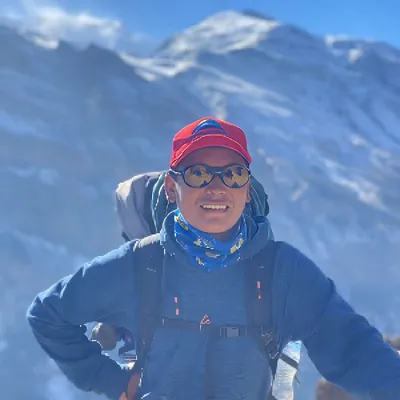
Upper Dolpo Trek Detailed Itinerary

Day 1

Fly to Nepalgunj (150 m), then transfer to hotel

As flight time for Nepalgunj either morning or afternoon time, transfer to Kathmandu domestic airport for scenic flight to reach Nepal Far South West at Nepalgunj, a city of low and warmer temperatures.

Flying for 55 mins to land at Nepalgunj airport, during air super panorama of Himalayan chain of mountains from Langtang-Ganesh-Manaslu-Annapurna to Dhaulagiri range.

As place lands at Nepalgunj airport, where short drive takes you respective hotels within Nepalgunj city, of strong Indian culture influence due to its closeness with Indian border of UP (Utter Pradesh), afternoon explore the city and catch glimpse of South Western Nepalese local culture and custom.

Max Altitude: 150m (492ft)
Duration: 55 minutes
Meals: Breakfast, Lunch and Dinner
Accommodation: Hotel
Mode of Transportation: Flight
Day 2

Morning flight to Jhupal (2,475 m) drive to Dunai (2,140 m)

Morning after early breakfast transfer to Nepalgunj airport for short connecting

Flight in a smaller plane to land at Jhupal in Dolpo, where our other camping staff

and porters receives you.

On reaching Jhupal where short exciting drive leads past farm villages and forest

areas to reach a large settlement and town at Dunai for overnight in local simple

lodge.

Dunai the main center and headquarter of whole Dolpo district with time to

explore around this interesting town with markets to observe Far West

Nepalese people traditional customs and interesting cultures.

Max Altitude: 2,140m (7,020ft)
Duration: 2-3 hours
Distance: 11 km
Meals: Breakfast, Lunch and Dinner
Accommodation: Teahouse
Mode of Transportation: Jeep
Day 3

Trek to Chepka (2,687m)

Morning walks past Dunai to cross a bridge above the Thulo Bheri River and climb to a ridge, then reach within the Phoksundo River valley, facing views of Kagmara peaks.

From here, the route descends past farm villages within a walnut tree garden and heads close to a stream at Dhera, where a short climb takes you to Raha-Gaon village, populated by Thakuri, a Hindu indigenous tribe of Nepal, Far West, then downhill walk into a forested area to reach the overnight camp at Chepka, a small farm village. 

Max Altitude: 2,687m (8,815ft)
Duration: 7-8 hours
Distance: 15 km
Meals: Breakfast, Lunch and Dinner
Accommodation: Camp
Day 4

Trek to Samdua village (2,960m)

From Chepka, a morning with a short climb and then descend to a forest near a river, where the climb continues, leaving the forest area, and then downhill starts to cross a small bridge at Ryajik village

Trek further to Samdua for an overnight stop, which is close to the entrance of Phuksumdo National Park.

Max Altitude: 2,960m (9,711ft)
Duration: 5-6 hours
Distance: 10 km
Meals: Breakfast, Lunch and Dinner
Accommodation: Teahouse
Day 5

Trek to Phoksundo Lake (3,611m)

The walk today leads to our first highlight of the adventure, heading into Phoksundo Lake after Pungmo Khola valley, with a descent to reach the upper side of Phoksundo Khola.

Trek continues towards Ringmo, an interesting village of Tibetan origin with mud plastered chhorten and Mani (prayer) walls, from here a short walk to Phoksumdo Lake for an overnight camp near Phoksumdo Lake

Max Altitude: 3,611m (11,847ft)
Duration: 6-7 hours
Distance: 14 km
Meals: Breakfast, Lunch and Dinner
Accommodation: Camp
Day 6

Rest day at Phoksundo Lake for local excursion

A rest day, and enjoy views of great beautiful landscapes with peaks of Kagmara, visit the nearby Ringmo village of great interest located by the lake side.

Max Altitude: 3,611m (11,847ft)
Meals: Breakfast, Lunch and Dinner
Accommodation: Camp
Day 7

Trek to Phoksundo-Khola (3,750m)

From here on, the trail to Upper Dolpo follows a contouring rocky ledge high over a riverbank, between an unsteady path.

As the walk proceeds at the end of a lake past summer grazing fields of yaks and other cattle, walk into a wide valley to reach Phoksundo Khola (stream) for an overnight camp.

Max Altitude: 3,750m (12,303ft)
Duration: 5-6 hours
Meals: Breakfast, Lunch and Dinner
Accommodation: Camp
Day 8

Trek to Phoksundo Bhanjyang (4,402m)

Morning walk leads past Phoksundo Khola up on hilly slopes towards the north direction, as the climb leads to a ridge top, enjoy grand views of a green wide valley with Kang-La pass in the far distance, which is on route to Shey Gompa, and then reaching our overnight camp stop around a nice and green summer pasture. 

Max Altitude: 4,402m (14,442ft)
Duration: 4-5 hours
Meals: Breakfast, Lunch and Dinner
Accommodation: Camp
Day 9

Cross Kang -La (5,357m) and Trek to Shey Gompa (4,160m)

Morning, a steep climb to the top of Kang-la pass, on the highest spot of the adventure to reach Shey Gompa or Crystal Monastery, which is close to the Crystal Mountain in a short distance.

From Phoksundo Bhanjyang, climb on stone and rocky path to Kang-la pass at above 5,350 m high rewarded with grand views of snow-peaks, including as far as Mt. Dhaulagiri.

After the top of Kang-la, descend to reach the bottom of a hill near a river, then into a remote, isolated area, encountering a Buddhist prayer monument with a Chorten and Mani.

From here, a short walk leads you to our main goal and highlights Shey Gompa situated beneath beautiful looking Crystal Mountain, renowned and respected as a Holy Mountain located close to the monastery.

Max Altitude: 4,160m (13,648ft)
Duration: 5-6 hours
Distance: 9 km
Meals: Breakfast, Lunch and Dinner
Accommodation: Camp
Day 10

Rest day at Shey Gompa around Crystal Monastery

Rest day at Shey Gompa in a serene environment, completely out of this world, in the harmony of nature. Visit Shey Monastery, also called Crystal Monastery.

Shey Gompa is a great place, which is well described by Peter Matthiessen in his famous classic novel the ‘Snow Leopard’. (Can find in book stores around Kathmandu in Thamel) 

Day 11

Trek to Namgung (4,360m) via Sela (Gela) La (5,094m)

Journey continues to a wall canyon to reach high at Sela, also called Gela-la at 5,094 m high, offering great views of the Mt. Dhaulagiri range of peaks. From here, walk downhill to Namgung Gaon for an overnight stop.

Max Altitude: 4,360m (14,304ft)
Duration: 6-7 hours
Distance: 14 km
Meals: Breakfast, Lunch and Dinner
Accommodation: Camp
Day 12

Trek to Saldang (3,620m)

After a marvelous time, the walk leads on a dusty trail within windswept terrain, heading with a steep climb to reach an overnight camp and stop at the nice village of Saldang.

An impressive and large village of the region situated on the high side of a huge plateau in the far southwest of Tibet. 

Max Altitude: 3,620m (11,876ft)
Duration: 5-6 hours
Distance: 9 km
Meals: Breakfast, Lunch and Dinner
Accommodation: Camp
Day 13

Trek to Cha-Gaon (4,910m)

Morning walk follows Nang Chu River with short ups and downs past Sugu-Gaon and Dechen Lapran, a cattle herder settlement

Head to overnight camp at Chagoan village with the old Rapa Gompa of pre-Buddhist and ancient Bon-Pa culture.

Max Altitude: 4,910m (16,108ft)
Duration: 5-6 hours
Distance: 11 km
Meals: Breakfast, Lunch and Dinner
Accommodation: Camp
Day 14

Trek to Dachu Khola Camp at (4,700m)

Morning walk heading south to the Tarap valley around Tokyu and Dho Tarap village, then reaching at Dachu Khola and beyond, crossing the river through farm fields, and then into Yak herder areas for overnight camp.

Max Altitude: 4,700m (15,419ft)
Duration: 6-7 hours
Meals: Breakfast, Lunch and Dinner
Accommodation: Camp
Day 15

Cross Jyanta-La at (5,220 m) and walk to Phedi (4,900m)

From this pleasant camp, a morning walk follows a river for some time on route encountering yaks and mules laden with caravan heading on route to Tibet.

Trade with Tibet exists since past hundreds of years on this ancient Trans Himalayan Salt and Caravan Trade Route between the two countries of Nepal Far West and Tibet.

From the base at Jyanta-la Pass where walk leads to a steep climb to reach on top of the pass along with views of massive mountain range, and then descend to the base of the pass on route to Tokyu village.

Max Altitude: 4,900m (16,076ft)
Duration: 6-7 hours
Meals: Breakfast, Lunch and Dinner
Accommodation: Camp
Day 16

Trek to Tokyu Gaon (4,209m) via Jeng La (5,090m)

After a steep, tough climb today, an easy walk to reach a large village of Tokyu Gaon for overnight, an interesting and impressive village within the inner Dolpo area the place around consists of more than ten villages with nice tended farm fields, having a few old monasteries. 

Max Altitude: 4,209m (13,809ft)
Duration: 6-7 hours
Distance: 12 km
Meals: Breakfast, Lunch and Dinner
Accommodation: Camp
Day 17

Trek to Dho Tarap (3,940 m)

After Tokyu Gaon, on the downhill trail towards Tarap Chu, the walk leads on a broad green valley past scenic wide valley coming across Sheppard’s and cattle herders settlements where Yaks and Sheep graze around this lovely valley, as the walk continues to our overnight camp at Dho Tarap, another interesting village with a mix of tribes of Tibetan origin as well as Magar of western mid hills.

Max Altitude: 3,940m (12,926ft)
Duration: 5-6 hours
Distance: 11 km
Meals: Breakfast, Lunch and Dinner
Accommodation: Camp
Day 18

Trek to Ghyamgar (3,755 m)

Morning descent to Tarap valley, the largest and longest valley of the Dolpo area, covers nearly 20 k.m of distance, stretches from the Tarap Chu River to join the Thuli Bheri River near Tarakot village.

Walk heads to Langa with beautiful cascading waterfalls, then on the south route to Sisaul, a small place of Kesila, to reach our overnight camp at Ghyamgar.

Max Altitude: 3,755m (12,319ft)
Duration: 7-8 hours
Distance: 12 km
Meals: Breakfast, Lunch and Dinner
Accommodation: Camp
Day 19

Trek to Tarap Khola (3,300 m) via Chhyugar (3,441 m)

From this nice campsite, the morning starts within a nice valley of Tarap to enter into a narrow gorge with some vegetation of juniper and wild rose bushes.

The walk leads towards a place called Tol-Tol with a large overhanging cave, where the walk continues to reach the confluence of the River Tarap Chu and Lang Khola, overnight camp by the river.

Max Altitude: 3,300m (10,826ft)
Duration: 6-7 hours
Meals: Breakfast, Lunch and Dinner
Accommodation: Camp
Day 20

Trek to Tarakot (2,540 m)

Morning walk begins heading into a small wooded area, following a river all the way to Tarakot, one of the large and interesting villages of inner Dolpo with an old history as a fort village guarding this old Trans Himalaya Salt Trade Route, a place with well-maintained terraced farm fields.

At Tarakot village, visit its old Sandul Gomba (monastery) located on the junction of Barbung Khola and Tarap Chu River.

Max Altitude: 2,540m (8,333ft)
Duration: 6-7 hours
Distance: 14 km
Meals: Breakfast, Lunch and Dinner
Accommodation: Teahouse
Day 21

Trek to Dunai (2,140m) - 05 hrs then drive to Jhupal (2,475m) - 02 hr jeep ride

After Tarakot, last day walk to Dunai, then taking a short drive to reach the end of our adventure at Jhupal for last overnight stop and flight back to Kathmandu.

Morning walk on a wide trail with a short climb with downhill towards the Thuli Bheri River valley to reach Dunai, on reaching at Dunai taking a jeep drive to Jhupal to catch our next morning flight to Nepalgunj.

Max Altitude: 2,475m (8,120ft)
Duration: 2 hours drive
Distance: 11 km
Meals: Breakfast, Lunch and Dinner
Accommodation: Lodge
Mode of Transportation: Jeep
Day 22

Morning flight to Kathmandu via Nepalgunj and transfer to hotels

After a great adventure around Upper Dolpo, where a short walk leads to Jhupal airstrip, board a small aircraft for a scenic short flight to Nepalgunj city.

At Nepalgunj, get refreshed in hotels before the connecting flight back to Kathmandu. On reaching Kathmandu airport, transfer back to your respective hotels.

Max Altitude: 1,400m (4,593ft)
Duration: 55 minutes
Meals: Breakfast
Accommodation: Hotel
Mode of Transportation: Flight
Have Questions? We're Here to Help
Like this itinerary but want to make a few changes? Every traveler is unique, and your journey should be too. Our local travel experts will design a personalized experience tailored to your interests, preferred pace, travel dates and budget.
Route Map & Altitude Profile

Cost Details

Includes

  • Airport reception and departure assistance
  • Round-trip flight fare (Kathmandu - Nepalgunj - Juphal - Nepalgunj - Kathmandu)
  • Standard meals (breakfast, lunch, and dinner) during the trek
  • Government-licensed trekking guide with vast experience and knowledge
  • Strong and helpful porter with proper equipment (1 porter for 2 people)
  • Salary, food, accommodation, and insurance for the guide and porters
  • Tea house/lodge accommodation during the trek
  • Two-night hotel at Nepalgunj 
  • Special Upper Dolpo trekking permit
  • Comprehensive first aid kit with an oximeter to monitor oxygen level daily
  • Government taxes and official expenses
  • Duffel bag, sleeping bag, down jacket and walking poles for the trek

Dates & Availability

Aug 2026
Sep 2026
Nov 2026
Dec 2026
Jan 2027
Feb 2027
Mar 2027
Apr 2027
May 2027
Jun 2027
Jul 2027
Aug 2027
Sep 2027
Oct 2027
Nov 2027
Dec 2027
Start Date
03 Aug, 2026
End Date
24 Aug, 2026
Status
Guaranteed
Price
US$4200
US$4400
Start Date
07 Aug, 2026
End Date
28 Aug, 2026
Status
Guaranteed
Price
US$4200
US$4400
Start Date
10 Aug, 2026
End Date
31 Aug, 2026
Status
Guaranteed
Price
US$4200
US$4400
Start Date
14 Aug, 2026
End Date
04 Sep, 2026
Status
Guaranteed
Price
US$4200
US$4400
Start Date
17 Aug, 2026
End Date
07 Sep, 2026
Status
Guaranteed
Price
US$4200
US$4400
Start Date
21 Aug, 2026
End Date
11 Sep, 2026
Status
Guaranteed
Price
US$4200
US$4400
Start Date
24 Aug, 2026
End Date
14 Sep, 2026
Status
Guaranteed
Price
US$4200
US$4400
Start Date
28 Aug, 2026
End Date
18 Sep, 2026
Status
Guaranteed
Price
US$4200
US$4400
Start Date
31 Aug, 2026
End Date
21 Sep, 2026
Status
Guaranteed
Price
US$4200
US$4400

Meet Our Expert Guides

Phinjo Sherpa
Trekking Guide
Dibash Mainali
Trekking Guide
Dinesh Rai
Trekking Guide
Kumar Karki
Trekking Guide

Equipment List

Upper Body Layers
  • Breathable, quick-dry base layers
  • Comfortable t-shirts
  • Lightweight insulating jacket
  • Down jacket for cold conditions
  • Waterproof and windproof jackets
Lower Body Layers
  • Thermal base layer
  • Waterproof trekking pants
  • Comfortable pants for evenings in teahouses
  • Comfortable hiking shorts for warmer sections
  • Waterproof and windproof outershell for rain or snow
Footwear & Accessories
  • Trekking boots with ankle support (preferably Waterproof)
  • Multiple pairs of quick-dry socks
  • Warm socks for cold nights
  • Gaiters for snowy, muddy, or dusty trails
  • Trekking poles to reduce strain on knees
Head & Sun Protection
  • A hat or a cap to block the sun
  • Warm beanie for cold mornings and evenings
  • UV-protected sunglasses
  • Neck gaiter or buff to prevent dust, cold, and sunburn
  • Sunscreen (30-50+ SPF) for face and exposed skin
  • Lipbalm with SPF
Personal & Medical Kits
  • Personal medications
  • Diamox (Acetazolamide) for altitude sickness
  • Ointment
  • Hand sanitizers and wet wipes
  • Quick-dry towel
Travel Documents
  • Valid Passport
  • Passport-sized photos for permits
  • Travel insurance
  • Flight tickets
  • Cash in Nepali Rupees
  • Emergency contact details
Miscellaneous
  • Daypack (30-45L) with raincover
  • Reusable water bottles
  • Headlamps for early morning hikes
  • Water purifying tablet or filter
  • Phone or Camera for capturing the adventure
  • Powerbank for an easier charging option
  • Notebook, books, or cards for free time
  • Snacks like energy bars and chocolates
  • Drybag to keep your gear safe from rain

Essential Information

Accommodation and Food During the Trek

Forget teahouses with menus. Upper Dolpo runs almost entirely on camping, and that's part of what makes the trek feel like a real expedition rather than a guided walk. Below Samdua village, you'll find a small number of basic lodges in villages with simple rooms and shared facilities that are perfectly fine for a night or two.

Once we push higher, lodges disappear almost entirely, and from there it's tents the rest of the way at base camps, at high passes that somehow still feel like home once the dining tent is up and the stove is going.

Our kitchen crew carries everything: stoves, fuel, and all the food supplies. Every evening, they set up camp ahead of or alongside the group and put together a hot meal from scratch, usually dal bhat, noodle soup, fried rice, or a simple pasta, with eggs and porridge for breakfast. It's not a varied menu by city standards, but it's freshly cooked, filling, and exactly what your body needs after 6-7 hours at altitude.

Above 4,500m, the appetite naturally drops, so we make a point of pushing trekkers to eat properly even when they don't feel like it, as the legs need the fuel more than the stomach wants it.

We strongly recommend bringing snacks for the trail, such as a stash of nuts, chocolate, or energy bars, which makes a real difference on the long pass days when lunch is still hours away.

Upper Dolpo Trek Permits

This is one of the most heavily permitted treks in Nepal, and the cost reflects that.

You'll need:

  •  Restricted Area Permit (USD $500 for the first 10 days, then $50/day after)
  •  The Shey Phoksundo National Park entry permit
  •  A Trekker's Information Management System) TIMS card

The restricted permit requires a minimum group of two and a licensed guide with no exceptions.

Marvel Adventure processes everything well in advance because Dolpo's checkposts are remote and unforgiving if paperwork isn't sorted properly.

Upper Dolpo Trek Difficulty and Fitness Requirements

This is genuinely one of the hardest treks we run, and we say that having operated routes across Everest, Manaslu, and Kanchenjunga.

The altitude profile:

You're crossing multiple passes above 5,000m: Kang La (5,357m) and Jyanta La (5,220m) are the two major crossings, both demanding long, cold pre-dawn starts.

The daily demands:

Treks typically run 6 to 8 hours, often longer on pass-crossing days and over terrain that shifts constantly. There's very little flat, easy walking on this route. Most days involve real elevation gain or loss, and the trail conditions are rougher than anything you'll find on the standard Everest or Annapurna circuits.

The duration factor:

Most itineraries run 22 to 28 days, which changes the nature of the challenge entirely. It's nearly a month of sustained effort, which tests endurance and mental resilience as much as raw fitness. Fatigue accumulates differently over a trek this long. We have seen trekkers who start strong sometimes find days 18 through 22 harder than the pass crossings themselves.

The remoteness factor:

Once you're at a higher altitude, there's no quick descent option if something goes wrong. Helicopter access exists but is weather-dependent and can take significantly longer than evacuation from the Everest or Annapurna regions.

Who does this trek suit:

We wouldn't recommend Upper Dolpo as a first Himalayan trek. We only recommend it to someone who has already completed at least one major high-altitude trek such as EBC, Manaslu, the Annapurna Circuit, or similar. Previous experience tells us less about fitness and more about whether you have the patience and mental steadiness for this kind of isolation.

How to train:

Start preparing 4-6 months out. Try long hiking days with a loaded pack (8-10 kg), consistent cardio work 4 to 5 times a week, and ideally one multi-day trek as a trial run before committing to Dolpo. Leg strength matters, but cardiovascular endurance and mental stamina matter more on a route this long.

Best Time for Upper Dolpo Trek

Late spring through early autumn is the best time for the Upper Dolpo trek. Specifically, late May through September is when this trek actually looks proper. What many trekkers don't realize is that Dolpo sits in a rain shadow, so even monsoon months are workable here, unlike most of Nepal.

We've taken groups through in July when the rest of the country was flooded out, and the trail was fine. June to September is what we recommend, as the high passes are clear, and the valley is at its most alive.

Communication and Electricity

Honestly, you should plan to disconnect. Above Samdua, there's no reliable phone signal, no Wi-Fi, and electricity comes from small solar setups that prioritize lighting over charging devices.

We carry a satellite phone on every Dolpo trip for genuine emergencies and to be in touch with our office in Kathmandu, and that's the only communication line you can count on. We highly recommend bringing spare batteries and a power bank charged before you leave Kathmandu. This isn't a trek where you check messages at lunch.

Drinking Water and Hygiene

The stream and tap water need treating, and there are no exceptions in Dolpo. We carry water purification for the group and recommend every trekker also bring their own tablets or a filter as backup.

Hygiene facilities are basic to nonexistent above base camp villages, and hand sanitizer becomes your best friend. It's not glamorous, but it's exactly what you'd expect from one of the most remote inhabited valleys in the Himalayas, and that's precisely the point of coming here.

Cultural Etiquette in Dolpo

Upper Dolpo is one of the last places where Tibetan Buddhism culture exists almost untouched by tourism, and that comes with real responsibility.

Here are a few tips while trekking to Upper Dolpo:

  • Always walk clockwise around chortens and mani walls.
  • Ask before photographing people or entering monasteries
  • Never photograph during prayer or ceremony without explicit permission.
  • Modest clothing matters more here than in busier trekking regions, as this isn't a place where local customs have adapted to visitors.

We brief every group properly before we arrive.

Guide, Porter, and Safety Support

A licensed guide isn't optional here, but it's required by the restricted area permit, and frankly, you wouldn't want to attempt this without one anyway.

We also provide experienced porters in your team. You will be heading on a remote trek for almost a month, and it's highly important to have a trusted porter who is part of the team rather than someone just carrying the weights.

Our Dolpo guides have specific regional experience, not just general Himalayan credentials. We carry pulse oximeters, a comprehensive medical kit, and a satellite phone on every trip. Evacuation from Upper Dolpo is genuinely complex as it's slower and more weather-dependent than almost anywhere else we operate, which is exactly why we don't cut corners on guide quality or trip preparation here.

Also, keep in mind that tipping is highly appreciated in tourism culture, especially when you are heading for a remote location like the Upper Dolpo.

Upper Dolpo Trek FAQs

How difficult is the Upper Dolpo Trek?

The Upper Dolpo Trek is one of Nepal's most challenging treks. The combination of remote terrain, high mountain passes, long trekking days, and limited facilities makes it best suited for experienced trekkers or adventurous travelers seeking a true wilderness experience.

Is the Upper Dolpo Trek suitable for beginners?

Generally, we do not recommend Upper Dolpo as a first trek in Nepal. From our experience at Marvel Adventure, trekkers enjoy the journey much more when they already have some multi-day trekking experience at altitude.

How fit do I need to be for the Upper Dolpo Trek?

You should have strong endurance and be comfortable walking 6–8 hours a day for several weeks. We highly recommend regular hiking, cardio training, and long-distance walking before the trek.

What is the highest altitude of the Upper Dolpo Trek?

The highest point depends on the itinerary, but most Upper Dolpo routes cross high passes above 5,000 meters. Kang La Pass, at around 5,357 meters, is the highest point on our standard itinerary.

What is the best time to do the Upper Dolpo Trek?

The best time is from May to October. Unlike many trekking regions in Nepal, Upper Dolpo lies in a rain-shadow area, making it one of the few regions that can be trekked comfortably during the summer monsoon.

Is altitude sickness common on the Upper Dolpo Trek?

Yes, it is a concern on the Upper Dolpo trek. You spend several days above 3,500m, and mild headaches and fatigue are the most common symptoms. The main altitude risk in Upper Dolpo is also the dryness, which increases dehydration and makes symptoms feel worse than they otherwise would.

Do I need a guide for the Upper Dolpo Trek?

Yes, the Restricted Area permit cannot be issued without a licensed guide, and the minimum group size is two trekkers. Our guides have specific experience in the Upper Dolpo region. This simply transforms what you see from interesting to extraordinary.

Can I do the Upper Dolpo Trek solo?

No, the Restricted Area permit requires a licensed guide and a minimum group of two trekkers, enforced at checkposts along the route. A guide keeps you on track, keeps the itinerary moving efficiently, and gives you access to local knowledge and community hospitality that simply doesn't happen when you're walking alone.

Why is Upper Dolpo a restricted trekking region?

Upper Dolpo borders Tibet and has a unique cultural and ecological environment. Restricted area regulations help preserve local traditions, manage tourism, and protect the region's fragile ecosystem.

What permits are required for the Upper Dolpo Trek?

You need the Upper Dolpo Restricted Area Permit and the Shey Phoksundo National Park Permit. Our team at Marvel Adventure handles all permit arrangements before the trek begins.

Is the Upper Dolpo Trek fully camping-based?

In most cases, yes. Unlike Everest or Annapurna, Upper Dolpo has very limited teahouse infrastructure. Most expeditions rely on a fully supported camping setup with guides, cooks, and support staff. You can find basic accommodations in villages at lower sections, but it's mostly camping at higher altitude.

What kind of accommodation is available during the trek?

Most nights are spent in tents. In a few villages, basic local lodges may be available, but camping remains the primary accommodation throughout the trek. So, you need to be mentally prepared for camping above 3,500 meters for multiple days.

Are hot showers, charging, and Wi-Fi available during the trek?

Facilities are extremely limited in Upper Dolpo. Most trekkers should not expect regular hot showers, reliable charging, or internet access once they enter the remote sections of Upper Dolpo.

What food is available during the Upper Dolpo Trek?

Because this is usually a camping trek, meals are prepared by the expedition guide. All the food and cooking utensils will be arranged beforehand. Menus in the lower section of the trek often include rice, pasta, soups, vegetables, potatoes, eggs, and traditional Nepali dishes.

How remote is the Upper Dolpo Trek?

Upper Dolpo is one of the most remote trekking regions in Nepal. Many trekkers tell us it feels like stepping into a completely different world, with isolated villages, ancient monasteries, and very few visitors.

How many hours do we walk each day?

Most trekking days involve around 5-8 hours of walking. However, pass-crossing days can be longer depending on weather, trail conditions, and altitude.

What transportation is used for the Upper Dolpo Trek?

Our standard itinerary begins with flights from Kathmandu to Nepalgunj and then to Juphal the next day. The trek then starts from Dunai and follows remote mountain trails into Upper Dolpo.

Is Shey Phoksundo Lake included in the itinerary?

Yes. Shey Phoksundo Lake is one of the major highlights of the Upper Dolpo Trek. Its deep turquoise water and dramatic mountain setting leave a lasting impression on almost every trekker.

What is included in the Upper Dolpo Trek package?

Our Upper Dolpo package includes permits, domestic flights, guide services, camping equipment, support staff, meals during the trek, and logistical arrangements. At Marvel Adventure, we clearly explain all inclusions before departure.

Why book the Upper Dolpo Trek with Marvel Adventure?

Based on our experience, Upper Dolpo is a serious expedition that requires detailed planning and reliable support. We focus on experienced guides, strong logistics, quality camping services, and proper acclimatization planning so trekkers can fully enjoy one of Nepal's most remote and extraordinary adventures.

Price Per Person
US$4200
US$4400
All inclusive price
Book This Trip
Talk to Our Travel Experts

You May Also Like

upper mustang trek
Duration: 14 Days
5.0(6 Reviews)

Upper Mustang Trek

US$1750US$1750
Difficulty Level: Moderate
kanchenjunga circuit trek
Duration: 20 Days
5.0(2 Reviews)

Kanchenjunga Circuit Trek

US$1995US$1995
Difficulty Level: Strenuous
makalu base camp trek
Duration: 17 Days

Makalu Base Camp Trek

US$1875US$1875
Difficulty Level: Strenuous
Need Help? Call Us+977 986-0313572