
Nir Karki
Talk to an Expert (Nir Karki)
Last-minute Deals
Book Now
Price from
US$1995

Kanchenjunga Circuit Trek

257 reviews
29 reviews
Duration
20 Days
Trip Grade
Strenuous
Country
Nepal
Maximum Altitude
5,143m
Group Size
Min 2 pax
Best Time
(Mar-May) and (Sep-Nov)

Want to experience a rugged trekking adventure in the remote trails of Nepal? If so, the incredible Kanchenjunga Circuit Trek is ideal for you. This outstanding trek package from Marvel Adventure is everything you can hope for!

The trekking adventure in the Kanchenjunga region is famous for its off-the-beaten-path, pristine trails. On this exciting trek, you will pass through numerous scenic landmarks and natural terrains. There are forests with lush vegetation that you need to cross to arrive at the destination.

Kanchenjunga is a pristine region with immense natural diversity. Most of the trails remain protected under the Kanchenjunga Conservation Area. You will also observe endangered wildlife species, including Red Pandas, Himalayan Tahr, Snow leopards, and others.

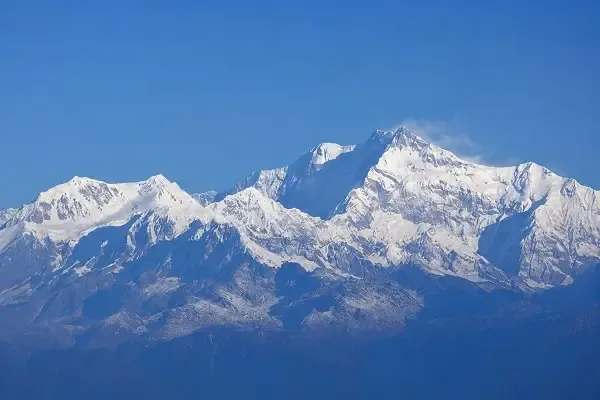
All along the trail, you can view the majestic Himalayas, including Mount Kanchenjunga. Besides that, you can also observe other snow-clad mountains while trekking. During this journey, the trekkers will have a great time exploring the glaciers, lakes, mountain passes, rivers, floras, and faunas.

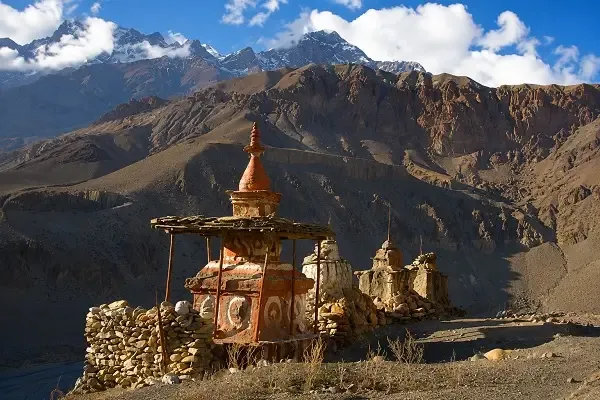
Moreover, cultural exploration opportunities are another exciting aspect of the Kanchenjunga circuit trek. Local settlements of ethnic communities include Bhotiya, Sherpa, Tamang, Limbu, Rai, Gurung, and others. Buddhist heritage sites and landmarks are all over the trails, including small chortens, mani walls, gompas, and prayer flags.

We at Marvel Adventure offer you this outstanding Kanchenjunga Circuit Trek package at a reasonable cost. Contact us to book this stunning journey in the foothills of the Himalayas. Happy Traveling!

Trip Highlights

  • Incredible trekking journey to the base camp of the third-highest mountain in the world, Kanchenjunga (8586m)
  • Observing the Himalayan vista of the snow-clad mountains from various viewpoints
  • Gorgeous sunrise and sunset views overlooking the Himalayas
  • Diverse exploration opportunities for the endangered wildlife
  • Exploring the cultural landscapes, heritage, and traditions of the local ethnic communities
  • Staying in the local tea houses and camps along the trail
  • Experiencing the beautiful hospitality of the local people
Kanchenjunga Circuit Trek Detailed Itinerary

Day 1

Fly to Bhadrapur (91m) and Drive to Phidim (1,365m)

The Kanchenjunga Trek journey begins as you fly from Kathmandu to Bhadrapur. Our team will pick you up and take you to the Tribhuvan International Airport in Kathmandu. The flight journey is a short one of only an hour. You will fly above the hilly region.

After arriving at Bhadrapur, you will drive to Phidim. The journey to Phidim will pass through the beautiful highway for 5-6 hours. It is a beautiful valley located in the remote region of eastern Nepal. There are sweeping views of the snow-clad mountain that you can observe from the viewpoint. After you arrive at Phidim, you will stay overnight at a hotel/lodge and rest for the night.

Max Altitude: 1,365m (4,478ft)
Duration: 5-6 hours drive
Distance: 158 km
Meals: Breakfast, Lunch and Dinner
Accommodation: Hotel
Mode of Transportation: Jeep
Day 2

Drive to Sekathum (1,650m) via Taplejung by jeep

We will have breakfast early, as we have a long journey ahead of us today. Today, the scenic drive from Phidim to Taplejung to Sekathum alongside the Mechi Highway is on the cards.

Taplejung is an ancient village of the Limbu dynasty. Many religious temples in the Taplejung region, including Pathibhara Devi Temple, “Mukkumlung Mangham.”

After arriving at Taplejung, you will rest for some time and continue driving to Sekathum. 

Max Altitude: 1,650m (5,413ft)
Duration: 6-7 hours
Distance: 200 km
Meals: Breakfast, Lunch and Dinner
Accommodation: Teahouse
Day 3

Trek to Amjilosa (2,310m)

The trekking day begins with a scenic sunrise view from the teahouse. You can also observe the sweeping Himalayan vista. We will eat breakfast and embark on the first day of the trek.

The trail from there gently moves uphill as we pass through the waterfalls and streams. We will take an uphill path to Jabari. There you will stop by for some time to have lunch. Finally, you will arrive at Amjilosa after trekking for a few hours, where you can relax.

Max Altitude: 2,310m (7,578ft)
Duration: 4-5 hours
Distance: 6.6 km
Meals: Breakfast, Lunch and Dinner
Accommodation: Teahouse
Day 4

Trek to Gyabla (2,730m)

This section of the trek passes alongside the Ghunsa Khola. The trail takes you through the serene landscapes, where you can find beautiful trails. The uphill trail takes you above a ridge and crosses the bridge above the river. You can find a water stream as you climb through the bamboo bushes.

The trail then moves to the switchback paths as you lead your way through the uphill valley and rocky terrain. The course also has a landslide-prone area you will cross during the trek. After a few hours of trekking, you will arrive at Gyabla, where you will end your walk.

Max Altitude: 2,730m (8,956ft)
Duration: 4-5 hours
Distance: 6 km
Meals: Breakfast, Lunch and Dinner
Accommodation: Teahouse
Day 5

Trek to Ghunsa (3,475m)

The Gyabla to Ghunsa section of the trek takes you to a narrow valley with an elevation of 2700 m. The trail passes alongside the Ghunsa Khola as you pass through diverse vegetation zones in gradual uphill terrain. Trekkers can find many rhododendrons and bamboo trees in their paths.

There, you can also find many wildlife animals like red pandas, Himalayan black bears, etc. You will need to cross tricky landslide-prone areas during the trekking journey. We will cross the settlement of Phale, where the people of Ghunsa migrate in the winter.

We will walk uphill along the broad valley, where you will find the settlement of Ghunsa, surrounded by snow-covered peaks. There is a large community of Sherpa in the region. We will rest there after arriving at Ghunsa.

Max Altitude: 3,475m (11,400ft)
Duration: 5-6 hours
Distance: 11 km
Meals: Breakfast, Lunch and Dinner
Accommodation: Teahouse
Day 6

Acclimatization at Ghunsa

This day gets separated for acclimatization. There are various acclimatization points in the village of Ghunsa. You can go on a hike to the ridges from where you can observe the spectacular Kumbhakarna Peak (7,711m). The peak is also popularly known as the Janu Peak.

You will get the best cultural insights into the place. You can observe rural lifestyles that will enchant you along the trail. Gompas, mani walls, chortens, and prayer flags are also influenced by Tibetan Buddhism practices. There you can also taste the local millet wine, Tongba.

Lapsang La is where you can hike, passing along the Yamtari Khola. There is a pond near the glacier where you can explore around. After exploring, you will return to the teahouse in Ghunsa to spend the night.

Max Altitude: 3,475m (11,400ft)
Meals: Breakfast, Lunch and Dinner
Accommodation: Teahouse
Day 7

Trek to Khabhanchen (4,050m)

The trail to Khambachen from Ghunsa passes through rockfall areas early in the section. The course moves alongside the river banks, passing through the gorgeous forested trails with rhododendron, pines, and birch trees. You will pass through forested areas covered in rhododendron and fern trees.

You need to cross a wooden bridge leading to Rampuk Kharka. The trail passes through the cascading waterfalls and arrives at the landslide-prone area. This point provides you with the different perspectives of Mt. Jannu. The trail then leads you through tricky paths before arriving at Khambachen.

Max Altitude: 4,050m (13,287ft)
Duration: 6-7 hours
Distance: 10 km
Meals: Breakfast, Lunch and Dinner
Accommodation: Camp
Day 8

Trek to Lhonak (4,780m)

On this day of the Kanchenjunga circuit trek, you will continue your journey passing through the beautiful terrains. The trail from Khambachen to Lhonak is a scenic section of the trek. It is the last settlement before Kanchenjunga Base Camp. There are rocky fields and boulders on the hillside.

You will descend along the route and climb alongside a river’s banks. This leads you to the river streams that you cross on a bridge. The gentle climb will lead you to the Buddhist heritage site of Ramtang Monastery. The beautiful visit to the Gompa will enchant you spiritually. After you arrive at Lhonak, you will rest overnight.

Max Altitude: 4,780m (15,682ft)
Duration: 5-6 hours
Distance: 10.5 km
Meals: Breakfast, Lunch and Dinner
Accommodation: Camp
Day 9

Trek to Kanchenjunga Base Camp (5,143m), Trek back to Lhonak (4,780m)

On this day, you will start your journey to the beautiful terrains of the Kanchenjunga region. The gradual path moves uphill through the course, covered in beautiful wildflowers. There is also the Kanchenjunga glacier that you will need to cross along the trails.

You will pass through the beautiful alpine treelines. The Kanchenjunga base camp is a lovely destination with many observable points. The base camp remains surrounded by snow-clad mountains, including Mount Kanchenjunga and others. After exploring around and making incredible memories, you will descend back. After 3-4 hours, you will reach Lhonak.

Max Altitude: 4,780m (15,682ft)
Duration: 7-8 hours
Distance: 15 km
Meals: Breakfast, Lunch and Dinner
Accommodation: Camp
Day 10

Trek to Khambanchen (4,050m)

The beautiful trekking journey from Lhonak to Khambachen starts as you have your breakfast. The scenic vertical trail has much more diverse flora and fauna. There, you can also observe the picturesque yak pastures. The path is quite beautiful as it will provide you with a different perspective of the path. After trekking for 4-6 hours, you will arrive at the settlement of Khambachen.

Max Altitude: 4,050m (13,287ft)
Duration: 5-6 hours
Distance: 10 km
Meals: Breakfast, Lunch and Dinner
Accommodation: Camp
Day 11

Trek to Ghunsa (3,475m)

On this path from Khambachchen to Ghunsa, you will continue trekking through the beautiful terrains of the region. The trail will lead you to the challenging terrains on a downhill trail to arrive at Ghunsa. The downhill trek is relatively easy as you have walked the path before. After arriving in Ghunsa, you will rest and have your meals for the night.

Max Altitude: 3,475m (11,400ft)
Duration: 5-6 hours
Distance: 10 km
Meals: Breakfast, Lunch and Dinner
Accommodation: Teahouse
Day 12

Trek to Sele la Kharka (4,240m)

The trail on this section from Ghunsa to Sele la Kharka passes through numerous diverse terrains. The incredible journey will provide you with the best views of the entire region. The scenic landscapes of the region will enchant any traveler. You will continue your journey in the south, observing the beautiful snow-clad mountains to reach Sele La Kharka.

Max Altitude: 4,240m (13,910ft)
Duration: 6-7 hours
Distance: 10 km
Meals: Breakfast, Lunch and Dinner
Accommodation: Teahouse
Day 13

Trek to Tseram (3,870m) via Sinon la pass (4,660m)

The journey from Sele La Kharka to Tseram is enchanting, with incredible landscapes all around. The trek trail will take you through multiple terrains, arriving at the destination of Tseram. There, you can observe the beautiful trails of the region traversing through the Chele La Pass and Sinon La Pass.

This incredible terrain will provide astounding views of the entire region. The trek trail will take you through the high mountain passes of the Kanchenjunga Base Camp Trek. The trek trails gradually take you uphill towards Mirgin La Pass, where you can observe the sunrise view.

You will cross the various water streams and continue along the trails within the region. The beautiful wooden bridge provides the best views of the entire region. There, you can observe the wildflowers, flora, and fauna of the region. The beautiful nature trails of the region to arrive at Chele La Pass, passing through the natural terrains, are quite enchanting.

You will get to observe the snow-clad mountains of the area, including Mt. Kanchenjunga, Makalu, and others, from Sele La. You will then descend along the trails to arrive at the destination from Sele La. The descending route is quite scenic as you descend around 1000m to arrive at your destination.

Max Altitude: 3,870m (12,696ft)
Duration: 7-8 hours
Distance: 15 km
Meals: Breakfast, Lunch and Dinner
Accommodation: Teahouse
Day 14

Trek to Ramche (4,580m)

The trail on this day will take you alongside the beautiful route to arrive at the destination of Ramche. You will pass through the serene natural trails to arrive at the village settlement. The alpine village also has excellent viewpoints of the entire region that you can observe along the route.

The gradual uphill trail will first pass through the challenging terrains of the region. There, you can find many lateral moraines along the course as well. You will finally arrive at your destination after trekking for a few hours and resting there.

Max Altitude: 4,580m (15,026ft)
Duration: 4-5 hours
Distance: 10 km
Meals: Breakfast, Lunch and Dinner
Accommodation: Teahouse
Day 15

Trek to Oktang Base Camp (4,730m), Trek down to Torangden (2,995m)

The Kanchenjunga circuit Trek will take you through the beautiful Oktang Base Camp on this day. You will pass through the natural terrains along the alpine valley. There are numerous lateral moraines alongside the Yalung Glacier that you will cross in this section.

After a rugged trek, you reach the destination of Oktang Base Camp. There, you can explore the base camp area and take incredible pictures. After exploring the region, you will spend the night at the teahouse.

The snow-clad mountains look majestic from the base camp. After exploring around, you will begin your slight descending trail to the village settlement of Torangden. It takes approximately 3-4 hours to reach the destination, where you will spend the night.

Max Altitude: 2,995m (9,826ft)
Duration: 7-8 hours
Distance: 13 km
Meals: Breakfast, Lunch and Dinner
Accommodation: Teahouse
Day 16

Trek to Yamphudin (2,080m)

The trek continues along descending trails from Torangden to arrive at Yamphudin. The beautiful trails pass through the region's challenging terrain for around 5-6 hours. The course is mostly descending as you move alongside the winding paths of the Simbuwa Khola. The trail then takes you along the flat areas of the Kanchenjunga Conservation Area. Many wildflowers, like rhododendron, orchids, etc., are on the path to Yamphudin.

Max Altitude: 2,080m (6,824ft)
Duration: 6-7 hours
Distance: 12.5 km
Meals: Breakfast, Lunch and Dinner
Accommodation: Teahouse
Day 17

Trek to Khebang (1,910m)

This Yamphudin to Khebang trek journey starts early in the morning, after breakfast. The uphill trek passes through the settlement of Lamite Bhanjyang. The trail further descends through the numerous pine-forested courses.

The trekkers will also need to cross the pristine Simbhua Khola. There are Amji Khola river banks that you will travel through on the wooden bridge. After trekking for 5-6 hours, you will finally arrive at Khebang.

Max Altitude: 1,910m (6,266ft)
Duration: 5-6 hours
Distance: 14 km
Meals: Breakfast, Lunch and Dinner
Accommodation: Teahouse
Day 18

Trek to Hapukhola (1,400m)

This trekking journey in the pristine landscapes is the last section of the trek. The trail has many up-and-down, winding paths. There are many settlements along the route as well. You can enjoy the beautiful nature trails during this trekking journey. After arriving at Hapukhola, you will rest overnight.

Max Altitude: 1,400m (4,593ft)
Duration: 5-6 hours
Distance: 12 km
Meals: Breakfast, Lunch and Dinner
Accommodation: Teahouse
Day 19

Drive to Bhadrapur (91m)

The trail on this day trek takes you on a beautiful trail passing through numerous terrains. You will pass through the beautiful trails on this drive from Hapukhola to Bhadrapur for the last time. The trails drive past the scenic settlements and farmlands of the region to arrive at the destination.

Max Altitude: 91m (298ft)
Duration: 5-6 hours
Meals: Breakfast, Lunch and Dinner
Accommodation: Hotel
Mode of Transportation: Jeep
Day 20

Fly back to Kathmandu (1400m)

You will fly back to Kathmandu from Bhadrapur as the Kanchenjunga circuit trek ends.

Max Altitude: 1,400m (4,593ft)
Duration: 45 minutes
Meals: Breakfast
Accommodation: Hotel
Mode of Transportation: Flight
Have Questions? We're Here to Help
Like this itinerary but want to make a few changes? Every traveler is unique, and your journey should be too. Our local travel experts will design a personalized experience tailored to your interests, preferred pace, travel dates and budget.
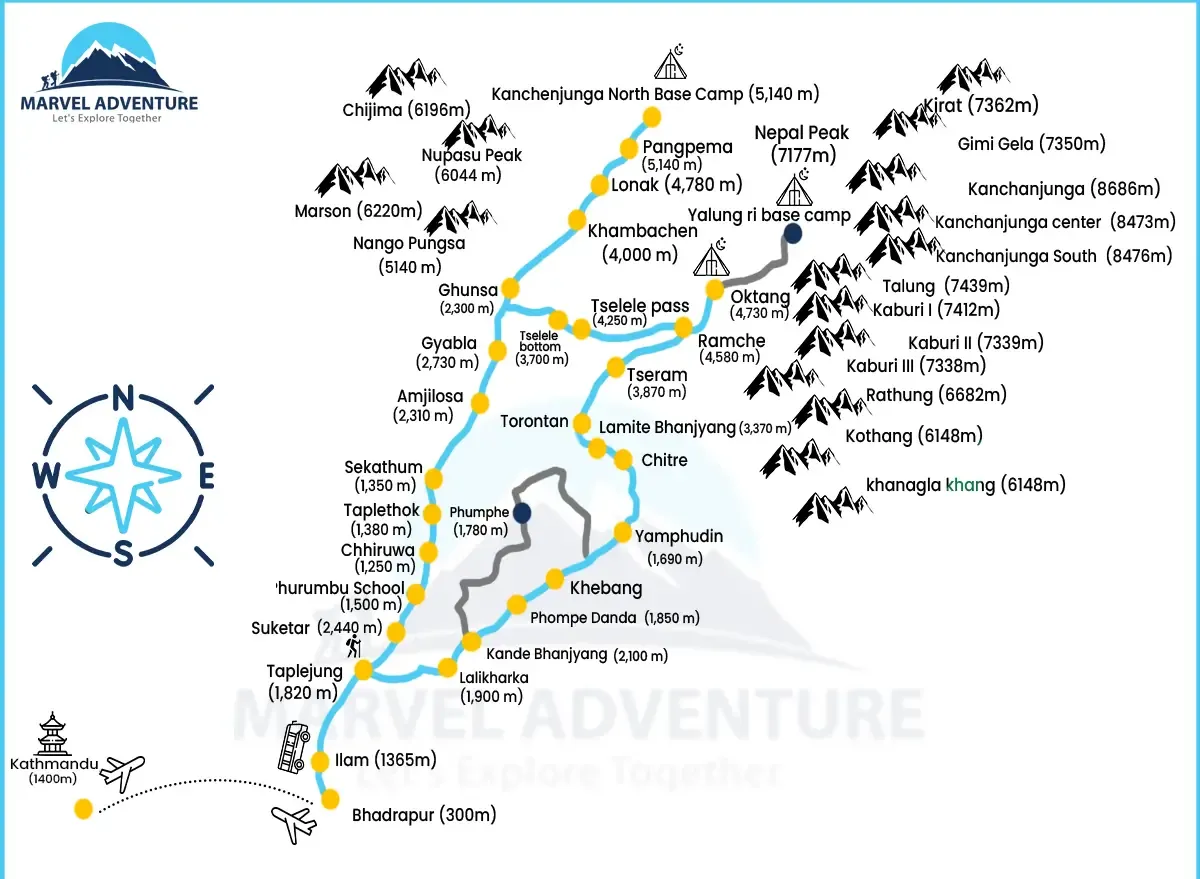
Route Map & Altitude Profile

Cost Details

Includes

  • Airport pick-up and drop service
  • Domestic travel costs as per the itinerary
  • Standard meals during the trek (Breakfast, Lunch, and Dinner)
  • Fresh fruits every night after dinner
  • License holder, experienced trekking guide with local knowledge
  • Strong and helpful porter with proper equipment (1 porter for 2 people)
  • Teahouse and camp accommodations during the trek
  • Special Trekking Permits and Conservation Area Permits
  • First aid kit with an oximeter to monitor oxygen level
  • Duffel bag, sleeping bag, down jacket, and walking poles for the trek
  • Official expenses and government taxes

Dates & Availability

Aug 2026
Sep 2026
Oct 2026
Nov 2026
Dec 2026
Jan 2027
Feb 2027
Mar 2027
Apr 2027
May 2027
Jun 2027
Jul 2027
Aug 2027
Sep 2027
Oct 2027
Nov 2027
Dec 2027
Start Date
03 Aug, 2026
End Date
22 Aug, 2026
Status
Guaranteed
Price
US$1995
Start Date
07 Aug, 2026
End Date
26 Aug, 2026
Status
Guaranteed
Price
US$1995
Start Date
10 Aug, 2026
End Date
29 Aug, 2026
Status
Guaranteed
Price
US$1995
Start Date
14 Aug, 2026
End Date
02 Sep, 2026
Status
Guaranteed
Price
US$1995
Start Date
17 Aug, 2026
End Date
05 Sep, 2026
Status
Guaranteed
Price
US$1995
Start Date
21 Aug, 2026
End Date
09 Sep, 2026
Status
Guaranteed
Price
US$1995
Start Date
24 Aug, 2026
End Date
12 Sep, 2026
Status
Guaranteed
Price
US$1995
Start Date
28 Aug, 2026
End Date
16 Sep, 2026
Status
Guaranteed
Price
US$1995
Start Date
31 Aug, 2026
End Date
19 Sep, 2026
Status
Guaranteed
Price
US$1995

If there is only one person for the trip, there will be a USD 300 additional cost.

Meet Our Expert Guides

Khilaraj Nachhiring
Trekking Guide
Phinjo Sherpa
Trekking Guide
Dibash Mainali
Trekking Guide
Dinesh Rai
Trekking Guide

Equipment List

Upper Body Layers
  • Breathable, quick-dry base layers
  • Comfortable t-shirts
  • Lightweight insulating jacket
  • Down jacket for cold conditions
  • Waterproof and windproof jackets
Lower Body Layers
  • Thermal base layer
  • Waterproof trekking pants
  • Comfortable pants for evenings in teahouses
  • Comfortable hiking shorts for warmer sections
  • Waterproof and windproof outershell for rain or snow
Footwear & Accessories
  • Trekking boots with ankle support (preferably Waterproof)
  • Multiple pairs of quick-dry socks
  • Warm socks for cold nights
  • Gaiters for snowy, muddy, or dusty trails
  • Trekking poles to reduce strain on knees
Head & Sun Protection
  • A hat or a cap to block the sun
  • Warm beanie for cold mornings and evenings
  • UV-protected sunglasses
  • Neck gaiter or buff to prevent dust, cold, and sunburn
  • Sunscreen (30-50+ SPF) for face and exposed skin
  • Lipbalm with SPF
Personal & Medical Kits
  • Personal medications
  • Diamox (Acetazolamide) for altitude sickness
  • Ointment
  • Hand sanitizers and wet wipes
  • Quick-dry towel
Travel Documents
  • Valid Passport
  • Passport-sized photos for permits
  • Travel insurance
  • Flight tickets
  • Cash in Nepali Rupees
  • Emergency contact details
Miscellaneous
  • Daypack (30-45L) with raincover
  • Reusable water bottles
  • Headlamps for early morning hikes
  • Water purifying tablet or filter
  • Phone or Camera for capturing the adventure
  • Powerbank for an easier charging option
  • Notebook, books, or cards for free time
  • Snacks like energy bars and chocolates
  • Drybag to keep your gear safe from rain

Essential Information

..

Why choose Kanchenjunga Region for Trek?

The Kanchenjunga region is quite famous for its immense natural beauty. There are scenic virgin trails that you will pass to arrive at the mountain’s base camp. These trails are mainly off the beaten and unique from the more mainstream treks in the Everest region.

You will trek the foothills of the mountains while crossing the spectacular natural landmarks. Many diverse natural trails exist, including waterfalls, hills, forests, glaciers, rivers, streams, etc. Trekkers will pass through the quiet trails in the depths of nature.

Another thing that makes this Kanchenjunga region stand apart is the remote landscapes. Away from the hustle and bustle, you will get to explore the beautiful area in all its glory. You will observe the most outstanding views of the tallest Himalayan peaks, including Mt Kanchenjunga.

The local community will welcome you with open arms and incredible hospitality. There are unique lifestyles and traditions that you can observe during the trek. Hence, you should choose the remote Kanchenjunga circuit trek for all these reasons.

Best Time for the Kanchenjunga Circuit Trek

The two best seasons for trekking and traveling in the beautiful Himalayan foothills. These include the spectacular Spring (March, April, and May) and Autumn (September, October, and November) seasons. Spring provides stable weather, whereas, in the Autumn season, there are fewer weather-related challenges.

Spring season

Spring is favorable for its excellent weather conditions with no weather-related challenges. Travelers will trek in the great blue sky with no overcast conditions. Besides that, the entire trail will get covered in wildflowers like rhododendron. The temperature remains in the mid-20 degree Celsius which is ideal for trekking. Hence, it is pretty pleasant to trek in the Spring season.

Autumn season

Autumn is also one of the best times for the Kanchenjunga circuit trekking. This is because it has fewer weather-related challenges. Besides, there are various other advantages of trekking in the autumn season. There are moderate temperatures that range around mid-20 degrees celsius. The Autumn season is excellent for cultural exploration, as many festivals around this time of the year.

Difficulties of the Kanchenjunga Trek

Tackling this high-altitude sickness is through acclimatization. This process is essential to quickly adapt to changing high-altitude conditions. You should also rest well after the trek and not rush through the trek.

You must trek gently so that you will be able to continue your journey without any hassle. Take regular breaks and carry Diamox tablets as a precaution to reduce symptoms like nausea, headache, insomnia, etc.

The rugged region also has dangerous uphill and downhill slopes that you will have to cross. The trekkers must carry proper tracking gear and equipment for a comfortable journey. You should also trek in the peak season of Spring and Autumn for pleasant trekking conditions. Read More about Kanchenjuna trek difficulty

Can you do this trek?

The Kanchenjunga circuit trek is challenging in the northeastern region of Nepal. The trek is relatively more complex than other treks in the area. However, if you prepare well for the trek, you can efficiently complete it. You will also need the best trekking gear and equipment for the trek.

However, you should also do some other treks as practice before you start the Kanchenjunga circuit trek. It will help you continue your tour in the high-altitude region with ease. Another essential thing to consider for the expedition includes a basic fitness level. Stamina, high strength, and endurance are also required for the trek.

A healthy and nutritious diet is also essential during the trekking journey. Besides all the strength-building physical exercises, you must also perform flexibility-building cardiovascular exercises. Moreover, mental exercises will help you remain motivated along the trail.

How to prepare for Kanchenjunga Circuit Trek?
  • Trek early and trek slow
  • Rest well and acclimatize at various intervals
  • Hydrate regularly along the trail
  • Tackle altitude sickness through various measures
  • Train well with all the exercises
  • Only get those items necessary during the trek
  • Book all the meals and accommodations
  • Carry water purification tablets
  • Get all your snacks along the trail
  • Carry a power bank, solar charger, extra batteries, etc.
Is this trek suitable for beginners?

The Kanchenjunga circuit Trek might be a little difficult for absolute beginners. However, if you have some experience in trekking at a high altitude, you can complete the trek with ease. The tour takes you through the remote terrains along challenging routes that move uphill and downhill. The rugged landscapes require the use of proper gear and equipment. Hence, you need to be careful along the trail and prepare well.

Why is Acclimatization necessary?

Acclimatization is an integral aspect of the Kanchenjunga circuit trek. The beautiful hike takes you through some of the highest-altitude terrains. Hence, you must tackle altitude sickness to be fit and in great shape along the trails. Hydrating regularly and trekking at a slow pace is also a necessity. You can also take Diamox tablets to tackle the symptoms of altitude sickness along the trail.

Kanchenjunga Circuit Trek FAQs

How many hours do we walk each day?

Most days run 6-8 hours, which is longer on average than EBC, ABC, or even the Manaslu Circuit. The approach trails from Taplejung involve multiple consecutive long days before you even reach altitude, and some sections of the north circuit above Ghunsa have extended stages with no intermediate stop.

How long is the Kanchenjunga Circuit Trek?

The full Kanchenjunga Circuit, visiting both North and South Base Camps and crossing Sinon La pass, runs 20 days, including flights and transport from Kathmandu.

What is included in the Kanchenjunga Circuit Trek package?

Our standard Kanchenjunga Circuit package includes: flights from Kathmandu to Bhadrapur or Birtamod, jeep transport to and from Taplejung, all permits, all accommodation on trail, all meals on trail (breakfast, lunch, and dinner), a licensed and experienced guide with specific Kanchenjunga experience, and a porter. We confirm the full inclusion list in writing before booking.

How much extra money should I carry during the trek?

Carry at least NPR 30,000-45,000 (roughly USD $220-$335) beyond your package cost. The Kanchenjunga region has no ATMs once you leave Taplejung. Draw everything you need in Kathmandu before departure. Running short on cash on the Kanchenjunga Circuit is a problem with no convenient solution.

Is the Kanchenjunga Circuit Trek worth it compared to Everest or Annapurna?

For the right trekker, absolutely, and it's not even close. Kanchenjunga offers something that EBC and the Annapurna Circuit genuinely can't anymore: real wilderness, genuine solitude, and the feeling of being somewhere that the trekking industry hasn't fully arrived yet. You will be standing at the base of the world's third-highest mountain without a queue of people behind you.

Why book the Kanchenjunga Circuit Trek with Marvel Adventure?

Because this circuit demands more from an operator than any other trek we run, and we take that seriously. Our guides on the Kanchenjunga route have specific experience in the region. We've built our itineraries around what the circuit actually requires. We keep groups small, verify insurance without exception, and stay reachable throughout. If Kanchenjunga is on your list, do it with a team that has been there and knows what doing it properly actually looks like.

How difficult is the Kanchenjunga Circuit Trek?

It's one of the most demanding treks in Nepal, and we say that having run some of the hardest routes in the country. The Kanchenjunga Circuit combines long daily stages, sustained high altitude, genuinely remote trail sections, and limited infrastructure in a way that tests even experienced trekkers.

Is the Kanchenjunga Circuit Trek suitable for beginners?

Kanchenjunga is one of the last routes we'd point a beginner toward. The remoteness alone sets it apart; teahouses are limited, evacuation is logistically complex, and there are sections of trail where you can walk a full day without passing another trekking group.

How fit do I need to be for the Kanchenjunga Circuit Trek?

You need to be comfortable walking 7-9 hours on consecutive days over rough, remote terrain with a daypack, at altitude, for more than two weeks. From our experience, the trekkers who handle Kanchenjunga best are those who've completed at least two previous Himalayan treks and trained consistently for 5-6 months before departure.

What is the highest altitude of the Kanchenjunga Circuit Trek?

The highest point on the standard circuit is Kanchenjunga North Base Camp at 5,143m, followed closely by Kanchenjunga South Base Camp at 4,730m.

What is the best time to do the Kanchenjunga Circuit Trek?

Spring (March–May) and autumn (September–November) are the best seasons for trekking in Nepal. During these months, the weather is usually stable, and the mountain views around Larkya La are much clearer.

Can I do the Kanchenjunga Circuit Trek during winter or monsoon?

Monsoon (Jun-Aug) brings heavy rainfall and landslide risk to the lower section. We have done it with some experienced trekkers, but the trail risks are real, and we don't recommend it for most people. Winter (Dec-Feb) means some sections can be completely impassable, and temperatures at the pass drop to levels that are dangerous without proper cold-weather expedition gear.

Is altitude sickness common on the Kanchenjunga Circuit Trek?

Mild AMS symptoms are common above 3,500m with headaches, fatigue, and disrupted sleep affecting most trekkers at some point on this circuit. On the Kanchejunga Circuit, descending quickly isn't always straightforward, and helicopter access depends heavily on weather. This is exactly why proper acclimatization at Ghunsa is non-negotiable on our itineraries.

How does Marvel Adventure help prevent altitude sickness?

We build it into the itinerary structure rather than treating it as an afterthought. Every Kanchenjunga Circuit itinerary we run includes proper acclimatization days at Ghunsa. Our guides take pulse oximeter readings every evening above 3,500m, brief trekkers on early AMS symptoms, and monitor hydration and pace throughout.

Is travel insurance mandatory for the Kanchenjunga Circuit Trek?

Yes, you need coverage for high-altitude trekking up to at least 6,000m, helicopter evacuation, and ideally trip interruption and emergency repatriation. We verify insurance at briefing without exception. If your policy doesn't cover what you're doing, we'll tell you before you go, not after something goes wrong.

Do I need a guide for the Kanchenjunga Circuit Trek?

Yes. The Kanchenjunga Restricted Area permit cannot be issued without a licensed guide, and the minimum group requirement is two trekkers. Beyond the regulation, a guide on this circuit is not a luxury or a convenience, but it's a core safety element.

Can I do the Kanchenjunga Circuit Trek solo?

No, and the permit system enforces this at multiple checkpoints along the route. The Kanchenjunga Restricted Area requires a licensed guide and a minimum group of two trekkers as solo permits are not issued.

Why is Kanchenjunga a restricted trekking region?

The Kanchenjunga Conservation Area borders both India (Sikkim) and Tibet, and lies within one of Nepal's most sensitive geographical and ecological zones. The restricted area designation was introduced to control trekker numbers, protect the rich biodiversity, and preserve the culture of the Limbu and Rai communities along the trail.

What permits are required for the Kanchenjunga Circuit Trek?

Two main permits: the Kanchenjunga Restricted Area Permit (RAP) and the Kanchenjunga Conservation Area Permit (KCA). A TIMS card is also required. We handle all permit processing as part of our packages. Getting paperwork wrong at a remote checkpost in the Kanchenjunga region is not a problem that resolves quickly or cheaply.

Is the Kanchenjunga Circuit Trek fully teahouse-based?

Mostly, but requires camping as well. The lower sections of the circuit have established teahouses. Above Ghunsa on the approach to North Base Camp and above Tseram on the approach to South Base Camp, infrastructure becomes very basic, and in some sections camping may be necessary depending on the season and weather.

What kind of accommodation is available during the trek?

In the lower sections, teahouses are basic but functional. In Ghunsa, lodges are better established with reasonable rooms and a proper dining area. Above Ghunsa toward North Base Camp, accommodation is minimal, stone shelters or very basic lodges that are weather-dependent and not always open. Bring a sleeping bag rated to -15°C minimum as the nights above 4,000m on the east side of Kanchenjunga are serious.

Are hot showers, charging, and Wi-Fi available during the trek?

In the lower sections,  basic solar-heated showers and charging facilities exist, usually for a small fee. Above Ghunsa, hot showers are rare, and electricity is limited to small solar setups that prioritize lighting over device charging. Wi-Fi is available in some lower teahouses but is nonexistent above Ghunsa.

What food is available during the Kanchenjunga Circuit Trek?

Dal bhat, noodle soup, fried rice, eggs, and basic hot drinks are available throughout, but the menus get thinner and more consistent than on the Everest or Annapurna circuits because supply chains into this region are longer and more difficult.

How remote is the Kanchenjunga Circuit Trek compared to Everest Base Camp?

In a different category entirely. The EBC route has teahouses every 1-2 hours, hundreds of other trekkers on the trail, reliable mobile coverage through most of the route, and helicopter access from nearly every point. The Kanchenjunga Circuit has entire days with no other trekking groups, sections with no phone signal for multiple days, teahouses that may or may not be open depending on the season, and helicopter evacuation that is genuinely weather-dependent.

What transportation is used for the Kanchenjunga Circuit Trek?

Getting to the trailhead is the first logistical challenge. Our itinerary takes a flight from Kathmandu to Bhadrapur, then the next day takes a jeep drive to Sekathum, the standard starting point for the north circuit approach. We arrange all transport as part of our packages and monitor flight availability carefully

Price Per Person
US$1995
US$1995
All inclusive price
  • 2 - 4 paxUS$1995
  • 5 - 9 paxUS$1950
  • 10 - 20 paxUS$1875
Book This Trip
Talk to Our Travel Experts

What Our Clients Say

June 14, 2023
Amazing experience

I did Kanchenjunga Base Camp with Marvel Adventure. Trip was well organized even though it was last minute decision to go. From the begining I was taken care by my guide Tej and porter Nima....

A
Alicja
Scotland
June 22, 2022
Trek to Kanchenjunga base camp with Nir Karki

This is Vijay Mehta from Mumbai India I have done a trek Keith marvel tours in the month of may to June 2022 in Kanchenjunga base camp which is situated in east Nepal and the...

V
Vijay Mehta
India

You May Also Like

kanchenjunga trek nepal
Duration: 18 Days
5.0(3 Reviews)

Kanchenjunga Trek

US$1850US$1850
Difficulty Level: Strenuous
upper dolpo trek
Duration: 22 Days

Upper Dolpo Trek

US$4200US$4400
Difficulty Level: Strenuous
makalu base camp trek
Duration: 17 Days

Makalu Base Camp Trek

US$1875US$1875
Difficulty Level: Strenuous
Need Help? Call Us+977 986-0313572
Kanchenjunga Circuit Trek | 20 Days Trek to Both Base Camps