How Difficult is Mera Peak?
| Factor |
What a beginner should expect |
| Technical skills |
Basic crampon and rope skills are needed |
| Trekking endurance |
Several consecutive walking days |
| Altitude |
Demanding and unpredictable above 6,000 m. |
| Summit day |
A long, cold ascent and descent starting before dawn |
| Weather and snow |
Can substantially change the difficulty or stop the attempt |
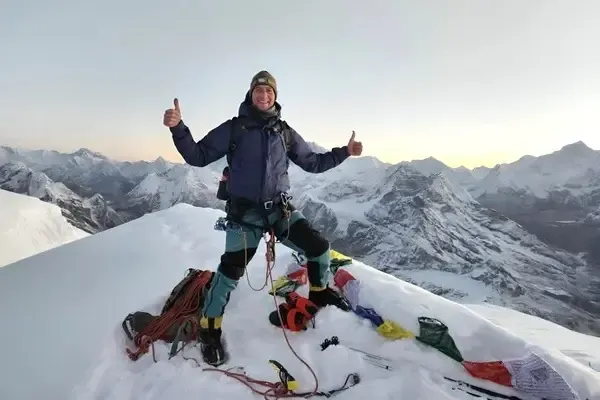
The standard route on Mera Peak crosses glacier and snow slopes rather than rock or mixed terrain. Most of the ascent from Khare to the summit is steady while using crampons for grip on snow and ice.
The one section that asks more of you technically is the final 40 to 50 metres below the summit, a steeper snowy portion where climbers use a jumar on a fixed rope to get up.
The normal route is relatively straightforward for a climbing peak, but fresh snow, hard ice, poor visibility, or changes to the route can make a particular attempt more demanding.
What Actually Makes Mera Peak Difficult?
This is the part that actually decides whether someone has a good climb or a miserable one. The actual difficulty comes from a combination of altitude, cumulative fatigue, the length of summit day, and weather.
Altitude is the Biggest Challenge
Mera Peak's summit sits above 6,400m, where lower air pressure means your body gets less oxygen with each breath. Even fit climbers move more slowly and need more time to recover. Cardiovascular fitness helps you move efficiently at lower elevations, but it doesn't automatically translate to how your body handles reduced oxygen at 6,000m and above.
At altitude, physical effort feels different. Tasks that would barely raise your heart rate at sea level leave you breathing hard. Pace slows, sometimes by a lot. Recovery takes longer. And altitude affects people differently.
This is why the acclimatization day at Khare sits at the centre of how our Mera Peak itinerary is built. The days built into the itinerary exist specifically to let the body adjust gradually, rather than pushing straight to altitude and hoping for the best.
Trek to Khare Builds Cumulative Fatigue
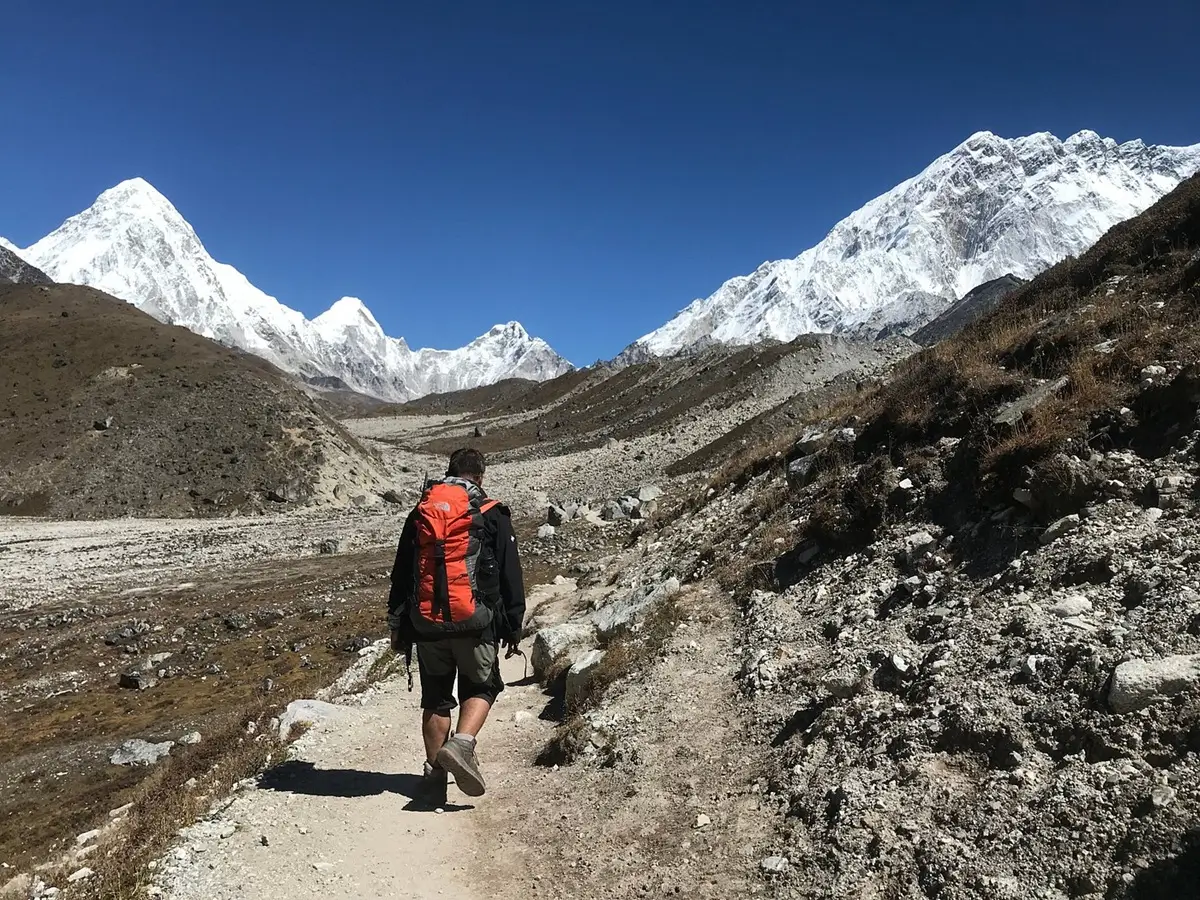
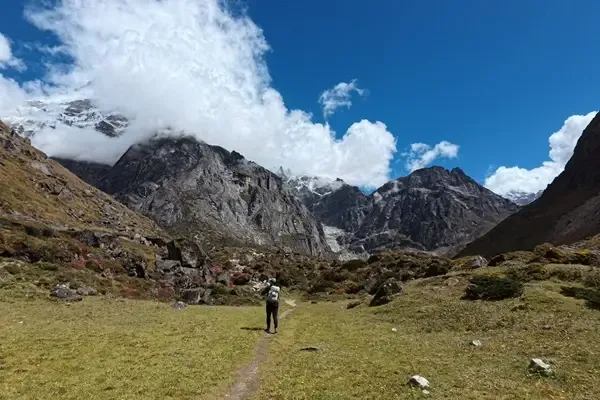
Getting to Khare, the last teahouse settlement before the climbing phase, takes about a week of trekking through the Hinku Valley. You will be crossing passes, dropping into valleys, climbing back out again, day after day.
These long walking days on uneven terrain accumulate fatigue even when you're fit. Carrying a daypack adds a steady load that doesn't disappear overnight. Sleep gets lighter as altitude increases, and appetite often drops off, which means the body is working with less fuel and less rest well before the climbing even starts.
Someone can feel genuinely strong on day two or three of the trek and still find themselves drained by day seven, simply because the fatigue has been building the entire time. Fitness gets you through the early days comfortably. Whether that fitness holds up depends on how well the body has been recovering along the way.
Summit Day is Long, Cold, and Mentally Demanding
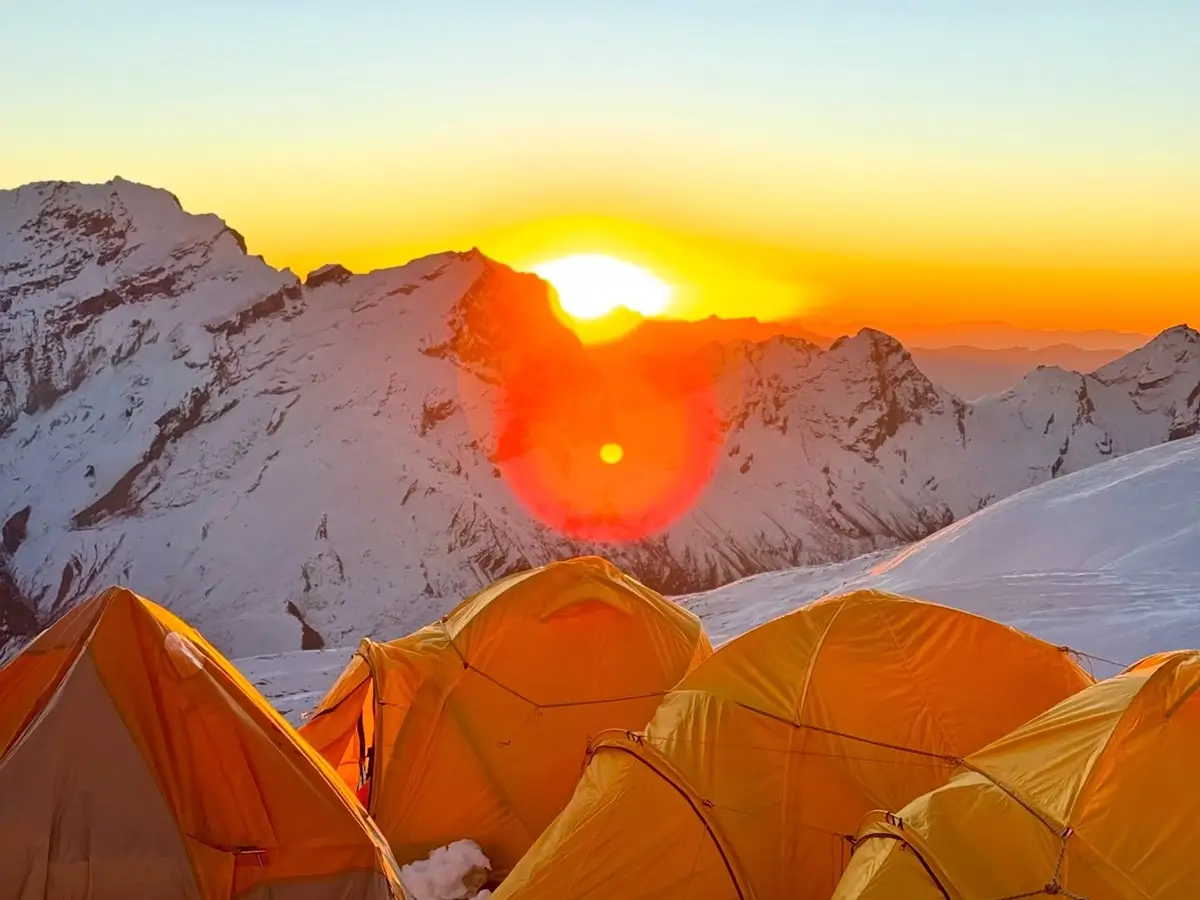
Mera Peak summit day starts early, typically somewhere between 2 am and 3 am from High Camp, as there's real distance to cover and a need to be out of the upper mountain before afternoon weather sets in.
It's cold in a way that's hard to communicate to someone who hasn't experienced it: dark, still, well below freezing, with wind that can turn a manageable temperature into something much harsher. Movement is slow because of the altitude, and it stays slow for hours. Honestly, there's little opportunity for real recovery along the way. You eat what you can carry, drink what you can keep from freezing, and keep moving.
There is also a mental side that is easy to underestimate before you're in it. Knowing there are still hours of climbing ahead, in the dark, in the cold, at an altitude where every step takes noticeably more effort than it should, that can be mentally exhausting in a way that pure physical fitness doesn't prepare you for.
And reaching the summit isn't the end of the effort. You still have to descend through High Camp to Khare. Exact timings vary with conditions, group pace, and itinerary, but generally summit day runs eight hours or more from departure to return.
Weather and Mountain Conditions Can Change Everything
A route that's not technical in good conditions can become considerably harder when the weather or the snow turns. Fresh snowfall changes footing and can bury the usual track. Strong wind adds a cold factor that your clothing alone doesn't fully solve. Poor visibility can make route-finding on glacier terrain a genuinely serious issue.
Glacier conditions shift season to season and even week to week. Snow cover and crevasse conditions can change, and a guide assessing the mountain that morning is working from what's actually there, not from how the route looked on a previous trip. This is one reason an experienced climbing guide matters.
Is Mera Peak a Technical Climb?
The standard Mera Peak route is not considered highly technical, but it's still a mountaineering objective rather than an ordinary trek.
Marvel Adventure specifically describes a technical section near the summit where fixed rope and a jumar may be required. We also provide pre-climb training at Khare to prepare climbers for the relevant equipment and terrain.
A first-time climber should expect to learn things such as:
Walking efficiently in crampons
Beginners need to learn how to move on snow and ice with crampons before they're doing it at altitude on summit day. It's a skill that becomes natural with a bit of practice, but it isn't instinctive the first time.
Using a climbing harness and ice axe
On the glacier sections, a harness connects you to the rope team for safety, and an ice axe provides balance and a way to arrest a slip on snow slopes. Neither of them requires advanced skill to use correctly, but both need to be understood before you're relying on them.
Using a jumar or ascender when required
On the fixed-rope section near the summit, climbers use a jumar to ascend efficiently and safely. Depending on route and snow conditions in a given season, fixed lines may be used elsewhere on the summit day too.
Maintaining balance and spacing on snow and glacier terrain
Movement technique matters, but so does awareness of the other people you're roped to. Following the guide's line and pacing rather than pushing ahead or lagging is what keeps a rope team safe.
The point of our pre-climb training at Khare is to build these skills under supervision before they're needed on the mountain.
Can a Beginner Climb Mera Peak?
Yes, someone with no previous mountaineering summit can climb Mera Peak if they have a strong trekking base, train consistently, acclimatize appropriately, and learn the required climbing skills under an experienced guide.
If by beginner you mean someone who has never climbed a 6,000m mountain before, Mera Peak can be the first Himalayan summit for a properly prepared person.
If you mean someone who has never done a long trek, rarely exercises, and has no experience walking for several consecutive days, we would not recommend this to you.
A suitable first-time climber should ideally be able to:
- Handle long days of uphill and downhill walking
- Train consistently before the expedition
- Adapt to several days of trekking
- Follow an acclimatization schedule
- Learn basic climbing equipment and techniques
- Stay comfortable enough to function in cold conditions
- Maintain a steady pace rather than rushing
- Listen to the climbing guide when conditions or their own condition require a change of plan.
How Fit Do You Need to Be for Mera Peak?
You don't need to be an elite athlete. But you do need enough endurance to keep moving for long periods, recover between days, and handle repeated uphill effort. And that is what the Mera Peak fitness requirements ask for.
Your preparation should look more like training for repeated mountain days and a demanding summit day than simply preparing for a trek. Therefore, here are a few things we suggest to build into your training plan:
Progressive hill walking
- Long, steady climbs, ideally with a loaded pack, build the specific endurance that flat cardio doesn't provide.
Stair climbing or inclined treadmill sessions
- Useful when hills aren't accessible, and they train the same muscles you'll rely on for hours of ascent.
Steady cardiovascular training
- Running, cycling, or swimming builds the base that makes long days more manageable, even though it doesn't address altitude directly.
Leg and core strength
- Squats, lunges and core work help with stability on uneven terrain and reduce fatigue-related mistakes later in a long day.
Back-to-back hiking days
- Working consecutive long days, even at lower altitude, gives a much more honest picture of how your body recovers overnight than a single big hike does.
Occasional longer endurance sessions
- A full day of long effort, done a few times in training, tells you more about your real capacity than a series of short workouts.
Your goal should be consistency over several months. Our guides suggest starting serious preparation four to six months out to build the kind of endurance that holds up on day nine of a fifteen-day itinerary.
However, one thing training cannot do is guarantee how your body will respond to 6,461m. Fitness helps you handle the workload. Acclimatization helps your body adjust to altitude. You need both.
How Marvel Adventure Prepares First-Time Climbers
For a first-time climber, preparation shouldn't stop when you arrive in Nepal. The useful part of a climbing itinerary is how our team manages the transition from trekking to mountaineering.
Your condition is assessed during the approach
Our climbing guide watches how each climber is moving, eating, sleeping, and responding to altitude gain over the trekking days into Khare. These observations help the guide make decisions.
Our itinerary allows time to acclimatize
The route into Khare is built with altitude gain spread across several days instead of rushing, which allows your body to adjust before the climbing phase begins.
Training at Khare
Before the summit push, climbers go through pre-climb training covering crampon use, harness fitting, basic rope work, and how to use a jumar or ascender on fixed lines. This is where beginners actually learn the skills covered earlier in this article, under direct supervision of our experts at Marvel Adventure.
High Camp before summit day
Moving up to High Camp at 5,780m shortens the distance to the summit and breaks the push into a more manageable structure, rather than attempting the whole ascent in one continuous stretch from Khare.
Summit pace
Guides control the pace. The most common mistake on summit day is moving too fast early and running out of strength before the hardest section, so pacing is managed by our guides rather than left to individuals.
Conditions are checked before proceeding
Health, weather, snow conditions, route conditions, and how each climber is responding to altitude are all checked before a summit attempt proceeds. Our guide will make the final safety decision, and that call is based on what's happening on the mountain that day, not on a fixed schedule.
Reserve day for flexibility
A contingency day is built into our itinerary specifically because weather or health issues can disrupt a summit attempt. Having that buffer available, rather than a single fixed shot at the summit, matters a lot more than it might seem before the trip.
One thing trekkers need to understand is that none of this guarantees a summit. What it does is help the team prepare and make informed decisions.
Are You Ready for Mera Peak? A Practical Self-Assessment
Before committing to Mera Peak as your first Himalayan summit, we ask you to answer these honestly:
- Can I comfortably complete long hill walks on consecutive days?
- Have I followed a consistent training routine?
- Can I handle several hours of steady uphill movement without stopping constantly?
- Have I previously completed a multi-day trekking or hiking trip?
- Am I comfortable walking in cold and changing mountain conditions?
- Am I prepared to learn basic crampon, harness, and rope techniques?
- Can I maintain a steady pace even when the terrain becomes tiring?
- Do I understand that altitude can affect me regardless of my fitness level?
Mostly yes: You may be a realistic candidate for Mera Peak, assuming your preparation, acclimatization and general health line up in the months before departure.
Several no answers: More preparation is probably worth doing first. A high-altitude trek below 6,000m, completed before attempting Mera Peak, can also give you a much clearer sense of how your own body responds to altitude.
Uncertain: You can share your trekking background, previous high-altitude experience and current training level directly with Marvel Adventure. We can help you with a realistic assessment based on your specific history rather than trying to guess from a checklist alone.
Final Verdict: Is Mera Peak Right for a First-Time Climber?
Mera Peak is technically straightforward compared with many other Himalayan climbing peaks, but it's physically demanding because of its altitude, its multi-day approach, a long summit day, and conditions that can shift with little warning.
Previous mountaineering experience is useful. It isn't necessarily compulsory. What matters more is trekking experience, actual physical preparation rather than being planned and skipped, and going in with a realistic understanding that altitude can't be trained away, conditions can change the difficulty on any given day, and summit success is never guaranteed.
If you're considering Mera Peak as your first Himalayan summit, share your previous trekking experience, current training level, and preferred travel dates with Marvel Adventure. Our team can help you work out whether the itinerary and your current preparation are a sensible match, or what you'd want to adjust before committing.
Frequently Asked Questions
Is Mera Peak suitable for beginners?
It's manageable for a well-prepared beginner with a solid trekking background and consistent training, but it isn't an easy climb.
Do I need mountaineering experience for Mera Peak?
No. Pre-climb training at Khare covers the basic skills needed: crampon use, harness fitting, and fixed-rope technique.
Is Mera Peak harder than EBC trek?
Yes. It is generally a substantially more demanding mountaineering objective because of greater altitude, glacier travel, and the summit day.
Is Mera Peak harder than Island Peak?
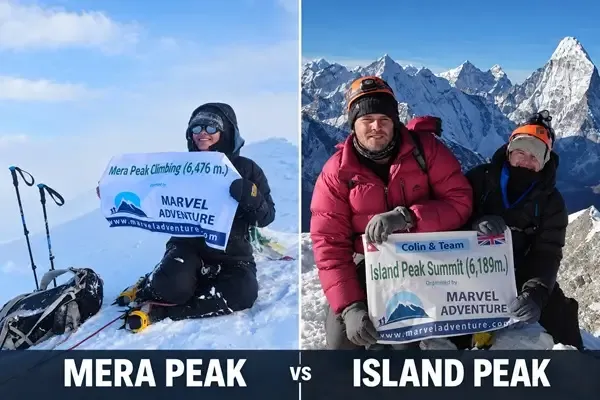
Technically, Island Peak asks more of you. It's got that steep fixed-rope headwall near the top, whereas Mera's summit push is glacier walking with one shorter technical stretch. So Mera is the bigger physical and altitude test, whereas Island Peak is the bigger technical one.
What is the hardest part of climbing Mera Peak?
The week of trekking just to reach Khare, the nights that get colder and higher, and then a summit day where you're moving slowly at 6,000 metres in the dark, knowing you still have to get back down once you're up there. That combination wears people down.
How long should I train for Mera Peak?
Give it four to six months if you can, with regular hill walks, back-to-back long days on your feet, and some strength work for your legs. Consistency beats intensity here.
Can I climb Mera Peak without a guide?
No. The Nepal Mountaineering Association (NMA) requires a licensed guide for the climbing permit. Beyond the legal side, you'd genuinely want one anyway: rope team movement, glacier travel, and knowing when conditions mean turning back aren't things to figure out solo at 6,000 metres.