History of Tengboche Monastery
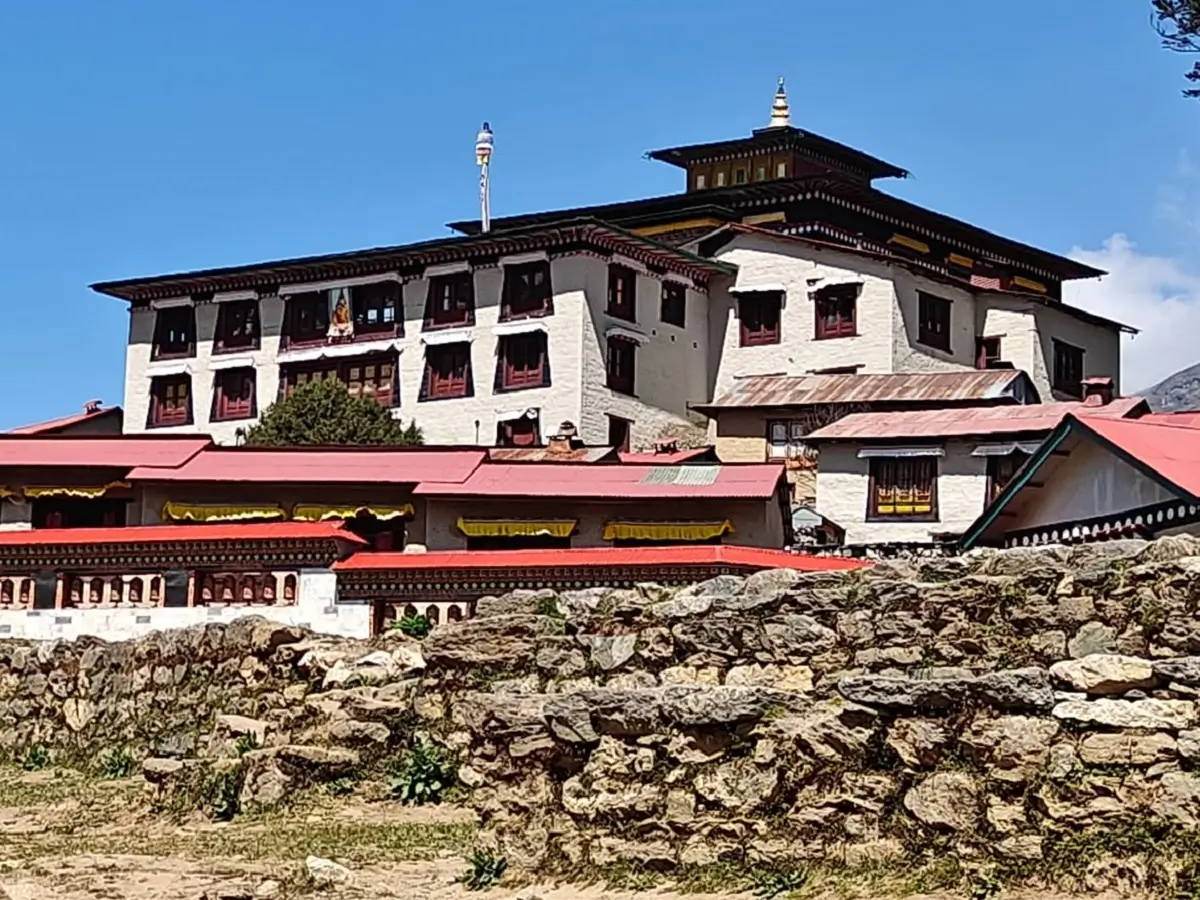
Tengboche Monastery wasn’t always the solid, striking monastery as it appears in front of you today. The history of Tengboche Monastery is deeply connected to the ancient traditions of the Khumbu region.
It was founded in 1916 A.D by Lama Gulu. According to the locals here, Lama Gulu had deep ties to Rongbuk Monastery in Tibet, on the northern face of Mount Everest, and he believed the site above the Dudh Koshi valley was spiritually significant because of its position between these sacred mountains.
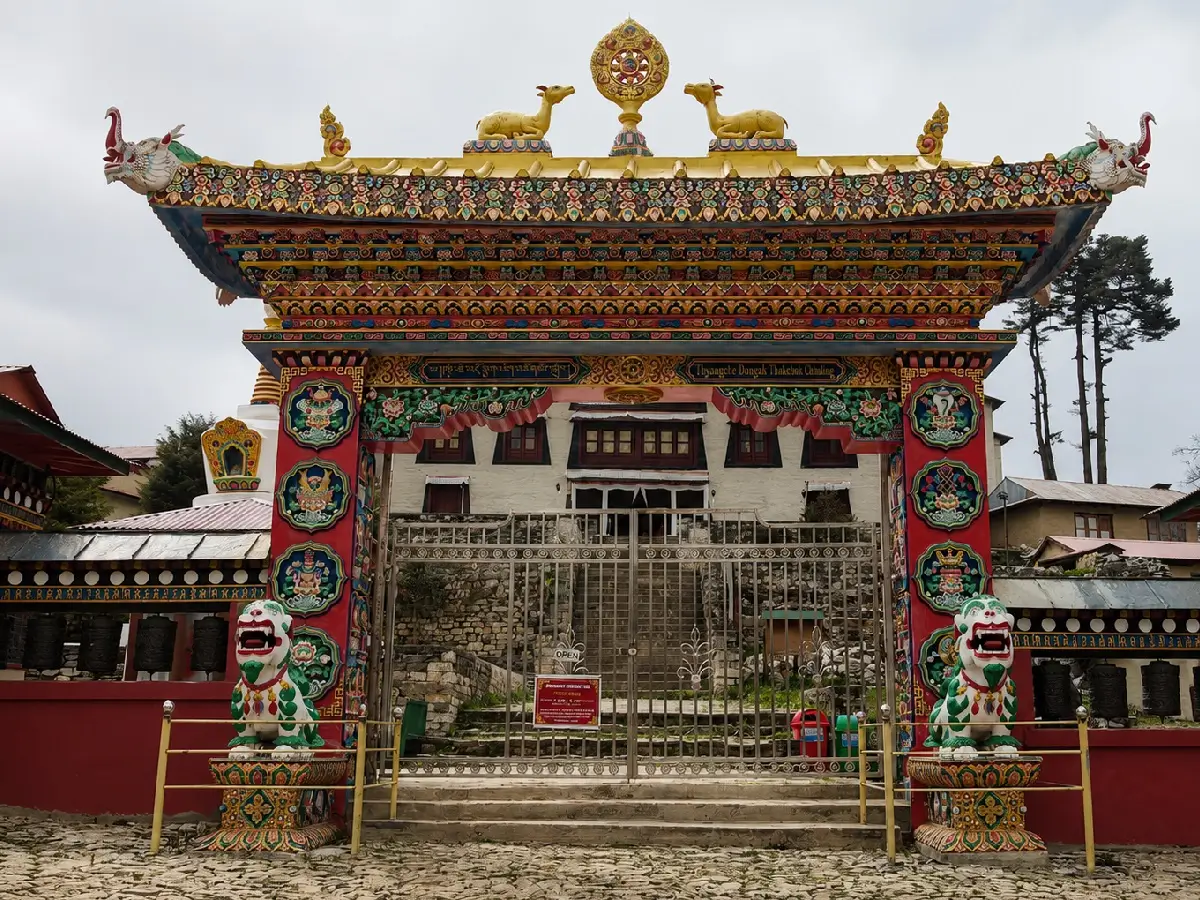
However, Tengboche has faced several challenges over the years. The original building was destroyed in 1934 after a massive earthquake. The villagers and monks here worked together to rebuild the monastery.
The rebuilt structure stood there for decades until 1989, when a devastating fire completely damaged the building along with its centuries-old religious texts, thangkas and artifacts.
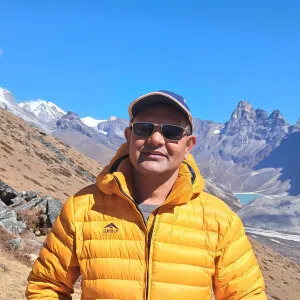
Dhana Tamang, one of our experienced guides, says,
“My Grandfather used to tell me about the fire here in 1989. He said the whole Khumbu valley felt the loss.”
Later on, with the help of Sir Edmund Hillary’s American Himalayan Heritage Foundation and many international funds, the Sherpa Community rebuilt the monastery.
The 2015 Nepal earthquake caused some structural damage to parts of the monastery. The restoration work was carried out in phases over the following years.
Today, the monastery stands strong as one of the most popular spiritual places in the Everest region. And while walking through it, you won’t even realize to what extent it has survived.
Cultural and Spiritual Significance of Tengboche Monastery
When you step inside and spend some time in its courtyard, you understand the importance of the Tengboche monastery.
Daily Rituals and Monastic Life at Tengboche
Many trekkers are surprised when they learn that the monastery is home to 30 to 40 monks who live and study here. The typical daily activities of life inside the monastery include:
- Early morning prayers at around 6:00 AM, with the sound of rhythmic chanting echoing across the valley.
- Lighting butter lamps in the prayer hall as they burn throughout the day.
- Study of ancient Buddhist texts by young monks.
- Evening prayers at around 3 PM
Our guides from Marvel Adventure often encourage the trekkers to attend the evening prayer if the monastery is open to visitors.
Role of Monastery in Sherpa Culture
You will find several monasteries on the Everest Base Camp trek, but Tengboche has the largest Everest region monastery and is the heart of the Sherpa culture. For Sherpas, it’s not just any religious site but a center of their community life.
Young children are brought here for blessings. It plays a crucial role in Sherpa weddings and other rituals. For any Sherpa climbing team, the puja at Tengboche monastery marks the official beginning of their expedition.
Every season, climbers from all around the world seek blessings here in Tengboche before heading for their Everest expedition.
Mani Rimdu Festival at Tengboche Monastery
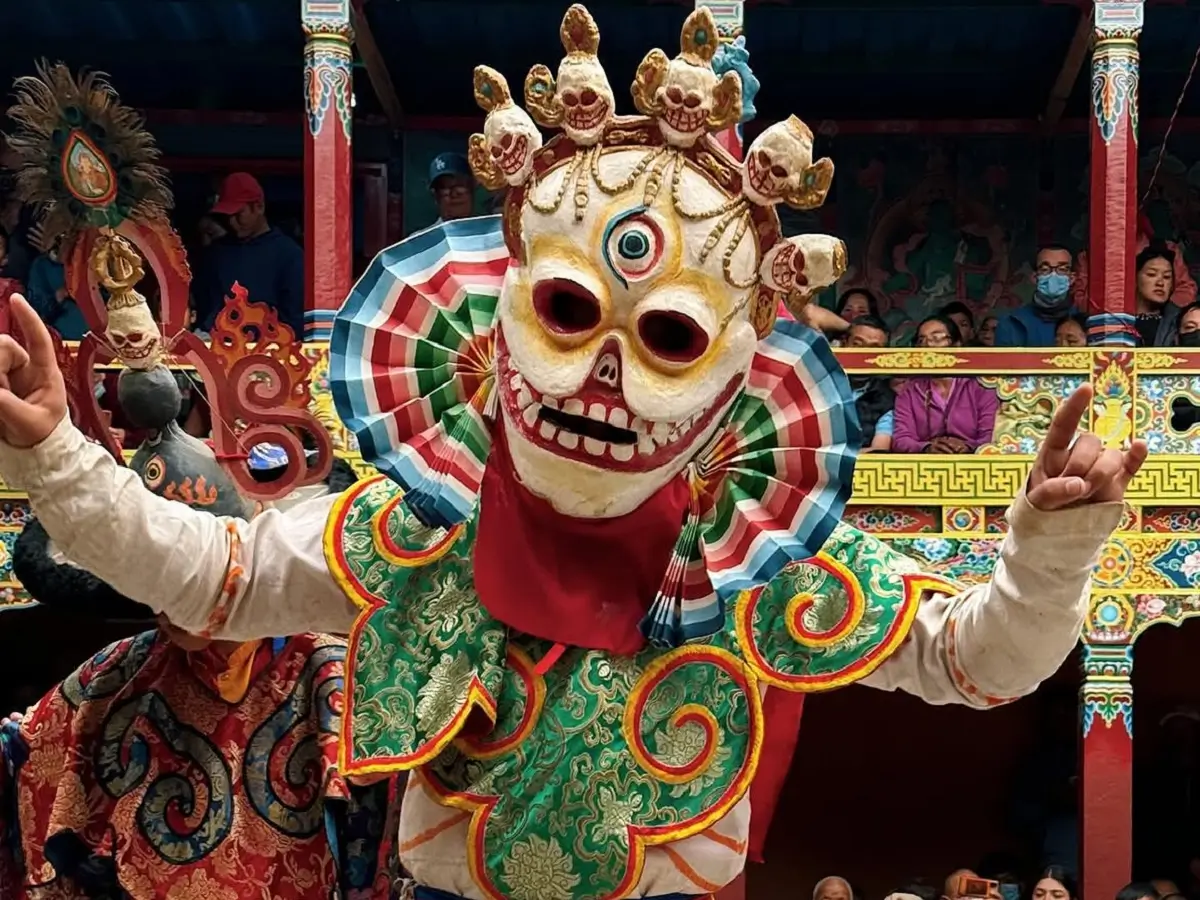
If you’re planning an Everest Base Camp trek in October or November, you will witness one of the most important cultural events held annually, the Mani Rimdu festival.
This three-day Tengboche monastery festival brings hundreds of Sherpa locals and trekkers to the monastery to witness sacred rituals, masked Chham dance, and the dramatic fire puja in the courtyard.
During the last autumn trek in Nepal, we timed it perfectly. After returning to Kathmandu, Amelie, one of our clients, said,
“I still get chills remembering sitting quietly in the courtyard during the fire puja. It really felt something ancient and alive.”
You will soon notice how places like this remind you that Sherpa culture isn’t frozen in time. It’s simply living, adapting, praying, and celebrating right in the shadow of the world’s highest mountains.
Visiting Tengboche Monastery
After years of guiding multiple treks, we can confidently say that for trekkers heading into the Everest region, the Tengboche monastery trek is one of the most accessible spiritual places.
How to reach Tengboche
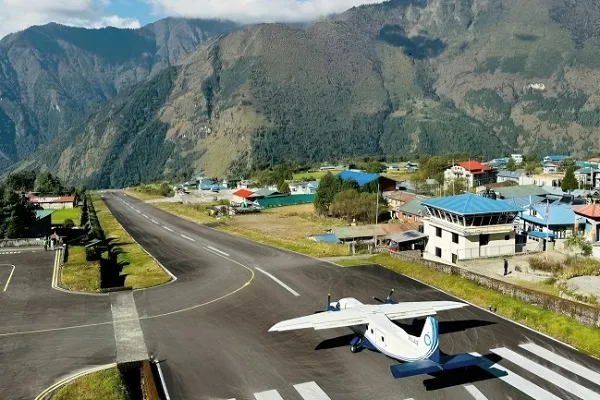
In our standard Everest Trek itinerary, trekkers start with a Lukla flight from Kathmandu. We enter Sagarmatha National Park, a UNESCO World Heritage Site, and then reach Tengboche while trekking from Namche Bazaar to Everest Base Camp.
After the acclimatization day, the journey from Namche Bazaar includes the following route:
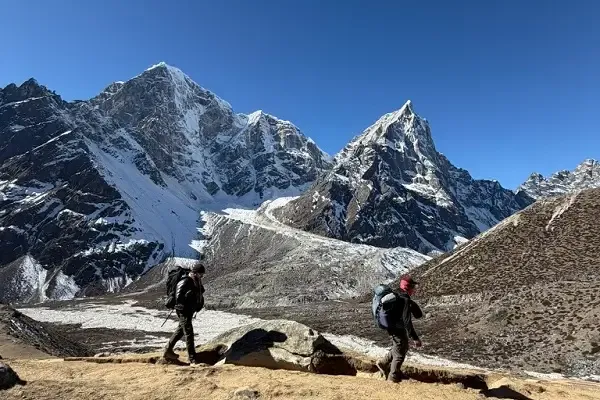
- The trek starts from Namche, along a ridge with scenic mountain views
- We descend steeply to the river crossing at Phungi Thanga
- Climb through the rhododendron forest trail to finally reach Tengboche monastery
- The distance from Namche to Tengboche is approximately 9-10 km.
We have noticed many trekkers find the climb from the river to Tengboche challenging.
Best time to visit Tengboche Monastery
Spring and Autumn are the best times to trek in Nepal, and both of these seasons are excellent for visiting the Tengboche monastery.
Highlights of trekking in Spring season (March - May)
- Walk through the forest trails with blooming rhododendrons
- Moderate temperatures, perfect for your first trek in Nepal
- Experience the clear mountain views of the Khumbu region
Highlights of trekking in Autumn season (September - November)
- Enjoy excellent views of the Himalayas
- Stable weather conditions throughout the trek
- Witness cultural festivals of the Sherpa community, such as Mani Rimdu
For adventurers, winter trekking in Nepal is possible too. But you might have to face cold temperatures if you are planning the Everest Base Camp trek in December or January.
Tips for trekkers
Here are some of the basic etiquette we share with every group before entering the monastery:
- Remove your hats and sunglasses inside the main hall as a simple form of respect
- Dress modestly by covering your shoulders and knees before entering the main temple
- Remove your shoes when you enter the prayer hall
- Ask for permission before filming the ceremonies and monks. Generally, photography isn’t permitted inside the main hall
- As you pass stupas, prayer wheels, and mani walls, make sure to walk clockwise. This is a traditional way of showing respect in Tibetan Buddhism
- Keep your voice low during the prayers
- You might see a small donation requested at the entrance. We recommend that trekkers pay willingly, as the monastery relies partly on visitor contributions to keep things running.
Tengboche Monastery in Everest Region Trekking Itineraries
Trekkers are surprised to learn that almost every major trekking route in the Khumbu region passes through Tengboche. The most common treks that pass through the monastery include:
Everest Base Camp Trek (12 days)
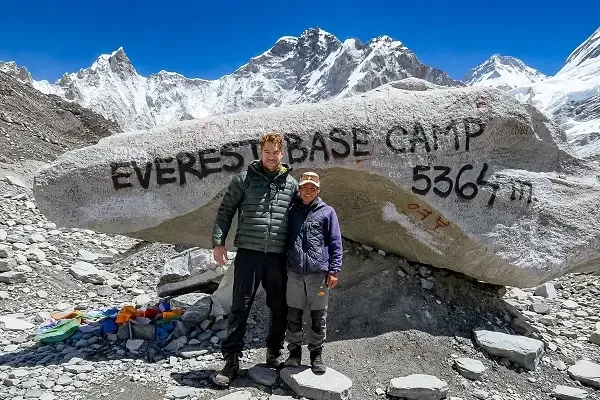
If you check out the Everest Base Camp trek map, you’ll find out that this classic route takes you directly through Tengboche on Day 4 of our itinerary. Most of the time, we stay overnight in Tengboche.
Bucket List Trek
Price from
Everest Panorama Trek (7-8 days)
The Everest Panorama Trek reaches its highest point at Tengboche. Therefore, it is perfect for travellers who want the cultural and mountain experience without reaching the base camp.
Everest Three Passes Trek (15-17 days)
In the Everest Three High Passes Trek, we will pass through Tengboche as a part of a longer route that crosses the Kongma La, Cho La, and Renjo La Pass.
Whichever route you choose, we at Marvel Adventure recommend that you take a proper stop at Tengboche; ideally, overnight to experience proper cultural immersion in your Everest trek.
Complete Everest Experience
Price from
Highlights around Tengboche monastery
Our clients often tell us that spending a little extra time exploring Tengboche helped them walk away with a deeper memory of their Everest journey.
Here are some of the major highlights around the monastery:
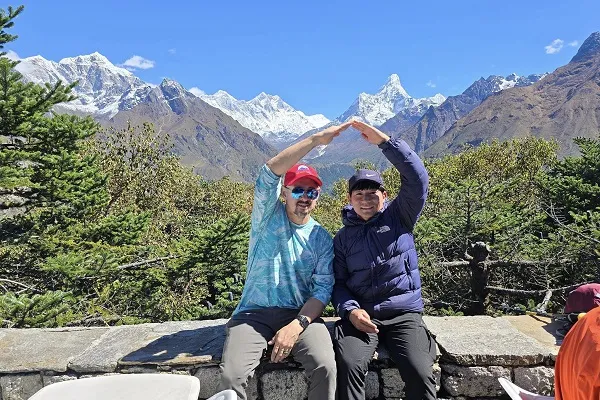
- Enjoy the clear panoramic views of Mount Everest and Ama Dablam without any rush
- Experience the quiet sunrise moments in the monastery courtyard
- Walk through the peaceful rhododendron and pine trails, especially on your spring trek
- If you are staying overnight at Tengboche, you can enjoy stargazing in the clear skies
- Explore the Sherpa culture in the mountains
- Witness the beautiful prayer ceremony with rhythmic chanting that echoes throughout Tengboche
Why Tengboche Monastery is more than just a Stop
The trekking trails in the Everest region are busy now. Namche Bazaar has many coffee shops, the teahouses have wifi, and the Base Camp route has been walked by hundreds of thousands of people. However, to this day, Tengboche monastery has managed to hold onto something that the growing popularity of these routes has not affected.
The silence you find here in the monastery is completely different from the one you find higher in the mountains. In simple words, the silence here is settled or purposeful. The monks here have been maintaining this space for over a century.
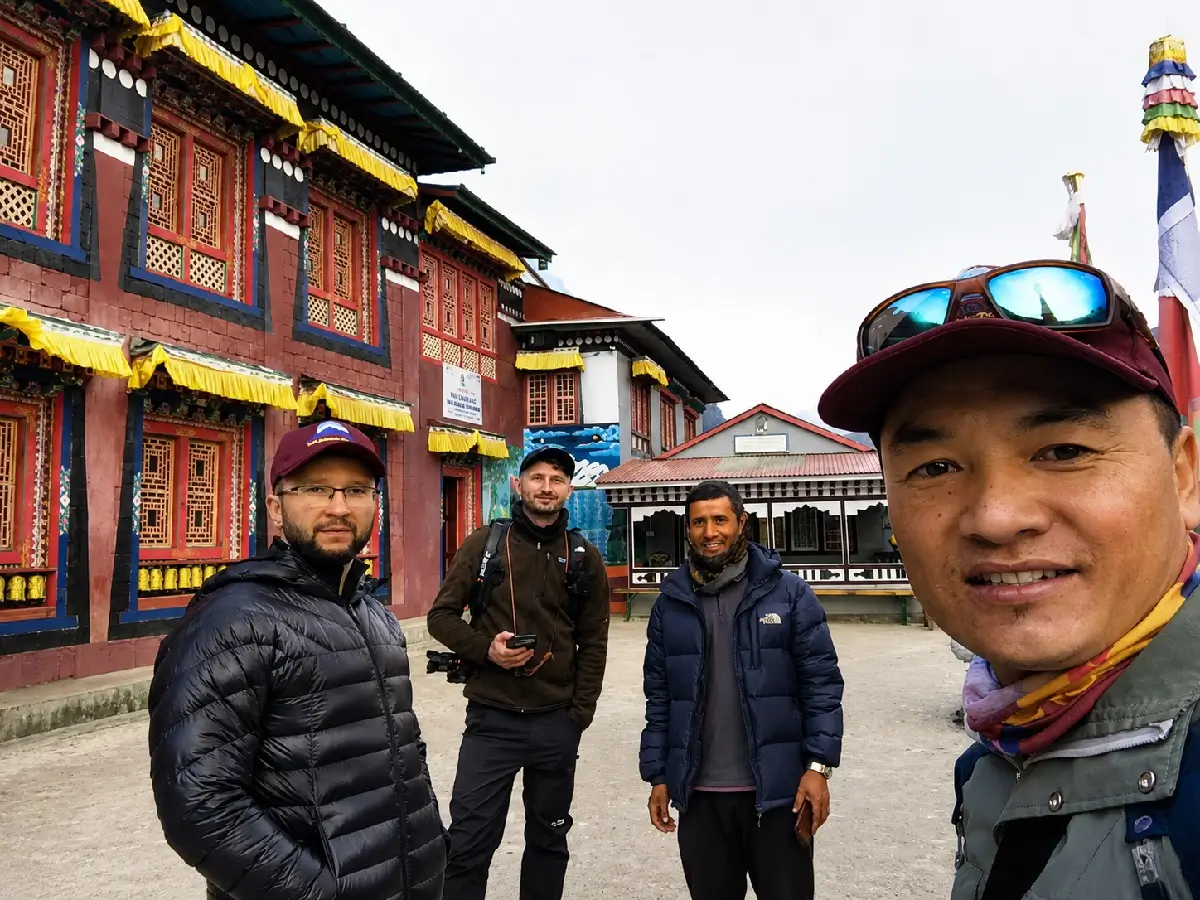
On a previous trek, Phinjo, our Everest region guide, told us,
“Every trekker I bring here thinks it's just a monastery on the way to Base Camp, but I love to see their surprised faces when they actually see the monastery.”
Give the place the time it has earned. The summit views will impress you. Tengboche will stay with you.
If you are planning an Everest Base Camp trek or any other trek in the Khumbu region, feel free to contact our team at Marvel Adventure. We will help you make Tengboche more than just a stop on your journey.
FAQs
Where is Tengboche Monastery Located?
Tengboche Monastery is located in the Khumbu region, at an altitude of around 3,867 meters, along the trekking route from Namche to EBC.
What is the Mani Rimdu Festival?
Mani Rimdu is a traditional Tengboche monastery festival celebrated by the Sherpa community, usually during October or November.
How far is Tengboche Monastery from Namche Bazaar?
Tengboche Monastery is located around 9.5 kms from Namche Bazaar. It usually takes 5-6 walking hours, depending on your pace and rest breaks.
Can trekkers visit inside Tengboche Monastery?
Yes, trekkers are generally welcome to enter the monastery and observe the prayer ceremonies. But make sure to follow the monastery rules.
Can you take photos inside the main prayer hall?
No, you cannot take photos inside the main prayer hall, especially during the prayer sessions.
Can you photograph monks at Tengboche Monastery?
Yes, you can take photos of monks at the monastery. However, it is recommended to ask for permission before taking close-up photos.
Can you stay overnight at Tengboche Monastery?
You cannot stay inside the monastery itself, but Tengboche village has several teahouses and lodges.