Trip highlights
These are the core list of activities you will remember for a lifetime if you do the Everest Base Camp Trek in October
- Aerial tour of the Kathmandu valley during the leaf-falling season from your first flight to Lukla.
- Exploring the unique landforms of the Himalayan trails of Nepal, including various waterfalls, glaciers, mountains, and other natural diversities at their peak after the monsoon has swept away the dirt.
- The hospitality and beauty of Namche Bazaar during a festive season.
- Exploring the Sagarmatha National Park and its rarity in the autumn season.
- The sunrise view from the Nagarjun Hills with autumn leaves falling all over the region.
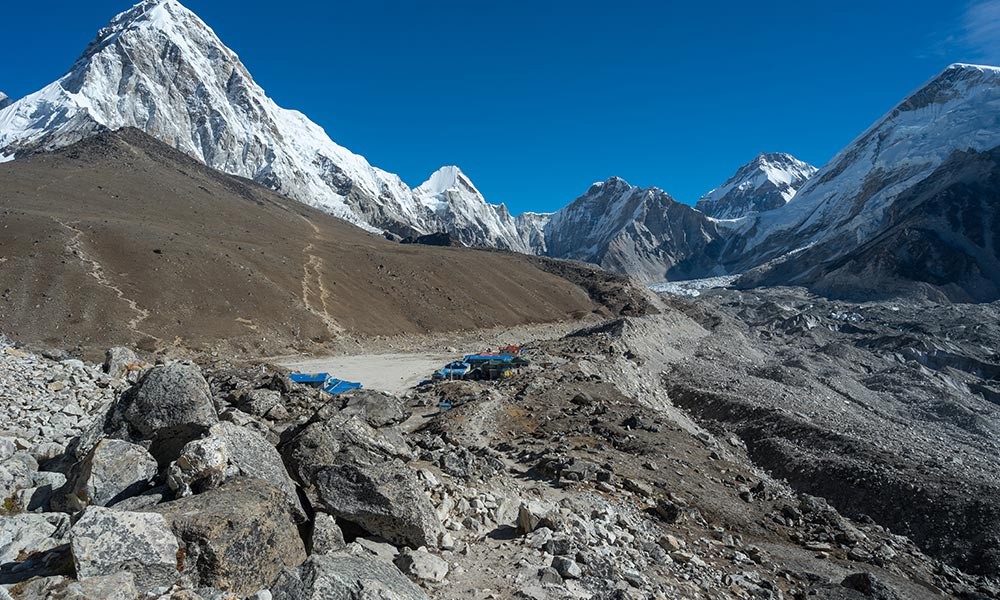
- Experiencing the view of the world’s top through Kala Patthar.
- Observing the local heritages, cultures, and monasteries during a festive period.
- Getting a taste of local delicacies made during the festival season.
- The friends that you will make throughout the journey.
Suitability of the Everest Base Camp trek in October
You can do the Everest Base Camp trek throughout the year. But the Everest Base Camp trek in October is a whole different experience. It comes with several perks.
Perfect time to trek the Everest Base Camp weather-wise
The mild weather makes the trek to Everest Base Camp in October the most enjoyable. You can stroll outside during the daytime. This gives you a chance to enjoy the warm, pleasant weather and the brilliant blue skies.
In contrast to the winter nights, the Everest region experiences bearable cold in October. Compared to the monsoon, the weather will not be cloudy. It also won't have any other dangers on the road caused by the monsoon rain along the trails. Therefore, you do not need to bring any heavy or bulky clothing or rain gear when you go hiking this month.
The month of October is also the least likely to experience rain or snowfall because it is so dry. Thus, this month, you should not need to worry about icy trails, insects, or sweltering temperatures.
The suitable temperature for October
October days are sunny and range from 12 degrees Celsius to 16 degrees Celsius in the Everest region. You can therefore walk on warm, sunny days when making your Everest Base Camp trek in October. The Everest region's most adequate temperature range comes around this time of the year.
At this time of year, however, the temperature at night falls from 2 degrees Celsius to -5 degrees Celsius. This is not a very cold temperature, especially considering it is close to Mount Everest. Although it is tolerable, it is best to bring sleeping bags or extra thermal clothes. They must be able to withstand cold temperatures so that you can stay warm while you sleep.
The October temperatures and weather are usually favourable. But you need to be aware that the weather in the mountains is unstable throughout the year. The temperature might change drastically because of the clouds and the altered wind pattern. Being cautious of it is always a good idea.
The festival months of Nepal
The two most important festivals in Nepal, Dashain and Tihar, occur in October. Families get together, celebrate, and have fun during this season of the year. Trekking in Nepal at this time will allow you to participate in the Dashain and Tihar celebrations within the Hindu communities and Mani Rimdu, among the Sherpa communities.
You will see high bamboo swings in open ground with kids swinging on them. You might see kids flying kites all over the sky. Youths might also play games like “langur burja” along the settlement areas. You might also be able to see festival lights in people’s houses in non-remote areas. These activities mark the Dashain and Tihar festivals.
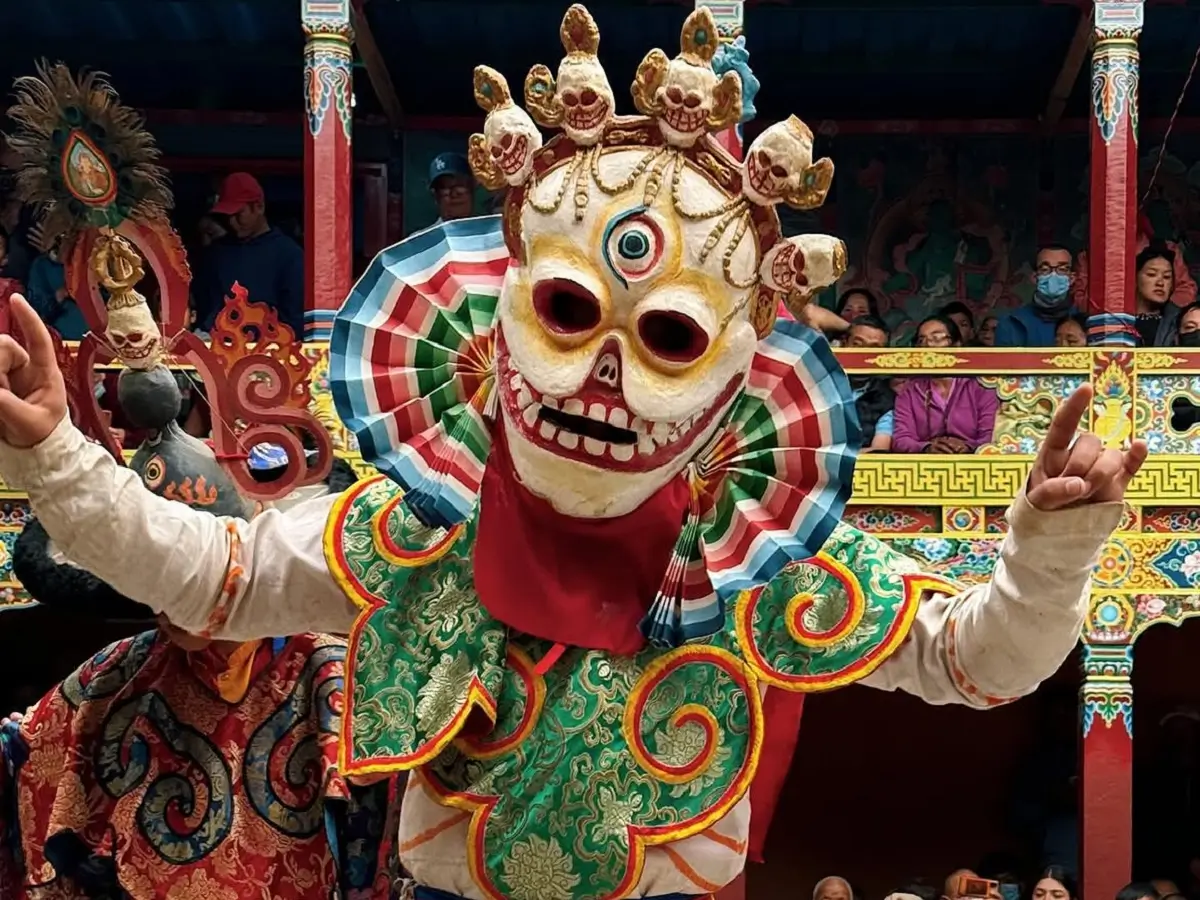
You can also experience Mani Rimdu during your Everest Base Camp trek in October, as it is a significant festival of the Sherpas. If you can, try to make it to Tengboche for the festival. The most significant monastery in the region is Tengboche Monastery. Mani Rimdu celebrations centre on this tiny town with breathtaking views of Ama Dablam. Monks dance in symbolic performances for the festivals. They wear elaborate costumes and masks to vanquish demons.
You might also get to sample some of the regional specialities that are made especially for this time of year. The festival seasons are quite joyous around the country and make your trip a thousand times better.
The landscapes you can observe
People travel to the Everest region to take in the breathtaking views of the mountain. October is the month that offers the most pristine views of the highest peaks on earth.
The rain clears the air and ushers in clear skies and a fresh atmosphere because the autumn season follows the monsoon. Additionally, a dry environment gives you the clearest views of everything around you. So you can take in the enticing views of the mountains and hills nearby.
You will come across locals working on their farms in the lower regions of your trekking trails because October is harvest time there.
The wholesome trekking community
Many tourists prefer to go on treks in October because of the month's moderate temperatures and pleasant surroundings. You won't have to travel alone on your October hike, then. There are a lot of domestic and foreign tourists on the trail.
The wildlife and vegetation of the Everest region during October
In October, the flora and fauna of the Everest region look extraordinary. Because of monsoon rain and the warm sun of autumn, the diverse flora and fauna come into life with new charm and beauty.
The entire route runs through Sagarmatha National Park, and this is where you can find real biodiversity. If you are lucky enough, you might witness a Himalayan tahr on the slopes above Namche. There are musk deer around too, though you're more likely to hear something moving than actually see one.
Birds are easier to find in this region: the Himalayan monal turns up near Namche and Monjo often enough, and you'll likely spot snow pigeons, choughs, and maybe a lammergeier too. However, none of it is promised on any given day.
In the lower regions, you will be able to see paddy, millet, etc. As you ascend the trail, you will walk past diverse grasslands and lush forests of rhododendrons and oaks. The entire trail is home to a range of alpine vegetation that you will get to see on your route. As mentioned before, you will also be able to experience seeing the farmers working down the lower trails for the harvest season
Food and Accommodation available for your Everest Base Camp in October
There are several tea houses along the Everest Base Camp trail that are very busy at this time of year. These tea houses provide a variety of nutritious and fresh meals along the trekking trails. They will provide you with enough energy to finish the trek. In the Everest region, you can choose from a variety of foods and beverages.
Rooms are generally simple. Depending on the teahouse, you may have twin beds, blankets, shared bathrooms and a common dining area. The dining room is usually the warmest and most social part of the teahouse.
Hot showers and charging facilities are often available for an additional fee, although the facilities become more basic as you climb higher.
Due to business closures during busy seasons, lodging and food may be a major problem at certain times of the year. Many tea houses are open during this season, even though they might be a little crowded. However, making early reservations might enable you to get the first choice.
Everest Base Camp Weather in October
The biggest reason trekkers choose October to trek in Nepal is because of the favourable weather. However, that doesn’t mean that perfect weather is guaranteed throughout the trek. Temperature might change drastically because of the clouds and the altered wind pattern. Being cautious is always a good idea.
Temperature tends to drop quickly as you gain altitude. Lower sections like Lukla feel pretty comfortable to walk during the day, whereas you will require proper clothing for Gorakshep and Kala Patthar viewpoints, especially before sunrise
October Temperature by Place
| Place |
Day |
Night |
| Lukla |
12 to 17°C |
5 to 10°C |
| Namche Bazaar |
10 to 15°C |
0 to 5°C |
| Tengboche |
8 to 12°C |
-3 to 2°C |
| Dingboche |
5 to 10°C |
-5 to 0°C |
| Lobuche |
2 to 5°C |
-8 to -3°C |
| Gorakshep |
0 to 3°C |
-9 to -4°C |
| Everest Base Camp |
-5 to 2°C |
-12 to -7°C |
The temperatures mentioned above are the approximate ranges during October in the Everest region. The actual day-to-day temperature depends on altitude, wind exposure, and time of the day.
Gorakshep is where the daily swing is most extreme. A mild, sunny midday can be followed by a night well below -10°C, so this is where sleeping bags and layering really matter.
What Changes on the EBC Route in October?
The route itself doesn't change with the season. Lukla to Namche, Namche to Tengboche and Dingboche, then Lobuche, Gorakshep, and Base Camp is the same trail whether you walk it in March or October. What changes in October is how the trail feels.
- Trails are busier, particularly on the popular acclimatization side trips and around midday when most groups are moving at the same pace.
- Teahouses in Namche, Tengboche, and Dingboche fill up earlier in the afternoon than in shoulder months.
- Rest stops and lunch spots along the way see more foot traffic, so service can be slower at peak hours.
- Demand for rooms rises sharply in main stops before Base Camp, which is where booking through a guide matters most.
- There is more interaction between trekking groups on the trail and in dining rooms, since so many people are moving through the same villages.
- Lukla flights run at full capacity, with multiple carriers operating back-to-back throughout the morning.
- Starting early in the morning becomes more useful in October, both to beat the crowds on popular stretches and to reach teahouses before rooms are gone.
- Photography conditions are generally better, with clear air after the monsoon, though this doesn't mean clear skies every day.
- The festival atmosphere in villages like Namche adds a layer to the trek that isn't there in quieter months.
- Temperatures change more noticeably as you climb, since October's warm, mild lower villages contrast sharply with the cold above Dingboche.
Difficulties you might face doing this trek in October
We have already established several times how suitable the Everest Base Camp trek in October can be. However, every trekking adventure comes with some difficulties. These difficulties are barely life-threatening and can be easily mitigated through some caution. These are some fender benders that the Everest Base Camp brings and their severity during October.
Altitude sickness
The Everest Base Camp trek goes through a high elevation point. You begin this trek at a low elevation of 1440 meters in Kathmandu and ascend to a maximum height of 5545 meters at Kala Patthar. As a result, many hikers experience the effects of altitude sickness as they climb the Khumbu region's trails.
You will experience the symptoms of the illness at any time of year, regardless of the time of year you are trekking. Therefore, if you do not take good care of yourself, you have a high risk of developing altitude sickness even in October.
These risks are, however, minimized when you plan a trek properly. You ought to separate days to acclimatize and trek with guides who will give you tricks and tips to help with altitude acclimatization.
You should always move at your own pace and continue to drink water throughout your journey to reduce risk. Additionally, since both alcohol and caffeine cause dehydration, it is advisable to avoid them while hiking. Altitude sickness risk can rise with dehydration.
A well-organized trekking package with Marvel Adventure includes proper acclimatization planning and guide support, so you do not need to manage everything on your own.
Difficulty in the trekking route
Trail conditions in the Everest region can become more difficult during the monsoon and winter because of rain, snow, ice, and changing mountain weather. However, the likelihood of precipitation or snowfall is lowest in October.
Therefore, the trekking route is less challenging than during other seasons like winter and monsoon. It is not necessary for you to walk on icy or snow-covered trails. Other seasons, such as the monsoon and winter, make it difficult to navigate rocky terrain that is covered in snow or muddy water.
But in October, you can enjoy walking in the tolerable temperatures on the dry Everest region trails. However, the discomfort of the travel route is usually caused by the crowd of trekkers along the trail. For some travelers, the sheer volume of people making the trek in October can be discomforting.
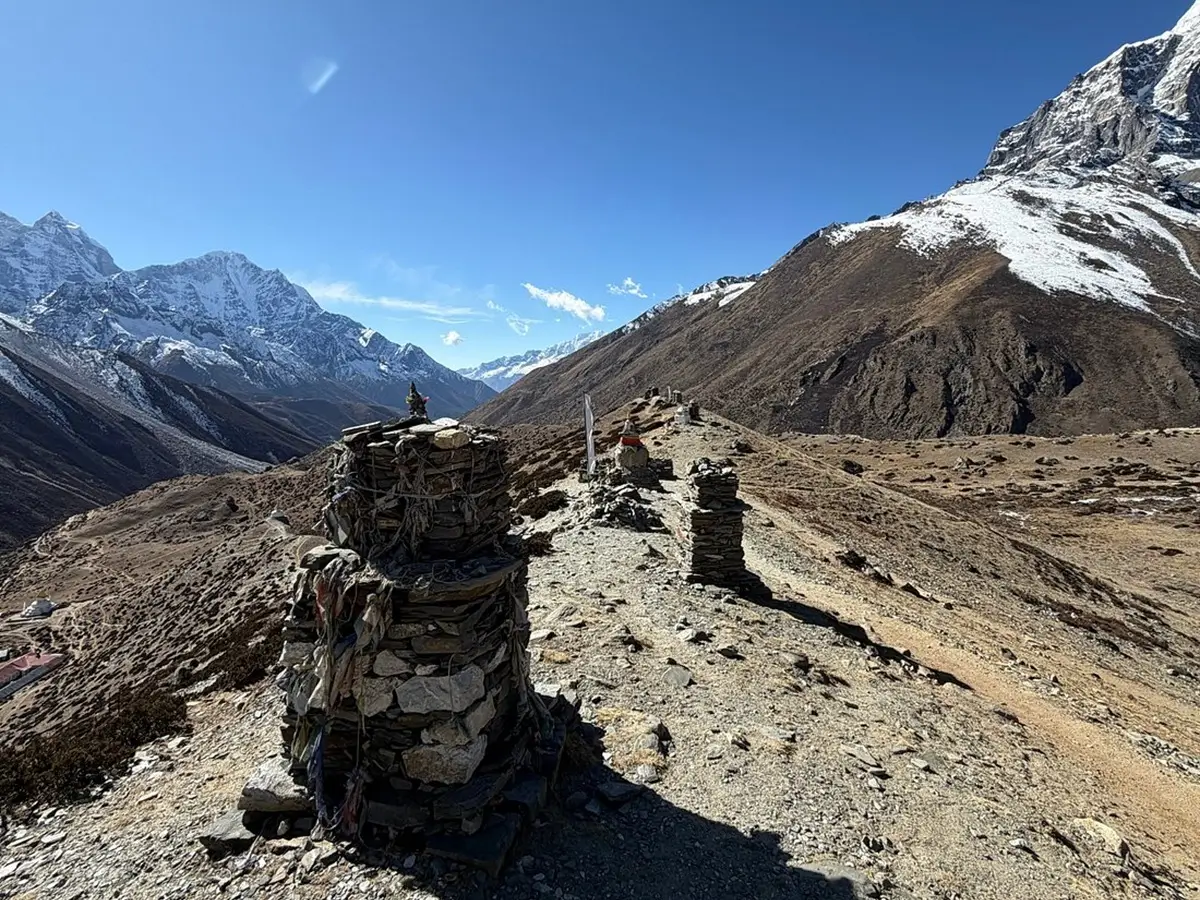
There are numerous alternate routes in the Everest region for tourists looking for less-travelled paths that still provide breathtaking views of Everest and its neighbours without the crowds. Although they are way less popular than the typical EBC trek, the Gokyo Lakes Trek, the Three High Passes Trek, or even the extremely difficult Arun Valley to EBC trek still overlap with it in some places, giving you an alternative that is comfortable and will be satisfying from a trekking point of view.
Accommodation issues
The Everest region is home to a large number of teahouses where you can eat and stay. However, October is the busiest month, and due to the large increase in the number of trekkers, these teahouses are frequently full.
Since these teahouses have a limited number of rooms and amenities, you might occasionally have to mingle in a room with your fellow trekkers. Making reservations for lodging in advance is, therefore, a good idea. If you have not made reservations, you might occasionally have to sleep in the dining room.
The accommodation issues will not cause much discomfort, as the trek will consist of many trekkers spending the night together. If you do not get the rooms you were eyeing, you will still be fine and sleep in the communal dining area with your fellow trekkers. The accommodation this time feels like a slumber party.
Crowds and cost
The peak trekking season in Nepal occurs in October, so the increase in prices and crowds during this time is natural. The most popular trek in Nepal is the EBC trek, so it's extremely unlikely that you'll have the trails to yourself in October. Teahouses quickly fill up, so it's crucial to trek with a reliable guide who can secure a bed at a cozy location.
On a similar note, flights from Kathmandu to Lukla might sell out months before October, so plan your trip as soon as possible. It may be necessary to be flexible with flight schedules and the standard of lodging you'll accept if you make travel arrangements at the last minute.
Lukla Flights in October
October is the highest-demand period of the year for Kathmandu to Lukla flights. Seats can sell out weeks or even months in advance during peak October dates. Weather can still affect mountain flights even in the generally favourable autumn window, as the cloud buildup over the Khumbu often pushes flights later in the morning.
Delays and schedule changes happen regularly, simply due to the volume of flights being managed. Also, the flight arrangements, including which airline or airstrip is used, can change at short notice depending on operational conditions on a given day.
We always recommend keeping a buffer day at both ends of your itinerary rather than booking an outbound international flight for the same day you land back in Kathmandu. None of this means flights are unreliable in October compared to other months. You just need to book in advance to avoid last-minute hassle at the airport.
Marvel Adventure helps make changes when flight schedules are disrupted. Depending on the situation, we can even arrange a helicopter flight to Lukla, or if you have enough days, you can also choose the Salleri to Everest Base Camp package.
Internet and Charging Facilities
Wi-Fi availability varies by village, and most teahouses charge for access through prepaid cards. Trekkers need to realize that the connections get slower and less reliable the higher you go, and can drop out entirely for stretches above Dingboche.
Teahouses often charge a small fee per device for charging phones, cameras, and power banks. Power cuts or limited solar/generator capacity can affect charging access, particularly during busy periods when demand is high. So always carry your own power bank to avoid depending on the teahouses.
Drinking Water
When you are up high in the mountains, your body loses water faster because you breathe more often and the mountain air is very dry. Because of this, staying hydrated is one of the important things you can do during your trek.
You should carry a bottle and bring a filter or some purification tablets with you. Relying on buying water is not a good idea because it is hard to find and it is bad for the environment at high altitudes.
Usually trekkers need to drink about 3 to 4 litres of fluid every day while trekking, although how much fluid you need depends on your own body, how fast you walk, and the altitude. We strongly suggest not drinking water straight from streams or taps, even if the water looks very clear.
October Packing Checklist for Everest Base Camp
October's daytime conditions are relatively comfortable, especially below Namche, which can lead people to under-pack for the cold higher up. The list below is built around that gap between a mild afternoon in Lukla and a freezing night at Gorakshep.
- Layered clothing you can add or remove throughout the day, since October's temperature swing is bigger than it looks from the daytime forecast.
- Thermal base layers (top and bottom) above Dingboche.
- A fleece or light down mid-layer for evenings at every stop.
- A windproof outer layer, since October is dry but exposed ridgelines get windy.
- A warm hat, a sun hat or cap and two pairs(lighter and warmer) of gloves.
- Good trekking socks, with spares, since blisters and cold feet are two of the most common complaints on this trek.
- A sleeping bag rated for at least -15°C, since teahouse rooms above Dingboche are unheated.
- Sunglasses with strong UV protection and sunscreen.
- A water bottle or hydration system you can keep from freezing overnight.
- A headlamp with spare batteries for early starts and basic teahouse lighting.
- A power bank and charging accessories suited to Nepal's plug type.
- Basic personal medications, including anything for altitude, upset stomach, and minor aches.
- Trekking poles, useful on both the ascents and the descents.
- Comfortable, broken-in trekking boots. October is not the season to test new boots for the first time.
- A lightweight rain shell, low on the priority list in October but still worth carrying in case of an unexpected system moving through.
Common Mistakes to Avoid on October EBC Trek
Over the years, we have noticed some common mistakes that some trekkers make while planning for their Everest Base Camp trek in October.
- Assuming October means there will be no weather problems at all.
- Packing for the warm temperatures during the day and not preparing for the cold at night.
- Booking flights to Lukla close to the trek date.
- Thinking teahouse rooms will always be available without making a reservation in advance.
- Not realizing how crowded the trail and the popular stops can become.
- Walking fast because other trekkers around you are moving quickly.
- Rushing the days meant for acclimatization.
- Carrying little water, especially on the days when the trek is longer.
- Relying completely on Wi-Fi for communication or for navigation.
- Forgetting to bring a power bank or extra batteries for phones and cameras.
- Carrying little cash in an area where card payments are not always possible.
- Planning a return schedule that's too tight after the trek without leaving any time for flight delays.
Everest Base Camp Trek in October: Myth vs Reality
| Myth |
Reality |
| Trail is easy because October has great weather |
Altitude and long walking days remain the real challenge, regardless of the forecast |
| Every teahouse will have a room |
Peak season means popular stops can fill up by early afternoon |
| EBC will be quiet in the morning |
Popular viewpoints and rest stops can still be busy at any hour |
| You don't need warm clothing |
Higher elevations drop well below freezing at night, even in October |
| Internet works everywhere on the trail |
Connectivity gets patchier and slower above Namche |
| Flights to Lukla always operate normally |
Flight schedules can still shift with cloud cover and wind |
Our Local Tips for Everest Base Camp Trek in October
Here are some local tips to ensure that you are well-prepared for this amazing EBC Trek in the month of October.
Start early
Start walking early to make the most of the day and avoid the busiest hours on popular stretches. You will generally have a more comfortable walking window before the trail gets busier.
Keep your warm layer accessible
Do not bury your down jacket at the bottom of your backpack simply because Lukla feels comfortable. The weather is unpredictable and you don’t want to be searching your entire bag in the middle of the trek.
Carry a power bank
Charging can become more limited and expensive at higher elevations. During October, you might also not get enough time to charge all your devices since the charging ports at teahouses could be occupied most of the time.
Download maps before leaving Kathmandu
Internet access should be treated as a convenience, not something you depend on. Download offline maps and key information before heading above Namche, where signal gets patchy. Having said that, we will also provide you with a trekking map before your trek.
Keep some cash with you
Remote villages do not offer the same payment options you will find in Kathmandu. Keep some cash on hand, since card and digital payment connectivity is inconsistent above Namche.
Leave room in your itinerary
Lukla flights can change, and a tightly packed schedule leaves little room for disruption. So, keep some buffer days in your flight schedule for the return leg from Lukla, in case of delays.
Do not copy another trekker's pace
October's busy trails can create a feeling that everyone is in a hurry. There is no need to follow that rhythm. Don't let the pace of faster trekkers around you set your own pace.
Plan your festival experience deliberately
If you want to see Mani Rimdu at Tengboche, check the year's confirmed dates and build your itinerary around them.
Prepare for late October differently from early October
Conditions can become noticeably colder toward the end of the month, particularly at higher elevations.
Book early
Book your accommodation ahead, since October is the busiest month of the year and rooms in Namche and Dingboche go quickly.
FAQs about EBC Trek in October
Can you climb Everest in October?
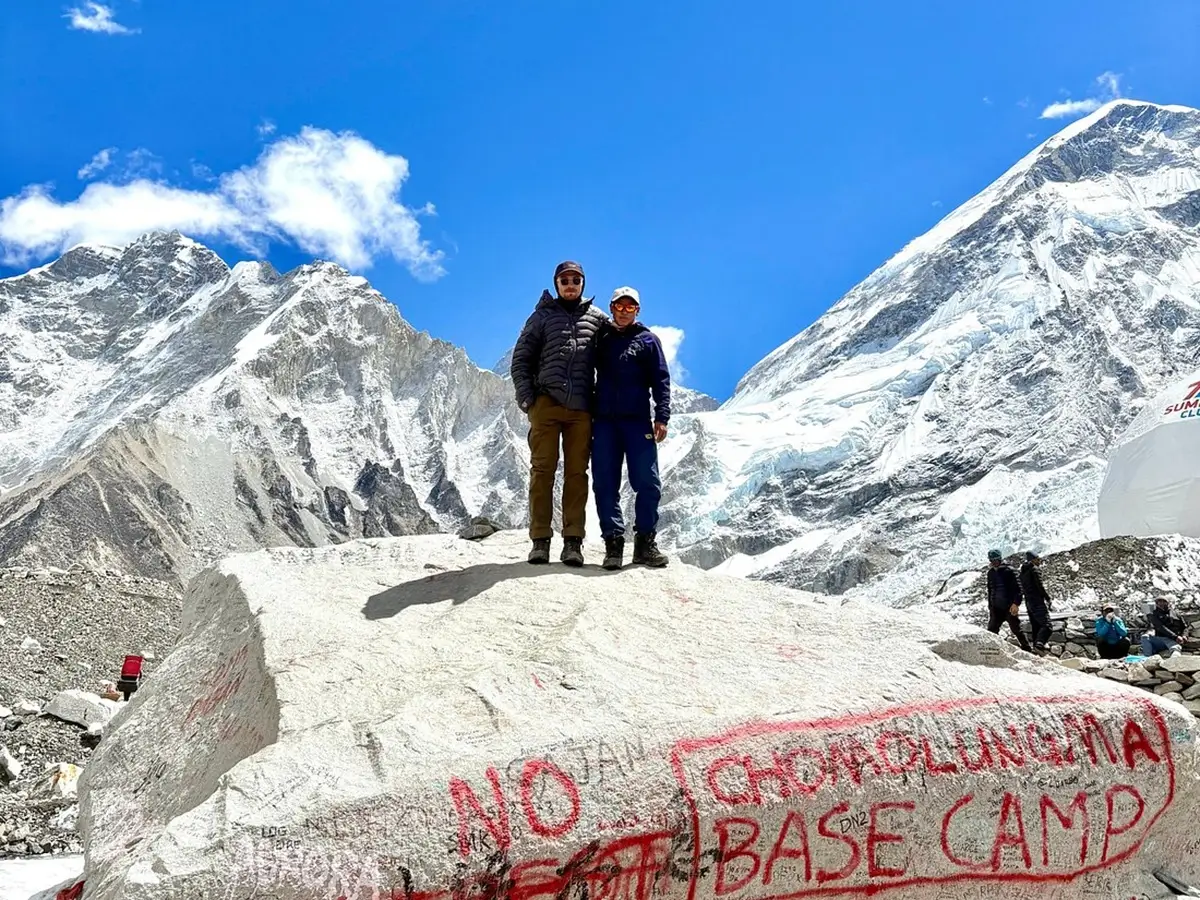
Everest Base Camp routes are crowded with hikers because October is the busiest month for trekking. Most visitors to Base Camp come during this month because of the beautiful nature and pleasant weather.
However, Everest climbing is not at its busiest in October, so although you can climb Everest in October, there is less movement from Base Camp to Summit.
Which month is the best for the Everest Base Camp trek?
The months that lie in the spring(March to May) and autumn(September to November) season of the northern hemisphere are the best for the Everest Base Camp trek weather-wise. However, if you want to experience the Everest region and the diverse Nepali culture and nature at its fullest, the Everest Base Camp trek in October is the best.
How many days is the Everest Base Camp trek?
The number of days of the Everest Base Camp trek varies according to the itinerary, but it usually takes 12 days from Kathmandu to Kathmandu.
What is the temperature of the Everest Base Camp in October?
At Everest Base Camp itself, daytime temperatures in October can hover around -5°C to 2°C, while nights can fall roughly between -12°C and -7°C. Lower villages such as Lukla and Namche are considerably warmer.
Does it rain in the Everest Base Camp?
With an average of 18 inches of precipitation, the Everest Base Camp Region is relatively dry. The monsoon season, which runs from June to September, sees the bulk of the precipitation. The month of October, on the contrary, will be quite dry.
Final say on why you should do the Everest Base Camp trek in October
To recap, Nepal has a busy trekking and hiking season in October. Because of this season, the weather is clear and less unstable. There won't be much cold weather. During your trip to go hiking and trekking, the path will be easy to walk. As a result, the temperature will fit your body perfectly well.
It will be a really enjoyable experience to fraternize with other trekking teams on your trip because October is a busier time to visit Everest Base Camp and is full of trekkers.
You will also get glimpses of landscapes in weather that brings out its best potential. It is also best to be familiar with the Nepali culture, as it is the time for the festivities.
If you plan to hike to Everest Base Camp in October, you should make arrangements with a good team. You can trust Marvel Adventure to make these arrangements for you.
We have an autumn package crafted especially for your convenience for the Everest Base Camp trek in October. You will have an unforgettable trip to the EBC at the best possible travel time through us. For booking and further queries, please contact us.