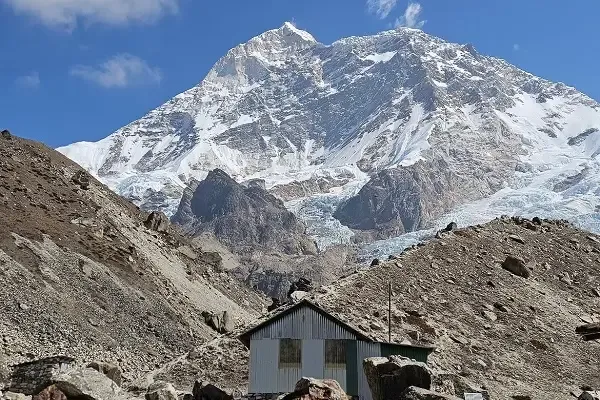

Kanchenjunga Trek is an incredible journey to the foothills of Mt Kanchenjunga and heavenly Eastern Nepal. Being the third-highest peak in the world, Mt Kanchenjunga (8,586m) has been drawing mountaineers and trekkers from all around the globe. It is no surprise that the majestic peak also attracts you.
Kanchenjunga has five peaks and is shared by India and Nepal. The Kanchenjunga Main, Central, and South lie on the border, and the Kangbachen and Kanchenjunga West lie entirely in Nepal. This trek will ultimately be on Nepal’s side. You will get to see and explore the beauty of the land of Nepal.
Read the details on Where Kanchenjunga is Located?
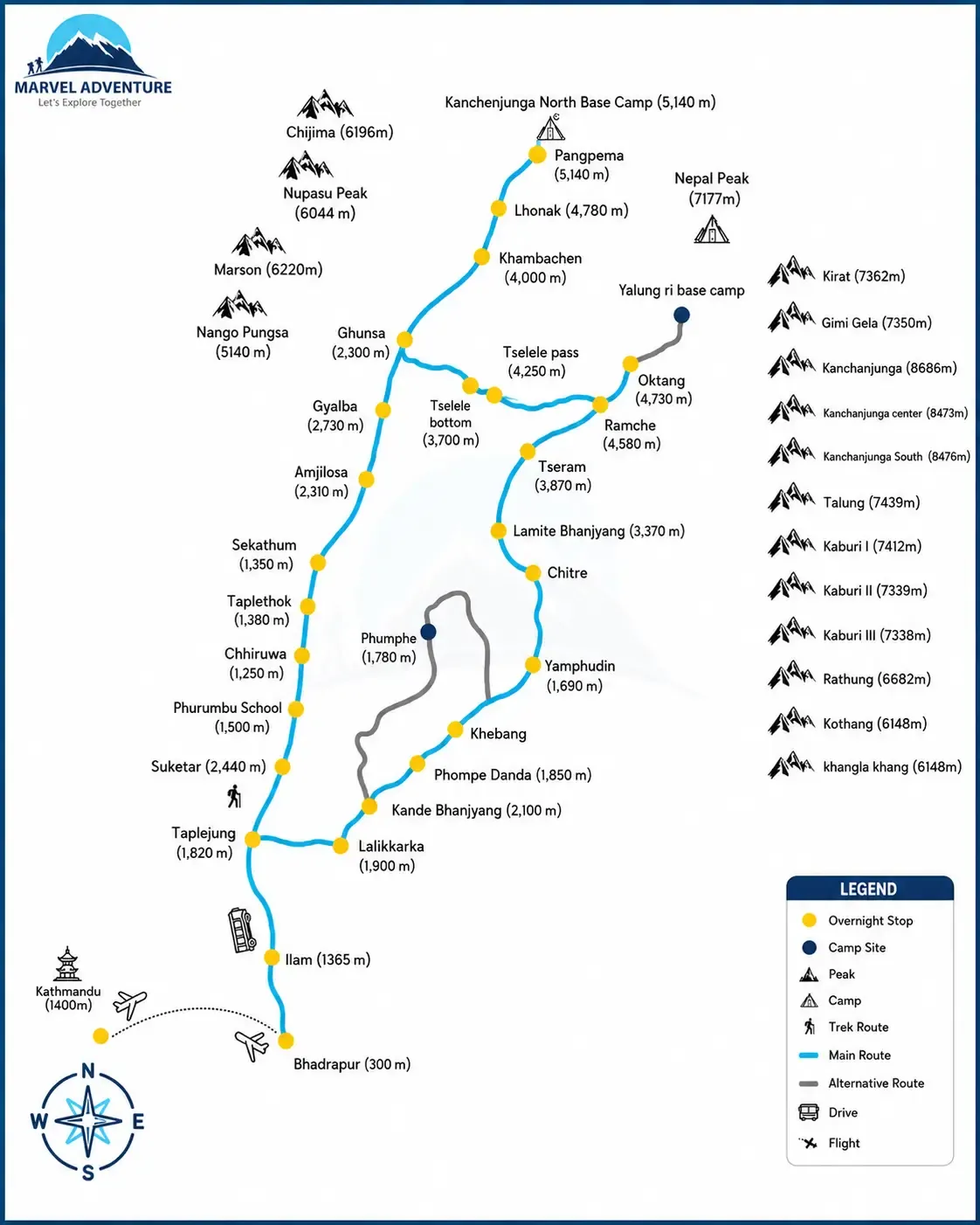
This adventure to the home of Kanchenjunga is an excursion of 18 days. Beginning in Kathmandu, Nepal’s capital, the trip will progress through the unexplored side of Nepal. It is a trek for avid trekkers who like to explore the world's tranquil, remote, and off-the-beaten corners.
The explorers of the British Expedition in May 1995 explored a trail to reach Oktang (Kanchenjunga South Base Camp) and Yarlung Glacier. And this Kanchenjunga Trek follows the same route. You will walk through the exciting path to reach Kanchenjunga South Base Camp (4,780m) and Kanchenjunga North Base Camp(5,190m). Check more on how to reach Kanchenjunga.
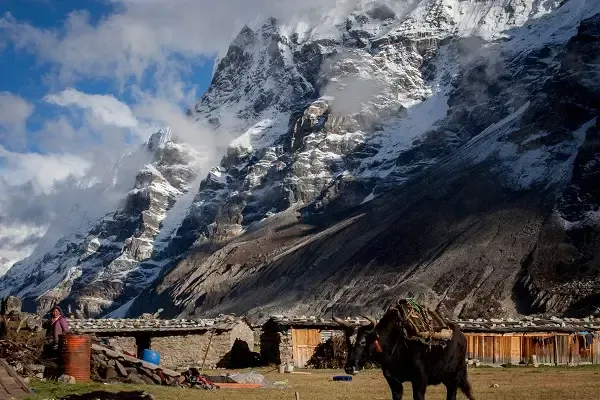
The whole trek is a sheer experience for trekkers. Starting the tour with a scenic flight and drive, trekkers reach the beginning point of the walk. Then, trekkers travel across the beautiful villages of various ethnic groups in the region. The tour offers you a look into their lifestyle and culture. As the trek progresses, trekkers traverse the lush Kanchenjunga Conservation Area, an affluent site of flora and fauna.
Many rivers, streams, waterfalls, ponds, and glaciers come along on this walk. The best thing about the trek is that good things keep coming at you. Scenic mountain passes and magnificent snow-clad peaks are just some of the good things. The notable peaks of the trek are the Kanchenjunga series, Yalung Kang, Kirat Chuli, Kabru, Pathibhara, Gimigela, Doma, Faktanglung, and more. Likewise, the important mountain passes of the trek are Miring La, Selele Pass, and Tamo La. You will touch numerous other attractive hilltops and ridges.
As said earlier, the Kanchenjunga Trek is a complete trekking package. It is ranked as a moderate to difficult trek; thus, it is only for avid and experienced trekkers. It requires good preparation, experience, and immense enthusiasm to do this adventure. If you feel like you have all of them, we are here to help you unravel this journey.
Trip Highlights
- Fly over the Himalayas, watching Mt Everest, Lhotse, Makalu, and more.
- Land in eastern Nepal, an unfrequented home of Mt Kanchenjunga.
- Explore the fascinating landscapes of the region.
- Walk and breathe in the lush forest of oaks, firs, birch, rhododendron, and other vegetation.
- Enjoy the serene walk through the Kanchenjunga Conservation Area and encounter its flora and fauna.
- Trek on a remote, virgin, and tranquil trekking trail of Nepal.
- Experience the distinct culture, lifestyle, and hardship of locals.
- Pass by breathtaking waterfalls, traditional hamlets, electric rivers, vibrant meadows, frosted glaciers, and more.
- Climb Kanchenjunga North Base Camp(5,065m) and Kanchenjunga South Base Camp(4,780m).
- Grasp glorious snow-clad mountains from multiple ridges, passes, and hilltops.
- Catch jaw-dropping peaks such as the Kanchenjunga series, Kokthang, Kabru Range, Januu Himal, and Mera Peak
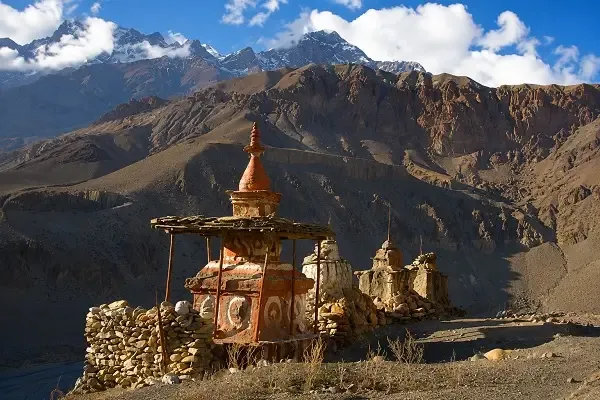
- Pay spiritual visits to the monasteries and shrines of the region.
- Get an impression of Indian, Nepalese, and Tibetan lifestyles in one single trek.
When is the best time for Kanchenjunga Trek?
When to walk the Kanchenjunga Trek? Well, the answer is simple. Do it when everything is alright. That would be the Autumn and Spring seasons, the best times to explore Nepal’s higher corners. The seasons are just perfect for venturing into the Kanchenjunga region.
Autumn(September, October, November) is a stable time to visit eastern Nepal, the home of Mt Kanchenjunga. It is dry weather with minimal precipitation. There are fewer chances of rainfall and snowfall during Autumn. You can glance at landscapes, valleys, and peaks without any disturbance. The weather is also quite ideal and warm. Plus, it is the time of grand festivals in Nepal.
Likewise, Spring(March to May) is another ideal time for Kanchenjunga Trekking. It is the season of colorful flowers and surroundings. Everything is blossoming in this season, especially Rhododendron flowers. Also, the temperature is mild and bearable except during the night and morning hours. The precipitation level is low, meaning fewer rainfall chances and a dry trail.
How difficult is the Kanchenjunga Trek?
Kanchenjunga Trek is not for newbies. It is one route that takes you to the wild, remote, and high parts of Nepal. The trek is long and challenging, as you have to spare 21 days for the entire trip. Kanchenjunga Trekking is rated moderate to difficult for its high-altitude trekking and trail nature. Check more on Kanchenjunga trek difficulty.
The trek is an adventurous journey through the rugged, remote, isolated region. The walk begins from an altitude of 900m and reaches a height of 5,143m. You will cross numerous uphills, ridges, glaciers, rapid descents, and mountain passes. On average, you must trek for 6-8 hours and 10-12 km. Some of the days are even longer.
Trekkers with enough experience, expertise, and preparation can only overcome this trek. Thus, Kanchenjunga Trekking is not a trek for beginners. It is about the ultimate trekking experience in the Himalayas. The conditions can be totally against you at times. You have to sleep in tented camps on some days. Choose this trek only if you can endure such situations. Be well prepared!