
Nir Karki
Talk to an Expert (Nir Karki)
Last-minute Deals
Book Now
Price from
US$495

Mardi Himal Trek

257 reviews
29 reviews
Duration
7 Days
Trip Grade
Easy
Country
Nepal
Maximum Altitude
4,200m
Group Size
Min 1 pax
Best Time
Autumn (Sep-Nov) and Spring (Mar-May)

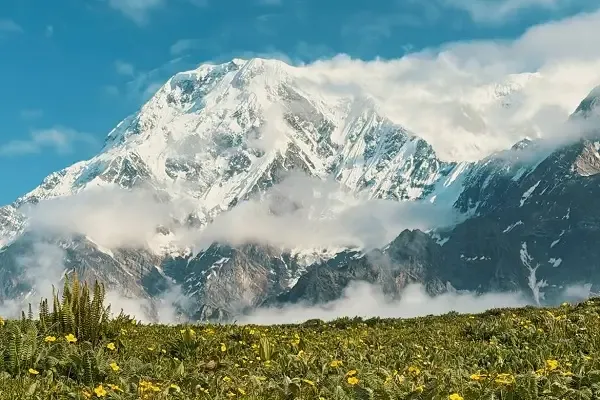
Mardi Himal Trek is an off the beaten trek in the Annapurna region of Nepal. The trek was officially opened in 2012 and gained wide recognition among the trekkers who love the peaceful trail and abundant natural views. Mardi Himal Base Camp is located at around 4350 meters.

Mardi Himal Trek is quite interesting compared to other treks of Annapurna Region since you will walk through the less trodden trails enjoying the glorious scenery.

Driving to Kande, the trek begins with a steep ascent and reaches Pothana. It is a tiny Gurung village and the trek moves higher via Forest camp and high camp (3980m). This is a relatively secluded area and the trek goes on through the rhododendron forest. The weather is chilly, but the warm dining hall and soup re-energize you. Mt. Fishtail and Annapurna can be explored from the closest point along with the Mardi Himal itself.

If you love watching biodiversity, then bless yourself since you can witness various flora and fauna including Danphe, Himalayan Thar and musk deer during the trek in the beautiful lush forest. Trek to Mardi Himal base camp from high camp is tough, but the surrounding panoramas are awesome enough to inspire you. We take a hike from the high camp, explore the beauties from the base camp and back to the high camp. The surprising panoramas make you forget the tiredness of the trek.

On the fourth day of the trek, you can reach the Mardi Himal base camp. It’s fast, wonderful and exciting. Retrace to Sidhing village, drive to Pokhara, and end the mesmerizing trip. Although this trek can be done throughout the year,  Autumn and Spring are the best seasons. During these seasons, the weather is clear, wildflowers are in full bloom, and the mountain views are fabulous. 

Mardi Himal Trek Highlights

  • Off the beaten path, along with the peaceful environment
  • Exploration of rich biodiversity 
  • Getting to know local culture and traditions
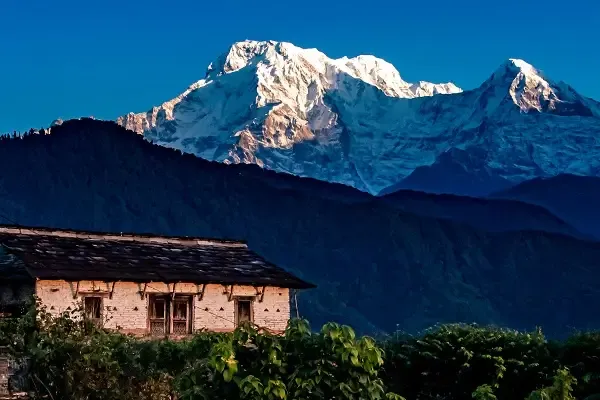
  • Stunning view of Mardi Himal, Mt. Annapurna and Mt. Macchapucchre
  • Pokhara Sightseeing Tour of major attractions

Marvel Adventure excitingly welcomes you to enjoy off the beaten trek to Mardi Himal Base Camp. We are committed to making your trek truly outstanding and memorable with all the necessary arrangements.

If you want an extended trek to experience the breathtaking beauty of the Annapurna region, we also offer a 12 days Annapurna Circuit Trek, allowing you to immerse yourself in the beauty of the Himalayas in a slightly longer timeframe.

Mardi Himal Trek Detailed Itinerary

Day 1

Drive to Pokhara (820m)

We take a wonderful scenic drive to Pokhara as we cruise through colorful rural settings, and after about 7 hours, we reach the lake city. On reaching Pokhara, we will check into our Hotel, refresh, and stroll around the lakeside and visit the Fewa Lake and Barahi temple.

Max Altitude: 820m (2,690ft)
Duration: 7-8 hours
Distance: 200 km
Meals: Breakfast, Lunch and Dinner
Accommodation: Hotel
Mode of Transportation: Public Bus
Day 2

Drive to Kande and Trek to Pothana (1,890m)

The trip starts with an hour's drive to Kande. The trail ascends through the climbing of stairs from Phedi firstly and then through the forests to reach Dhampus, a Gurung village that provides picturesque scenes of the Annapurna range, Manaslu, and many more. We will continue our ascent until we reach Pothana, a small village. 

Max Altitude: 1,890m (6,200ft)
Duration: 2-3 hours
Distance: 3.6 km
Meals: Breakfast, Lunch and Dinner
Accommodation: Teahouse
Day 3

Trek to Forest Camp (2,530m)

It will be a steep uphill climb today through the forests. On the way, you can enjoy scenic views of mountains like Dhaulagiri and the Annapurna ranges. After walking for about 5 hours, we will reach Forest Camp. 

Max Altitude: 2,530m (8,300ft)
Duration: 5-6 hours
Distance: 9 km
Meals: Breakfast, Lunch and Dinner
Accommodation: Teahouse
Day 4

Trek to High Camp (3,580m)

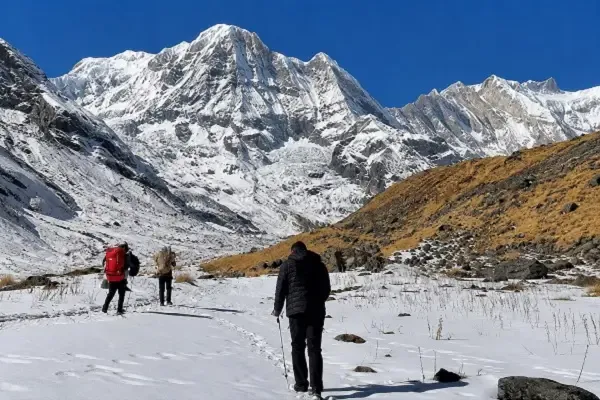
The trail from the Forest camp to the high camp follows a steep ascent through the forest. You'll be passing through Badal Danda (Cloud Hill), walking mainly on grasslands. On reaching the top, we will be highly rewarded with the magnificent, breathtaking views of the Annapurna range and Mount Machhapuchhre. 

Max Altitude: 3,580m (11,745ft)
Duration: 5-6 hours
Distance: 9 km
Meals: Breakfast, Lunch and Dinner
Accommodation: Teahouse
Day 5

Early morning hike to Mardi View Point (4,200m), Trek down to Siding and Drive to Pokhara

We will start our ascent to Mardi Himal Viewpoint. The trek today is challenging with a walk along a narrow, rocky trail. The hardship of the day is rewarded with the exquisite mountain views of Mardi Himal, Mt. Fishtail, Hiuchuli, Anapurna I and II, and Gangapurna.

We will retrace our steps and follow a steep descent to low camp from where we will trek through the forest to Mardi Khola. After a pleasant walk along the river and the forest, we'll reach Siding Village. Then, we'll take a 1.5-hour drive to Pokhara. 

Max Altitude: 820m (2,690ft)
Duration: 7-8 hours
Distance: 17 km
Meals: Breakfast, Lunch and Dinner
Accommodation: Hotel
Day 6

Half day sightseeing in Pokhara

As Pokhara is a beautiful city shadowed by the beautiful Himalayas and blessed with serene lakes, we will be exploring this beautiful city. We can visit the serene lakes, mysterious caves, and other attractions offered in Pokhara. Mahendra Cave, Bindabasini Temple, Davis Falls, Shiva Temple, and International Mountain Museum are worth exploring. In the evening, we can relax and enjoy the vibrant city of Pokhara.

Max Altitude: 820m (2,690ft)
Meals: Breakfast, Lunch and Dinner
Accommodation: Hotel
Day 7

Drive back to Kathmandu

After enjoying the trek, we will drive back to Kathmandu, which will be about a 7-hour drive. On the way, you can enjoy the scenic views of villages, rivers, mountain ranges, and many more. 

Max Altitude: 1,400m (4,593ft)
Duration: 7-8 hours
Distance: 200 km
Meals: Breakfast and Lunch
Accommodation: Hotel
Mode of Transportation: Public Bus
Have Questions? We're Here to Help
Like this itinerary but want to make a few changes? Every traveler is unique, and your journey should be too. Our local travel experts will design a personalized experience tailored to your interests, preferred pace, travel dates and budget.
Route Map & Altitude Profile

Cost Details

Includes

  • Airport pickup and drop service
  • Standard meals (breakfast, lunch and dinner) during the trek
  • Government license holder guide with experience and local knowledge
  • Strong and helpful porter with proper equipment (1 porter for 2 people)
  • Salary, food, accommodation and insurance for guide and porter
  • Teahouse/lodge accommodation during the trek
  • All land transportation as per the itinerary
  • TIMS (Trekking Information Management System) card
  • Annapurna Conservation Area Project (ACAP) entry permit
  • 2 nights standard Hotel in Pokhara on a BB basis
  • Comprehensive first aid kit with oximeter
  • Government taxes and official expenses

Dates & Availability

Aug 2026
Sep 2026
Oct 2026
Nov 2026
Dec 2026
Jan 2027
Feb 2027
Mar 2027
Apr 2027
May 2027
Jun 2027
Jul 2027
Aug 2027
Sep 2027
Oct 2027
Nov 2027
Dec 2027
Start Date
02 Aug, 2026
End Date
08 Aug, 2026
Status
Guaranteed
Price
US$495
Start Date
05 Aug, 2026
End Date
11 Aug, 2026
Status
Guaranteed
Price
US$495
Start Date
09 Aug, 2026
End Date
15 Aug, 2026
Status
Guaranteed
Price
US$495
Start Date
12 Aug, 2026
End Date
18 Aug, 2026
Status
Guaranteed
Price
US$495
Start Date
16 Aug, 2026
End Date
22 Aug, 2026
Status
Guaranteed
Price
US$495
Start Date
19 Aug, 2026
End Date
25 Aug, 2026
Status
Guaranteed
Price
US$495
Start Date
23 Aug, 2026
End Date
29 Aug, 2026
Status
Guaranteed
Price
US$495
Start Date
26 Aug, 2026
End Date
01 Sep, 2026
Status
Guaranteed
Price
US$495
Start Date
30 Aug, 2026
End Date
05 Sep, 2026
Status
Guaranteed
Price
US$495

If there is only one person for the trip, there will be a USD 100 additional cost.

Meet Our Expert Guides

Khilaraj Nachhiring
Trekking Guide
Dibash Mainali
Trekking Guide
Dinesh Rai
Trekking Guide
Jangbu Sherpa
Trekking Guide

Equipment List

Upper Body Layers
  • Breathable, quick-dry base layers
  • Comfortable t-shirts
  • Lightweight insulating jacket
  • Down jacket for cold conditions
  • Waterproof and windproof jackets
Lower Body Layers
  • Thermal base layer
  • Waterproof trekking pants
  • Comfortable pants for evenings in teahouses
  • Comfortable hiking shorts for warmer sections
  • Waterproof and windproof outershell for rain or snow
Footwear & Accessories
  • Trekking boots with ankle support (preferably Waterproof)
  • Multiple pairs of quick-dry socks
  • Warm socks for cold nights
  • Gaiters for snowy, muddy, or dusty trails
  • Trekking poles to reduce strain on knees
Head & Sun Protection
  • A hat or a cap to block the sun
  • Warm beanie for cold mornings and evenings
  • UV-protected sunglasses
  • Neck gaiter or buff to prevent dust, cold, and sunburn
  • Sunscreen (30-50+ SPF) for face and exposed skin
  • Lipbalm with SPF
Personal & Medical Kits
  • Personal medications
  • Diamox (Acetazolamide) for altitude sickness
  • Ointment
  • Hand sanitizers and wet wipes
  • Quick-dry towel
Travel Documents
  • Valid Passport
  • Passport-sized photos for permits
  • Travel insurance
  • Flight tickets
  • Cash in Nepali Rupees
  • Emergency contact details
Miscellaneous
  • Daypack (30-45L) with raincover
  • Reusable water bottles
  • Headlamps for early morning hikes
  • Water purifying tablet or filter
  • Phone or Camera for capturing the adventure
  • Powerbank for an easier charging option
  • Notebook, books, or cards for free time
  • Snacks like energy bars and chocolates
  • Drybag to keep your gear safe from rain

Essential Information

..

The Mardi Himal Ridge Trail Experience

This is the trek's defining feature, and it's worth understanding before you book. Mardi Himal isn't a valley trek like ABC or Poon Hill. It's a ridge walk, and that changes everything about how it feels underfoot.

What makes the ridge walk unique

  • You're walking along an exposed trail above the treeline for a significant stretch, with views opening up on both sides simultaneously rather than the single-valley perspective you get on most Annapurna routes.
  • The sensation of walking a narrow ridge with Machhapuchhre directly ahead is unlike anything else in the Annapurna region. Most trekkers who've done ABC say Mardi feels like a completely different mountain experience.

Forest to alpine transition

  • The lower trail through Kande and Forest Camp runs through dense rhododendron and oak forest, genuinely some of the most intact forest cover in the conservation area.
  • Above Low Camp, the treeline drops away quickly. Within a few hours, you go from thick forest to open alpine terrain, a transition that is faster than on most comparable treks.

Narrow ridgeline sections

  • The stretch between Low Camp and High Camp narrows considerably in places, with the trail running side by side to the ridge rather than cutting across a wide hillside.
  • These sections demand a bit more concentration, particularly in wind or light snow. It's not technical, but also not a place to be checking your phone while walking, either.

Trail scenery

  • The combination of close-up Machhapuchhre views and the wide Annapurna panorama from a single, continuous ridge is the visual signature of this trek. You don't have to choose between forest beauty and mountain scenes, as you get both on the same day.
Accommodation and Tea Houses

Tea house standards

  • Quality drops noticeably as you climb higher. Kande and Forest Camp have decent, established lodges, but Low Camp and High Camp have far more basic facilities in comparison to Annapurna Base Camp's better-developed teahouses.
  • Rooms are simple twin-share throughout, with shared facilities above Forest Camp.

High Camp facilities

  • High Camp (3,580m) is the most basic accommodation point on the route. You will find a handful of lodges that fill up fast in peak season, so booking ahead matters here more than on most treks.
  • Don't expect much beyond a bed and a roof; this is functional shelter before a pre-dawn summit push, not a place to linger in comfort.

Food

  • Menus shrink considerably above Low Camp. Dal bhat, noodle soup, eggs, and porridge are the reliable foods here. Don't expect the variety you'd find on busier Annapurna routes like ABC or Poon Hill.
  • Eat a proper dinner the night before the High Camp viewpoint push. Trekkers don't realize how appetite drops at altitude right when your body needs the fuel most.

Hot shower

  • Available in the lower sections (Kande, Pothana, Forest Camp) for a small fee, usually solar-heated.
  • Above Low Camp, hot showers become unreliable or nonexistent. We suggest planning for a few days without one toward the end of the trek.

Electricity

  • Solar power is the norm from Low Camp upward, which means charging is limited and prioritized for lighting over guest devices.
  • Bring a power bank charged in Pokhara. Relying on the teahouse charging above Low Camp is  just optimistic at best.
Mountain Views along the Trek

Machhapuchhre

  • The single defining view of this entire trek. From High Camp and the viewpoint above, Machhapuchhre fills the sky directly ahead in a way that genuinely doesn't translate to photos. You will be close enough that the angle feels almost vertical.

Mardi Himal

  • The peak the trek is named for sits to the north of the main viewpoint, a striking pyramid that's often overlooked because Machhapuchhre dominates the scene. However, it is highly worth looking for it.

Annapurna South

  • Visible across the valley from the upper ridge sections, particularly stunning in the early morning light before cloud typically builds.

Hiunchuli

  • Sits alongside Annapurna South in the same sightline from High Camp. Himchuli is smaller in profile but definitely adds a lot to the feel of the panorama.

Annapurna I

  • Visible on clear days from the upper viewpoint, completing the full Annapurna massif view alongside Machhapuchhre. This combination of peaks in one panorama is what separates Mardi from lower-altitude Annapurna treks.
High Camp and View Point Guide

High Camp altitude

  • The high camp sits at 3,580m, already high enough that some trekkers feel mild effects, particularly after a fast ascent from Low Camp.

Upper viewpoint

  • The main viewpoint above High Camp sits at approximately 4,200m, reached via a steep 2 hour climb that's notably harder than the distance considering the altitude it is at.

Base camp

  • Mardi Himal Base Camp itself, at roughly 4,500m, is a separate and less commonly visited objective beyond the standard viewpoint. Most trekkers stop at the 4,200m viewpoint rather than pushing to base camp.

Sunrise timing

  • We will depart from High Camp, typically at 4:30-5:00 am, to reach the viewpoint before first light. It is colder and darker than the Poon Hill equivalent, given the higher altitude.

Walking duration

  • The viewpoint push is roughly 4-5 hours round-trip from High Camp. Keep in mind the cold factor, the dark, and the altitude when judging how it'll feel compared to a lower-altitude sunrise hike.
Trail Conditions Throughout the Year

Spring trails

  • Generally dry and stable, with rhododendron blooms through the forest sections in March and April, which adds genuine visual reward to the lower trek days.

Monsoon mud

  • The lower forest sections become genuinely slippery and prone to leeches from June through August. This is one trek where we actively discourage monsoon attempts rather than just caution against them.

Winter snow

  • Snow accumulates quickly above Low Camp from December onward, and High Camp can become difficult or temporarily inaccessible after heavy snowfall. Winter trekking here requires flexibility and proper gear, not a fixed schedule.

Autumn conditions

  • The most reliable window for this specific trek is autumn, as there are dry trails, stable weather, and the clearest shot at an unobstructed Machhapuchhre view from the viewpoint. October is consistently our top recommendation.
Your Local Support Team

Guide

  • Mandatory under current regulations, and on this specific trail, a guide matters more than the legal requirement suggests. Trail markers above Low Camp can be less visible, especially after fresh snow.

Porter

  • Standard on our Mardi Himal packages, typically one porter per two trekkers, which is a genuine relief on a trek with this much sustained elevation gain.

Safety

  • Our guides carry pulse oximeters from Low Camp upward and monitor symptoms closely, given how quickly this trek gains altitude compared to its short overall duration.

Office support

  • Our Pokhara team stays in contact with every guide throughout the trek. Given Mardi Himal's relative remoteness above Low Camp, this contact line matters more here than on the busier ABC or Poon Hill routes.
Communication and Essential Facilities

Mobile network

  • NTC offers reasonable coverage through Forest Camp and Low Camp. The signal becomes unreliable or absent above that point.

Charging

  • It is available at lower teahouses for a fee. Above Low Camp, solar-dependent charging is limited and inconsistent. So we strongly recommend bringing a fully charged power bank.

WiFi

  • Present at some lower lodges (Kande, Forest Camp) but essentially nonexistent from Low Camp upward. You should consider treating the upper trek as genuinely offline.

Drinking water

  • Tap and stream water require treatment throughout the trek. Carry a filter bottle or purification tablets, as bottled water becomes both expensive and impractical to source the higher you climb on this particular route.

Mardi Himal Trek FAQs

Why is the Mardi Himal Trek worth doing in 2025 and 2026?

Mardi Himal still offers genuine solitude with a trail where you might go hours without seeing another trekking group, and a viewpoint that isn't crowded. We've watched other routes in Nepal change as they grew popular. Mardi Himal is still in the good phase. Come sooner rather than later.

How do I get to the starting point of the trek from Pokhara?

Our itinerary starts in Kande, about a 45-minute drive from Pokhara. We will arrange all trail transport as part of our packages. Generally, you're on the trail within an hour of leaving your Pokhara hotel, which is one of the advantages of this trek over routes in the Everest region.

Do I need travel insurance for the Mardi Himal Trek?

Yes, we strongly recommend getting it before you book anything else. A rescue flight from around High Camp can cost several thousand dollars, and no teahouse is going to put that on a tab. We've seen trekkers skip insurance to save money and spend the rest of the trip stressed about it.

What is the best time to do the Mardi Himal Trek?

Autumn (October–November) and spring (March–May) are the seasons we always recommend. October is our top pick as the skies are clear, the air is dry, and Annapurna's south face looks unreal at sunset from Base Camp. Spring is beautiful too, especially in April when the rhododendrons in the lower sections are in full bloom.

How much does the Mardi Himal Trek cost?

A fully guided Mardi Himal Trek package with Marvel Adventure typically runs USD $450–$700 per person, depending on group size and duration. The cost will cover your accommodation, all meals on trail, guide and porter, permits, and Pokhara transfers.

Why book the Mardi Himal Trek with Marvel Adventure?

Our guides are licensed, altitude-trained, and local to the Annapurna region. We build itineraries that give you a real shot at the High Camp viewpoint with proper acclimatization. Small groups, honest pricing, no hidden extras.

What is the Mardi Himal Trek?

Mardi Himal is a relatively new official trekking route in the Annapurna region that most travellers still haven't heard of, which is exactly what makes it special. You get a front-row view of Machhapuchhre and the Mardi Himal. We started running this route early and still consider it one of the most rewarding short treks we offer.

How difficult is the Mardi Himal Trek?

It is an easy-to-moderately challenging trek. The trail gains altitude quickly, particularly above Forest Camp, and the final push to High Camp and the viewpoint involves steep, exposed sections. Based on our experience, trekkers who've done a previous Himalayan trek handle it well. First-timers can also do it, but they need good preparation.

Can beginners do the Mardi Himal Trek?

Yes, genuinely. It's one of the better entry points into Himalayan trekking. The trail is clear, the teahouses are comfortable, and you don't need technical skills. That said, "beginner" doesn't mean "no preparation." Do some regular hiking or stair training for 6–8 weeks before you fly. 

How many days does the Mardi Himal Trek take?

At Marvel Adventure, our standard itinerary is 7 days because it gives trekkers enough time to enjoy the trail comfortably without rushing. Based on our experience, this itinerary makes the trek feel much more relaxed and enjoyable, especially around High Camp.

Can I see Machhapuchhre (Fishtail) from the Mardi Himal Trek?

From High Camp and the viewpoint above, Machhapuchhre extraordinarily fills the sky. You're close enough that it feels almost vertical above you. Annapurna I, Annapurna South, Hiunchuli, and Mardi Himal itself are all visible on a clear day. Most trekkers who do this route for the Machhapuchhre view say it was better than they imagined. We've never had anyone disagree.

Is altitude sickness a concern on the Mardi Himal Trek?

It's worth taking seriously, even though the Mardi Himal trek isn't as high as the EBC. Above Forest Camp, some trekkers start feeling headaches and fatigue. Our guides carry pulse oximeters and keep a close eye on how everyone's doing. If symptoms worsen, we descend as no summit is worth the risk.

How does the Mardi Himal Trek compare to the Annapurna Base Camp Trek?

ABC takes you into the sanctuary surrounded by giants on all sides; Mardi Himal puts you on an exposed ridge with Machhapuchhre dominating the view directly ahead. ABC is busier and has more teahouse variety while Mardi Himal is quieter with a raw and more remote feel above Low Camp. Both reach similar altitudes. If you want crowds and comfort, ABC. If you want solitude and a more adventurous ridge experience, Mardi Himal is the better call.

Is a guide mandatory for the Mardi Himal Trek?

 Yes, a licensed guide is mandatory. Beyond the legal side, they know which teahouses are good, spot early AMS symptoms, handle logistics, and navigate the trail after snowfall. We've had trekkers tell us they thought they didn't need a guide, and most of them change their mind somewhere around Forest Camp.

What accommodation is available on the Mardi Himal Trek?

You can easily find teahouses from Kande to High Camp, but the quality and availability drop significantly as you climb. Around Forest Camp, teahouses get basic,  with simple twin rooms, shared facilities, and limited menu options.

Are there ATMs or money exchange facilities on the Mardi Himal Trek?

No. You will find nothing on the trail once you leave Pokhara. This is non-negotiable, so draw all the cash you need before you reach the trailhead. Pokhara has reliable ATMs near Lakeside and money exchange offices throughout the tourist area.

Price Per Person
US$495
US$495
All inclusive price
  • 2 - 4 paxUS$475
  • 5 - 9 paxUS$450
  • 10 - 20 paxUS$425
Talk to Our Travel Experts

What Our Clients Say

November 04, 2025
Such a helpful guide and company

I've travelled into the Himalayas with Marvel Adventures twice now and will be returning again. From start to finish Nir is so helpful at making sure everything is organised for you, including flights, accommodation etc,...

J
Jemma B
Australia
October 11, 2025
Mardi himal trekking review

I had a wonderful trekking experience with Shalik Bhandari.

His deep knowledge of the trail and his professional guiding skills made the journey truly enjoyable.
He’s also incredibly patient and efficient...

c
cc l
South Korea

You May Also Like

ghorepani poon hill ghandruk trek
Duration: 7 Days
5.0(3 Reviews)

Ghorepani Poonhill Ghandruk Trek

US$525US$525
Difficulty Level: Easy
7 day annapurna base camp trek
Duration: 7 Days
5.0(3 Reviews)

7 Days Annapurna Base Camp Trek

US$725US$725
Difficulty Level: Moderate
6 days mardi himal trek
Duration: 6 Days

6 Days Mardi Himal Trek

US$425US$425
Difficulty Level: Easy
Need Help? Call Us+977 986-0313572
Mardi Himal Trek | 7 Days Scenic Trek in Nepal