Panggom vs Direct Zatrwa La: The Two Routes at a Glance
Both routes land you on the same trail eventually in Kothe. Getting there is where they split. One takes the long way round. The other takes you to the harder part almost right away.
| Factor |
Panggom Approach |
Direct Zatrwa La |
| Starting Direction |
South from Lukla |
Direct towards Chutanga |
| Early Sequence |
Lukla - Paiya - Panggom - Ramailo Danda - Chhatra Khola - Kothe |
Lukla - Chutanga - Zatrwa La - Thuli Kharka - Kothe
|
| Physical Demand |
Spread across more days |
Concentrated early on |
| Time Required |
Longer |
Shorter |
| Overall Approach |
Longer and more gradual |
Shorter and more direct |
| Trail |
Lower valley trekking |
Fast into higher sections |
| Main consideration |
Time and Distance |
Early pass crossing |
If you're tight on schedule, the right column could make it easier. If you want your body to adjust to altitude before things get serious, the left one is the ideal one.
Mera Peak via Paiya and Panggom
You will head south from Lukla towards Paiya. From there you will move to Panggom, Ramailo Danda, then down to Chhatra Khola before the trail finally brings you up to Kothe, where it joins the main Mera Peak route.
Why so long? Because this trail climbs and drops from ridges and valleys again and again. This back-and-forth is what adds the extra days.
However, this longer approach gives your body some real time. By the time you reach Kothe, you've already had several days of eating, sleeping, and walking in the thin air. You will already have some experience at altitude right when the stakes go up.
Mera Peak via Direct Zatrwa La
This one's straightforward: Lukla, Chutanga, Zatrwa La, Thuli Kharka and Kothe. You go up and over, straight into the Hinku Valley.
Yes, it is a shorter trip, but the pass comes early. Whatever fitness and acclimatization you're bringing with you, that's what you've got when you hit the top of Zatrwa La Pass.
Some climbers prefer this shorter approach, particularly when they have done altitude before, know how their body reacts, and don't have two extra days to spare.
The Real Difference: How Quickly You Gain Altitude
Here's the thing nobody really explains well: it's not about how high you go. Both routes end up in the same place eventually. It's about how fast you get there and whether your body is ready before the altitude starts asking questions.
How the Panggom Route Gains Altitude
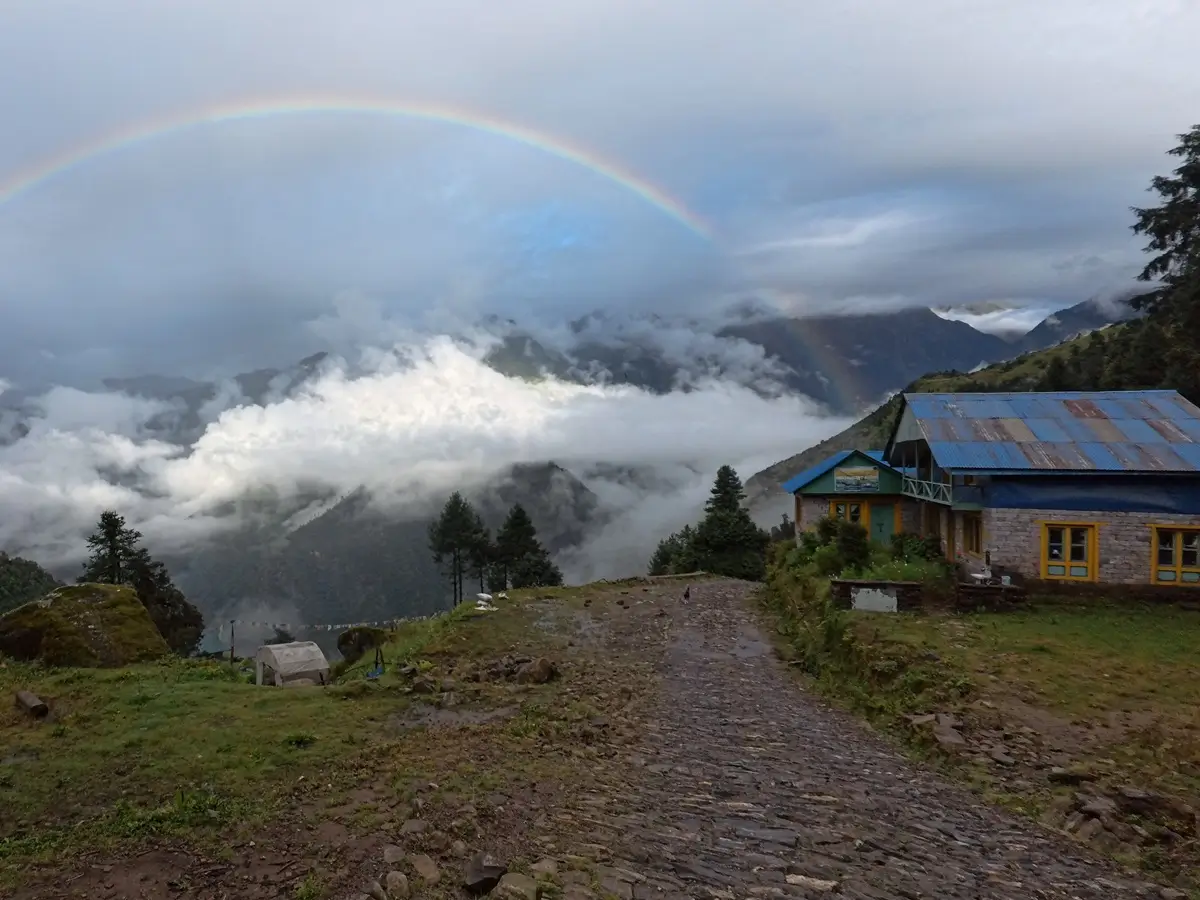
This trail goes up, comes back down, and goes up again. So you spend several nights below 4,000m before the real climbing starts. That gives your body time to adjust before Thaknak and Khare come into the picture.
It also buys our guides time. They can learn more about how someone's doing by watching how they respond to altitude, eat, and sleep for three nights.
But let's be straight: the extra days don't make altitude sickness go away. Acclimatization helps. It doesn't guarantee anything. Some people just respond badly to altitude, and we've seen it happen to fit and experienced climbers too.
How the Direct Zatrwa La Route Gains Altitude
You start at around 2,860m in Lukla. Within a day or two you're pushing up toward Zatrwa La, sitting around 4,610m, before dropping down toward Thuli Kharka and on to Kothe.
That's a big jump. Your body hasn't had much time, and you're probably still shaking off jet lag and the flight to Lukla on top of it. You head straight up to a steep climb with general travel fatigue, and the pass asks more of you. And there are factors like wind, snow, and visibility that change how the early days actually feel.
It just means the hard part comes first, with greater early demands on the body than the Panggom route to Mera Peak.
How the Routes Compare Beyond Acclimatization
Altitude's only half the story. Honestly, it's what people prioritize while ignoring the stuff that actually shapes how the trek feels day to day. Duration, how your legs hold up, what you're actually looking at while you walk, what the weather is like. None of that shows up on an elevation chart, but it's exactly what you'll remember once you're back home telling people about the trip.
So, here are some of the actual experiences of walking these Mera Peak climbing routes.
Duration and Physical Effort
Panggom adds roughly two days before you even reach Kothe, and more total distance on top of that. You're not just walking further, but you're climbing the same few hundred meters more than once, dropping back down, then doing it again on the next ridge. That adds up in your legs even if it doesn't show up clearly on an elevation chart.
Yes, the direct Zatrwa La route trims the schedule down, no question. But don't make the mistake of taking shorter as lighter. It doesn't remove effort from the trip, it just moves it. Instead of spreading the physical work across several days, it compresses it into one intense stretch right at the start, before your body's had any real altitude. However, some climbers prefer that. Get the hard part done, and move on.
We'd never call the Panggom route to Mera Peak easy. It's not. It's gradual, better paced, and a different thing entirely.
Scenery and Trail Experience
On Panggom, you're down in the valleys a lot longer, and it changes the whole trek. You'll pass through more villages, see more variety in the terrain and get more of that slow trek feeling that a lot of people actually come to Nepal for in the first place. The landscape shifts under your feet gradually. It doesn't feel like a rush toward a mountain yet, and it still feels like a trek.
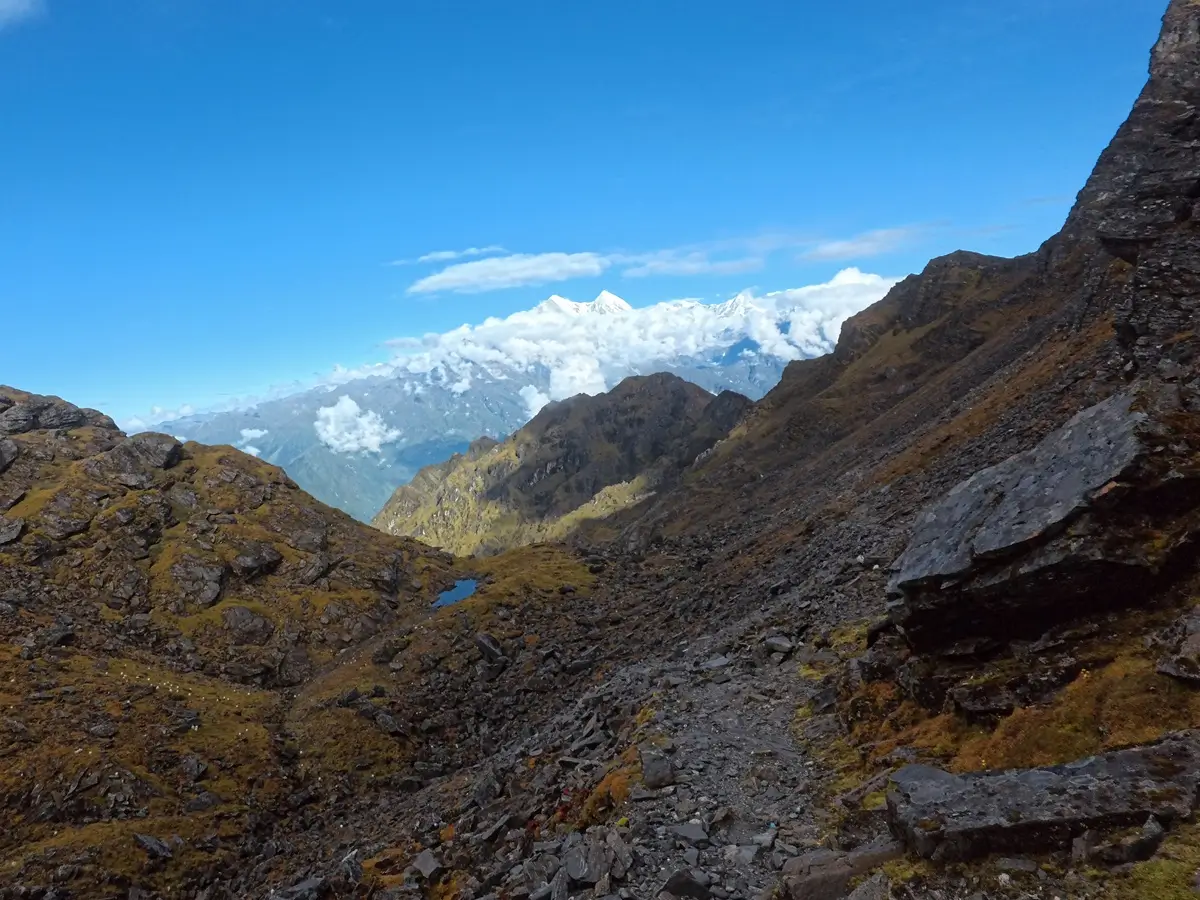
Zatrwa La skips most of that. You're into the high-altitude sections fast, within a day or two of leaving Lukla. For a lot of climbers, it's exactly the point. They're not out here for the villages or the terraced fields. They came for the mountain, and the sooner they're on the Hinku side looking up at it, the happier they are. There's nothing wrong with that mindset either. The direct approach offers less time in the lower villages and forests, while reaching the higher terrain sooner.
Weather and Trail Conditions
Rain could hit the Panggom side hard sometimes. This causes the lower trails to get muddy, slippery, and slower than you'd expect from looking at a map. These weather conditions down there shift a lot depending on the season.
On Zatrwa La, snow, ice, wind, and poor visibility can affect the crossing. We're not going to tell you the pass is always buried in snow, because it isn't, not every year. What actually matters is checking current conditions before you go, and that’s where our experienced guides come in. Even though no one can guarantee the weather, an experienced guide who understands the weather patterns can help a lot when you are up there.
Why Crossing Zatrwa La After the Summit is Different
Let's clear something up: we don't skip Zatrwa La. Our climbers cross it too. Just not on day two.
Here is how our Mera Peak route from Lukla runs:
Paiya - Panggom - Ramailo Danda - Chhatra Khola - Kothe - Thaknak - Khare - Mera Peak summit. Then, on the way back: Mera Peak - Zatrwa La - Lukla.
On the return, climbers have already spent several days at higher elevations, so the crossing comes after substantially more altitude exposure than it would on the direct approach. However, summit fatigue, snow, ice, and weather can still make Zatrwa La demanding.
One thing we've noticed over the years is that climbers tend to judge an itinerary by the number of days. Once they're actually out there walking, what matters way more is where the hard days land. Right at the start, when you're least ready? Or near the end, after you've already proven to yourself you can handle it? That's really why we sequence it this way. Panggom spreads the trek across more days. Zatrwa La on the return means we're not backtracking through the entire Panggom route after already climbing the peak. It's not about which one is the best route to Mera Peak and which one is bad. It's about where the effort makes the most sense.
Which Route Should You Choose?
We've put together multiple Mera Peak itineraries at this point, and the climbers who end up happiest are the ones who picked based on their actual fitness and schedule, not on which route sounded more impressive. So here's the honest breakdown.
Choose the Panggom Route if:
- You haven't done much high-altitude trekking yet
- You'd rather go slow than get thrown at a hard pass on day one or two
- You've got the extra two days to spare
- You want more time trekking before the climbing part starts
- You'd rather spread the physical load out than take it all at once
- You actually care about the lower valleys and village trail, not just the summit
Here is the thing: being new to altitude doesn't automatically cross out the direct route either. It comes down to your fitness, your preparation, and what the weather conditions look like when you go.
Consider Direct Zatrwa La if:
- You have recent acclimatization that is relevant to the planned ascent
- Your schedule's tight, and you genuinely need to save days
- You'd rather take one hard part early than add extra trekking days
- Your fitness is solid going in
Conclusion
We've guided people up both routes. We've watched strong, experienced climbers find Zatrwa La tougher than expected on a bad-weather day, and we've watched first-timers handle the Panggom approach without much trouble at all because they gave themselves the time to adjust. The mountain doesn't care which route sounds better. Your body does, and that's really who you should be planning this trip around.
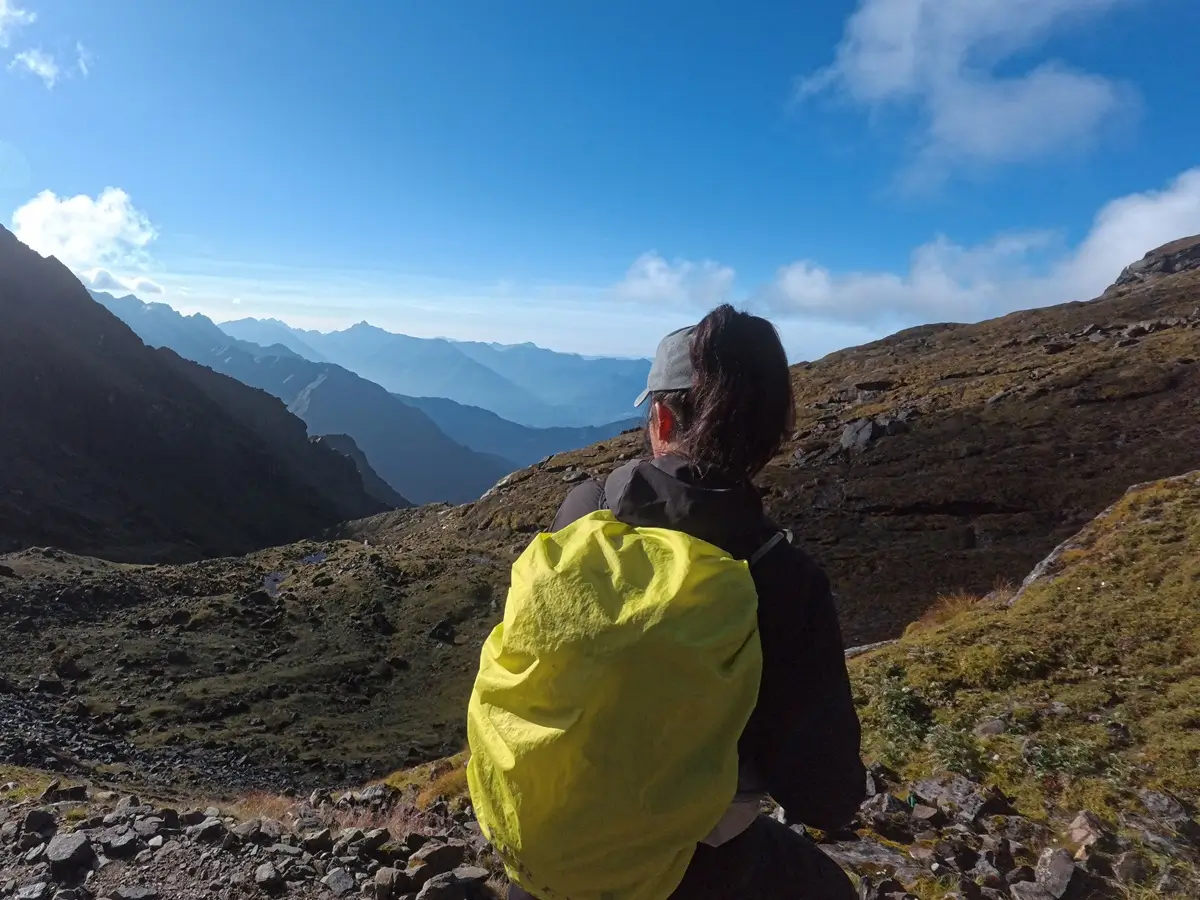
We go in through Panggom and come out over Zatrwa La because it gives our climbers a longer runway before the mountain gets demanding, without making the team retrace the entire southern approach after they've already summited. It's a structure we've refined over a lot of seasons and a lot of climbers, and it has worked well for us. That said, we're not going to pretend it's the only way to do it. It’s just the way we've found makes sense.
If you're still not sure, tell us what altitude you've handled before, how many days you've got, and what pace actually sounds good to you. That's usually all we need to point you toward the route that'll actually work for your trip.
Frequently Asked Questions
What is the best route to Mera Peak?
There isn't one. It depends on your fitness, your altitude history, and how many days you've got. Panggom suits people who want a gradual build-up. Direct Zatrwa La suits people with experience who want to save time.
How long does the Panggom route take?
It takes around 15 days. This route adds roughly two extra trekking days compared to the direct route, mostly because of all the up-and-down between Lukla and Kothe. Exact timing could shift a bit depending on your itinerary and pace.
How long does the direct Zatrwa La route take?
It takes around 11-12 days depending on your itinerary. You're cutting out the southern loop entirely, so you reach Kothe faster.
How high is Zatrwa La Pass?
Around 4,610m. You're starting from Lukla at about 2,860m, so that's a serious jump, and it happens early in your trek, usually within the first couple of days out.
Can beginners take the direct Zatrwa La route?
They can, but it's not something to walk into casually. Being new to high-altitude trekking doesn't automatically rule it out. It comes down to your fitness, your preparations, and how the conditions look on the day.
Does the Panggom route avoid Zatrwa La?
No, not in our itinerary. We go in through Panggom, but we still cross Zatrwa La on the way back out after the summit. So it's simply about when you cross it.