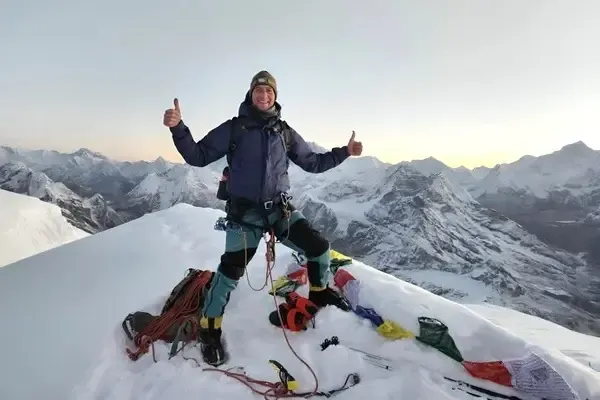
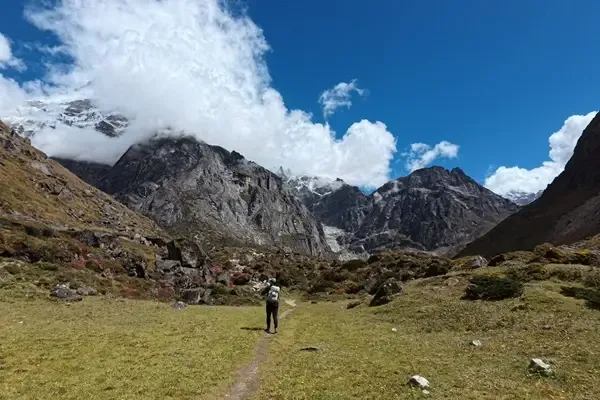
Why is there an acclimatization day in Dingboche?
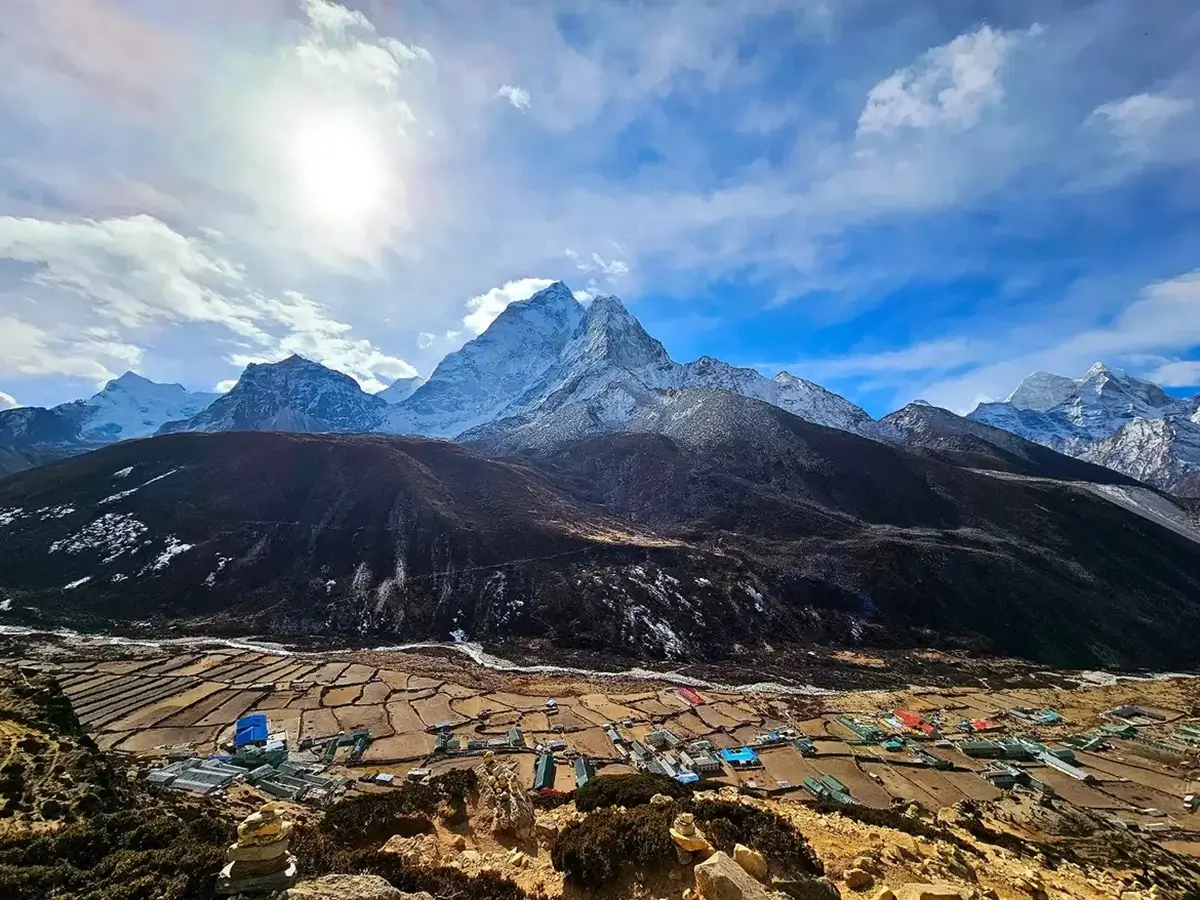
Dingboche sits at an altitude of 4,410 meters. At this altitude, the air thins, and the landscape changes completely from that of the lower Khumbu region in Namche Bazaar. A short rise that should take two minutes suddenly takes four, and you're breathing harder.
That's exactly why we don't rush anyone through Dingboche. It's the point in the trek where your body needs the extra time to catch up with the elevation it's already gained. On our 12-day EBC itinerary, you'll walk in from Tengboche and then simply stay here for two nights before pushing on toward Lobuche.
What does “Climb High, Sleep Low” mean in Dingboche?
“Climb High, Sleep Low” is a phrase you will hear quite often once you are in Lukla. The logic behind it is simple enough. You spend your day walking up toward thinner air, then come back down to sleep where the oxygen is a little more forgiving.
The idea behind the Dingboche acclimatization hike is simple: you will leave the village, spend some time higher up the valley, and return to the same teahouse to sleep that night. Your body starts to adjust at higher points, and it gets to recover overnight at a lower elevation.
Does a rest day mean doing nothing?
Many trekkers are surprised when they learn that a rest day doesn’t necessarily mean staying inside your room for the day. There's a real gap between doing nothing, wandering around the village, and pushing up toward Nangkartshang. Which one fits you depends entirely on how you woke up feeling.
If your legs are fine and your appetite's normal, moving a little tends to help more than sitting still all day. So when we call it a rest day, we really mean an easier day. Not a wasted one.
What Is the Nangkartshang Peak Hike From Dingboche Like?
The trail out of Dingboche climbs straight out of the village and into open, treeless terrain. There are no forests to block your view of what's coming. You can see the whole slope stretched out ahead of you, and that honesty about the climb is exactly what makes it feel longer than it is. The gradient becomes steeper as you climb higher.
Trekkers often fall into a rhythm here. A handful of steps, a pause, a few deep breaths, then on again. That's not you being unfit. That's just Dingboche.
Regarding the Nangkartshang peak difficulty, it doesn't ask for ropes or scrambling, as nothing about it is technical. But don't mistake that for easy. The altitude does all the work here, not the terrain.
How difficult is Nangkartshang Peak?
What makes Nangkartshang hard isn't the trail. It's the altitude and the continuous uphill you're asking your body to do. You're starting from around 4,410 meters and finishing somewhere near 5,100. That's almost 700 meters of climbing, and at this height, that's not an easy task.
Some mornings it comes easy. A trekker who's acclimatizing well can be up at the viewpoint in a couple of hours. Other mornings it doesn't come easy at all, and you're stopping every few minutes just to let your lungs catch up. Both are completely normal. Estimate about three to five hours for the whole round trip, and let your pace that day decide the rest.
What can you see from Nangkartshang Peak?
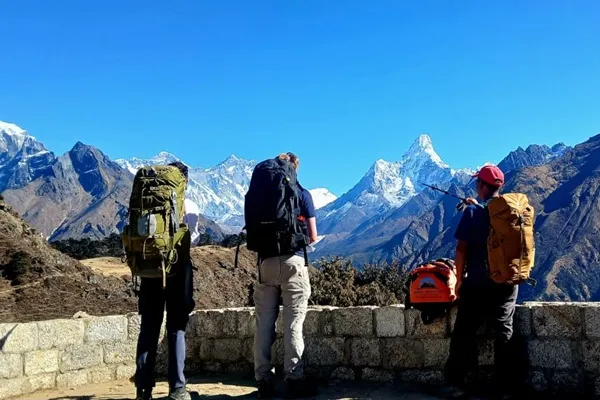
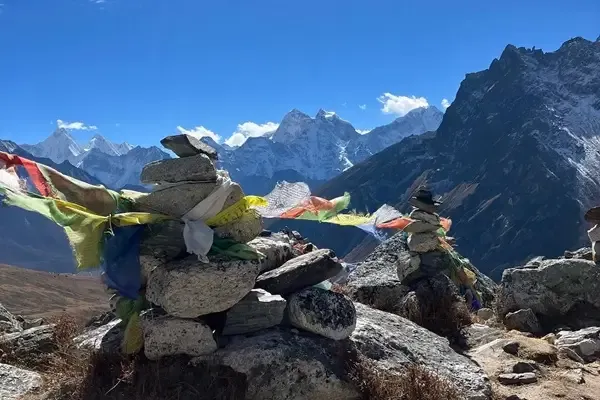
The views are one of the main reasons most trekkers choose this Dingboche acclimatization hike. Just after a short climb, the entire valley opens up, with Ama Dablam taking over the skyline alongside Island Peak.
On a clear day, you can also see Mt Makalu, Mt Cho Oyu, and other peaks around the Imja Valley.
Do you need to reach the top of Nangkartshang?
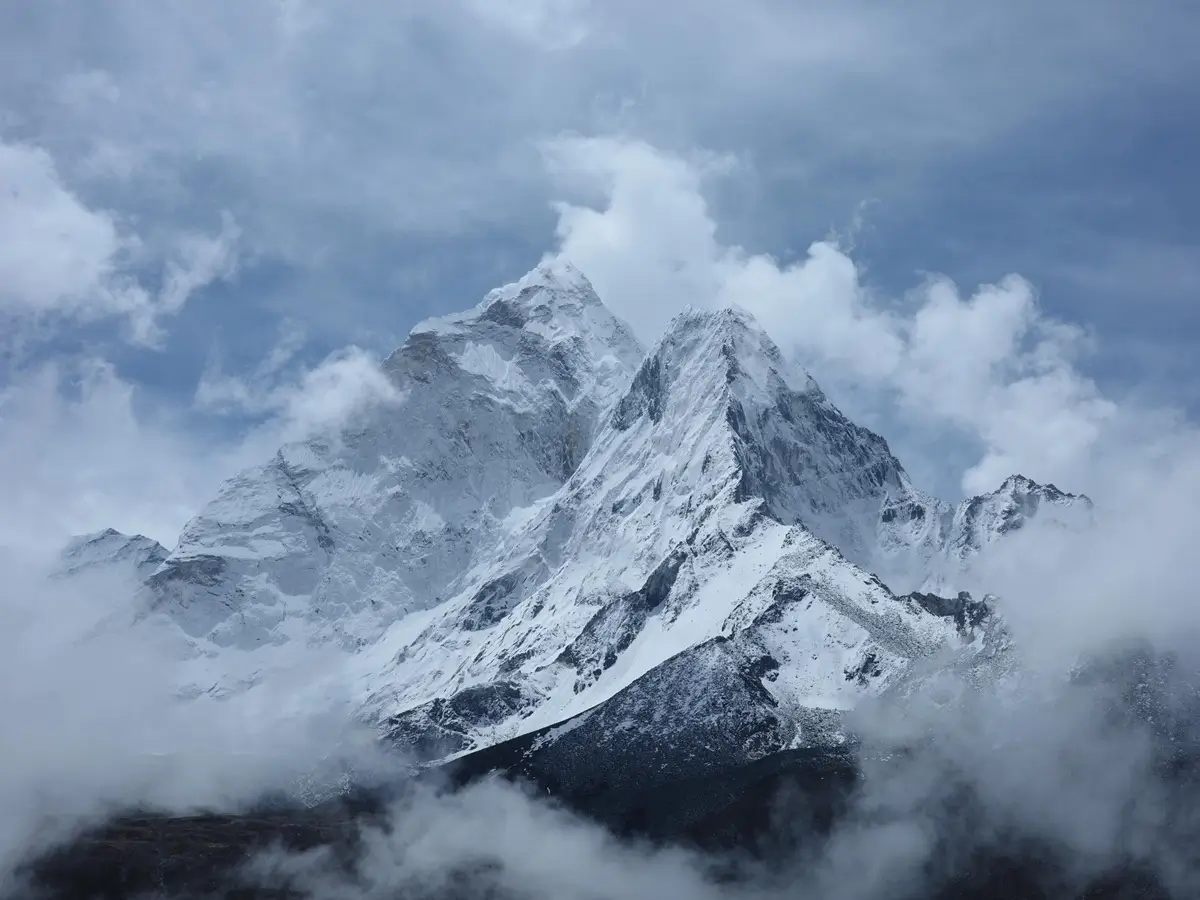
No. This is probably the most important thing to understand about your Dingboche acclimatization day. Rather than just ticking Nangkartshang Peak off your list, the purpose is to give yourself some controlled exposure to higher elevation and then return to Dingboche to sleep. Which means reaching the highest point is not the only useful outcome.
Think of the day as an acclimatization exercise, not a summit challenge. If you reach a comfortable high point, spend some time there and return to Dingboche feeling reasonably fresh, you have had a productive day. If you push another few hundred meters simply because everyone else is continuing, you may arrive back exhausted.
Is a Partial Nangkartshang Hike Still Useful?
Yes. A partial Nangkartshang peak hike is often the sensible middle option.
Maybe you slept poorly but otherwise feel okay. Maybe your legs are heavier than expected after Tengboche. Or maybe you simply know that spending several hours climbing is going to take more out of you than you want before the next trekking day. You can walk up the ridge, gain some elevation, enjoy the views, and turn around.
There is no rule saying the acclimatization day only counts if you reach the highest point. This option is particularly useful for people who want some activity without turning their Everest Base Camp rest day into another hard trekking day.
When should you hike Nangkartshang Peak?
When asked this question, here is what one of our most experienced guides at Marvel Adventure, Phinjo Sherpa, had to say:
I often give the green signal for the full hike if you slept decently, your appetite is fine, no headache is following you around, and you are not experiencing unusual or excessive fatigue.
Regarding the timing, mornings tend to reward you here. The wind hasn't picked up yet, the sky's usually still clean, and that means better odds of an actual view once you're up top. But weather in the Khumbu does what it wants, and no itinerary can promise you a clear morning.
When Is an Easy Rest Day the Better Choice?
Some mornings, doing less is the better move. If Tengboche to Dingboche exhausted you, then there is no point in going for another 700 meters of climbing the next day.
Maybe sleep never really came. Maybe breakfast just sat there, untouched. Maybe your legs feel too heavy. Or maybe you just know you haven't bounced back. That's when an easy day is the better choice. We suggest taking a short stroll through the village, sitting outside if the sun's out, and actually finishing your meals. Then you can rest at the lodge and give your body time to recover.
And if something feels more serious than ordinary tiredness, tell your guide and let them make the call. Skipping the Nangkartshang peak hike isn't failing the trek. It's just one more decision you get to make based on how you actually feel.
Nangkartshang Peak vs Easy Rest Day: Which Is Better?
Honestly, there is no universal winner here. The better option depends on your condition that morning.
| Factor |
Full Hike |
Partial Hike |
Easy Day |
| Effort |
High for an acclimatization day |
Moderate |
Low |
| Time on feet |
3 -5 hours |
1.5 - 2.5 hours |
Under an hour |
| Best for |
Trekkers feeling strong |
Trekkers feeling okay but tired |
Trekkers needing recovery |
| Benefit |
Greater altitude exposure |
Some altitude exposure without full effort |
Recovery before continuing the trek |
| When to avoid |
When unusually tired or unwell |
When a short climb feels difficult |
When you feel well & want some gentle movement |
| Recovery demand |
Highest |
Moderate |
Lowest |
Here is the simple way to look at it:
- Feeling strong? The full Nangkartshang hike can be a good choice.
- Feeling okay but not great? Walk up the ridge partially and turn around.
- Feeling physically tired but otherwise well? Go for the easy Dingboche rest day.
Common Mistakes on Dingboche Acclimatization Day
Here are some of the common mistakes made by trekkers on the acclimatization day in Dingboche.
Treating Nangkartshang like a summit challenge
The moment trekkers know that there is a peak around, they start thinking about reaching the top. That mindset is not particularly useful here. Nangkartshang is there as an acclimatization hike. If the summit becomes a competition, you can easily end up walking faster and harder than the day requires.
Walking too fast
This is a common mistake that many trekkers tend to make. You may feel good for the first 20 minutes and start walking at your normal pace. Then the altitude catches up and makes things difficult for you. Slow down before you reach that point. A steady pace with regular breathing is much more useful than repeatedly stopping because you went too hard.
Staying in bed all day despite feeling fine
Some people make the mistake of treating a rest day as doing absolutely nothing. If you feel good, a gentle walk around Dingboche can be perfectly reasonable. You do not necessarily need to spend the whole day lying down. The goal while trekking in the Himalayas is to maintain balance.
Ignoring symptoms to keep up with the group
Never hide how you are feeling because the rest of the group is moving higher. A trekking itinerary is a plan. It is not a deadline. If you feel unwell, tell your guide. The group can adjust. We always say this to every client: “Your health matters more than reaching a particular viewpoint that morning.”
Not eating enough before the hike
Nangkartshang is still an uphill walk, even though it is technically a side trip. Have breakfast before heading out and carry a few snacks for the trail. Starting a high-altitude climb without enough food can make the walk feel unnecessarily difficult.
Not carrying enough water or warm clothing
The temperature can change quickly once you are higher above Dingboche. Carry enough water for the outing and have an extra warm layer available. The wind at the higher points can make a sunny morning feel much colder than it did in the village.
Conclusion: So, Nangkartshang Peak or an Easy Rest Day?
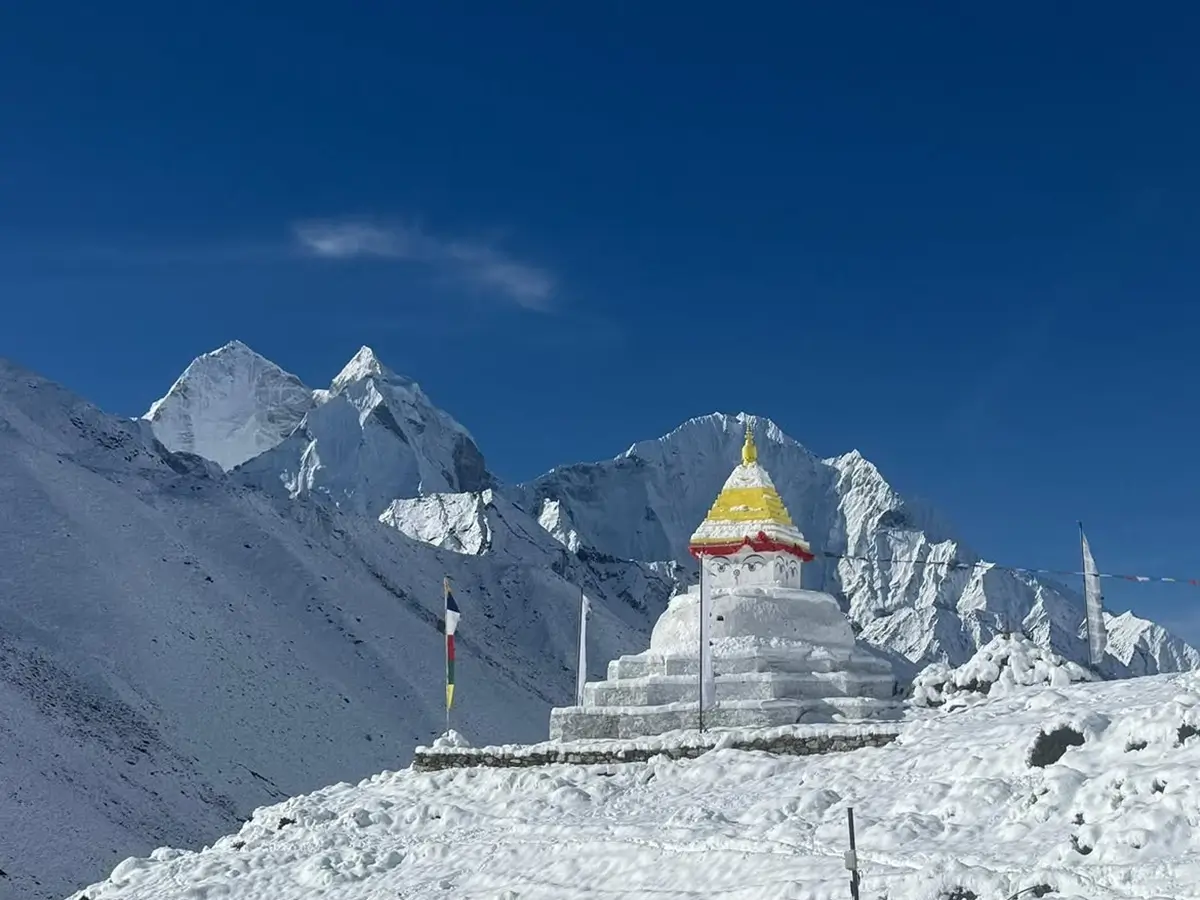
There's no single right call here. But there's a decent way to think about it. The best Dingboche acclimatization day isn't the one that puts you highest on the ridge. It's the one that leaves you properly adapted without burning you out for what's coming next.
Some mornings the right choice is the push to Nangkartshang. Other mornings the right choice is to stop halfway, enjoy the view from the lower ridge, and call it a day. Some mornings the right choice is to stay near the lodge, drink tea, and let your body quietly heal. No single option is best for everyone. Whichever one matches how you actually feel that morning is the right one.
At Marvel Adventure, we consider this acclimatization day part of the wider trek rather than a standalone summit objective. The aim is to arrive at the next stage ready to keep going. If you are planning the Everest Base Camp Trek, our local guides can help adjust the day's activity according to the group's pace, weather, and how everyone is actually feeling on the trail.
Frequently Asked Questions
How difficult is Nangkartshang Peak?
No ropes, no gear, no technical climbing required. What gets you is the air. A slope that would feel like nothing lower down turns into real work up here.
How high is Nangkartshang Peak?
5,083 meters. That's roughly 670 meters above Dingboche, all gained in one morning.
How long does the Nangkartshang hike take?
For most people, it's three to five hours, there and back. Where you land in that range depends on your pace, how you're acclimatizing, and how far up you actually go.
Can you acclimatize without reaching the summit?
Yes. You do not need to reach the summit to gain useful altitude exposure. Get halfway up and back down, and you've still done what the day was built for.
Is Nangkartshang Peak necessary for Everest Base Camp acclimatization?
Not strictly. The goal is exposure to higher elevation. A partial hike, or even a gentle walk around, can fulfil the goal of the acclimatization day.
What should you do if you feel tired on your Dingboche acclimatization day?
Pull back. A short walk or a quiet day near the lodge is a completely reasonable call, especially if sleep, appetite, or how you feel just isn't lining up.
What does "climb high, sleep low" mean in Dingboche?
Walk higher during the day, sleep lower that night. It gives your body a gentler way to adjust. It's not a guarantee against altitude sickness, just one part of getting there safely.