Everest Base Camp Trek Overview
The walk begins in the Sherpa town of Lukla, a place of great interest for its small and unique airstrip. There's an airport named ‘Tenzing and Hillary’, a tribute to the late legendary mountaineers who were the first to reach the top of Mt. Everest in 29th May 1953.
Adventure continues following Dudh Koshi, a raging fast river fed by massive Khumbu and Ngozumba glaciers located further north, where walks lead you to our main highlight of the journey.
The trek leads past several nice and lovely villages of Ghat, Phakding and Monjo villages adorned with impressive religious monuments of prayer walls and spinning bells, where walking clockwise is a sign of respect in the Buddhist religion.
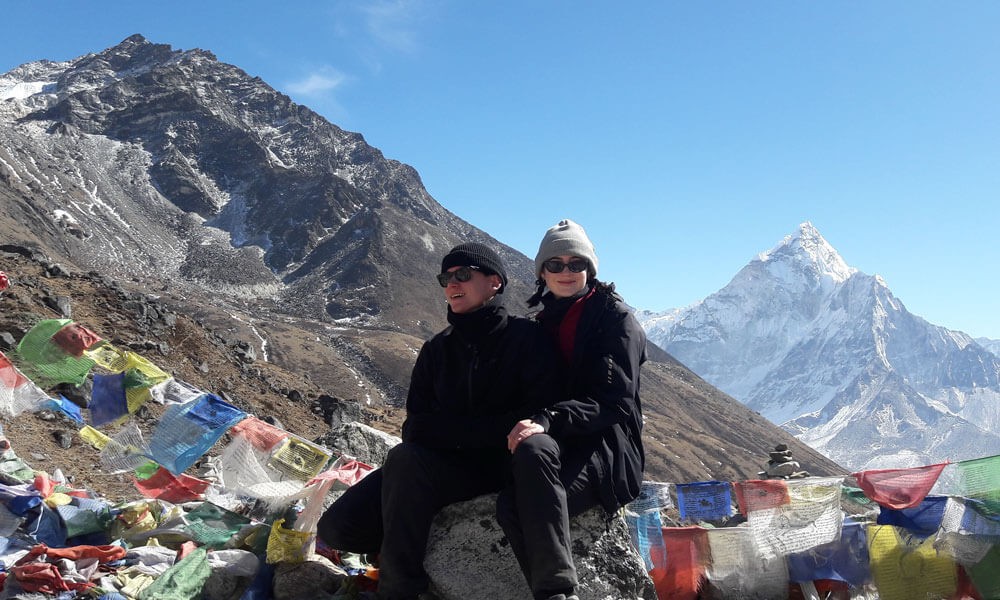
The route leads to crossing long suspension bridges, at Monjo where the walk enters Sagarmatha National Park. This park was established to conserve and protect various exotic flora and fauna of the Khumbu area.
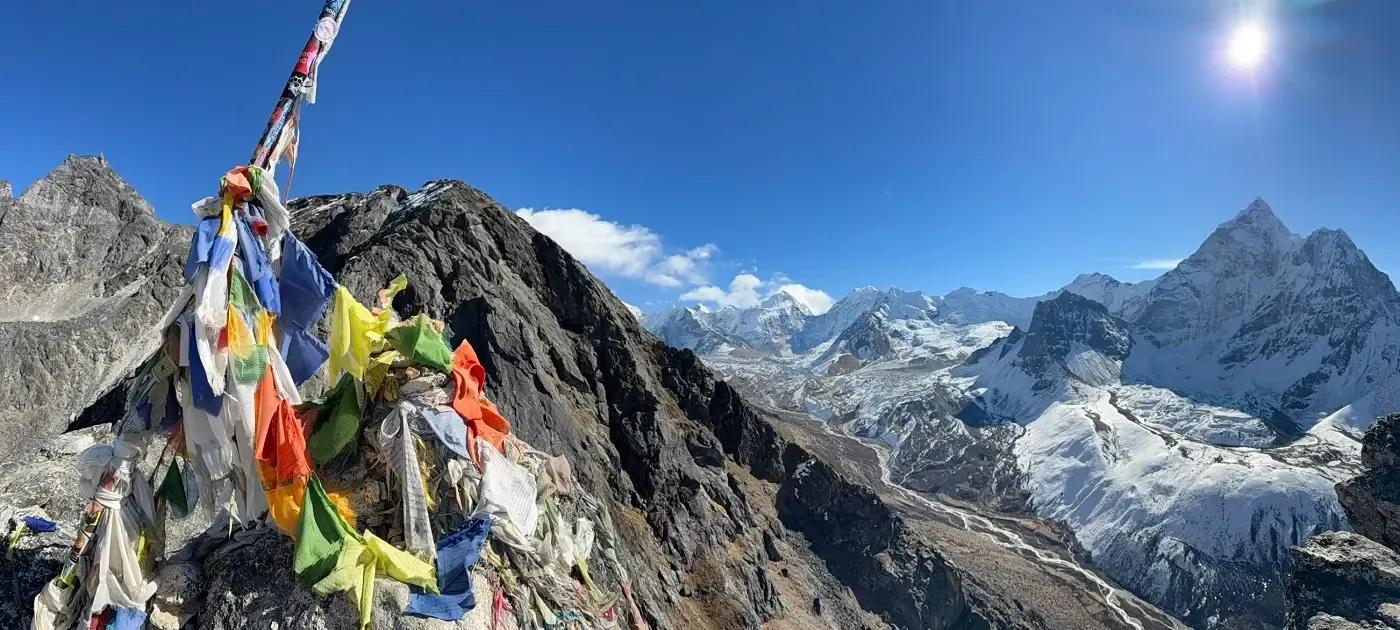
The park was designated as a World Heritage Site in 1979, where the world's highest peaks, Mt. Everest, Lhotse, Nuptse, Cho-Oyo, Pumori, Amadablam, Thermasarkhu, Kwangde, Khangtiaga and Gyachung Kang are located.
Sagarmatha- - a name for Everest in Nepal, while the native Sherpa call it Chomolungma of Tibetan origin, where both names mean ‘Great Mother’, an interesting place to collect information on the Khumbu region of Everest.
To enter park premises, one has to obtain permits for all trekking areas within Nepal Himalaya including the Everest region. From the park, walk leads around the Dudh Kosi River gorge and deep valley covered with dense tree lines of rhododendron-magnolia-blue pines, oaks and silver firs then heading steeply up facing glorious views of Kwangde, Thermasarkhu with Everest on clear morning.
Finally, after a pleasant and hard long walk, reaching Namche Bazaar, where houses are located in an amphitheatre, U-shaped, a popular and main hub of local Sherpa as well as for trekkers.
Namche offers facilities of nice hotels, shops, stores, banks and ATM with a number of good restaurants where, once a week, a colorful and busy Saturday market takes place an interesting and exciting bazaar to witness.
The bazaar of Namche, where all Khumbu Sherpa visit a great spot to observe the local immense culture and customs, which is quite similar to Tibetans, where the border of Tibet is located high and beyond the Khumbu area.
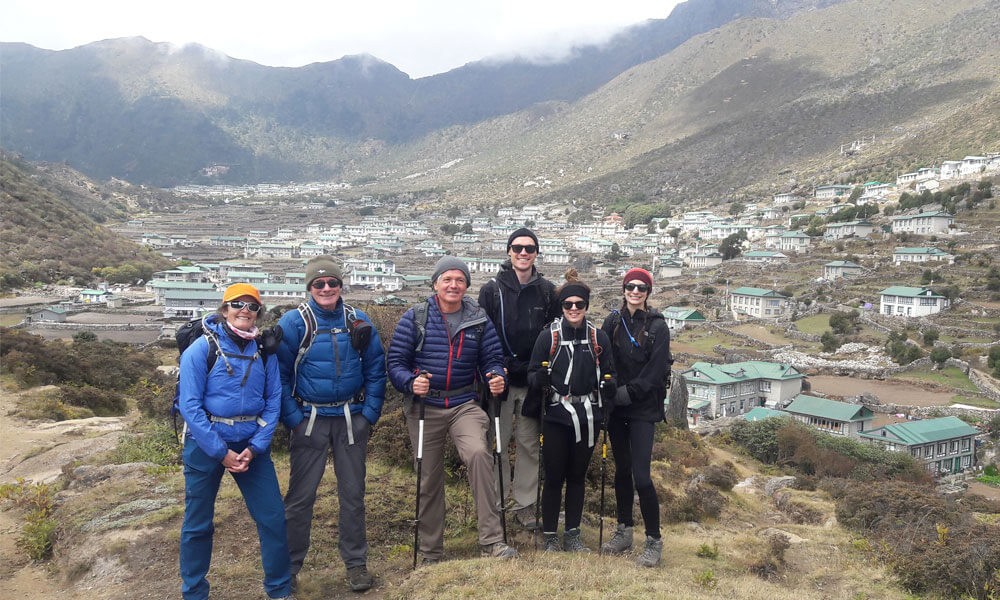
After Namche, walk on wide and scenic trail with fabulous views of Everest and range of adjoining peaks where down and uphill reach you at wonderful spot in Tengboche with its impressive monastery.
Tengboche is surrounded by green alpine woodland where views of high peaks encircles this lovely place. Tour of the monastery is worth a visit enriched with bright painting of fresco known as Thangka with many precious idols of Buddha and other important Gurus and Lama.
At Tengboche Monastery, mountaineers also visits for blessing from the high priest for safe and successful climb around world highest mountains within Khumbu and Everest region.
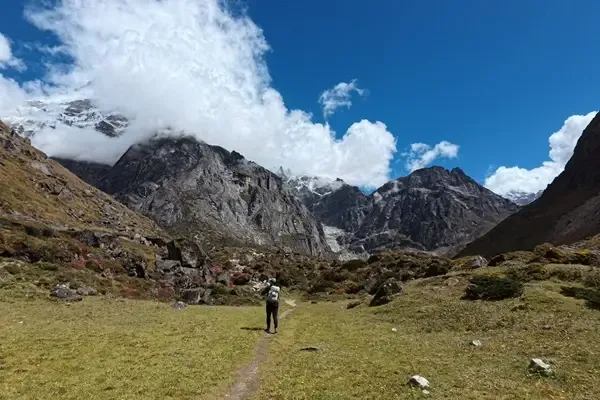
From here onward on high trails where tree lines and lush vegetation and tree lines disappears for short juniper and rhododendron bush and shrubs, as walk proceeds higher on leaving last village of Pangboche.
Walking carries on after overnights at Dingboche and Lobuche settlement to reach our ultimate goal and highlight at Everest Base Camp at the height of 5,365 m high.
Standing beneath world's highest Mountain certainly excites all trekkers with close views of massive Khumbu Ice Fall and glaciers, enjoying marvelous moments of lifetime experience where next adventure takes you high on top Kalapathar.
Kalapathar is a rocky high hill, the highest point of trekking adventure at above 5,545 m with closest views of Mt. Everest at stone throw distance with array of peaks that surrounds you.
After a remarkable journey enjoying glorious moments on highest point of the adventure return walk leads you on the same trail with slight difference taking a route towards Pheriche windy and scenic valley to reach Namche unto Lukla.
At Lukla where one can celebrate final and last night around high Khumbu and Everest region, a perfect spot to complete Everest Base Camp September Trekking.
Early morning short and scenic flight from Lukla brings you to Kathmandu with a great panorama of the mountain range during 30-35 minutes air borne includes ever present views of Mt. Everest.
Why Everest Base Camp Trek in September?
Travelers might wonder why visit the high Khumbu and Everest in September, after the end of the wet season around post-monsoon times. Well, here are some of the reasons why EBC Trek in September is a good idea.
- Fresh post-monsoon landscapes
- Fewer crowds than October and November
- Comfortable daytime temperatures
- Improving mountain visibility
- Easier teahouse availability
- September cultural atmosphere
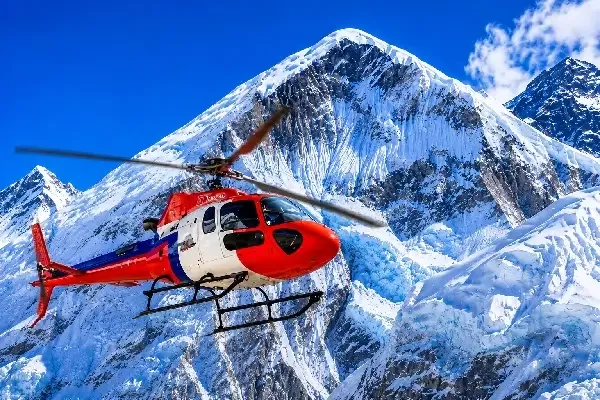
Note: September is also one of the best times for the Everest Base Camp Helicopter Tour.
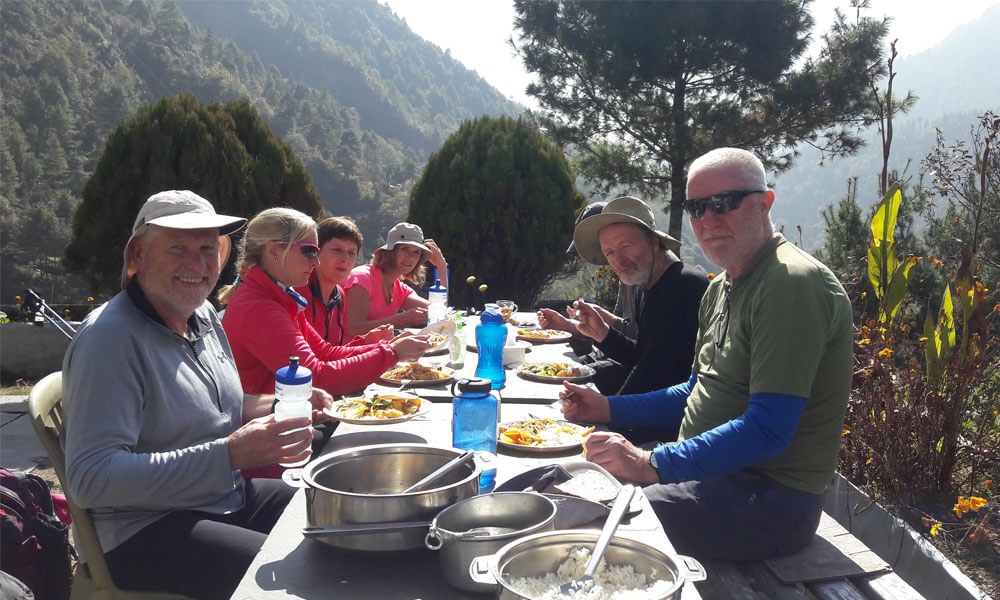
Weather of Everest Base Camp in September
Everest Base Camp in September has right pleasant temperatures of minimum -05° C to + 5° Celsius in the morning and night as well in shades away from sunlight.
Daytime has maximum +15° to 20° Celsius in the sun and depending on elevation wise, it can be cold during morning and nighttime with bright sunny days for a few hours where UV (Ultraviolet) can be strong. Therefore, sunblock and hats are highly recommended.
In the cold weather in the morning and nighttime and sometimes during afternoon time, clouds can accumulate and makes much colder without wind-chill factor that occurs during midday, adding more freezing temperatures.
Pros and Cons of Everest Base Camp Trek in September
It is a good time of the year in the month of September, around post-monsoon and with perfect temperature for walks as well to catch the morning and late afternoon views of peaks.
The negative side is it can get cloudy during midday till late afternoon or in the nighttime, with chances of light rains or snow at higher elevation.
The main and important thing to know is that due to the end of the wet season of monsoon rains, dark clouds can still obstruct views and flights to and from Kathmandu-Lukla-Kathmandu, which might lead delay of flight and cancellations due to unfavorable weather in September.
.jpg)
Common mistakes to avoid during EBC Trek in September
We have been operating Everest region treks in September for more than a decade. Here are a few common mistakes that trekkers usually make:
Packing like it's October
September mornings and nights are still cold, but the daytime sun after a monsoon-soaked atmosphere can be intense. We've had trekkers overpack heavy insulation and underpack sun protection, then regret it both ways within the same day.
Ignoring leeches in Lower Section
Between Lukla and Namche, the trail is still damp enough in early September that leeches show up on the lower forested stretches. We suggest a bit of salt or leech-repellent spray in your kit, especially if you are a first-time trekker.
Assuming cloud cover means no views
We have seen many of our trekkers give up on photography by midday once the clouds roll in. What they don’t realize is that the early morning, before around 9 or 10 AM, often offers a better chance of clear mountain views. Chase the light window rather than writing off the whole day.
Skipping acclimatization because walk feels easy
September's green, moist air makes the walking genuinely more comfortable, and that is where trekkers make the common mistake of rushing the schedule. Altitude doesn't care how easy the walk felt. We strongly recommend taking rest days at Namche and Dingboche.
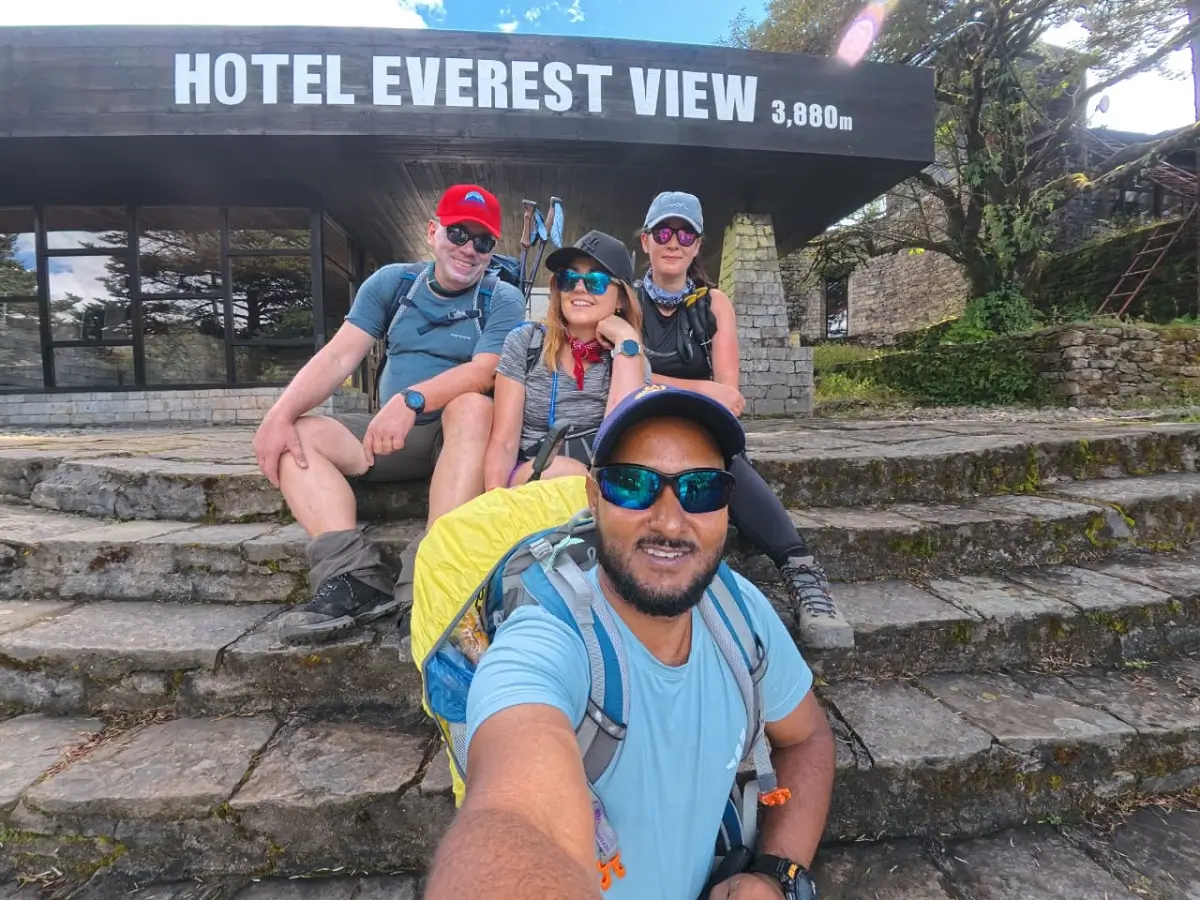
Wearing brand new boots
If you are thinking of using your new boots once you reach Lukla, you could be in trouble for the next few days. September's damp lower trail is exactly the kind of terrain that turns a stiff, unbroken-in boot into a blister factory by Day 2. We generally suggest getting used to your boots while you are in Kathmandu or Pokhara before you head to the trail.
Myth vs Reality: Everest Base Camp Trek in September
Over the years, we've noticed the same handful of myths come up in almost every inquiry we get about a September trek. Here's what we actually see on the ground.
| Myth |
Reality |
|
September is too rainy for trekking
|
The heaviest monsoon rain is done by early September. What's left is light, short afternoon or evening showers, not the sustained daily downpours of July and August. Mornings are usually dry and clear. |
| Lukla flights get cancelled constantly in September |
Delays happen, but cancellations are less common than people assume. Early morning flights, before cloud builds up over the valley, have a high chance. It's the afternoon flights that face more disruption. |
|
Clouds block the Everest views entirely
|
Clouds usually build through the late morning and afternoon. Our morning starts with a cup of tea with our trekkers while enjoying clear views of Everest and the surrounding peaks before the sky closes in later on. |
| The Lukla to EBC trail is muddy the whole way |
Only the lower sections, roughly from Lukla to Namche, hold onto real post-monsoon moisture. Above Namche, the trail becomes considerably drier, and by Dingboche and beyond, it's firm underfoot. |
| September is as crowded as October |
Not close. October is peak season for a reason: packed teahouses, busy trails, booked-out flights. September is noticeably quieter, with better lodge availability and more one-on-one attention from local guides and lodge owners. |
| September isn't suitable for first-time trekkers |
If anything, we’d say it's the opposite. The gentle post-monsoon air, combined with quieter trails and more relaxed lodges, makes September one of the pleasant times for someone attempting EBC for the first time. |
Early vs Late September: Which is better?
This is one of the most asked questions from our clients before booking the trip. So, we have put together a comparison chart to help with decision-making.
| Basis |
Early September |
Late September |
| Rain |
Higher probability |
Lower probability |
| Crowds |
Very low |
Slightly increasing |
| Trails |
Some muddy sections |
Usually dry |
| Lukla flights |
Weather-sensitive |
Improving conditions |
| Mountain Views |
More variable |
More reliable |
If you have flexible dates, we suggest planning the Everest Base Camp Trek for the second half of September for a more comfortable trekking experience and clear mountain views.
Everest Base Camp Trek in September Itinerary
Day 1: Flight to Lukla (2,820 m) and Trek to Phakding (2,657 m) - 4 hrs.
Day 2: Trek to Namche Bazaar (3,440 m) - 6 hrs.
Day 3: In Namche, rest day for acclimatization with a short hike.
Day 4: Trek to Tengboche (3,867 m) - 5 hrs.
Day 5: Trek to Dingboche (4,365 m) - 5 hrs.
Day 6: Another rest day at Dingboche for acclimatization and local hike
Day 7: Trek to Lobuche (4,890 m) - 5 hrs.
Day 8: Trek to Everest Base Camp (5,365 m) and walk back to Gorakshep (5,180 m) - 6 hrs
Day 9: Morning climb to Kalapathar (5,545 m) and Trek to Pheriche (4,371m)
Day 10: Trek to Namche Bazaar - 6 hrs.
Day 11: Trek to Lukla - 6 hrs.
Day 12: Fly to Kathmandu and transfer to hotel
Packing list for Everest Base Camp Trek in September
Always make sure to pack light and smart instead of carrying everything. Here is an ideal packing list for your EBC Trek in September;
- Backpack / Duffel bag to put your things that will be carried by a porter (Approx. 60 - 70L )
- A Daypack for you, around 35 L
- Sleeping bag ( Suitable for up to -20)
- Downjacket
- Waterproof / Windbreaker (top and bottom)
- Two pairs of thermal layers (top and bottom)
- Two pairs of walking trousers
- About 4 T-shirts
- Lightweight fleece jacket
- Hand gloves
- Warm hat / Sun hat and Buff
- Sunglasses (Polarized), Sunscreen and Lip Balm
- Trekking boots
- Light shoes / Sneakers / Flip-flops
- Four pairs of warm shocks
- Undergarments
- Toiletries ( Wet wipes, hand sanitizer, soap, toothbrush, etc.)
- Towel
- Small medical kit
- Two water bottles, 1L each, and Water Purification tablet / Water Filter / SteriPen
- Head Torch
- Power bank for your electrical devices
- Walking Poles
Marvel Adventure will provide the following things for the trek.
- Duffel bag
- Sleeping bag
- Down jacket
- Company cap
- Walking Poles
Similar articles you may like:
What happens if Lukla Flight is delayed?
This is the one question we get asked whenever someone is planning for an EBC trek. If you're trekking in early September and are wondering about the delay in the Lukla flight, we've sat in that domestic terminal enough times to know exactly how this goes.
The flight to Lukla depends on weather conditions and visibility. Cloud cover can cause delays even when conditions in Kathmandu appear fine. We've watched that wait stretch from a quick forty minutes to most of the morning, with our team on the phone with the airline the whole time chasing real updates instead of guesses.
For late September departures, we generally suggest building in at least one full buffer day. We also have noticed that more often than trekkers expect, the cloud is gone by mid-morning and the whole day gets back on schedule anyway.
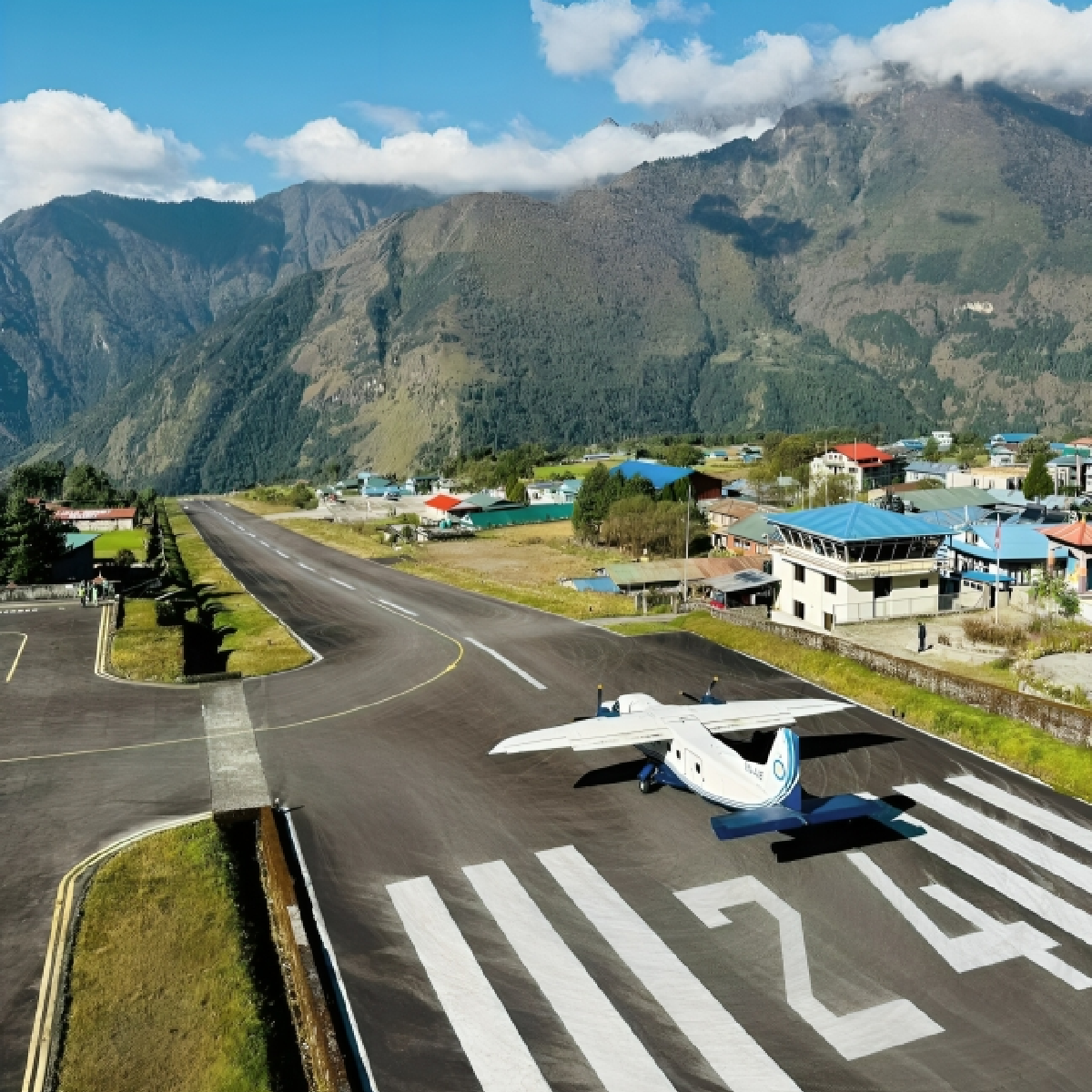
When it doesn't clear in time, we've got a few moves we actually use, not just mention. A helicopter transfer to Lukla. It is best for weather conditions when a fixed-wing flight can't fly. Keep in mind that it costs more but preserves your trekking days.
The second is simply tightening the itinerary once you're on the ground by adjusting an overnight stop. You don’t have to worry about the schedule as our guides handle it without you having to think about it.
The one thing we'd genuinely suggest you avoid is booking zero buffer against an international flight home. That's the single scenario where a Lukla delay stops being an inconvenient morning and starts being an actual problem.
Marvel Adventure also offers an alternative to the Lukla flight. If you have 15 days and want to trek through a less-traveled route that very few trekkers get to walk, check out our Salleri to Everest Base Camp trek.
Conclusion
Everest Base Camp Trek in September is a nice and pleasant walk on quieter trails than during the busy peak time of trekking season, with fewer people, where you can choose the best lodges at your disposal.
The area around high hills is alive with fresh green vegetation, walking on blankets of miniature low ground flowers, where you can catch the aroma and fragrance of wildflowers in bloom.
Enjoy Everest Base Camp September Trekking at your best in the low trekking season around the Himalaya without the hassle and away from the crowd of trekkers.
If September fits your travel dates, there is no reason to rule it out. Follow a well-paced itinerary, plan for buffer days and pack proper waterproof gear - you'll be more than ready to experience the magic of the Himalayas.
Planning your Everest Base Camp Trek this September? Get in touch with us and we'll provide you with expert tips, help you choose the departure date and organize the trek perfectly as per your requirements.
Frequently Asked Questions
What is the weather like at Everest Base Camp in September?
The mornings and nights are cold, roughly -5°C to 5°C, with daytime temperatures climbing to a comfortable 15°C to 20°C in the sun. Cloud usually builds by midday, so mornings are your clearest, most reliable window.
Can first-time trekkers do the EBC Trek in September?
Yes, and we'd say it's actually a good month to start with. The post-monsoon air makes acclimatization noticeably easier, and quieter trails mean more attention from your guide throughout.
Is late September better than early September for treks in Nepal?
For late September departures, we generally suggest trekkers expect drier trails and slightly more stable flight conditions than early September, since the tail end of the monsoon has usually cleared by then. Early September still works well, just with a slightly more residual moisture on the lower trail.
Are Lukla flights reliable in September?
They are reasonably reliable, particularly in the early morning slots before cloud builds. Short delays are common enough that we always recommend a buffer day. However, the outright cancellations are less frequent than most people assume.
How many buffer days should I keep?
At minimum, one full day built into your itinerary, ideally at the end of the trek before your onward international flight. It's the single easiest way to remove flight-delay stress from the entire trip.
Will I get clear views of Mount Everest in September?
Yes, particularly in the mornings. Cloud cover tends to roll in later in the day, so the early hours consistently give you the clearest look at Everest and the surrounding peaks.
How crowded is the trail in September?
Noticeably quieter than October's peak season. Lodges are easier to book, trails are calmer, and you'll generally get more personal attention from guides and teahouse owners alike.
Is travel insurance mandatory for the EBC Trek in September?
We require it for every trekker on this route, regardless of season. It needs to cover high-altitude trekking and emergency helicopter evacuation specifically, as standard travel insurance often doesn't include this by default.